
Key Takeaways
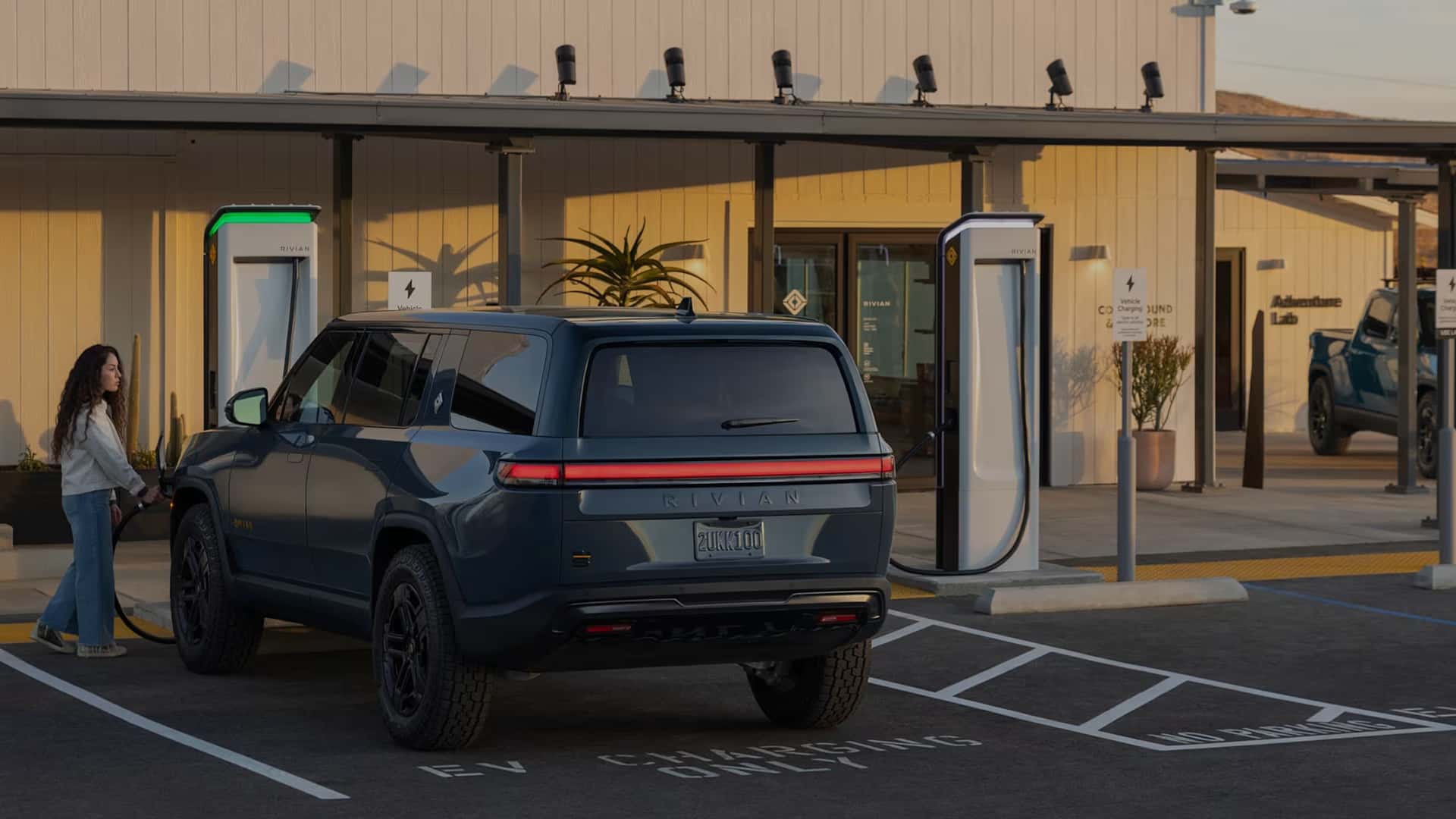
- Rivian’s proprietary Adventure Network (RAN) of DC fast chargers expanded by 39% in the past year, exceeding 1,100 individual charging ports across the United States.
- The network now comprises 1,185 ports and 165 locations, offering up to 300 kilowatts of power per port, with a claimed 100% renewable energy match.
- Despite gaining access to Tesla’s extensive Supercharger network via the NACS standard, Rivian continues strategic investment in its own infrastructure to enhance brand experience and reliability.
- In contrast, Rivian’s Waypoint network of Level 2 chargers has shown significantly slower growth, with only 10 new installations reported this year, bringing its total to 540 chargers at 208 locations.
- Compared to industry leader Tesla, which boasts over 40,000 fast charging ports, Rivian remains a niche but growing player in the rapidly evolving electric vehicle charging landscape.
UNITED STATES – Rivian, the burgeoning electric vehicle manufacturer, has announced a significant expansion of its proprietary direct current (DC) fast charging network, known as the Rivian Adventure Network (RAN). Over the past 12 months, the network has witnessed a robust 39% growth, now featuring more than 1,100 individual chargers strategically placed across the United States.
This substantial development underscores Rivian’s sustained commitment to building out its dedicated charging infrastructure, even as the wider EV industry moves towards broader interoperability, including the adoption of Tesla’s Supercharger network by numerous manufacturers.
Rivian Adventure Network: A Pillar of Charging Infrastructure
According to the company’s third-quarter earnings report, the Rivian Adventure Network currently boasts 1,185 ports capable of delivering impressive charging speeds of up to 300 kilowatts (kW). This represents a notable 39% increase in charging ports compared to the same period last year.
The physical footprint of the network has also expanded, with the number of operational stations climbing to 165. This marks a 26% growth in station count year-over-year, illustrating a methodical rollout aimed at enhancing accessibility for Rivian owners.
Commitment to Renewable Energy
A distinctive feature of Rivian’s fast charging network is its stated commitment to environmental sustainability. The startup claims that its DC fast chargers are powered by 100% renewable energy.
While this does not necessarily mean that every individual charger draws its electricity directly from an on-site solar array or wind farm, Rivian ensures that every kilowatt-hour delivered through a RAN charger is matched with an equivalent amount of renewable energy sourced from facilities that may operate in different geographical locations.
This approach, often facilitated through renewable energy credits, aligns with the company’s broader ethos of sustainable electric mobility and appeals to an environmentally conscious consumer base.
Strategic Investment Amidst Industry Convergence
Rivian’s continued investment in its proprietary charging infrastructure comes at a pivotal time for the electric vehicle ecosystem. The company’s passenger models, alongside those of many other automakers, have recently gained access to tens of thousands of public DC chargers across the U.S., including the extensive and widely acclaimed NACS-equipped Tesla Superchargers.
This industry-wide shift towards the North American Charging Standard (NACS) has led some to question the long-term necessity of proprietary networks. However, Rivian’s strategy appears to be multi-faceted, focusing on providing a distinct, reliable, and branded charging experience tailored to its adventurous customer base.
The presence of purpose-built stalls within the Rivian Adventure Network likely aims to offer a consistent user experience, reduce potential congestion at popular charging locations, and reinforce the brand’s identity as a premium outdoor lifestyle vehicle manufacturer.
The Waypoint Network: A Slower Trajectory
While the DC fast charging infrastructure has received significant attention in Rivian’s recent presentations, the company’s Waypoint network of Level 2 chargers has seen comparatively less focus. These slower, destination-style chargers, typically operating at 11 kilowatts, are designed for longer stays, such as overnight charging at hotels, parks, or workplaces.
Notably, the Waypoints network was not explicitly mentioned in the company’s most recent official documents. However, data from the Department of Energy’s Alternative Fuels Data Center (AFDC) indicates that the network has not been entirely static, though its growth rate significantly lags behind that of the RAN network.
According to the AFDC, Rivian installed only ten new 11-kilowatt Waypoint chargers this year, with the most recent pair activated in October. In total, the company currently operates 540 Waypoint Level 2 chargers distributed across 208 locations throughout the United States. This slower pace of expansion suggests a strategic prioritization of the faster charging infrastructure, which is critical for long-distance travel and quick top-ups.
Rivian’s Position in the Broader EV Charging Landscape
Despite the commendable growth of its DC fast charging network, Rivian remains a relatively small player in the rapidly expanding and increasingly competitive electric vehicle charging industry. The sheer scale of established networks provides a stark contrast to Rivian’s current footprint.
For context, Tesla, the undisputed leader in charging infrastructure, commands an immense network comprising over 40,000 fast charging ports spread across nearly 3,300 locations within the U.S. alone. Beyond its Supercharger network, Tesla also operates approximately 14,000 Level 2 Destination Chargers at nearly 4,000 sites, demonstrating a comprehensive approach to charging solutions.
Other significant players like Electrify America, EVgo, and ChargePoint also contribute extensively to the public charging ecosystem, offering thousands of fast and Level 2 chargers across the nation. Rivian’s growth, while impressive for a newer entrant, highlights the considerable investment and time required to build out a truly ubiquitous charging network comparable to industry giants.
The continued development of the Rivian Adventure Network is crucial for customer satisfaction and the overall appeal of Rivian vehicles. A reliable and accessible charging infrastructure directly addresses common concerns among prospective EV owners, such as range anxiety and the availability of charging options during long journeys or in remote areas where Rivian vehicles are often used.
As the electric vehicle market continues its accelerated expansion, Rivian’s commitment to its proprietary charging network, alongside its integration with broader charging standards, will play a vital role in solidifying its market position and supporting the growing fleet of its electric trucks and SUVs.
FAQ Section
What is the Rivian Adventure Network (RAN)?
The Rivian Adventure Network is Rivian’s proprietary network of DC fast chargers designed to provide rapid charging solutions for its electric vehicles. It’s built to support long-distance travel and ensure Rivian owners have reliable access to high-speed charging.
How much has the Rivian Adventure Network grown recently?
In the past 12 months, the Rivian Adventure Network has grown by 39%, surpassing 1,100 individual charging ports. As of the third-quarter earnings report, it features 1,185 ports across 165 locations in the U.S.
What is the power output of Rivian’s fast chargers?
Rivian’s DC fast chargers in the Adventure Network are capable of delivering up to 300 kilowatts (kW) of power. This high power output allows for quick replenishment of battery charge, minimizing downtime for EV owners.
Does Rivian’s network use renewable energy?
Rivian states that its fast chargers are powered by 100% renewable energy. This is achieved by matching every kilowatt-hour delivered through its chargers with an equivalent amount of renewable energy purchased from sources operating elsewhere.
What is the difference between RAN and Waypoint chargers?
RAN chargers are DC fast chargers, providing high-speed charging for quick stops and long trips. Waypoint chargers are Level 2 (11 kW) chargers, offering slower, more extended charging ideal for destinations like hotels or workplaces where vehicles are parked for several hours.
Why is Rivian investing in its own network if its EVs can use Tesla Superchargers?
Rivian’s investment in its proprietary network ensures a dedicated, high-quality charging experience tailored to its customers, particularly for adventurous routes. It provides brand control, potentially reduces congestion, and enhances overall customer satisfaction, complementing access to other networks like Tesla Superchargers.
How does Rivian’s charging network compare to Tesla’s?
While growing rapidly, Rivian’s network is significantly smaller than Tesla’s. Tesla operates over 40,000 fast charging ports and 14,000 Level 2 Destination Chargers in the U.S., making it the industry leader in charging infrastructure scale.