
Key Takeaways
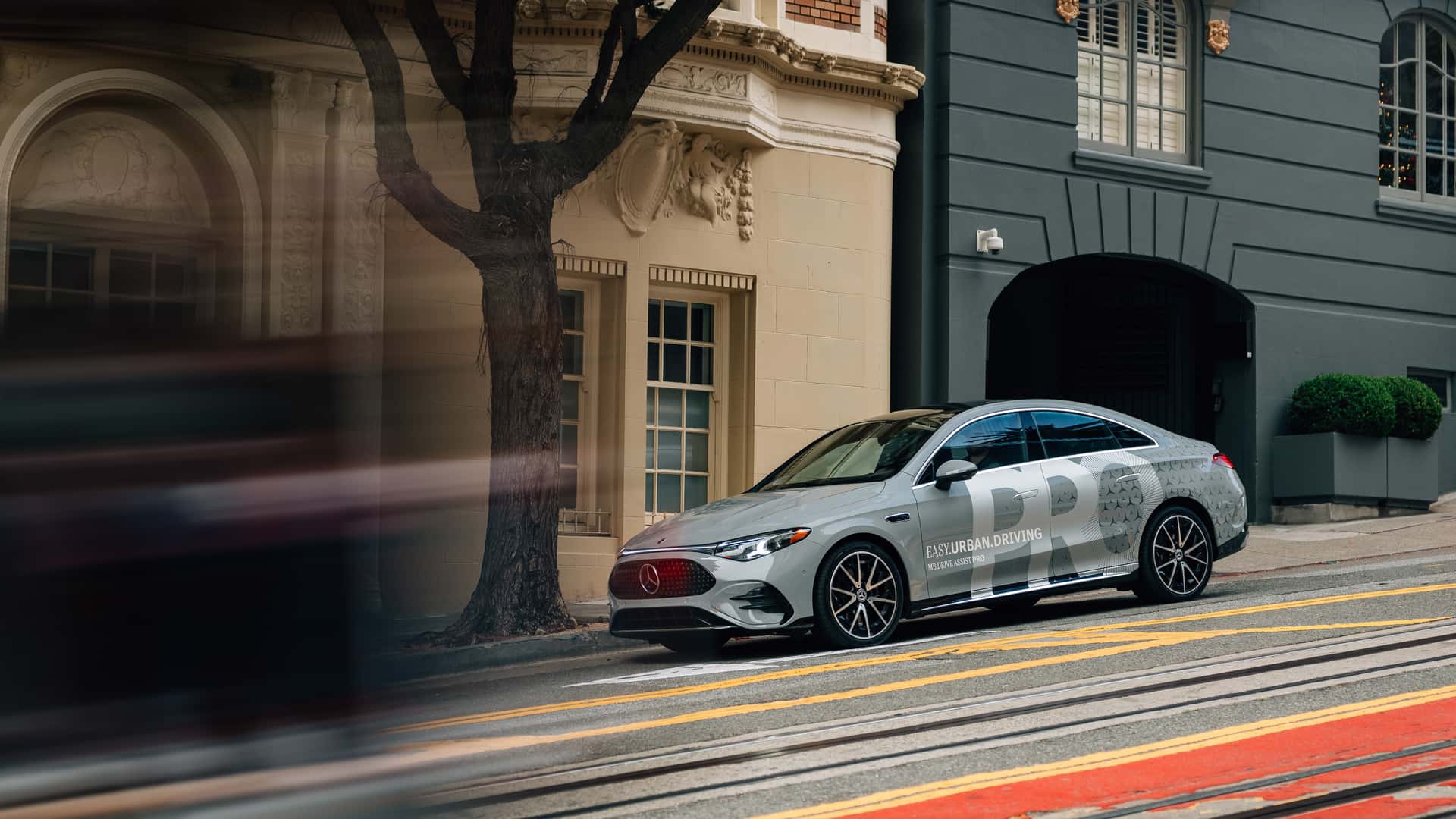
- Mercedes-Benz is launching its advanced driver-assistance system, MB.Drive Assist Pro, as a direct competitor to Tesla’s Full Self-Driving (Supervised).
- A key philosophical difference dictates that MB.Drive Assist Pro requires drivers to keep hands on the steering wheel when operating on surface streets, unlike Tesla FSD.
- Mercedes adheres strictly to Society of Automotive Engineers (SAE) Level 2 definitions, where the driver remains responsible for vehicle supervision at all times.
- The Mercedes system employs a comprehensive sensor suite including cameras, five radar sensors, and 12 ultrasonic sensors, contrasting with Tesla’s camera-centric approach.
- While some drivers acknowledge the safety rationale, many Tesla FSD users accustomed to hands-off driving on surface streets express reluctance to adopt a system with a hands-on requirement.
For many urban commuters, the daily grind of navigating busy roads can feel like an unending challenge. Lucian Capellaro, a resident whose routine involves traversing the winding Laurel Canyon from the San Fernando Valley to Los Angeles’ west end, knows this tedium intimately. The promise of advanced autonomous driving systems, particularly Tesla’s Full Self-Driving (FSD) feature, has therefore piqued his interest, yet his preference for a vehicle beyond the Tesla ecosystem—driven by considerations of design, interior quality, and body style—has left him seeking alternatives.
Mercedes-Benz is now poised to offer a compelling option. The luxury automaker is set to introduce its MB.Drive Assist Pro point-to-point automated driving system early next year. This sophisticated technology will be rolled out across a wide array of the brand’s electric and internal combustion vehicles. Existing eligible models will gain access to the feature through a convenient over-the-air (OTA) software update, bringing enhanced driving capabilities to a broader customer base.
The introduction of MB.Drive Assist Pro marks a significant development in the burgeoning field of advanced driver-assistance systems (ADAS), offering a direct rival to established autonomous driving technologies. As manufacturers push the boundaries of vehicle autonomy, the design and operational philosophies behind these systems become critical differentiators.
The Core Distinction: Hands On vs. Hands Off
Both Tesla’s Full Self-Driving (Supervised) and Mercedes-Benz’s MB.Drive Assist Pro enable drivers to input a destination, allowing the vehicle to navigate the route and park autonomously. However, a fundamental operational divergence sets the two systems apart. While both offer hands-free operation on controlled-access highways, the Mercedes system mandates that drivers maintain a hand on the steering wheel when traversing surface streets, a requirement absent in Tesla’s FSD (Supervised) functionality.
This operational difference is not an indicator of the system’s capabilities, but rather a reflection of a deeply ingrained philosophical approach by Mercedes-Benz. The German automaker strictly adheres to the definitions of autonomous driving “levels” as outlined by the Society of Automotive Engineers (SAE). MB.Drive Assist Pro, much like FSD (Supervised), is classified as a Level 2 system, or what Mercedes refers to as “Level 2 Plus Plus.” This classification inherently means the system requires constant supervision by the driver.
The distinction between different levels of autonomy is a critical regulatory and safety consideration. The ability for a driver to engage in non-driving activities, such as watching a movie or reading a book, while the vehicle operates autonomously is a hallmark of a Level 3 system or higher. Mercedes-Benz Chief Technology Officer Jörg Burzer underscored this boundary in a statement to InsideEVs.
“There is a very important borderline between the levels,” Burzer explained. He further clarified, “That borderline is that with Level 2 Plus Plus, you are responsible. At Level 3, the machine, the car, the software stack, is responsible.” This highlights Mercedes’ emphasis on explicit driver responsibility within its current advanced driver-assistance systems.
Navigating Complexity: Highways Versus City Streets
Burzer elaborated on the rationale behind the hands-on requirement for surface streets, pointing to the inherent complexities of urban driving environments. Controlled-access highways, with their predictable traffic flows and limited variables, present a comparatively simpler scenario for a Level 2 system to manage.
Conversely, surface streets are characterized by a far more chaotic and unpredictable environment. Factors such as pedestrians, cyclists, varied speed limits, complex intersections, and sudden changes in traffic patterns significantly increase the operational challenges for autonomous systems. Consequently, Mercedes-Benz mandates driver intervention through the hands-on-wheel requirement when operating off highways.
This decision resonates with users like Lucian Capellero, despite his personal inclination for risk-taking as a motorcycle rider. His perspective highlights a practical safety concern. “Think about the reaction time it must be for someone to take their hands from off the wheel to on the wheel,” Capellero observed. He concluded, “I’d view my hand on the wheel as lessening the seconds of reaction time to something crazy happening.” This suggests a user-centric acknowledgment of potential risks associated with fully hands-off driving in dynamic urban settings.
Further customer research cited by Burzer indicates a regional divergence in driver preferences. He noted that European drivers tend to align with Capellero’s view. “In the city, they like to have something, some regulation or some requirement that you have to have a hand on the wheel,” Burzer stated. However, he admitted, “I don’t know about U.S. customers yet.” This indicates an ongoing assessment of market expectations and regulatory frameworks, which could influence future developments.
User Experience and Philosophical Divides
When directly confronted with the hands-off capabilities of Tesla FSD on surface streets, Burzer reiterated Mercedes’ commitment to regulatory definitions and SAE autonomy levels rather than directly comparing user experience. “The big question is when is level 3 coming?” he insisted. “Because then you can have the hands off (anywhere).” This stance underscores a conservative, phased approach to achieving higher levels of autonomous driving capabilities.
However, the perceptions of many Tesla FSD users diverge significantly from Mercedes’ strict adherence to SAE definitions. These users often feel their vehicles are already delivering a hands-off experience in diverse environments. They, and perhaps Tesla itself, appear less bound by theoretical classifications and more focused on the practical, real-world performance of their vehicles.
Antonio Hidalgo, another Los Angeles area resident and regular FSD user, exemplifies this sentiment. He uses FSD extensively for both commuting and general driving, admitting to even taking naps behind the wheel under certain conditions, albeit while wearing a hat and sunglasses. Hidalgo claims the only noticeable flaws in the system now relate to parking functions.
When asked about the prospect of switching to a system like MB.Drive Assist Pro with a hands-on requirement on surface streets, Hidalgo expressed significant reservations. “If the (Mercedes system) worked the same but I had to keep my hand on the wheel …” he paused thoughtfully. “… You know, I probably wouldn’t (make the switch). I mean, I think I would be interested in having a nicer car with a better interior. But no.” His response highlights the value placed on the hands-off experience once accustomed to it.
Mharlon Barrientos, who commutes with FSD in Indianapolis, echoed a similar sentiment. While it took time to build trust in FSD for surface street driving—initially requiring him to “hover” a hand over the wheel—system updates and prolonged experience have allowed him to drive fully hands-off. For Barrientos, the prospect of a hands-on requirement represents a regression.
“Having a hand on the wheel as a requirement would be a bit of a step back to the feel of full autonomous driving that I’ve gotten used,” Barrientos stated, recalling that his Model Y originally mandated hands-on operation. This user feedback suggests that once drivers experience hands-off autonomy, reverting to a more supervised mode is perceived as a functional downgrade, irrespective of the underlying safety rationale.
Technological Approaches: Sensor Fusion versus Camera-Centric
Mercedes-Benz is quick to highlight a key technological differentiator for MB.Drive Assist Pro over Tesla FSD (Supervised): its sensor suite. While Tesla’s system primarily relies on cameras for environmental perception, Mercedes’ system incorporates a more diverse array of sensors. MB.Drive Assist Pro integrates five radar sensors and 12 ultrasonic sensors alongside its cameras, collectively feeding raw data to its Nvidia-powered computer.
Christoph von Hugo, Mercedes’ Head of Active Safety, emphasized the safety and performance advantages of this multi-sensor approach. “Different sensor inputs increases performance and safety,” von Hugo asserted. He made veiled references to what he implied was Tesla’s insufficient camera-only method, adding, “Relying on one just is not enough.” This statement underlines Mercedes’ belief in sensor fusion—combining data from various sensor types—to achieve a more robust and reliable understanding of the driving environment.
Further reinforcing this stance, von Hugo stated that Mercedes will not even ascend to SAE Level 3 capability without the integration of LiDAR technology, in addition to cameras, radar, and ultrasonic sensors. It is notable that Mercedes had previously offered a Level 3 system briefly in the U.S., which has since been phased out, indicating their cautious and evolving approach to deploying higher levels of autonomy.
However, the technological superiority, at least on paper, may not be a decisive factor for all users. Mharlon Barrientos, the Indianapolis FSD user, expressed skepticism about the direct impact of sensor specifications on his purchasing decision. “I honestly haven’t even thought about the tech behind it, so I’m not so sure knowing that there’s radar and ultra-sonic sensors (on the window sticker) would be a huge selling point,” he admitted.
Barrientos indicated that tangible performance advantages, perhaps demonstrated through videos or independent reviews, would be more persuasive than a list of hardware components. “Just like the Tesla system, I think it would take me some mileage on both highway and streets to gain a trust for the system to know it’ll handle either situation well,” he explained. This highlights that for many consumers, trust is built through real-world experience and demonstrated capability rather than technical specifications alone.
Beyond Autonomy: Holistic Vehicle Preferences
Despite the intense focus on autonomous driving capabilities, the article also reveals that such features are part of a broader set of considerations for potential car buyers. Barrientos, for instance, is not exclusively loyal to Tesla or FSD, indicating that many Tesla owners are not necessarily “die-hard” brand advocates.
His priorities extend beyond just autonomous driving. “The hands-on requirement in the city would not be enough to sway me off of the car provided I like the rest of the car,” Barrientos clarified. He elaborated, “While I like the functionality of FSD, it’s still a bit further down the list of what I look for in a car. Functionality, comfort, value … I still like to feel the mechanics and have the feel of actually driving a car.” This perspective underscores that overall vehicle attributes, including the driving experience, remain highly important.
Lucian Capellero shares this holistic view. He ponders the practical difference MB.Drive Assist Pro would offer compared to his wife’s BMW i4, which already features adaptive cruise control and hands-free highway driving assistance for low-speed traffic jams. For Capellero, the appeal of Mercedes’ system hinges on its point-to-point navigation prowess in complex environments like Laurel Canyon.
“I guess I’d just have to experience (MB.Drive Assist Pro) for myself, but if it can navigate all the craziness that is Laurel Canyon through Hollywood, and it is literally just my hand resting on the wheel, and that’s it, then sure,” he mused. “The fact that it’s truly point-to-point, then yes, that sounds super appealing.” This highlights that for many, the practical benefits in their specific driving scenarios, combined with other vehicle characteristics, will ultimately determine the system’s desirability.
The Unfolding Debate: Performance and Perception
The central question that remains is whether MB.Drive Assist Pro can genuinely match the performance and navigational capabilities of Tesla FSD, even with its stipulated hands-on-the-wheel requirement. Early observations from InsideEVs during a passenger-seat ride in San Francisco in January indicated promising potential. A comprehensive, full review is anticipated to provide definitive answers.
As advanced driver-assistance systems continue to evolve, the industry grapples with balancing technological innovation, regulatory compliance, safety mandates, and consumer expectations. Mercedes-Benz’s philosophical commitment to strict SAE Level 2 interpretations presents a distinct approach in this evolving landscape, offering a contrasting vision to Tesla’s more aggressive hands-off deployment. The market’s reception to MB.Drive Assist Pro will ultimately determine the efficacy of its ‘hands-on’ philosophy in the competitive realm of autonomous driving.
Frequently Asked Questions (FAQ)
What is Mercedes-Benz MB.Drive Assist Pro?
MB.Drive Assist Pro is Mercedes-Benz’s upcoming point-to-point automated driving system, designed to navigate and park vehicles autonomously. It will be available on a wide range of Mercedes-Benz electric and internal combustion models, with existing eligible vehicles receiving the feature via over-the-air updates.
How does MB.Drive Assist Pro differ from Tesla Full Self-Driving (FSD) Supervised?
The primary difference lies in the hands-on requirement. Both systems offer hands-free driving on controlled-access highways. However, MB.Drive Assist Pro requires drivers to keep a hand on the steering wheel when operating on surface streets, whereas Tesla FSD (Supervised) allows for hands-off driving in similar conditions.
Why does Mercedes require hands on the wheel for surface streets?
Mercedes-Benz adheres strictly to Society of Automotive Engineers (SAE) Level 2 definitions, where the driver maintains responsibility. According to Mercedes CTO Jörg Burzer, surface streets present far more complex and chaotic environments than highways, necessitating driver supervision for safety and regulatory compliance.
What are SAE autonomous driving levels?
The Society of Automotive Engineers (SAE) defines six levels of driving automation, from Level 0 (no automation) to Level 5 (full automation). Level 2 systems provide partial automation where the driver must continuously supervise the driving environment and be ready to intervene. Level 3 systems transfer responsibility to the vehicle under specific conditions.
What sensors does MB.Drive Assist Pro use?
MB.Drive Assist Pro employs a robust sensor suite that includes cameras, five radar sensors, and 12 ultrasonic sensors. Mercedes’ Head of Active Safety, Christoph von Hugo, emphasizes that this multi-sensor approach enhances performance and safety compared to systems relying solely on cameras.
How do users typically perceive the hands-on requirement on surface streets?
User perceptions are mixed. While some, like Lucian Capellaro, appreciate the safety aspect and reduced reaction time, many Tesla FSD users accustomed to hands-off driving in urban settings view a hands-on requirement as a functional step back and express reluctance to switch to such a system.
When will MB.Drive Assist Pro be available?
MB.Drive Assist Pro is set to be added to a large number of Mercedes-Benz electric and internal combustion vehicles early next year. Eligible vehicles already purchased will be able to add the feature through an over-the-air software update.
Does Mercedes-Benz plan for higher levels of autonomous driving?
Yes, Mercedes-Benz indicates that it will not advance to SAE Level 3 capability without incorporating LiDAR technology, in addition to its current array of cameras, radar, and ultrasonic sensors. This highlights their cautious and technologically comprehensive approach to higher autonomy levels.