
Key Takeaways
- BYD has introduced an innovative electric vehicle (EV) charging station, integrating solar panels and significant battery storage.
- The system features a robotic arm for automated, hands-free vehicle connection.
- Designed for grid-independent operation, this technology promises high-speed EV charging in locations without reliable grid access.
- The core of this innovation is BYD’s advanced Flash Charging technology, capable of ultra-fast power delivery.
- BYD aims to deploy 6,000 such Flash Charging stations globally by the close of 2027, expanding sustainable mobility infrastructure.
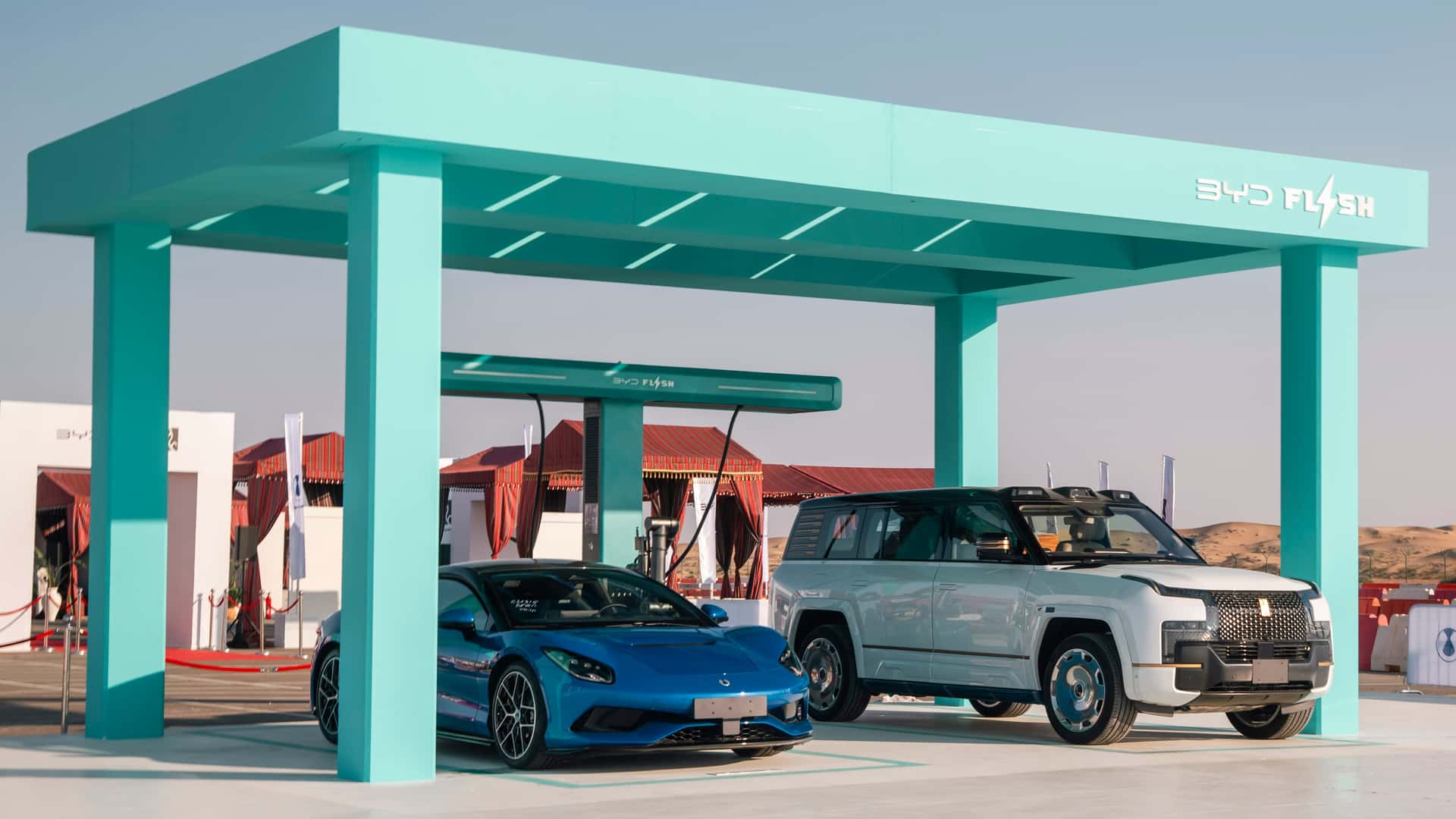
In a significant stride towards redefining electric vehicle (EV) charging infrastructure, BYD has unveiled a groundbreaking charging station in the Abu Dhabi desert. This innovative facility integrates several cutting-edge technologies, including solar power generation, robust battery energy storage, high-speed BYD Flash Charging capabilities, and an advanced robotic arm for autonomous vehicle connection. The system is engineered to function independently of conventional electricity grids, opening new possibilities for fast charging solutions in remote or underserved regions.

Traditional EV charging, particularly rapid charging, often necessitates a substantial and reliable connection to the power grid. However, BYD’s latest offering directly addresses this challenge by harnessing renewable energy and on-site storage. The fundamental concept is elegantly simple: solar panels capture sunlight to generate electricity, which is then stored in large-capacity batteries, ready to be dispatched to electric vehicles at ultra-fast rates through the BYD Flash Charging system.
The Genesis of a Grid-Independent Solution
BYD’s latest deployment in the Abu Dhabi desert serves as a compelling proof-of-concept for truly self-sufficient EV charging. While the company has long demonstrated the efficiency of its Flash Charging technology in reducing charging times, this new integration focuses on the equally critical challenge of power supply. By combining multiple energy components, BYD is paving the way for sustainable and accessible charging, even where grid connections are impractical or non-existent.
This initiative represents a strategic move to democratize EV adoption globally. It acknowledges that the global transition to electric mobility requires infrastructure that can adapt to diverse geographical and infrastructural conditions, from densely populated urban centers to vast, sparsely connected landscapes. The desert environment provides an ideal testing ground for the resilience and independence of such a system.

Advanced BYD Flash Charging: Powering the Future
Central to BYD’s innovative station is its high-performance Flash Charging technology. This system is already renowned for its rapid power delivery, significantly shortening the time required to recharge an electric vehicle. Each T-shaped BYD Flash Charger is notably equipped with two 185-kilowatt-hour (kWh) storage batteries, culminating in a substantial 370 kWh total on-site energy storage capacity. This built-in battery buffer plays a crucial role in enhancing charging efficiency and reliability.
These dedicated storage batteries are designed to draw power from the grid at rates ranging from approximately 100 to 560 kilowatts (kW) when grid connectivity is available. They then supply electricity to the connected EV at a much higher, sustained rate, bypassing potential limitations of the immediate grid connection. The BYD Flash Chargers are capable of delivering an impressive 1,500 kW through a single charging cable or up to 1,000 kW when two cables are in simultaneous use, marking them among the fastest chargers available globally.
The speed of BYD Flash Charging is particularly evident with compatible vehicles equipped with the company’s second-generation Blade battery. Such vehicles can achieve a charge from 10% to 70% in a mere five minutes, or reach 97% capacity in just nine minutes. This translates to a user experience that closely mimics the quick refueling times of conventional gasoline vehicles, addressing a primary concern for many prospective EV owners.
Solar Integration and Energy Storage: A Sustainable Equation
The addition of solar panels to the BYD Flash Charging ecosystem signifies a major step towards sustainable and self-sufficient operations. These panels are engineered to generate clean electricity on-site, directly contributing to the station’s power requirements. This integration minimizes reliance on fossil fuel-generated grid electricity and reduces the station’s carbon footprint.
The role of battery energy storage extends beyond simply boosting power delivery. It allows the station to accumulate solar energy during peak sunshine hours and discharge it efficiently when demand is high or when solar generation is low. This intelligent energy management system helps in reducing demand on the main grid during busy periods, offering a more stable and predictable power supply for EV charging. Furthermore, it underpins the station’s ability to operate entirely off-grid, a feature particularly transformative for remote applications.
While BYD has detailed the 370 kWh battery capacity for its standard Flash Chargers, specific technical details regarding the total battery capacity or the exact solar output for this novel desert installation have not yet been publicly disclosed. Consequently, the precise number of vehicles the station can charge, or the speed at which it can do so using solar power alone in an off-grid scenario, remains to be fully clarified by the manufacturer.
Robotic Automation for Seamless Charging
Further enhancing the user experience and operational efficiency, BYD’s new charging station incorporates a sophisticated robotic arm. This innovative component automates the process of plugging the charging cable into the electric vehicle. By working in conjunction with potential automated parking systems, the robotic arm facilitates a completely hands-free charging experience for drivers.
This level of automation not only adds convenience but also streamlines operations, potentially reducing the need for human intervention and increasing the overall throughput of the charging station. It aligns with the broader industry trend towards more intelligent and integrated automotive ecosystems, where vehicles can self-park and connect to charging infrastructure autonomously.
The Growing Trend of Battery-Backed Charging
BYD’s integration of battery storage into its charging infrastructure is not an isolated development but rather a reflection of a burgeoning trend within the EV industry. Battery-backed charging solutions are gaining traction because they offer several strategic advantages. They enable charging stations to deliver substantially more power than their direct grid connection might allow, effectively decoupling peak demand from immediate grid supply.
This approach also serves to alleviate strain on the electrical grid, especially in areas with limited grid capacity or during times of high energy consumption. Prominent industry players, including Tesla, have already embraced this model. Tesla’s largest Supercharger site, launched earlier this year, incorporates solar panels alongside its Megapack batteries, illustrating a shared vision for enhanced charging resilience and sustainability.
Companies like Electric Era and Beam Global have also specialized in developing and deploying battery-backed charging solutions, demonstrating a clear market demand for such innovations. Even beyond dedicated off-grid sites, many BYD Flash Chargers not situated in remote locations leverage on-site energy storage to augment their power delivery, ensuring consistent high-speed charging capabilities regardless of immediate grid fluctuations.
Global Expansion: BYD’s Ambitious Vision
The introduction of this advanced off-grid capable station underscores BYD’s aggressive global expansion strategy for its EV charging network. The company has articulated ambitious plans to establish a staggering 6,000 Flash Charging stations across the globe by the conclusion of 2027. This rapid deployment aims to solidify BYD’s position as a leader not only in EV manufacturing but also in critical supporting infrastructure.
While BYD has not specified the exact proportion of these upcoming stations that will feature solar power, off-grid operational capabilities, or the robotic arm, the sheer scale of the rollout indicates a strong commitment to widespread, high-speed charging access. The strategic placement of these stations is crucial for accelerating EV adoption in diverse markets.
Europe is already experiencing the benefits of BYD’s Flash Charging technology, with operational sites now established in key markets such as Italy, Germany, France, and the United Kingdom. Furthermore, plans are underway for the expansion of this advanced charging network into Canada, signaling a broad international reach. These deployments are vital for supporting BYD’s growing portfolio of electric vehicles in these regions.
A prime example of a vehicle designed to fully leverage the rapid power delivery of BYD Flash Charging is the Denza Z9 GT, which BYD currently sells in Europe. During a demonstration, this electric wagon impressively charged from 10% to 80% in just six minutes and 32 seconds, reaching 97% capacity in nine minutes and 22 seconds. This real-world performance highlights the transformative potential of such high-power charging for daily use and long-distance travel.
Looking Ahead: Impact on Electric Mobility
BYD’s pioneering efforts in developing solar-powered, battery-backed, and robotically-assisted EV charging stations mark a significant milestone in the evolution of electric mobility. By addressing the critical challenges of grid dependence and charging accessibility, these innovations have the potential to accelerate the global transition away from fossil fuels.
The ability to deploy high-speed charging infrastructure in virtually any location, regardless of existing grid stability, could unlock new markets for electric vehicles and foster sustainable development in remote communities. As BYD continues its aggressive global expansion, these advanced charging solutions will undoubtedly play a pivotal role in shaping the future of EV adoption and the broader energy landscape.
Frequently Asked Questions (FAQ)
What is BYD’s new EV charger innovation?
BYD has introduced an advanced EV charging station that combines solar panels for electricity generation, large battery storage for energy management, and ultra-fast BYD Flash Charging technology. It also features a robotic arm for automated vehicle connection, designed to operate independently of the electricity grid.
How fast is BYD Flash Charging?
BYD Flash Chargers can deliver up to 1,500 kW through a single cable or 1,000 kW when two cables are in use. Compatible vehicles with second-generation Blade batteries can charge from 10% to 70% in five minutes, or reach 97% in approximately nine minutes.
What is the role of the robotic arm?
The robotic arm automates the physical process of plugging the charging cable into the electric vehicle. This feature, combined with potential automated parking systems, offers a completely hands-free and convenient charging experience for EV owners, enhancing operational efficiency.
How does the system achieve off-grid operation?
The off-grid capability is achieved by integrating solar panels that generate electricity and large-capacity batteries (370 kWh per charger for standard Flash Chargers) that store this energy. This enables the station to power itself and charge EVs without requiring a direct connection to the conventional electricity grid.
Where are BYD Flash Charging stations being deployed?
BYD plans to establish 6,000 Flash Charging stations worldwide by the end of 2027. Currently, stations are operational in European countries like Italy, Germany, France, and the United Kingdom, with further expansion planned, including into Canada.
Why is battery-backed charging becoming common?
Battery-backed charging is gaining popularity because it allows stations to provide more power than their grid connection alone might supply, thereby accelerating charging times. It also helps reduce demand on the electricity grid during peak hours and offers greater resilience and flexibility in power delivery.
Which BYD vehicle can best utilize this technology?
The Denza Z9 GT, an electric wagon sold by BYD in Europe, is an excellent example. It demonstrated charging from 10% to 80% in just over six and a half minutes, and to 97% in around nine and a half minutes, showcasing the full potential of BYD’s ultra-fast Flash Charging system.