
Key Takeaways:
- Electric vehicles (EVs) often experience accelerated tire wear compared to conventional internal combustion engine (ICE) vehicles, primarily due to their increased weight and instantaneous torque.
- Empirical studies suggest EV tires may degrade 20-30% faster, leading to more frequent replacements.
- Factors like driving style, tire type (EV-specific vs. standard), and diligent maintenance (e.g., proper pressure, rotation) significantly influence tire longevity.
- While the phenomenon of faster EV tire wear is supported by evidence, its precise impact varies greatly depending on the specific vehicle, tire choice, and how it is driven.
The global automotive landscape is rapidly shifting towards electrification, with electric vehicles becoming an increasingly common sight on roads worldwide. As more consumers embrace this sustainable mode of transport, new questions arise regarding their operational nuances and maintenance requirements. One such prevalent query revolves around the longevity of EV tires: do these advanced machines genuinely consume rubber at an accelerated rate?

While electric cars are celebrated for eliminating many typical maintenance items associated with petrol or diesel vehicles, common wisdom, and indeed some owner experiences, suggest that tires might be an exception to this rule. This article delves into the physics, examines empirical evidence, and explores industry responses to provide a comprehensive understanding of EV tire wear.
The Underlying Physics: Why EV Tires Face Greater Demands
The notion that EVs might wear out their tires faster is rooted in fundamental principles of physics and vehicle dynamics. Several inherent characteristics of electric vehicles contribute to the increased stress on their tires:
Increased Vehicle Weight
A primary factor is the substantial weight of EV battery packs. These high-capacity power sources, essential for range, significantly increase the overall mass of an electric vehicle compared to a similarly sized internal combustion engine (ICE) car. Tires must bear this extra weight not just during static conditions but critically during acceleration, braking, and cornering, leading to greater friction and heat generation, which are direct contributors to tire degradation.

Instantaneous Torque Delivery
Another significant contributor to EV tire degradation is the instantaneous and often brutal torque delivery inherent to electric motors. Unlike ICE vehicles, which build power gradually, EVs can deliver maximum torque from a standstill. This rapid surge of power, particularly during aggressive acceleration, places immense strain on the tires, causing them to scrub against the road surface with greater force. This action, while thrilling for drivers, can lead to accelerated wear patterns.
Regenerative Braking
While beneficial for energy efficiency, regenerative braking in EVs also influences tire wear. During regeneration, the electric motors act as generators, slowing the vehicle and converting kinetic energy back into electricity. This braking force, primarily applied to the driven wheels, adds another dimension of stress alongside traditional friction braking, potentially altering typical tire wear patterns and accelerating degradation on certain axles.
Dissecting the Data: What Research Shows on EV Tire Longevity
To move beyond anecdotal evidence, several studies and fleet reports have attempted to quantify the difference in tire wear between electric and conventional vehicles. The findings, while largely pointing towards increased EV tire wear, also highlight the complexity and variability of the issue.
Controlled Environment Findings
A 2022 study published in *Science of the Total Environment* offered direct empirical evidence regarding EV tire degradation. Korean researchers conducted controlled tests measuring average tread wear. The results indicated an average wear of 201.7 milligrams per kilometre for the tested EV, compared to 158.9 mg/km for a gasoline car and 167.4 mg/km for a diesel vehicle. This translates to approximately 27% higher wear for the EV compared to gasoline, and 20% higher compared to diesel. It is crucial to note that this evidence was derived from specific vehicles under controlled conditions over a 550-kilometre route, making it applicable within that precise context rather than a universal forecast for all EV tire life.
Fleet Management Insights
Real-world fleet management data also provides valuable insights. A report from fleet management company *Epyx* in 2025 indicated that electric company cars required their first tire replacement at an average of approximately 23,100 kilometres (14,352 miles). In contrast, comparable combustion cars averaged 29,500 kilometres (18,333 miles) before their first change. This suggests roughly 22% fewer miles between tire changes for EVs in a fleet setting. However, *Epyx* itself acknowledged a limitation in its data: the EV sample tended to include larger vehicles, which inherently wear out tires faster than smaller cars, thus potentially skewing the comparison.
Particle Emission and Wear Estimates
A 2026 study published in *Environmental Research* approached the issue from a different angle, comparing particle emissions from electric and combustion versions of the same car. On average, it found that EVs released about 31% more particles from their tires and the road surface. While significant, this study measured particulate matter and not the actual lifespan of the tires, meaning higher particle release does not directly equate to 31% faster wear in terms of kilometers driven.
Another 2026 study published in *Mechanika* estimated that EV tires might last 35–62% fewer kilometres than those on combustion cars. However, this comparison was not strictly apples-to-apples, as the EVs in the study engaged in more city driving on different routes. Stop-and-go urban driving is known to be considerably harder on tires than continuous cruising, making it challenging to isolate how much of the accelerated wear was due to the vehicle type versus the driving conditions.
Weight-Controlled Testing
To isolate the impact of weight, *UTAC* conducted testing for the car industry groups ACEA and OICA. This involved one electric BMW iX1 and five combustion X1s, driven together over 15,000 kilometres (9,300 miles). The iX1 EV did indeed lose more rubber per kilometre than its combustion counterparts. However, once researchers statistically accounted for the iX1’s heavier weight, the observed difference in tire wear largely disappeared. This critical finding suggests that vehicle mass is a predominant factor contributing to the additional tire wear in EVs, rather than other characteristics like instantaneous torque, when weight is equalised.
The Role of EV-Specific Tires: An Industry Response
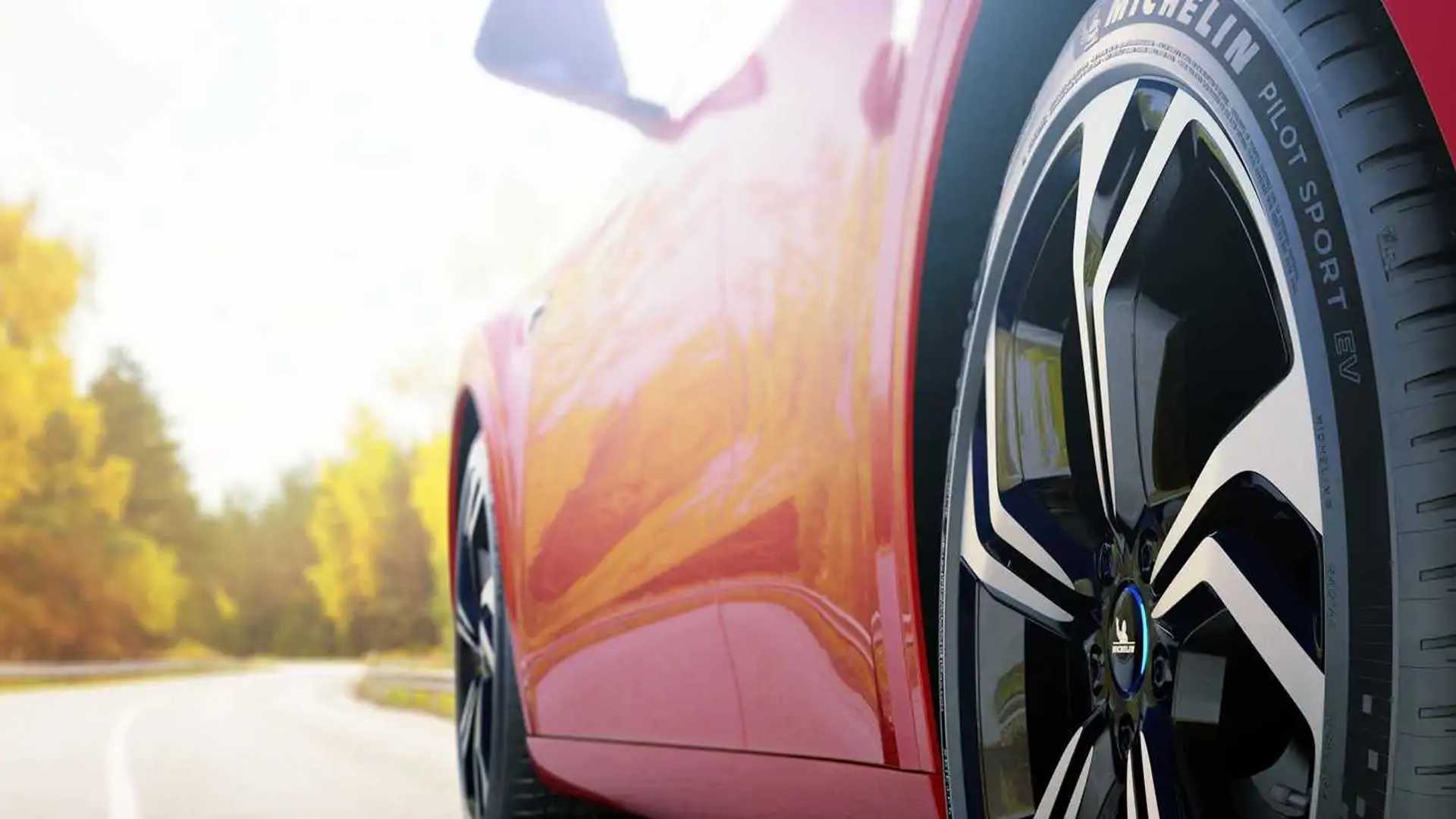
Recognising the unique demands placed on electric vehicle tires, manufacturers have developed specialised EV-specific tires designed to address these challenges head-on. These tyres incorporate several key features:
Engineered for Enhanced Durability and Load Capacity
EV-specific tires are built from the ground up to handle the increased weight of electric vehicles, featuring reinforced structures and compounds that offer greater durability and higher load capacities. This robust construction helps to mitigate the accelerated wear caused by the heavier vehicle mass.
Optimised for Low Rolling Resistance
Beyond durability, these tires are meticulously designed for low rolling resistance. This characteristic is vital for preserving the EV’s range, as less energy is expended overcoming friction between the tire and the road. Achieving low rolling resistance while maintaining grip and durability requires advanced `tire compounds` and tread designs.
Noise Reduction Technologies
A quieter cabin is a hallmark of electric vehicles. Consequently, tire roar, which might be masked by engine noise in an ICE car, becomes far more noticeable in an EV. EV-specific tires often incorporate acoustic foam or specialised tread patterns inside the tire to suppress noise, enhancing occupant comfort. However, Michelin points out that these features serve different purposes, and quieter tires do not automatically mean longer-lasting tires.
Leading tire makers, such as Michelin, have reported significant durability improvements across their newer tire lines, specifically engineered to manage the additional weight and torque of electric vehicles. Despite these innovations, *ADAC* advises that tires without an explicit EV marking can still be perfectly suitable, provided they meet the vehicle’s required specifications, including dimensions and appropriate load capacity ratings.
Mitigating Premature Wear: Best Practices for EV Owners
While the inherent characteristics of EVs contribute to `EV tire wear`, proactive measures and diligent maintenance can significantly extend `EV tire lifespan`. The advice for prolonging tire life on an electric vehicle is largely consistent with general tire care principles, yet takes on added importance:
Mindful Driving Style
Aggressive driving, characterised by sharp acceleration, hard braking, and fast cornering, is the fastest way to diminish tire life in any vehicle, but especially so in an EV with its immediate torque. Smooth accelerator inputs, gradual braking, and controlled cornering can substantially reduce `tire wear patterns`.
Maintaining Correct Tire Pressure
Adhering to the manufacturer’s recommended tire pressure is paramount. Under-inflated tires increase rolling resistance and generate excessive heat, leading to premature wear and reduced range. Over-inflation can reduce the contact patch and compromise grip and ride comfort, also leading to uneven wear.
Regular Tire Rotation
Following the manufacturer’s guidance for tire rotation intervals helps ensure even wear across all four tires. Due to factors like front-wheel-drive bias or specific weight distribution, tires on different axles or corners may wear differently. Rotation helps distribute this wear more uniformly, maximising overall tire lifespan.
Regular Inspections for Uneven Wear
Regularly inspecting tires for signs of uneven wear (e.g., more wear on one side of the tread, feathering) can indicate issues with alignment, balance, or suspension components. Addressing these issues promptly is crucial for both `EV tire longevity` and safety.
Tire care guidance from Michelin underscores the profound impact of driving style and consistent tire rotation intervals. When selecting new tires for an EV, owners should evaluate options based on expected lifespan, wet and dry grip performance, and their impact on vehicle range. While EVs can indeed wear tires faster, the extent of this difference varies considerably from one model to another and is heavily influenced by how the vehicle is driven.
The Broader Implications for EV Ownership
The discussion around `EV tire wear` is not just about maintenance but also about the overall `tire replacement costs EV` owners might face. While EVs offer savings on fuel and potentially reduced routine maintenance, the increased frequency of tire replacements can become a notable operating expense. Understanding this nuance is crucial for potential buyers and current owners alike, allowing for a more realistic assessment of the total cost of EV ownership.
Conclusion
The evidence overwhelmingly suggests that electric vehicles, owing to their increased weight and instantaneous torque delivery, do tend to wear their tires faster than their internal combustion engine counterparts. This phenomenon is not a myth but a quantifiable reality, supported by various studies and fleet data, although the precise degree of accelerated wear remains variable depending on specific vehicle characteristics, tire technology, and, crucially, driver behaviour. However, the emergence of EV-specific tires and the application of diligent `proper tire care` practices can significantly mitigate this effect, helping owners maximise the lifespan of their tires. Ultimately, as with any vehicle, the longevity of an EV’s tires is a function of the vehicle itself and how it is maintained and driven.
Frequently Asked Questions (FAQ) about EV Tire Wear
Q1: Why do electric vehicles wear tires faster than gasoline cars?
EVs typically wear tires faster due to their heavier weight (from large battery packs) and instantaneous torque delivery. This extra mass and immediate power place greater stress on tires during acceleration, braking, and cornering, leading to increased friction and accelerated `EV tire degradation` compared to lighter, less torquey internal combustion vehicles.
Q2: How much faster do EV tires typically wear out?
Studies suggest that EV tires can wear out approximately 20-30% faster than those on comparable gasoline cars. For instance, fleet data indicated EV tires might need replacement around 23,100 km, versus 29,500 km for ICE vehicles. However, actual `tire lifespan electric cars` vary greatly based on car model, tire type, and driving habits.
Q3: Are EV-specific tires necessary for electric vehicles?
While not always strictly necessary, EV-specific tires are highly recommended. They are engineered to handle the increased weight and torque of EVs, offer improved durability, low rolling resistance for better range, and often incorporate noise reduction features. Standard tires can be suitable if they meet the EV’s load capacity and other specifications, but EV-optimised tires are designed for superior performance and `EV tire longevity`.
Q4: What can EV owners do to extend the life of their tires?
EV owners can significantly extend `EV tire longevity` through several practices. These include adopting a smooth driving style with gentle acceleration and braking, maintaining correct tire pressures as per manufacturer recommendations, ensuring regular tire rotation, and conducting frequent inspections for signs of uneven wear. These steps help reduce `tire wear patterns`.
Q5: Does regenerative braking contribute to EV tire wear?
Yes, regenerative braking can contribute to `EV tire wear`. While it conserves energy, the process of slowing the vehicle by applying force to the driven wheels adds stress to those tires, particularly the drive axle. This additional braking force, combined with traditional friction braking, can alter and potentially accelerate overall `tire degradation` patterns.
Q6: How do EV tire replacement costs compare to ICE vehicle tire costs?
Given the faster wear rates, `tire replacement costs EV` owners face can be higher over the vehicle’s lifespan due to more frequent purchases. While individual EV-specific tires might not be drastically more expensive than premium ICE tires, the increased frequency of replacement contributes to a higher overall expense in `electric vehicle maintenance` budgets.
Q7: What are the key features that distinguish EV tires from standard tires?
EV tires are characterised by reinforced construction for higher load capacity to manage battery weight, specialised rubber compounds and tread designs for low rolling resistance to maximise range, and often feature acoustic foam or advanced patterns to reduce road noise, which is more noticeable in a quiet EV cabin. These features are critical for `EV performance`.