
Key Takeaways
- Electric Vehicles (EVs) generally exhibit higher tire wear compared to conventional internal combustion engine (ICE) vehicles.
- The primary factors contributing to increased EV tire wear are greater vehicle weight and the instantaneous torque delivery characteristic of electric powertrains.
- Real-world data and academic studies suggest EV tires may require replacement 20-30% sooner than ICE vehicle tires, though findings vary based on methodology and conditions.
- EV-specific tires are engineered to address these challenges, focusing on durability, load capacity, low rolling resistance, and noise suppression.
- Driving style, proper tire maintenance (pressure, rotation), and choosing appropriate tires remain crucial for maximizing tire longevity in all vehicles, including EVs.
The burgeoning adoption of electric vehicles (EVs) marks a significant shift in automotive technology, promising reduced emissions and lower fuel costs. However, a common query among current and prospective EV owners often revolves around maintenance, specifically the lifespan of tires. A prevailing notion suggests that electric vehicles may wear out their tires at an accelerated rate compared to their gasoline-powered counterparts. This concern, often substantiated by anecdotal evidence from owners facing earlier-than-anticipated tire replacement costs, prompts a deeper investigation into the underlying causes and empirical data.
At the core of this discussion lies fundamental physics. Electric vehicles are typically heavier than conventionally powered cars in the same segment, primarily due to the substantial weight of their battery packs. This increased mass places greater demands on tires during critical maneuvers such as acceleration, braking, and cornering. Furthermore, the hallmark of many electric vehicles is their brutal, instantaneous torque delivery, which can subject tires to considerable stress, particularly during spirited driving.

While the immediate power output is a known factor, leading German automobile association ADAC points out that simply having high torque doesn’t automatically translate to constant aggressive driving. Their analysis suggests that while vehicle weight undeniably contributes to increased tire wear, driving behavior remains a paramount influence on how quickly tires degrade. This implies that even with powerful EVs, a conservative driving style can significantly mitigate accelerated wear.
The Scientific Landscape: What Studies Reveal About EV Tire Wear
To move beyond common wisdom, researchers and fleet managers have embarked on studies to quantify the impact of electric vehicle characteristics on tire longevity. These investigations offer crucial insights, though methodologies and conclusions can vary.
Comparative Tread Wear Analysis
A seminal 2022 study, published in Science of the Total Environment, provided direct empirical evidence concerning tread wear. Korean researchers meticulously measured average tread wear for an EV, a gasoline car, and a diesel car over a controlled 550-kilometer (341-mile) route. The findings indicated that the tested EV exhibited an average tread wear of 201.7 milligrams per kilometer, significantly higher than the 158.9 mg/km for the gasoline car and 167.4 mg/km for the diesel vehicle.

This translates to approximately 27% higher wear for the EV compared to the gasoline car and 20% higher compared to the diesel car under the specific, controlled conditions of the experiment. While providing robust evidence for those particular vehicles and conditions, the study acknowledges that these results serve as a specific data point rather than a universal forecast for all EV tire lifespans.
Real-World Fleet Data and Replacement Cycles
Complementing academic research, real-world fleet management data offers another perspective on electric vehicle tire wear. Fleet management company Epyx reported in 2025 (as cited in the original source) that electric company cars experienced their first tire replacement at an average of approximately 23,100 kilometers (14,352 miles). This contrasts with combustion-powered cars in their fleet, which averaged 29,500 km (18,333 miles) before their initial tire change.
This data suggests roughly a 22% reduction in mileage between tire changes for EVs. However, Epyx themselves cautioned that their EV sample size during the reporting period skewed towards larger, heavier electric vehicles. Larger vehicles, regardless of powertrain, inherently tend to wear out tires faster than smaller ones, introducing a potential bias in this real-world comparison.
Particle Emissions and Theoretical Projections
Further studies have explored related aspects of EV tire performance. A 2026 study published in Environmental Research compared electric and combustion versions of the same car, focusing on particle emissions from tires and the road. On average, the electric variants released about 31% more particles. It is crucial to note that this study measured particulate matter, not the actual lifespan of the tires, so a direct correlation to 31% faster wear cannot be definitively drawn from this data alone.
Another 2026 study, published in Mechanika, provided theoretical estimates, projecting that EV tires could last 35–62% fewer kilometers than those on combustion cars. However, this study also highlighted a significant confounding factor: the electric vehicles in their model engaged in more city driving on a different route than their ICE counterparts. Stop-and-go urban driving inherently imposes greater stress and wear on tires than continuous cruising. This makes it challenging to isolate how much of the projected increased wear is attributable to the EV powertrain itself versus the distinct driving patterns.
Weight as a Primary Factor: The UTAC Findings
A controlled experiment conducted by UTAC for the car industry groups ACEA and OICA offered valuable insights into the role of vehicle weight. This test involved one electric BMW iX1 and five combustion X1s, which were driven together over an extensive 15,000 kilometers (9,300 miles) under consistent conditions.
The results confirmed that the iX1 EV consumed more rubber per kilometer than the combustion X1 models. Critically, once researchers adjusted for the electric vehicle’s heavier curb weight, the observed difference in tire wear largely diminished. This finding strongly suggests that, at least in this specific comparison, the additional weight of the electric vehicle was the primary driver behind the accelerated tire wear.
Addressing EV Tire Wear: The Role of EV-Specific Tires
Recognizing the unique demands of electric vehicles, tire manufacturers have developed specialized tires designed to mitigate the challenges of increased weight and instantaneous torque. These EV-specific tires are engineered with several key objectives in mind.
Firstly, they are constructed to accommodate the higher load capacities required by heavier electric vehicles. Secondly, their rubber compounds and tread designs are optimized for enhanced durability, aiming to extend the tire’s lifespan despite the greater stresses. Additionally, these tires often feature low rolling resistance properties, which are vital for preserving the EV’s battery range.
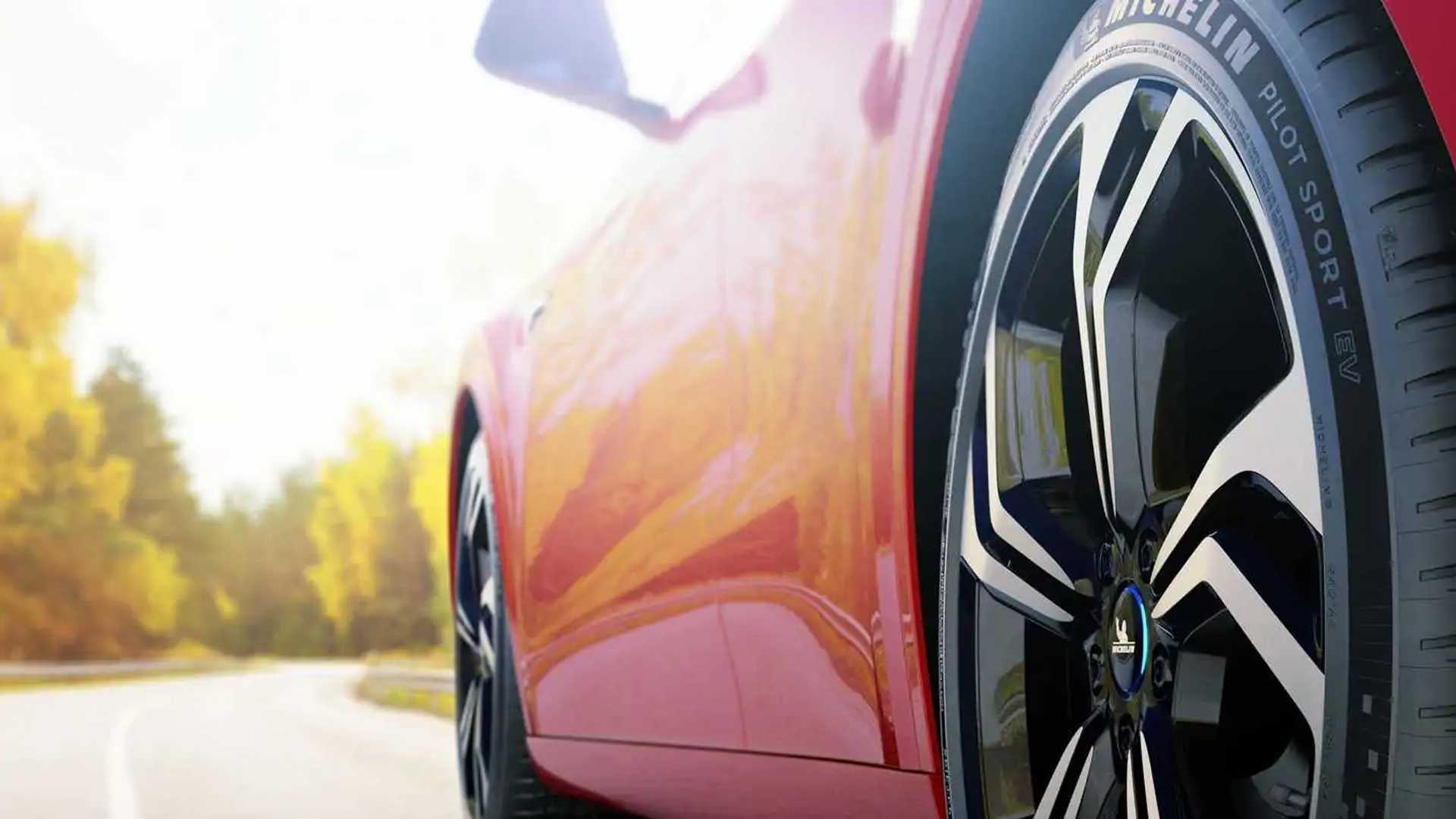
A less intuitive but equally important design consideration for EV tires is noise suppression. The near-silent operation of electric powertrains makes tire roar far more noticeable inside the cabin. To combat this, some EV tires incorporate acoustic foam within their structure to dampen noise. Michelin, a leading tire manufacturer, clarifies that while these features are distinct, their newer tire lines are demonstrating durability improvements specifically intended to handle the additional weight and torque characteristics of EVs.
It is important for consumers to note that while EV-specific tires offer tailored solutions, they are not always a mandatory requirement. ADAC advises that tires without an explicit ‘EV’ marking can be perfectly suitable, provided they meet all the vehicle’s required specifications, including crucial parameters like dimensions and load capacity ratings. Consulting the vehicle manufacturer’s recommendations is always advisable.
Extending Your EV Tire Lifespan: Practical Maintenance Tips
Despite the inherent characteristics of electric vehicles that can contribute to faster tire wear, owners have significant control over maximizing the lifespan of their tires. The practical advice largely mirrors best practices for any vehicle, emphasizing consistent care and responsible driving habits.
Key recommendations include:
-
Smooth Driving Inputs: Employing smooth acceleration and gentle braking significantly reduces stress on tires. The instant torque of EVs can be tempting to exploit, but aggressive starts and sudden stops dramatically increase tread wear. Regenerative braking, if managed smoothly, can actually lessen the burden on friction brakes and tires during deceleration.
-
Maintain Recommended Tire Pressures: Properly inflated tires ensure even weight distribution and optimal contact with the road. Under-inflated tires increase rolling resistance and heat, leading to faster wear and reduced range. Over-inflation can lead to uneven wear patterns and compromise grip. Always adhere to the manufacturer’s recommended pressure, typically found on a sticker inside the driver’s door jamb.
-
Regular Rotation and Balancing: Routine tire rotation, as per the vehicle manufacturer’s guidance, helps ensure even wear across all four tires. Front tires often wear differently than rear tires due to steering and power delivery. Regular balancing prevents vibrations and helps maintain uniform wear, crucial for tire longevity.
-
Check for Uneven Wear: Periodically inspect your tires for any signs of uneven wear, such as excessive wear on one side of the tread, cupping, or feathering. Such patterns can indicate underlying issues like improper alignment, worn suspension components, or incorrect tire pressure, which, if unaddressed, will drastically shorten tire life.
-
Consider Tire Characteristics for Replacement: When purchasing new tires, go beyond just price. Evaluate their expected lifespan (treadwear rating), wet and dry grip performance, and how they contribute to vehicle range (rolling resistance). Michelin highlights that these factors, combined with driving style and rotation intervals, make a significant difference to how long tires last.
In conclusion, the assertion that electric vehicles wear tires faster is not a myth; it is supported by physics and a growing body of evidence. The increased weight and powerful, instantaneous torque of EVs undeniably place greater demands on tires. However, the precise extent of this accelerated wear is not uniform, varying considerably from one vehicle model to another and, critically, depending on how the vehicle is driven and maintained. As with any car, the frequency of tire replacement ultimately hinges on the specific vehicle, the type of tires used, and, perhaps most importantly, the driver’s habits and commitment to proper tire care.
Frequently Asked Questions About EV Tire Wear
Why do electric vehicles wear tires faster than gasoline cars?
Electric vehicles generally wear tires faster due to their heavier weight, primarily from the battery pack, which increases stress during acceleration, braking, and cornering. Additionally, the instantaneous and high torque delivery of electric motors can lead to more aggressive acceleration, further contributing to accelerated tire degradation.
Do EV-specific tires actually help with tire longevity?
Yes, EV-specific tires are engineered to address the unique demands of electric vehicles. They feature reinforced construction for higher load capacities, durable rubber compounds, and optimized tread designs to better handle the extra weight and instant torque, thereby contributing to improved longevity and performance.
How much faster do EV tires wear compared to conventional car tires?
Studies and fleet data suggest EV tires can wear 20-30% faster than those on conventional cars, requiring earlier replacement. However, this varies significantly based on vehicle model, tire type, driving conditions, and individual driving style, making a universal percentage difficult to ascertain.
Is regenerative braking a factor in EV tire wear?
Regenerative braking primarily uses the electric motor to slow the vehicle, converting kinetic energy back into electricity, which can reduce the reliance on friction brakes. If smoothly applied, it can actually decrease stress on tires during deceleration compared to abrupt conventional braking, potentially extending tire life in that aspect.
What are the most effective ways to extend the life of my EV tires?
To extend EV tire life, maintain recommended tire pressures, practice smooth acceleration and braking, and adhere to regular tire rotation schedules. Regularly inspect tires for uneven wear, which could signal alignment issues. Choosing tires with a higher treadwear rating can also contribute to longer lifespan.
Are EV tires more expensive to replace?
EV-specific tires can sometimes be more expensive due to their specialized construction, including features for increased load capacity, noise reduction, and low rolling resistance. However, pricing varies widely by brand and model, and standard tires that meet an EV’s specifications may also be suitable.
Does driving style significantly impact EV tire wear?
Absolutely. Driving style is one of the most significant factors affecting EV tire wear. Aggressive acceleration, hard braking, and fast cornering — all actions that leverage an EV’s instant power and weight — will dramatically accelerate tire degradation, regardless of the tire’s design or vehicle type.