
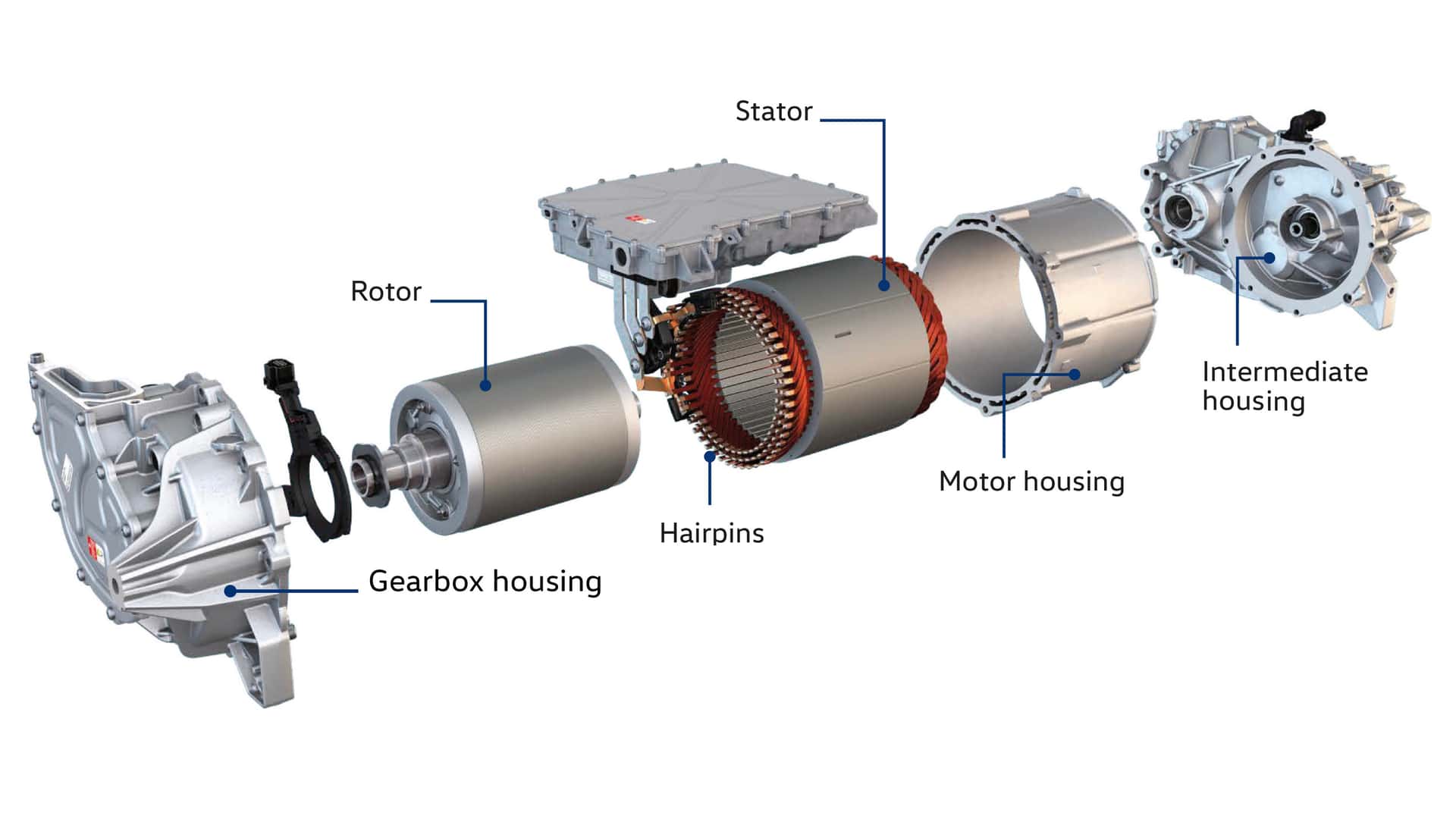
While much of the discourse around electric vehicles (EVs) often centres on battery technology and range, the sophisticated engineering within their electric motors is equally pivotal. These intricate powerhouses are far more than simple spinning components; they represent a diverse landscape of designs, each tailored to balance critical factors such as efficiency, raw performance, packaging constraints, and manufacturing costs. Understanding the nuances of EV motor technology is key to appreciating the rapid advancements in the automotive sector.
At its core, the fundamental distinction between different electric vehicle motors lies in how their rotating parts generate magnetism. Some designs rely on inherently magnetic materials, known as permanent magnets, while others ingeniously create these magnetic fields using electrical currents. While all motors harness magnetic forces to induce motion, their methodologies for generating and utilising this magnetism vary significantly, impacting their characteristics and applications.
Key Takeaways: Exploring EV Motor Technology
- EV motors are diverse, not monolithic, with designs chosen for efficiency, performance, and cost.
- The primary difference lies in how the rotor creates its magnetic field: permanent magnets, induced current, or supplied current.
- Permanent-Magnet Synchronous Motors (PMSM) offer high efficiency and power density but rely on rare earth elements.
- Induction Motors (Asynchronous Motors) are robust and avoid rare earths but are less efficient and generate more heat due to ‘slip’.
- Electrically Excited Synchronous Motors (EESM) provide adjustable magnetic fields without rare earths, though they add complexity and consume power for excitation.
- Many modern EVs employ hybrid setups, combining different motor types to optimise performance and efficiency across varying driving conditions.
- Automakers like Audi, BMW, Renault, Tesla, GM, and Mercedes-Benz strategically select or combine motor types based on specific vehicle requirements and engineering priorities.
The Fundamental Mechanism: How Electric Vehicle Motors Operate
Every electric vehicle motor is primarily composed of two critical sections: the stator and the rotor. The stator, as its name suggests, is the stationary outer casing of the motor, equipped with intricate coils. The rotor, conversely, is the dynamic, inner component designed to rotate. This rotor is directly linked to a shaft, which then transmits power to the vehicle’s wheels through a series of reduction gears.
The operational magic begins when direct current (DC) from the EV’s high-voltage battery pack is channelled into an inverter. This essential piece of power electronics transforms the DC into precisely controlled alternating current (AC). This AC is then fed into the stator’s coils in a meticulously timed sequence, generating a rotating magnetic field around the rotor. It’s this continuous, sweeping magnetic pull that compels the rotor to spin, effectively converting electrical energy into mechanical motion.
The term ‘synchronous’ is critical in understanding certain motor types. It denotes motors where the rotor’s rotational speed precisely matches the speed of the stator’s rotating magnetic field. Permanent-magnet and electrically excited motors fall under this category. In contrast, induction motors, which operate on a slightly different principle, exhibit a speed differential between the stator’s magnetic field and the rotor’s actual spin.
Permanent-Magnet Synchronous Motors (PMSM): The Rare Earth Advantage
Permanent-Magnet Synchronous Motors (PMSMs) represent a cornerstone of modern EV motor technology, widely adopted due to their compelling attributes. In these motors, the magnetic field necessary for the rotor’s operation is provided by robust, permanent magnets. These magnets are either securely attached to the rotor’s surface or intricately embedded within its structure.
The operational principle is elegantly simple: the stator’s rotating magnetic field exerts a continuous pull on the rotor’s permanent magnets, drawing it along. This mechanism eliminates the need for an external electrical supply to maintain the rotor’s magnetic field, a significant advantage for efficiency. By avoiding the power losses associated with energising rotor windings, PMSMs typically achieve higher energy conversion efficiency, particularly across a broad range of operating speeds.
PMSMs are highly prized for their exceptional power density, meaning they can produce substantial power from a relatively compact and lightweight package. This characteristic is invaluable in vehicle design, where space and weight are at a premium. Consequently, a vast majority of contemporary electric vehicles utilise permanent magnet motors as their primary drive units, capitalising on their inherent efficiency and strong performance.
However, this high performance often comes with an economic and geopolitical consideration. The potent magnets typically employed in these EV motors frequently incorporate rare earth elements, such as neodymium and dysprosium. The procurement of these materials can expose manufacturers to supply chain vulnerabilities, price volatility, and ethical sourcing challenges. While ‘permanent magnet’ doesn’t exclusively mean ‘rare earth,’ these specific materials are the prevalent choice for high-performance automotive applications, prompting ongoing research into alternative magnet technologies.
Induction Motors: The Robust, Rare-Earth-Free Alternative
Induction motors, also referred to as asynchronous motors, present a distinct and equally vital segment of electric vehicle motor technology. Unlike PMSMs, they eschew permanent magnets entirely. Instead, their rotors are equipped with conductive bars, typically made of copper or aluminium, which are connected at both ends by rings, creating a configuration often dubbed a ‘squirrel cage’ due to its resemblance to a rodent’s exercise wheel.
The operational principle of an induction motor relies on electromagnetic induction. As the stator’s rotating magnetic field sweeps past the rotor’s conductive bars, it induces an electrical current within them. This induced current, in turn, generates its own magnetic field within the rotor, allowing it to produce torque without the need for permanent magnets or a direct electrical connection to the rotor windings. This self-inducing nature is a hallmark of induction motors.
A crucial characteristic of induction motors is the concept of ‘slip.’ For current to be induced in the rotor, its rotational speed must always lag slightly behind the rotational speed of the stator’s magnetic field. This speed difference, or ‘slip,’ is essential; if the rotor were to catch up completely, the inductive effect—and thus the torque generation—would cease. This inherent slip makes them ‘asynchronous’ motors.
Induction motors boast several compelling advantages. They are inherently robust, reliable, and generally more cost-effective to manufacture compared to PMSMs, largely because they do not require rare earth elements. However, the process of inducing current in the rotor generates heat, which contributes to lower overall efficiency compared to PMSMs, especially under sustained heavy load. Despite this, they possess a unique benefit: when an induction motor is not powered, its rotor can spin with minimal mechanical drag, enhancing efficiency during coasting or when disengaged.
Automakers strategically leverage this characteristic. For instance, Audi cites this low-drag advantage for the front induction motor in its Q6 E-tron Quattro, which supplements the main permanent-magnet rear motor when additional propulsion or traction is required. This ‘hybrid’ motor setup is a common strategy in all-wheel-drive (AWD) EVs, where a potent permanent magnet motor handles the primary drive, while a less powerful induction motor on the secondary axle provides on-demand assistance, a method seen in many Tesla and General Motors (GM) electric vehicles.
Electrically Excited Synchronous Motors (EESM): The Adjustable Magnet
The electrically excited synchronous motor (EESM) represents a third distinct approach in EV motor technology, offering a compelling blend of attributes. In an EESM, the rotor does not contain permanent magnets; instead, it carries its own set of coils, which are supplied with electricity. When energised, these coils transform the rotor into a powerful electromagnet. This is why it’s termed ‘excited’ – it’s actively energised by an electrical current.
Imagine the permanent-magnet design, but with a crucial distinction: the strength of the rotor’s magnetic field is not fixed. Because it’s an electromagnet, its magnetic strength can be dynamically adjusted by varying the current supplied to its coils. This ability to modulate the rotor’s magnetic field provides engineers with an additional degree of freedom to optimise motor operation across a wide range of speeds and loads, potentially enhancing efficiency and performance characteristics under diverse driving conditions.
A significant advantage of EESMs is their complete independence from rare earth elements, addressing the supply chain and environmental concerns associated with PMSMs. Automakers like BMW have adopted EESMs in their latest sixth-generation EV powertrains, citing their efficient energy use in daily driving and consistent power delivery even at very high rotational speeds. Renault also employs this technology in vehicles such as the Renault 5 E-Tech, explicitly highlighting the reduced reliance on rare earths and magnet suppliers as a key driver for choosing wound rotors.
However, the flexibility of an EESM comes with its own set of trade-offs. The production of the rotor’s magnetic field actively consumes electricity, leading to some energy losses compared to the passive magnets of a PMSM. Furthermore, the rotor’s windings and the associated power supply system add complexity and potentially weight to the motor’s overall design. Thus, while avoiding permanent magnets, this approach introduces different engineering challenges.
The Strategic Blend: Why Not Just One EV Motor Type?
The landscape of electric vehicle propulsion is rarely monolithic, and automakers frequently combine different motor technologies within a single vehicle to achieve optimal performance and efficiency. The Audi Q6 E-tron Quattro, with its permanent-magnet rear motor and induction front motor, perfectly illustrates this strategic approach. The efficient PMSM handles the primary propulsion duties, while the induction motor on the front axle provides additional performance and enhanced traction on demand, crucially exhibiting minimal drag when inactive.
Other manufacturers adopt their own unique combinations. BMW, for instance, pairs an electrically excited rear motor with a front induction motor in some of its new all-wheel-drive configurations, aiming for a different balance of efficiency, power delivery, and material sourcing. Mercedes-Benz has taken another innovative route, deploying a permanent-magnet front motor that can be mechanically disconnected from the wheels when not required. This ingenious design eliminates the parasitic drag and energy losses that would otherwise occur if the motor were passively spinning, thereby significantly enhancing overall vehicle efficiency, especially during cruising.
The choice of EV motor technology is a complex engineering decision, balancing a multitude of factors. It’s not merely about generating power but also about intelligently managing energy consumption, particularly when propulsion is not needed. The continuous innovation in materials science, power electronics, and mechanical design ensures that a diverse array of motor types will continue to evolve and coexist in future electric vehicles, each playing a critical role in the ongoing quest for more efficient, powerful, and sustainable mobility.
FAQ: Common Questions About EV Motor Technology
Q1: What are the main types of EV motors?
The primary types are Permanent-Magnet Synchronous Motors (PMSMs), Induction Motors (also known as Asynchronous Motors), and Electrically Excited Synchronous Motors (EESMs). Each type generates the magnetic field for its rotor differently, influencing its performance characteristics.
Q2: Why do some EV motors use rare earth elements?
Permanent-Magnet Synchronous Motors (PMSMs) often use rare earth elements like neodymium and dysprosium because these materials create very strong and stable magnetic fields. This allows PMSMs to achieve high power density and efficiency from a compact size.
Q3: What is ‘slip’ in an induction motor?
Slip is the difference in speed between the rotating magnetic field of the stator and the actual rotation speed of the rotor in an induction motor. This speed differential is necessary to induce current in the rotor’s conductive bars, thereby generating its own magnetic field and producing torque.
Q4: How do Electrically Excited Synchronous Motors (EESMs) differ from PMSMs?
EESMs use electrical coils on the rotor to create an adjustable electromagnet, unlike PMSMs which use fixed permanent magnets. This allows for dynamic control of the magnetic field strength without relying on rare earth elements, though it adds complexity and consumes some power for excitation.
Q5: Why do some EVs use two different types of motors?
Automakers often use a combination of motor types to optimise different aspects. For example, a high-efficiency PMSM might handle primary propulsion, while a low-drag induction motor provides on-demand power for all-wheel drive, balancing performance, efficiency, and cost effectively.
Q6: Are induction motors less efficient than permanent-magnet motors?
Generally, induction motors are less efficient than Permanent-Magnet Synchronous Motors (PMSMs) under sustained heavy loads because generating current in the rotor creates heat and energy losses. However, their low-drag characteristic when unpowered can contribute to overall efficiency in specific driving scenarios.
Q7: What are the benefits of Electrically Excited Synchronous Motors (EESMs)?
EESMs offer the advantage of not requiring rare earth elements, which addresses supply chain and cost concerns. Their adjustable magnetic field allows engineers greater flexibility to optimise efficiency and performance across a wider operating range compared to fixed permanent magnets.