
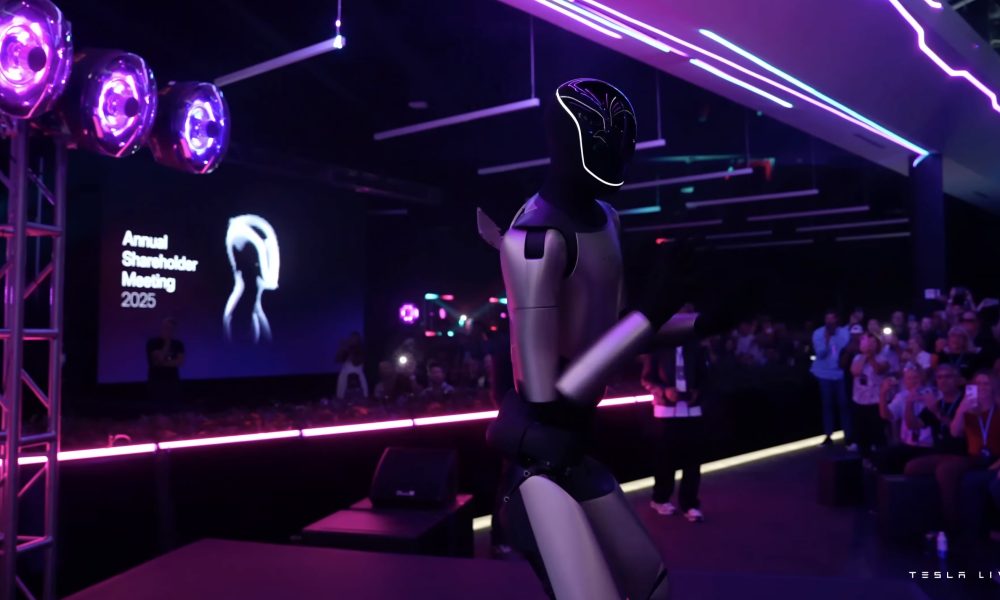
Elon Musk, the CEO of Tesla, has once again highlighted the profound potential of the company’s humanoid robot, Optimus, suggesting it could become the first real-world application of a theoretical ‘Von Neumann machine.’ Musk reiterated his long-held view that Optimus is poised to become Tesla’s most significant product to date.
Optimus as a Von Neumann Machine
In recent statements on the social media platform X, Musk responded to discussions about science fiction concepts materializing in reality. He stated, “Optimus will be the first Von Neumann machine, capable of building civilization by itself on any viable planet.” He previously described Optimus as Tesla’s “biggest product ever,” underscoring its strategic importance.

The concept of a Von Neumann machine, first proposed by mathematician John von Neumann, refers to a theoretical system capable of self-replication. Such machines are envisioned to utilize local resources to create copies of themselves and execute large-scale tasks autonomously, even in extraterrestrial environments. This vision aligns with Musk’s ambitious long-term goals for robotics and space exploration.
Broader Implications for Space Exploration
If Optimus achieves the capabilities described by Musk, it could significantly advance humanity’s capacity for interplanetary exploration. The robot’s potential to perform complex tasks autonomously on other worlds could unlock new possibilities for establishing human presence beyond Earth.
Musk’s forward-looking statements also connect with his broader interests in space-based artificial intelligence, large-scale robotic manufacturing, and the role of SpaceX’s Starship in transporting materials and equipment to other planets. While specific integration details were not provided, the Von Neumann machine concept implies Optimus could be a key component in a future interplanetary ecosystem.
