
Key Takeaways
- Sila, a battery anode technology developer, has received a conditional loan commitment of up to $1.4 billion from the US Defense Department’s Office of Strategic Capital (OSC).
- The substantial funding aims to expand Sila’s silicon-carbon (Si/C) anode manufacturing capacity at its Moses Lake, Washington, plant.
- A new lithium-ion battery cell manufacturing facility for high-performance specialty applications, including military and industrial drones, is also part of the expansion plan.
- Sila’s co-founder and CEO, Gene Berdichevsky, highlighted the importance of domestic manufacturing for technology sovereignty and supply chain security.
- This commitment follows a recent $300 million equity funding round, signaling strong investor confidence in Sila’s advanced battery technology.
WASHINGTON, D.C. / MOSES LAKE, WA – August 24, 2026 – Sila, a pioneering developer of advanced battery anode technology, has announced a significant financial milestone that is set to profoundly impact US battery anode manufacturing capabilities. The company has received a conditional loan commitment of up to $1.4 billion from the US Defense Department’s Office of Strategic Capital (OSC), marking a pivotal investment in domestic energy independence and technological leadership.
This substantial financing initiative underscores a strategic national push to fortify the critical supply chain for high-performance batteries. It is expected to significantly accelerate Sila’s capacity to produce cutting-edge battery materials and cells within the United States, reducing reliance on foreign sources for essential components in the rapidly evolving electric vehicle (EV) and defense sectors.

Transformative Investment Fuels Domestic Battery Production
The conditional loan commitment from the Office of Strategic Capital represents a monumental endorsement of Sila’s innovative silicon-carbon (Si/C) anode technology. This federal backing is designed to bolster domestic manufacturing capabilities, aligning with broader national security and economic objectives.
The $1.4 billion commitment is not merely a financial injection; it is a strategic partnership aimed at ensuring the United States maintains a competitive edge in advanced energy storage solutions. By supporting Sila’s expansion, the Defense Department is directly investing in the foundational technologies crucial for the next generation of power systems.
Strategic Expansion at Moses Lake: Scaling Advanced Anode Manufacturing
A primary focus of this funding is the ambitious expansion of Sila’s existing silicon-carbon anode manufacturing capacity at its facility in Moses Lake, Washington. This facility is poised to become a cornerstone for high-volume, domestic production of advanced battery materials.

Sila intends to leverage its next-generation modular manufacturing technology at the Moses Lake plant. This innovative approach is specifically designed to facilitate rapid scaling, allowing production to quickly adapt to surging demand across various industries, from consumer electronics to electric vehicles and specialized defense applications.
Forging Advanced Battery Cells for Critical Applications
Beyond anode expansion, a portion of the financing will be dedicated to the buildout of a new lithium-ion battery cell manufacturing facility. This state-of-the-art plant will focus on producing cells for specialty applications that demand exceptionally high performance.
These critical applications include industrial, agricultural, and military drones. The move ensures that crucial sectors requiring robust, high-energy-density batteries will have a secure domestic supply, enhancing operational reliability and strategic independence.
Bolstering US Supply Chain Security and Technology Sovereignty
The implications of Sila’s manufacturing scale-up extend far beyond commercial gains, touching upon fundamental aspects of national security and economic resilience. The ability to produce advanced battery components domestically is increasingly vital in a global landscape marked by geopolitical complexities and supply chain vulnerabilities.
Gene Berdichevsky, Sila’s co-founder and CEO, emphasized this critical aspect. He stated, “We solved the hardest problem in battery materials with the invention of the modern silicon anode. But invention is only the first step—manufacturing it at gigascale, here in America, proves that technology sovereignty is possible. By scaling our manufacturing at home, we are ensuring critical technology sectors have the supply chain security they need to thrive.”
This statement highlights the strategic imperative behind the investment in US battery anode manufacturing. It underscores a shift towards self-sufficiency in key technological areas, safeguarding essential industries from external disruptions and fostering sustained innovation within the nation’s borders.
Sustained Investor Confidence and Strategic Partnerships
The conditional loan commitment from the US Defense Department’s Office of Strategic Capital builds upon a foundation of strong investor confidence in Sila’s technology and vision. This federal backing closely follows a recent $300 million equity funding round, which saw significant participation from leading investment firms.
That equity round was notably led by Sutter Hill Ventures and Atreides Management. The combined private and public sector investment signals a robust belief in Sila’s capacity to revolutionize the battery industry and establish a formidable domestic presence in the advanced materials market.
The Future of Silicon Anode Technology: Titan Silicon
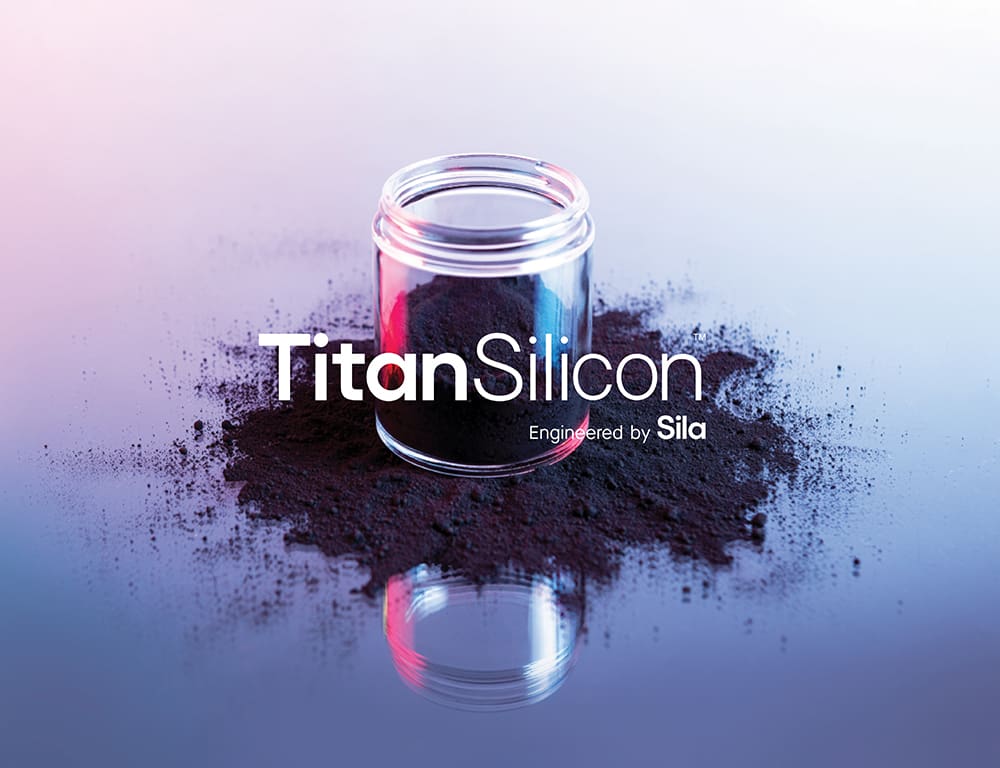
Sila’s flagship technology, Titan Silicon, represents a significant leap forward in battery chemistry. Traditional lithium-ion batteries predominantly use graphite as the anode material. However, silicon-carbon composite anodes, like Titan Silicon, offer substantially higher energy density.
This increased energy density translates into batteries that can store more power in a smaller, lighter package. For applications ranging from electric vehicles requiring longer ranges to drones demanding extended flight times and enhanced payloads, the adoption of advanced silicon anodes is transformative. The expansion of US battery anode manufacturing for such materials is crucial for broader technological progress.
The investment will also specifically advance Sila’s Si/C anode technology, further optimizing its performance and production efficiency. This continuous innovation is vital for staying ahead in the competitive global battery market.
Outlook: A New Era for American Manufacturing
The infusion of $1.4 billion into Sila’s operations is poised to usher in a new era for US battery anode manufacturing. By expanding domestic production capabilities for crucial battery components, the United States is taking concrete steps towards achieving greater energy independence, fostering economic growth, and strengthening its position as a global leader in advanced technology.
This strategic investment not only supports Sila’s growth but also lays foundational groundwork for a more resilient and innovative supply chain across the electric vehicle, clean energy, and defense sectors. As the world transitions towards more sustainable and electrified solutions, the ability to manufacture these core technologies at home will be an invaluable asset.
Source: Sila Nanotechnologies
Frequently Asked Questions (FAQ)
What is Sila’s core technology?
Sila develops advanced battery anode technology, specifically silicon-carbon (Si/C) composite anodes. Their flagship product, Titan Silicon, is designed to significantly increase the energy density of lithium-ion batteries compared to traditional graphite anodes.
What is the purpose of the $1.4 billion loan commitment?
The loan commitment will fund the expansion of Sila’s Si/C anode manufacturing capacity at its Moses Lake, Washington, plant. It will also support the creation of a new lithium-ion battery cell manufacturing facility for high-performance specialty applications.
Which government entity provided the loan?
The conditional loan commitment of up to $1.4 billion was provided by the US Defense Department’s Office of Strategic Capital (OSC). This underscores the strategic importance of Sila’s technology for national interests.
What kind of applications will the new battery cell facility support?
The new battery cell manufacturing facility will produce cells for specialty applications requiring high performance. These include industrial drones, agricultural drones, and military drones, ensuring a domestic supply for critical sectors.
Why is domestic manufacturing of battery anodes important?
Domestic manufacturing of battery anodes, as highlighted by Sila’s CEO, is crucial for achieving technology sovereignty and supply chain security. It reduces reliance on foreign sources for essential components, safeguarding critical technology sectors and enhancing national resilience.
Has Sila received other significant funding recently?
Yes, prior to the OSC loan commitment, Sila secured a $300 million equity funding round. This round was led by prominent investment firms Sutter Hill Ventures and Atreides Management, demonstrating strong investor confidence in the company.
What is the significance of silicon-carbon anodes for battery technology?
Silicon-carbon anodes are a next-generation material that can store significantly more lithium ions than traditional graphite anodes. This leads to higher energy density in batteries, enabling longer range for EVs and extended operational times for devices like drones.