
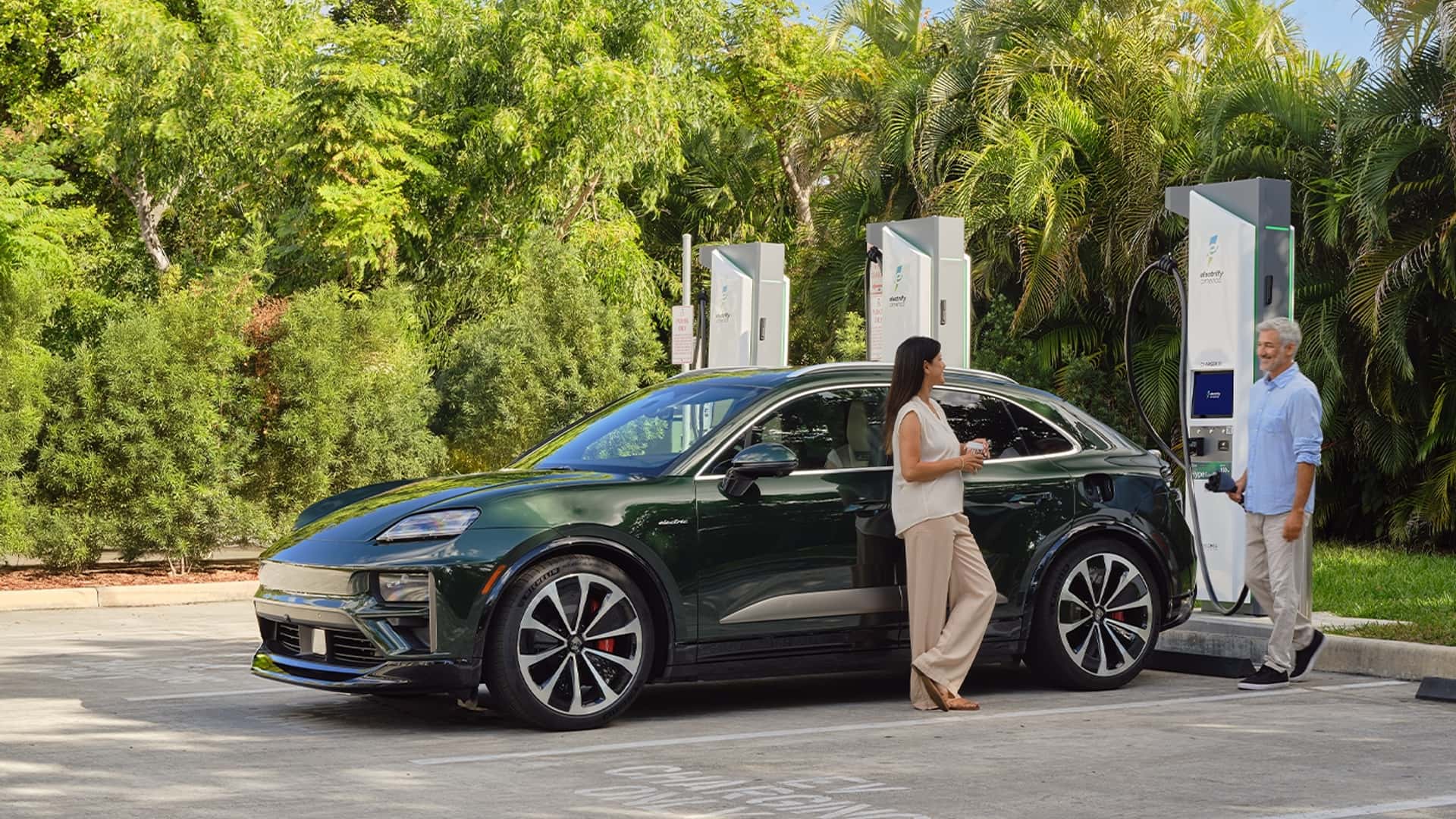
Orlando, Florida – Electrify America has officially commissioned its largest electric vehicle (EV) fast charging station to date, marking a significant expansion of the nation’s rapidly growing EV infrastructure. Located strategically in Orlando, the new facility features an impressive 24 individual stalls, each engineered to deliver a robust 350 kilowatts (kW) of power.
Key Takeaways:
- Electrify America’s new Orlando facility is its largest EV fast charging station, featuring 24 stalls.
- Each stall provides up to 350 kW of power, designed for rapid EV battery top-ups.
- The station is strategically positioned near major highways and popular tourist destinations in Florida.
- All charging stalls currently utilise CCS1 connectors, necessitating adapters for NACS-equipped EVs.
- This development underscores Florida’s crucial role as the second-largest EV market in the U.S.
The operational launch of this high-capacity hub on October 21 comes at a pivotal time for electric mobility, offering a substantial boost to charging options in a state experiencing rapid EV adoption. While the station boasts formidable charging capabilities, a key aspect for drivers to note is its exclusive reliance on CCS1 connectors across all stalls.
Strategic Location Enhances Accessibility for EV Drivers
The choice of Orlando for Electrify America’s flagship EV charging station is no coincidence. The facility is strategically situated near Interstate 4, a major artery connecting much of central Florida, and is in close proximity to major tourist attractions like Walt Disney World and Universal Studios.
Its location also benefits drivers heading to and from the Orlando International Airport, making it an ideal stop for both local residents requiring a quick charge and electric vehicle owners embarking on longer journeys or road trips.
This advantageous positioning ensures that the fast-charging services are accessible to a broad spectrum of EV users, from daily commuters to vacationers. The integration within the Sand Lake Corners South shopping center further enhances convenience, allowing drivers to utilise their charging time for dining or shopping.

Such amenities are becoming increasingly important, transforming charging stops from mere necessities into more integrated parts of a driver’s routine, thereby improving the overall electric vehicle charging experience.
Unpacking the Power: 350 kW Charging Capability
Each of the 24 stalls at the Orlando station is capable of delivering up to 350 kW of power. This high-power output represents the leading edge of current DC fast charging technology, designed to significantly reduce the time electric vehicles spend at charging stations.
For compatible EVs, a 350 kW charger can add hundreds of miles of range in as little as 15-20 minutes, depending on the vehicle’s battery capacity and charging acceptance rate. This level of rapid charging is crucial for alleviating range anxiety and making long-distance EV travel more feasible.
The sheer number of high-speed stalls at a single location also addresses concerns about charger availability, especially in high-traffic areas or during peak travel seasons. This density ensures that multiple vehicles can charge simultaneously, minimising wait times for drivers.
The advanced infrastructure at this Electrify America EV charging station is a testament to the ongoing evolution of electric vehicle support systems, aiming to match the refuelling speed and convenience of conventional petrol stations.
The Connector Conundrum: CCS1 Dominance and NACS Adaptation
Despite the station’s impressive scale and power, a significant detail for many electric vehicle owners is the exclusive provision of CCS1 connectors across all 24 stalls. This design choice highlights the current fragmentation within the EV charging standards landscape in the United States.
While CCS1 has been a prevalent standard for many non-Tesla EVs, the industry has recently witnessed a notable shift towards the North American Charging Standard (NACS). This movement gained substantial momentum after Tesla opened its extensive Supercharger charging network in the U.S., which exclusively uses NACS plugs, to competing EV manufacturers.
Consequently, drivers of NACS-equipped EVs, including all Tesla and Rivian models sold in the United States, will need to possess a charging adapter to utilise the services at this new Electrify America EV charging station. This requirement extends to an increasing number of electric models from legacy automakers.
Prominent manufacturers such as General Motors, BMW, Stellantis, and Mercedes-Benz have already announced their plans to integrate the compact NACS connector into their future electric vehicle lineups. This transition signals a growing industry preference for a unified charging standard, potentially simplifying the charging experience for consumers in the long run.
The necessity for adapters at new, high-profile stations like the one in Orlando underscores the transitional phase the industry is currently navigating. It presents a temporary hurdle for a segment of EV drivers until a more universal standard or more versatile charging infrastructure becomes widespread.
Electrify America’s Vision for Large-Format Charging Stations
The Orlando facility is a prime example of Electrify America’s broader strategy to roll out what it terms “large-format stations.” This initiative, set in motion earlier this year, aims to establish charging hubs capable of accommodating at least 20 electric vehicles simultaneously, each offering up to 350 kW of power.
This strategy reflects a forward-looking approach to meet the burgeoning demands of the electric vehicle market, anticipating a future where a higher density of powerful charging options will be essential. The company has already implemented several such large-format sites in California, demonstrating its commitment to scaling up its network.
Notably, one of these California locations incorporates a 1.9-megawatt battery system, which plays a critical role in balancing the local power grid. Such advanced integrations highlight Electrify America’s focus not just on providing charging services but also on contributing to grid stability and energy management.
These large-format stations are designed to serve as cornerstones of the evolving electric vehicle charging infrastructure, providing reliability and accessibility across key regions. They are integral to Electrify America’s mission of accelerating electric vehicle adoption by addressing infrastructure concerns directly.
Florida: A Critical Hub for EV Expansion
The significant investment in Florida’s electric vehicle charging infrastructure is well-justified by the state’s leading position in the U.S. EV market. According to data from the Department of Energy’s Alternative Fuels Data Center, Florida ranks as the second-highest state in terms of registered electric vehicles, trailing only California.
This robust and rapidly expanding EV community makes Florida a pivotal state for companies like Electrify America looking to grow their footprint and support the transition to electric mobility. The presence of a substantial and engaged EV driver base provides a strong impetus for continued infrastructure development.
Anthony Lambkin, vice president of Operations at Electrify America, underscored this commitment, stating, “This new station in Orlando represents our continued commitment to bringing fast, reliable, and convenient charging to Florida. Florida’s EV community is growing fast, and we’re excited to keep growing with it.”
The company’s strategic focus on states with high EV penetration ensures that charging solutions are deployed where they are most needed, fostering an environment conducive to further electric vehicle adoption and sustained growth in the segment.
Frequently Asked Questions (FAQ)
What is the capacity of Electrify America’s new Orlando EV charging station?
The newly opened Electrify America station in Orlando features 24 individual fast charging stalls. Each of these stalls is capable of delivering up to 350 kilowatts of power, making it the company’s largest and most powerful station to date, designed for rapid electric vehicle top-ups.
Where is the new Electrify America EV charging station located?
The station is strategically located in Orlando, Florida, near Interstate 4. Its proximity to major tourist destinations like Walt Disney World and Universal Studios, as well as the Orlando International Airport, positions it as a convenient charging hub for both local and transient EV drivers.
What type of connectors does the Orlando EV charging station use?
All 24 charging stalls at Electrify America’s Orlando station are equipped with CCS1 connectors. This means that electric vehicles with NACS (North American Charging Standard) ports, such as Tesla and Rivian models, will require an adapter to charge at this specific location.
Why is the connector type important for EV drivers?
The connector type determines compatibility between an electric vehicle and a charging station. With an increasing number of automakers adopting the NACS standard, drivers of these vehicles need to be aware of the connector type available at charging stations to ensure they have the necessary adapter for charging.
Which electric vehicles might require an adapter at this station?
EVs equipped with the NACS charging port, including all Tesla and Rivian models sold in the United States, will need an adapter. Additionally, new electric models from General Motors, BMW, Stellantis, and Mercedes-Benz, which are increasingly adopting NACS, will also require an adapter.
What is Electrify America’s ‘large-format stations’ strategy?
Electrify America’s ‘large-format stations’ strategy involves developing high-capacity charging hubs with at least 20 stalls, each offering up to 350 kW of power. This initiative aims to build robust infrastructure capable of serving a high volume of EVs simultaneously, enhancing network reliability and accessibility.
What is Florida’s significance in the U.S. EV market?
Florida is a crucial market for electric vehicles, ranking as the second-highest state in the United States for registered EVs, after California, according to the Department of Energy’s Alternative Fuels Data Center. This robust EV adoption rate makes it a priority state for charging infrastructure expansion.