
Key Takeaways (TL;DR)
- Electrify America, the second-largest DC fast charging network in the United States, has achieved a significant milestone, now operating over 6,000 high-powered charging ports.
- This expansion represents a 16% year-over-year increase in ports and a 10% rise in operational sites, underscoring steady development in the burgeoning electric vehicle market.
- Despite a competitive landscape with rivals like ChargePoint and new entrants such as Walmart, Electrify America maintains its prominent position as a key player in the non-Tesla EV fast charging network segment.
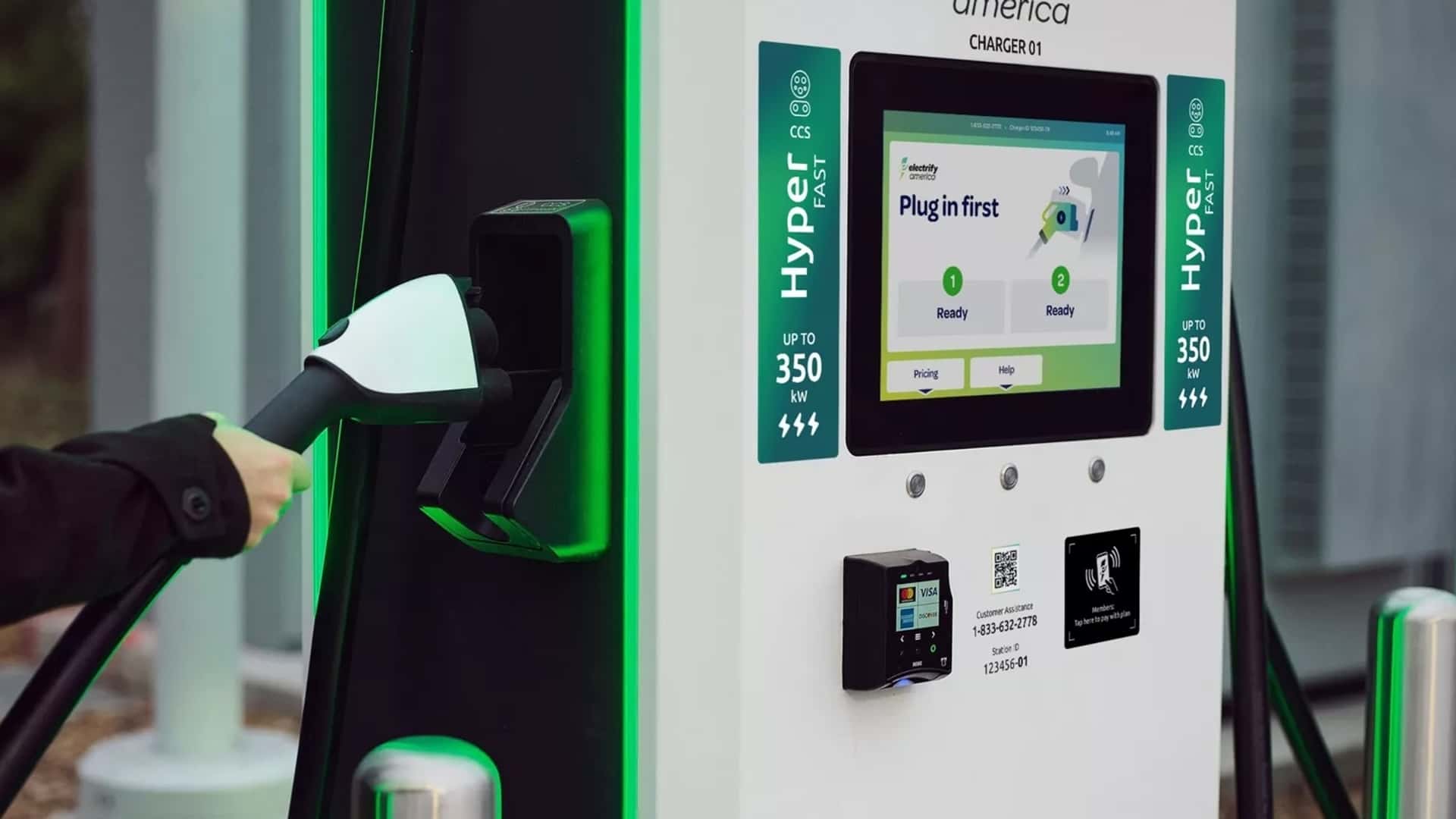
- The network predominantly offers 350 kW charging speeds and recently transitioned to a direct billing system, aiming to enhance user convenience and streamline the charging experience for electric vehicle drivers across the nation.
Electrify America’s Milestone: Over 6,000 Fast Charging Ports
Electrify America, a prominent name in the realm of electric vehicle (EV) infrastructure, has reached a significant operational milestone, now boasting over 6,000 high-powered charging ports across the United States. This achievement solidifies its position as the second-largest direct current (DC) fast charging network in the nation, surpassed only by Tesla’s proprietary Supercharger network.

The continuous expansion of Electrify America’s EV fast charging network arrives at a pivotal time, as the electric vehicle market experiences fluctuating growth. Despite a recent period of more subdued EV sales, the company has demonstrated a consistent commitment to building out critical charging infrastructure.
Understanding the Network’s Scale: Ports Versus Stalls
As per data from the Department of Energy’s Alternative Fuels Data Center (AFDC), Electrify America now operates 6,029 fast charging ports distributed across 1,191 distinct charging sites nationwide. This metric of ‘ports’ requires a nuanced understanding within the context of EV charging infrastructure.
A ‘port’ refers to a specific connector that can deliver power to an electric vehicle. It is distinct from an individual ‘stall’ or ‘charger.’ For instance, many Electrify America stations feature stalls equipped with two ports and four connectors, such as the Wawa-branded Alpitronic chargers recently deployed in Pennsylvania.

In such configurations, each port typically offers both CCS1 and NACS (North American Charging Standard) connectors, catering to a wider range of EV models. However, it is important to note that while a single stall may have multiple connectors, only two electric vehicles can often charge simultaneously from the same physical stall, optimizing power delivery and minimizing queue times.
Growth Trajectory and Market Position
Over the past year, Electrify America has demonstrated a robust expansion strategy. The total number of charging ports within its network has surged by 16%, while the count of operational stations has increased by approximately 10%.
This steady pace of development is crucial for supporting the growing fleet of electric vehicles on American roads. According to analysis by EV Charging Stations, such consistent growth ensures that the EV fast charging network can meet increasing demand, thereby alleviating range anxiety for EV owners.
In the competitive landscape of Q2 market statistics, Electrify America held a 6.7% share of the total DC fast charging ports in the U.S., adding 202 new ports during that quarter, as reported by industry observer Paren. This demonstrates a focused effort on strategic deployment rather than rapid, unfettered expansion.
The Competitive Landscape in EV Fast Charging
The U.S. EV fast charging network ecosystem is dynamic, characterized by several key players vying for market dominance. While Electrify America holds a strong second position, other operators are aggressively expanding their footprints and introducing innovative solutions.
The overall market for public charging infrastructure remains crucial for the widespread adoption of electric vehicles. A robust and reliable network of charging stations is often cited as a primary factor influencing consumer decisions regarding EV purchases.
ChargePoint’s Expanding Footprint
ChargePoint stands as the third-largest fast charging operator in the country. In the second quarter alone, the company significantly ramped up its efforts, deploying 333 new ports. This assertive expansion has contributed to ChargePoint’s impressive all-time market share of 6.1% of DC fast charging ports.
ChargePoint’s strategy often involves partnerships with various businesses and municipalities, allowing for a diverse range of deployment locations. Their growth signifies a healthy competition that ultimately benefits EV drivers through increased access to charging options.
Walmart’s Ambitious Entry
A notable emerging player in the EV fast charging network arena is Walmart. In Q2, Walmart’s nascent charging network installed more ports than any other non-Tesla company, signaling its serious intent in the sector. While its overall footprint remains comparatively small with 110 stations and 916 charging ports, its growth trajectory is exceptionally rapid.
Walmart has announced ambitious plans to install thousands of 400-kilowatt stalls by 2030. This initiative leverages the company’s vast real estate portfolio and high-traffic store locations, promising convenient charging solutions integrated into consumers’ daily routines.
The Broader Ecosystem
Beyond these leading players, the EV fast charging network landscape includes other significant contributors like EVgo, Shell Recharge, and numerous regional providers. Each network plays a vital role in addressing the diverse charging needs of the growing electric vehicle population, from urban centers to remote highway corridors.
The collective efforts of these companies, alongside government incentives and standardization initiatives, are propelling the development of a comprehensive and accessible charging infrastructure across the nation.
Technological Edge: High-Powered Charging
Electrify America distinguishes itself by prioritizing high-powered chargers across its network. The majority of its charging stalls are capable of delivering 350 kilowatts (kW) of power, enabling exceptionally rapid charging sessions for compatible electric vehicles.
This high-power capability allows many modern EVs to replenish a substantial portion of their battery charge in as little as 15-30 minutes, significantly reducing travel times for long-distance journeys. In addition to 350 kW chargers, the network also operates a selection of 150 kW and some advanced 400 kW chargers, as tracked by DCFC Tracker, providing flexibility and catering to various vehicle capabilities.
The deployment of these powerful units is critical for improving the overall charging experience, ensuring that EV drivers can spend less time waiting and more time on the road. It also helps future-proof the network as EV battery technology continues to advance, enabling faster charging rates.
Enhancing User Experience: Streamlined Billing
In a move aimed at simplifying the customer experience, Electrify America recently overhauled its billing system. The company has moved away from the previous model of requiring customers to maintain account balances for charging sessions. Instead, it has transitioned to a direct billing approach.
Under this new system, each charging session is billed automatically and directly to the user’s preferred payment method, eliminating the need for pre-loading funds or managing a separate account balance. This change mirrors trends in other consumer services, prioritizing convenience and ease of use for the growing demographic of EV owners.
The direct billing method is expected to reduce friction points for users, making the process of charging an electric vehicle more intuitive and seamless. This focus on user convenience is a key factor in encouraging greater adoption and satisfaction within the electric vehicle community.
The Road Ahead for EV Infrastructure
The continued growth of the EV fast charging network, exemplified by Electrify America’s latest milestone, is a testament to the ongoing evolution of electric vehicle infrastructure. As EV adoption accelerates, the demand for reliable, accessible, and fast charging solutions will only intensify.
Future developments in the sector are likely to include further standardization of charging connectors, such as the increasing adoption of the NACS standard by various automakers. Additionally, innovations in battery technology and grid management will play a crucial role in shaping the efficiency and sustainability of charging networks.
Strategic partnerships, government investment, and a continued focus on user experience will be paramount in overcoming challenges related to reliability and accessibility, ultimately paving the way for a more electrified transportation future. Electrify America’s steadfast expansion underscores the critical investments being made to support this transformation.
FAQs About EV Fast Charging Networks
What is Electrify America’s primary role in the EV charging ecosystem?
Electrify America’s primary role is to develop and operate a robust DC fast charging network for electric vehicles across the United States. Established from the Volkswagen Dieselgate settlement, its mission is to accelerate EV adoption by providing accessible, high-powered charging solutions, making long-distance EV travel feasible and convenient for a wide range of non-Tesla electric vehicles.
How does Electrify America’s network compare to Tesla’s Supercharger network?
Electrify America is the second-largest DC fast charging network in the U.S., after Tesla’s Supercharger network. While Tesla’s network historically catered exclusively to Tesla vehicles, Electrify America supports various EV brands through CCS1 and increasingly NACS connectors. Both offer high-speed charging, but Electrify America focuses on multi-brand compatibility for its public EV fast charging network.
What is the difference between a ‘charging port’ and a ‘charging station’?
A ‘charging station’ refers to the physical location or site where EV charging equipment is installed. A ‘charging port’ is the individual connector on a charger that an electric vehicle plugs into. One charging station can have multiple chargers, and each charger can have one or more ports. Electrify America often features stations with multiple ports per stall, increasing capacity.
What charging speeds does Electrify America typically offer?
Electrify America is known for its high-powered charging capabilities. The majority of its network consists of 350 kW DC fast chargers, which can add significant range in a short amount of time for compatible vehicles. It also operates 150 kW chargers and a limited number of 400 kW units, providing flexible options for various EV models and their charging needs.
How has Electrify America improved the payment process for users?
Electrify America recently transitioned to a direct billing system. This means users no longer need to maintain an account balance for charging sessions. Instead, each session is automatically billed directly to their preferred payment method, simplifying the process and enhancing user convenience. This streamlined approach aims to make the EV fast charging network more user-friendly and accessible.
What are the future prospects for the EV fast charging network in the U.S.?
The future of the U.S. EV fast charging network looks promising, driven by continuous expansion from operators like Electrify America, increased government investment, and evolving standardization efforts. We can expect more widespread availability, enhanced reliability, higher charging speeds, and a more seamless user experience as technology and infrastructure mature to support accelerating electric vehicle adoption nationwide.