
Key Takeaways
- SpaceX received a ‘CCC’ ESG rating from MSCI, its lowest possible score, placing it on par with high-risk nations.
- Elon Musk responded sharply, stating that ‘electric rockets are impossible’ for launch from Earth, highlighting a fundamental engineering constraint.
- The assessment cited concerns over rocket emissions, operational impacts, and governance issues like Musk’s concentrated control.
- While electric propulsion is effective in space for satellite maneuvering, it lacks the immense thrust needed for Earth-to-orbit launch.
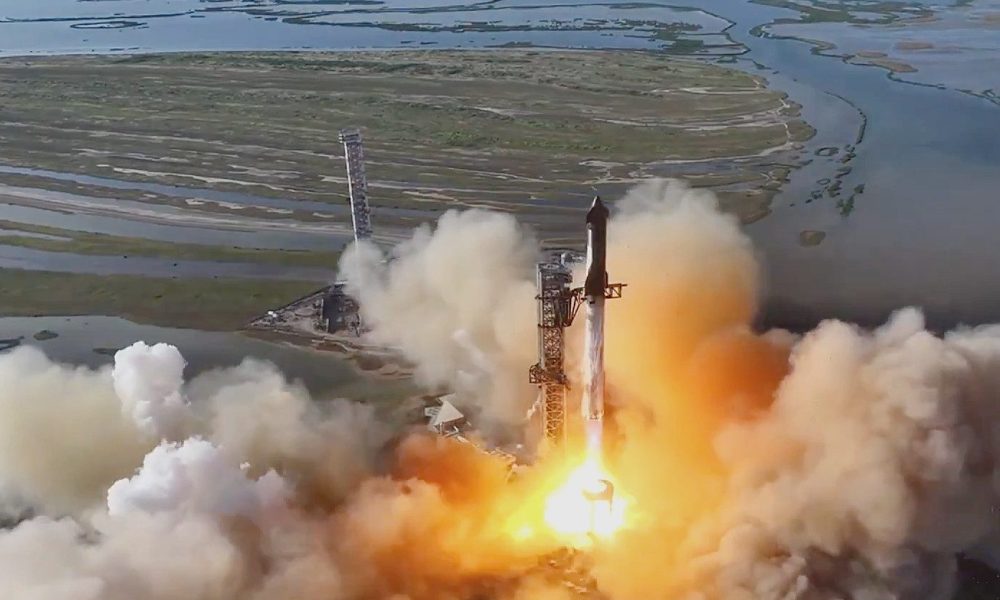
- SpaceX mitigates environmental impact through extensive rocket reusability and Starship’s focus on methane propellant and rapid reflight.
- Musk has previously criticized ESG metrics as potentially penalizing essential industries without practical alternatives.
SpaceX, the ambitious aerospace company led by Elon Musk, recently received its lowest possible Environmental, Social, and Governance (ESG) rating of ‘CCC’ from MSCI, a leading provider of critical decision support tools. This assessment, issued just last week, placed the company on a sustainability par with nations like Russia and highlighted significant risks across its environmental, social, and governance pillars.

In a characteristic and blunt reply on X on June 21, 2026, SpaceX frontman Elon Musk directly addressed the environmental component of the rating, stating: “Unfortunately, electric rockets are impossible.” His comment underscored a core physical constraint that ESG frameworks sometimes overlook when evaluating high-thrust industries critical for space access.
Understanding SpaceX’s ESG Assessment
MSCI’s ‘CCC’ rating for SpaceX, coinciding closely with the company’s public market debut, signals considerable exposure to environmental and social risks, coupled with governance concerns. The assessment specifically flagged the company’s reliance on chemical propulsion, leading to rocket emissions and other operational environmental impacts inherent in frequent launch activities.
Beyond environmental factors, MSCI also cited governance concerns. These included the concentrated control by Elon Musk and perceived limitations in shareholder protections, elements that can influence a company’s long-term stability and ethical practices according to ESG sustainability metrics.

Elon Musk’s Stance on ESG Metrics
Elon Musk’s recent comment on electric rockets is not his first critique of ESG frameworks. He has previously called ESG a “scam,” particularly after his electric vehicle company, Tesla, was removed from the S&P 500 ESG index. These statements reflect a broader sentiment among some industry leaders and investors who argue that current ESG metrics can sometimes penalize essential activities in sectors where practical, sustainable alternatives are not yet technologically feasible, potentially stifling innovation rather than encouraging it.
The Fundamental Challenge of Electric Rockets for Launch
Musk’s assertion that electric rockets are impossible directly targets the engineering realities of launching payloads from Earth’s surface. While electric propulsion systems do exist and are widely utilized in space, their operational principles differ fundamentally from what is required for atmospheric ascent.
Electric Propulsion in Space
Electric propulsion systems, such as ion thrusters and Hall-effect thrusters, are highly efficient for in-space maneuvers. These systems accelerate ionized propellants, typically xenon or krypton, using electric fields. They achieve very high specific impulse—a measure of propulsion system efficiency—often exceeding 3,000 seconds, significantly higher than the roughly 300–450 seconds typical for chemical rockets.
This superior efficiency makes electric propulsion ideal for tasks like satellite station-keeping, orbit raising, and deep-space missions. In these applications, continuous low thrust over extended durations is sufficient to achieve desired velocity changes. SpaceX’s own Starlink satellites, for instance, employ electric propulsion for precise orbital adjustments and deorbiting.
The Thrust Requirement for Earth Launch
However, launching from Earth’s surface presents an entirely different set of physics challenges. Overcoming Earth’s gravity and atmospheric drag requires enormous thrust, delivered rapidly and consistently. An orbital-class booster must generate thrust far exceeding its own weight, often in the millions of Newtons, within seconds of liftoff.
Chemical rockets achieve this through the exothermic combustion of dense propellants, producing a high-mass-flow, high-velocity exhaust. This process generates the massive kinetic energy needed to accelerate a vehicle to orbital velocities. The high energy density of chemical propellants is currently unparalleled for this purpose.
Why Electric Launch is Infeasible
Electric propulsion systems, by contrast, expel very small amounts of mass at extremely high speeds. While efficient, the sheer quantity of mass flow required to generate equivalent launch thrust would necessitate impractical onboard power levels. This would, in turn, demand massive energy storage or generation systems, adding prohibitive mass to the rocket itself.
The current state of technology for energy storage (batteries) or generation (solar panels, nuclear reactors) cannot provide the sustained power output or density required for a terrestrial launch vehicle without making it too heavy to ever leave the ground. As Musk has previously noted, this constraint is rooted in Newton’s third law of motion and the practicalities of energy delivery. The distinction is clear: electric propulsion excels once a vehicle is already in space, but it cannot replace the high-thrust chemical phase required to reach orbit from the ground with current or near-term technology.
SpaceX’s Mitigation Strategies for Environmental Impact
Despite the inherent environmental challenges of rocket launches and the low SpaceX ESG rating, the company has actively pursued strategies to mitigate its carbon footprint and broader environmental impact. These efforts primarily center on reusability and advanced propulsion systems.
Pioneering Rocket Reusability
SpaceX has revolutionized the aerospace industry by making orbital-class rocket boosters reusable. Falcon 9 boosters, for example, have completed more than 30 flights in some cases. This dramatically lowers the manufacturing burden and the associated emissions per kilogram delivered to orbit, significantly improving the environmental efficiency of space access.
Starship’s Sustainable Design
The company’s next-generation Starship system further emphasizes rapid and full reusability. Starship is designed to be completely reusable, including both its first and second stages. It also utilizes methane propellant, which, unlike kerosene-based fuels, can theoretically be produced via sustainable pathways, such as synthesizing it from atmospheric carbon dioxide and water using renewable energy. This approach holds the potential for closed-loop, carbon-neutral operations in the long term.
Balancing Technological Necessity with Sustainability Goals
The dialogue surrounding SpaceX’s ESG rating and Elon Musk’s comments highlights a critical ongoing debate: how to effectively balance the imperatives of technological advancement and space exploration with growing global sustainability goals. As humanity expands its presence in space for critical communications, scientific research, and future exploration, finding solutions that are both technologically feasible and environmentally responsible remains a central challenge.
While ESG frameworks will likely continue to evolve to better account for the unique characteristics of different industries, the fundamental limits of high-thrust electric launch propulsion are unlikely to change soon. The episode serves as a powerful reminder of the complex interplay between engineering realities, environmental stewardship, and the accelerating pace of innovation in the global aerospace sector.
Frequently Asked Questions (FAQs)
What is an ESG rating?
An ESG rating assesses a company’s performance and risk exposure in environmental, social, and governance factors. It helps investors understand a company’s non-financial risks and opportunities, which can impact its long-term sustainability and financial performance.
Why did SpaceX receive a ‘CCC’ ESG rating from MSCI?
SpaceX received its lowest possible ESG rating due to significant risks identified across environmental, social, and governance areas. Specific concerns included rocket emissions, operational environmental impacts, and governance issues such as concentrated control by Elon Musk and limited shareholder protections.
Why are electric rockets considered impossible for Earth launch?
Electric rockets are infeasible for Earth launch because they cannot generate the immense, rapid thrust required to overcome gravity and atmospheric drag. While efficient in space, electric propulsion systems expel very small amounts of mass, and generating launch-equivalent thrust would demand impractical power levels and prohibitive onboard mass.
Do electric propulsion systems exist and are they used in space?
Yes, electric propulsion systems like ion thrusters and Hall-effect thrusters are widely used in space. They are highly efficient for satellite station-keeping, orbit raising, and deep-space missions, where low thrust over long durations is sufficient, such as on SpaceX’s Starlink satellites.
What is specific impulse, and how does it relate to rocket efficiency?
Specific impulse is a measure of a rocket engine’s efficiency, indicating how effectively it uses propellant. Higher specific impulse means greater efficiency. Electric thrusters have very high specific impulse (over 3,000 seconds), but chemical rockets, with lower specific impulse (300-450 seconds), provide the high thrust needed for launch.
How does SpaceX address environmental impacts from its operations?
SpaceX mitigates environmental impacts primarily through rocket reusability, significantly reducing the manufacturing and emissions burden per launch. Additionally, its Starship system is designed for full reusability and uses methane propellant, which offers potential for sustainable, closed-loop production pathways.
What is Elon Musk’s broader view on ESG ratings?
Elon Musk has been a vocal critic of ESG ratings, previously calling them a “scam.” He argues that such metrics can unfairly penalize essential industries like space exploration or electric vehicle manufacturing when practical, sustainable alternatives for certain operations are not yet technologically mature.