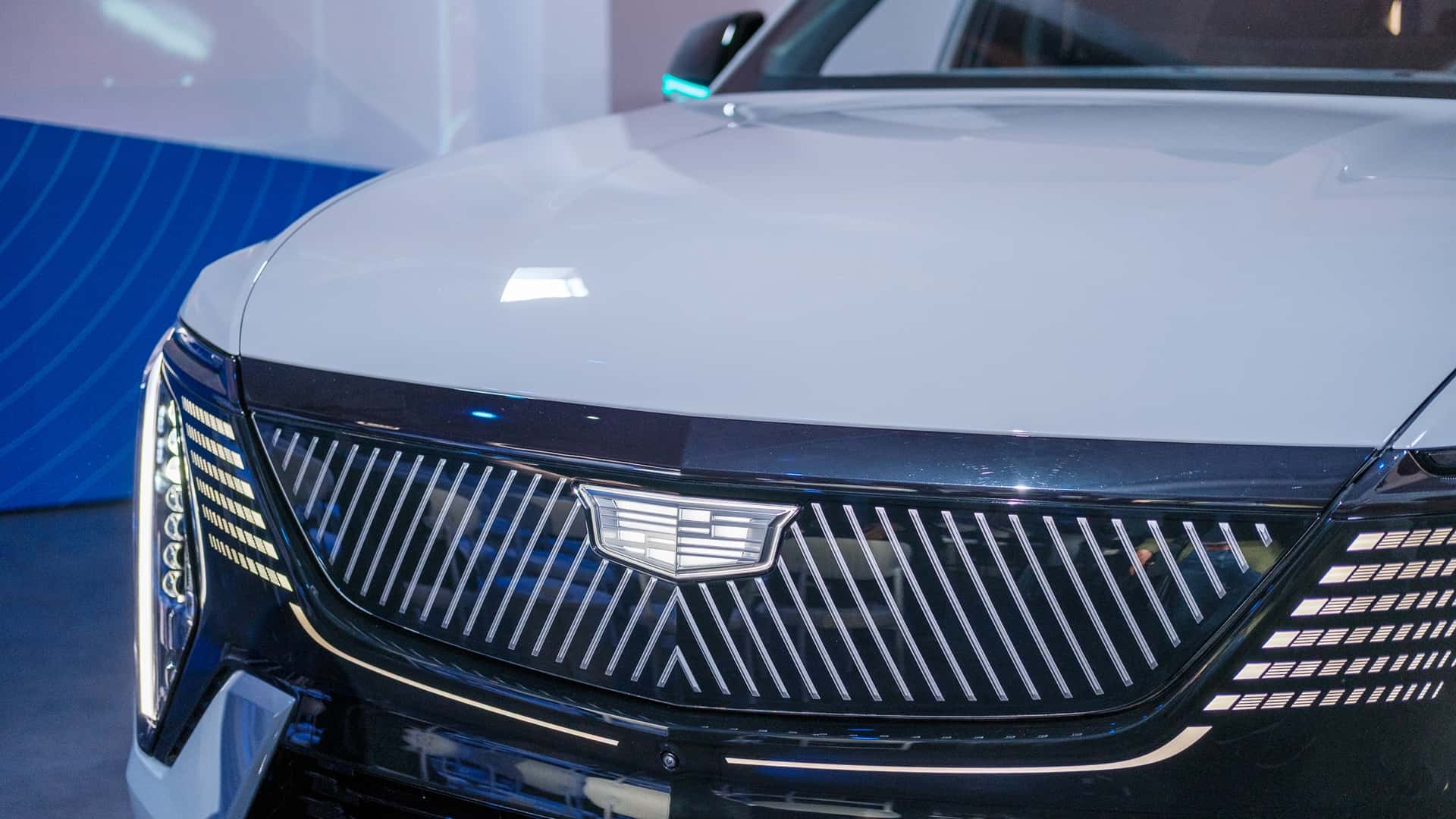
General Motors is poised for a significant evolution in its electric vehicle strategy, introducing a next-generation architecture that promises enhanced performance, advanced technology, and greater flexibility across its lineup. The upcoming 2028 Cadillac Escalade IQ is slated to be the first vehicle to showcase these advancements, featuring upgraded software, lidar for autonomous driving, and conversational AI.
Rethinking EV Platforms for Versatility
GM is moving beyond a singular, adaptable platform approach, opting instead for multiple architectures designed to better suit specific vehicle types and sizes. Alexander Doss, GM’s Vehicle Dynamics Performance Integration Engineer, explained to The Drive that the previous strategy, which relied on the ‘Ultium’ toolkit atop various architectures like the BEV3, presented packaging challenges. These challenges included large dashboard designs, potential efficiency limitations, and the absence of a front trunk (‘frunk’) in many models. The focus for the new architectures will be on optimizing “packaging and mass.”

Centralized Computing for a Software-Defined Future
In a move mirroring trends seen with manufacturers like BMW, GM is shifting towards a centralized computing architecture. This approach aims to reduce the number of Electronic Control Units (ECUs) by consolidating functions under a high-speed Ethernet backbone and fewer, more powerful central computers. This system will connect to simpler, localized “zonal” controllers that manage functions within specific areas of the vehicle. This redesign promises to decrease wiring complexity and cost, improve data transfer speed and efficiency, and facilitate easier software updates, which is crucial for the development of truly software-defined vehicles (SDVs).
Advancements in Battery Technology and Autonomous Driving
The next generation of GM EVs will also benefit from new battery technology developed in partnership with LG. These new prismatic cells will utilize an LMR chemistry, featuring higher manganese content and significantly less nickel compared to current NMC batteries. This is expected to boost range, particularly for larger trucks and SUVs, while maintaining comparable performance and longevity to existing packs, even in extreme temperatures.
The 2028 Cadillac Escalade IQ will introduce an enhanced version of Super Cruise, GM’s driver-assist system, which will allow for “eyes-off” driving capabilities. This upgrade integrates a forward-facing lidar sensor and more robust computing power. While the system will initially be restricted to specific highways and conditions, GM envisions a future where drivers can engage in activities like watching a movie while the vehicle handles the driving. The vehicle’s constant internet connectivity, enabled by the new architecture, is seen as a key enabler for these advanced autonomous functions and a more responsive user experience.