
As the automotive landscape in America shifts, a new generation of electrified vehicles is emerging to address consumer concerns about range and charging infrastructure. Extended-Range Electric Vehicles (EREVs), which combine an electric powertrain with a gasoline-powered generator, promise the advantages of electric cars without the typical anxieties associated with them. These vehicles are poised to arrive in significant numbers through 2026, 2027, and beyond.
How Extended-Range EVs Work
At their core, EREVs are electric vehicles. However, they incorporate a combustion engine that functions solely as a generator to recharge the battery. There is no direct mechanical link between the engine and the wheels. This setup allows drivers to benefit from electric propulsion for daily commutes, while the onboard generator can extend the vehicle’s range using gasoline. For those who prefer, EREVs can also be charged externally like conventional EVs.
While EREVs are not entirely new to the U.S. market, having seen models like the first-generation BMW i3 and Fisker Karma, the concept is gaining renewed traction among automakers. This resurgence appears to be a response to a market and regulatory environment that has proven less receptive to purely electric vehicles than initially anticipated.
Upcoming Extended-Range EV Models in the U.S.
Ram 1500 REV (Expected 2026)
Despite prior delays and a name change from the intended Ramcharger, the Ram 1500 REV is slated to be among the first next-generation EREVs available in the U.S. Production is anticipated to begin in the latter half of 2026, with the vehicle launching as a 2027 model. Parent company Stellantis opted to prioritize this extended-range version over an all-electric Ram 1500, a strategic move given the slower-than-expected sales of electric pickups.
The 2027 Ram 1500 REV will feature a substantial 92 kWh main battery pack. Its electric drive system comprises a 250 kW unit at the front and a 248 kW unit at the rear, delivering a combined output of 647 horsepower and 610 pound-feet of torque. With a full charge, the estimated electric range is 145 miles. This range extends to 690 miles with a full tank of gasoline, which fuels a 3.6-liter Pentastar V-6 engine that powers a 130 kW generator. The truck also includes a CCS-1 fast-charging port capable of accepting up to 145 kW, adding approximately 50 miles of range in 10 minutes. Pricing is yet to be announced but is expected to exceed that of conventional gasoline models.

Scout Motors Terra and Traveler (Expected 2027)
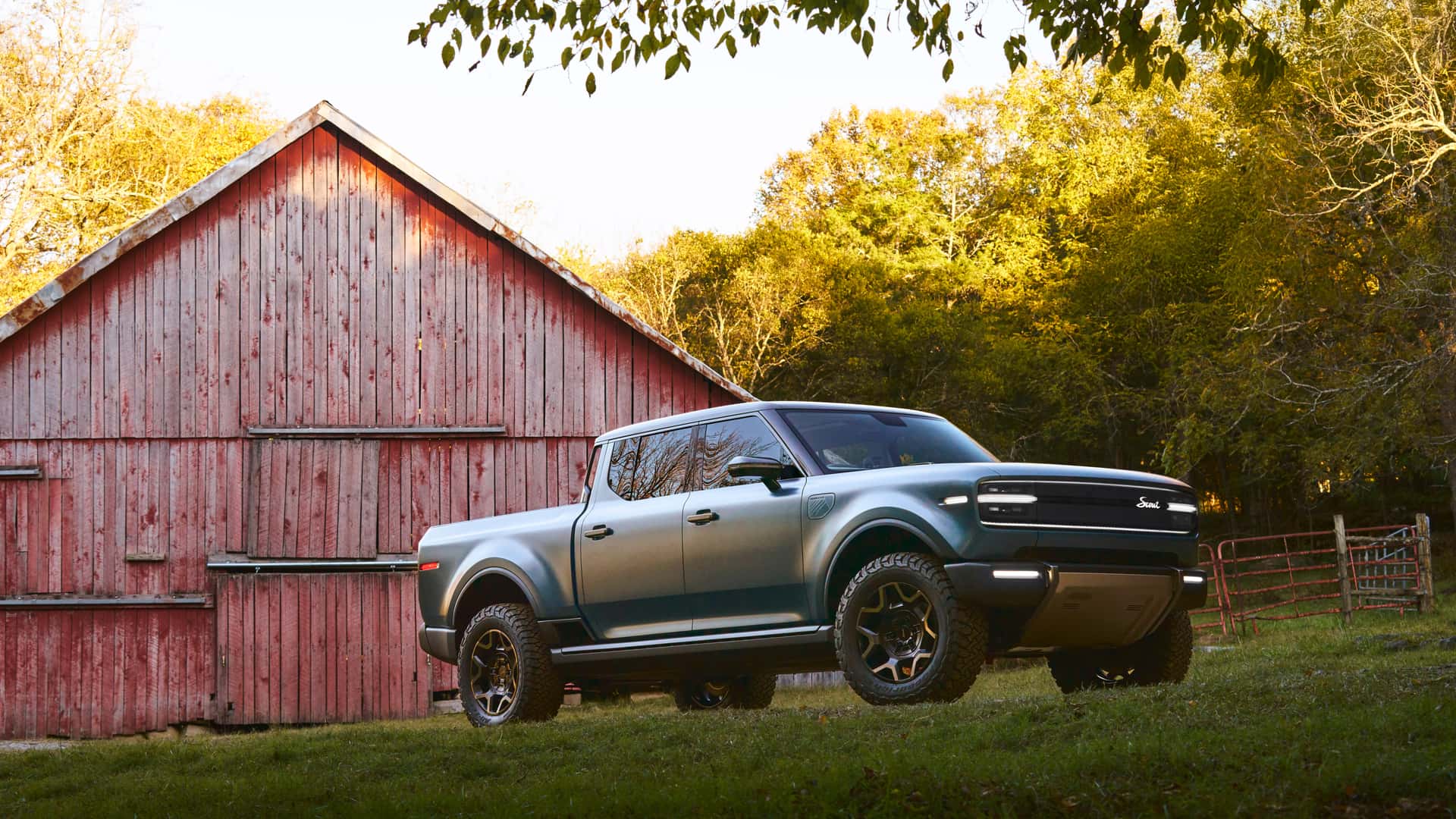
Scout Motors is preparing to launch its EREV pickup, the Terra, and SUV, the Traveler, from a new factory in South Carolina by the end of next year. These models draw inspiration from the classic International Harvester Scout vehicles but incorporate modern technology. Developed and built in the U.S., they aim to appeal to buyers seeking more than just a work vehicle.
The EREV variants will be equipped with a 63 kWh lithium-iron phosphate (LFP) battery, providing an all-electric range of around 150 miles. An additional 500 miles of range will be available through a naturally aspirated four-cylinder gasoline engine acting as a generator, located near the rear axle. Scout will also offer all-electric versions with a larger 120-130 kWh battery for an estimated 350-mile range. Notably, approximately 85% of Scout reservation holders have opted for the EREV versions, indicating strong market interest. Pricing for Scout vehicles is expected to start under $60,000, though it remains unclear if this applies to the EREV or EV configuration.
Jeep Grand Wagoneer (Expected 2026)
Stellantis will also equip the recently updated Jeep Grand Wagoneer with the same extended-range powertrain found in the Ram 1500 REV. Jeep has indicated this model may be the first EREV to reach the market. It will feature a 92 kWh battery powering front and rear electric motors, producing a combined 647 hp and 620 lb-ft of torque, enabling a 0-60 mph time of five seconds. While specific all-electric range figures are not yet available, Jeep states the combined electric and gasoline range will exceed 500 miles. The system utilizes the same 3.6-liter Pentastar V-6 engine as a generator. Pricing details are still forthcoming.
Hyundai and Genesis SUVs (Expected 2027)
Hyundai plans to introduce its first EREV models in the U.S. by the end of 2026, with sales commencing in early 2027. Initially, this technology will be featured in a Hyundai SUV and a Genesis SUV. According to Hyundai Motor President and CEO Jae Hoon Chang, the company has developed a unique powertrain enabling four-wheel drive with dual motors. The operation is electric-only, with the engine serving solely to charge the battery. The system comprises an MG1 unit for the front drive and generator, and an MG2 unit for the rear drive, powered by the battery. The gasoline engine will charge the battery, which will also support external charging.
Hyundai is targeting a total range of over 560 miles on a full battery and tank. Pricing for these models has not been announced, but Hyundai suggests they will be more affordable than comparable EV counterparts. The Genesis version is expected to be positioned as a more premium offering, with a combined production target of 80,000 units annually in the U.S. for both the Hyundai and Genesis EREV SUVs.
Ford F-150 Lightning EREV (Timing Unknown)
Although the all-electric Ford F-150 Lightning has ceased production, it is expected to return as an extended-range EV. Ford aims to offer a range exceeding 700 miles, specifically addressing towing capabilities for longer journeys. While details are scarce, this new EREV will effectively replace the canceled Project T3, which was originally slated for a 2028 launch. This gas-assisted truck is anticipated to provide enhanced long-distance towing performance compared to its predecessor.
Kia EREV (Timing Unknown)
Kia, part of the Hyundai Motor Group, is also reportedly developing an EREV system. Company president and CEO Ho Sung Song indicated last year that a 2.5-liter gasoline engine, also used in future hybrid powertrains, would form the basis of this EREV system. Reports from South Korea suggest the Telluride SUV could be the first Kia model to feature this extended-range technology, though specific vehicle applications are not yet confirmed.
Honorable Mentions
Nissan Rogue e-Power (Expected 2027)
The next-generation Nissan Rogue is anticipated to feature an updated version of the automaker’s e-Power system, which functions similarly to an EREV. Key differences include a smaller 2-4 kWh battery that cannot be externally charged. The system uses a gasoline engine to power a generator, with electric motors providing propulsion. The U.S.-spec Rogue is expected to adopt the setup from the European Nissan Qashqai, which uses a 1.5-liter three-cylinder engine feeding a 2.1-kWh battery, powering a 202-horsepower electric motor. All-wheel drive is expected for the Rogue.
Volvo’s Next-Generation Plug-In Hybrids (Timing Unknown)
Volvo is developing new plug-in hybrid (PHEV) models that are expected to offer approximately 100 miles of electric range, double the current offerings. While Volvo describes these as functioning like EREVs, they differ in that the gasoline engine can also directly drive the wheels, unlike true EREVs. This dual capability aims to optimize efficiency by using electric motors for most driving and the gasoline engine for direct power delivery at higher speeds.
BMW X5 & 7-Series EREV (Unconfirmed)
Following the pioneering role of the original BMW i3 REx, reports suggest BMW is considering EREV powertrains for larger, premium vehicles such as the X5 SUV and 7-Series sedan. This move would reintroduce extended-range technology to BMW’s lineup.
Audi SUV (Unconfirmed)
German publication Automobilwoche reported that Audi is developing an EREV SUV for the U.S. market, potentially utilizing the same platform as Scout Motors’ vehicles. As both brands are under the Volkswagen Group umbrella, Scout’s manufacturing facilities could potentially accommodate other VW Group vehicles.
Lotus Eletre PHEV (Unconfirmed)
While Lotus is transitioning to zero-emission vehicles, a plug-in hybrid version of its Eletre SUV, which can function as an EREV, is available in China. This model, part of the Geely group, shares technology with other Geely brands. The Eletre PHEV, scheduled for release in China in the latter half of 2026, features a 70 kWh battery, dual electric motors, and a 2.0-liter gasoline engine that can act as a generator or directly power the front wheels, producing a combined 982 hp. Availability in the U.S. remains uncertain.
This list will be updated as new EREV models are announced and further details become available.