
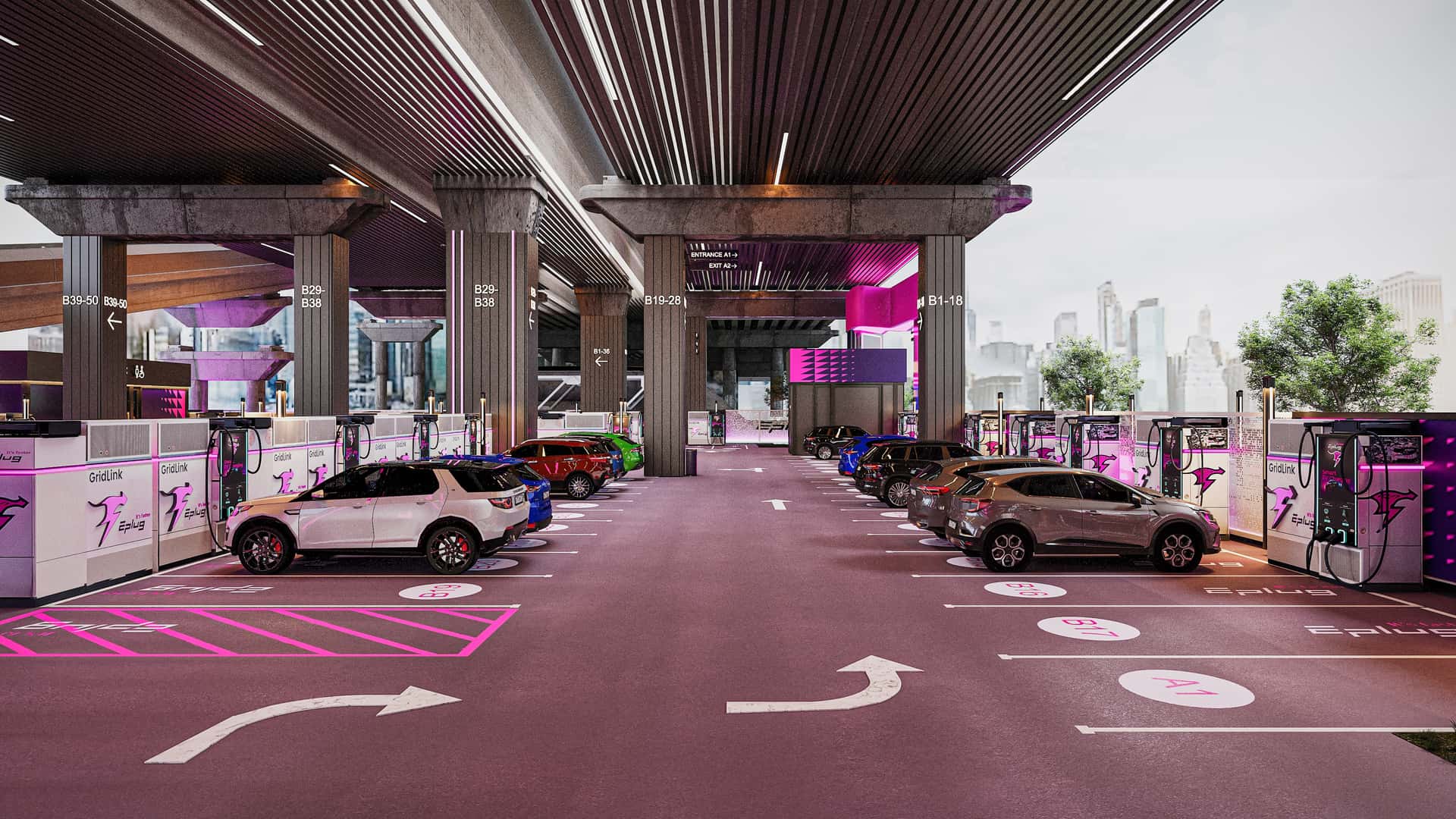
New York City is set to welcome a significant expansion in its electric vehicle (EV) charging infrastructure with the upcoming launch of a large-scale charging hub powered by lithium-ion batteries. This innovative approach aims to alleviate the economic pressures associated with charging EVs, particularly during peak hours.
Revolutionary EV Charging Station Planned for Brooklyn
The joint venture between German EV charging company XCharge and New York-based contractor Energy Plus will introduce what is anticipated to be the largest battery-powered EV charging hub on the East Coast. Located in Brooklyn’s Williamsburg neighborhood, the facility is scheduled to become operational in the second quarter of this year. It will feature 44 charging stalls, accommodating a total of 88 parking spaces.

High-Power Charging with Enhanced Grid Support
Each charger at the new hub will be capable of delivering up to 300 kilowatts (kW) of power, surpassing the capacity of many current charging stations. However, the defining feature of this facility is its reliance on on-site battery storage. Unlike conventional charging stations that draw power directly from the grid in real-time, this hub utilizes large lithium-ion battery containers. This system allows the facility to charge its batteries during off-peak hours, when electricity rates are lower, and then supply that stored energy to EVs as needed.
Innovative GridLink Technology
XCharge’s proprietary GridLink technology integrates the battery storage and charging units into a single, self-contained system for each charging stall. According to Aatish Patel, co-founder and president of XCharge North America, this design offers substantial benefits. “GridLink puts less strain on the grid during peak demand hours because it has stored energy from off-peak times,” Patel stated.
The 44 GridLink chargers will collectively offer up to 9.46 megawatt-hours (MWh) of electricity. Each unit contains 215 kilowatt-hours (kWh) of battery storage, enough to fully charge approximately 126 EVs, assuming an average battery pack size of 75 kWh.

Potential for Reduced Charging Costs
This battery-backed infrastructure holds the potential to significantly impact charging costs for EV drivers. Public fast-charging prices in major urban centers can be substantial, especially during peak hours, sometimes even exceeding the cost of gasoline. By leveraging stored, off-peak electricity, the XCharge hub could offer charging services at more competitive rates, potentially attracting price-sensitive consumers and the growing number of rideshare drivers who have transitioned to electric vehicles.
The GridLink units also support bidirectional charging, enabling them to send power back to the grid during emergencies. This capability positions the chargers as stationary energy storage systems, a technology increasingly being adopted to help manage electricity demand from various sources, including energy-intensive data centers.
As the adoption of electric vehicles continues to evolve, advancements in charging infrastructure like this Brooklyn hub are crucial for ensuring the grid’s readiness to support future demand, regardless of fluctuations in EV sales.