
Key Takeaways
- A pioneering off-grid electric vehicle charging station, powered entirely by solar energy, has commenced operations on the iconic Route 66 in Barstow, California.
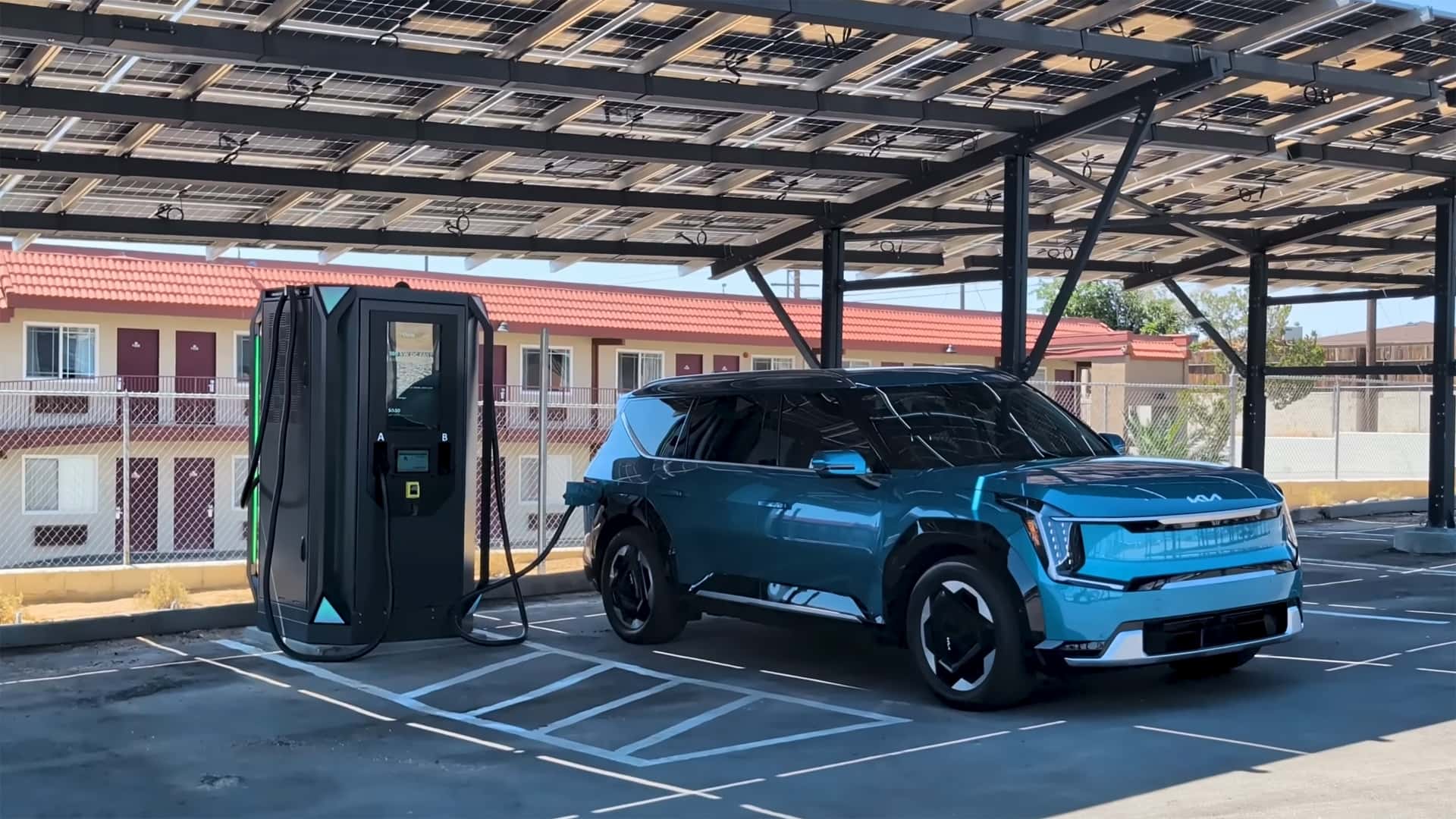
- Developed by startup Coral Charge, this facility boasts approximately 600 solar panels and three DC fast chargers, capable of simultaneously recharging up to six electric cars.
- Each charging dispenser incorporates substantial battery storage, providing up to 140 kilowatt-hours of energy to ensure continuous service, even after sunset.
- The station offers competitive pricing at $0.50 per kWh plus a $1 session fee, undercutting many grid-reliant competitors in the vicinity.
- Its unique off-grid design allows for significantly faster deployment, taking roughly eight weeks compared to the typical 50 weeks for conventional grid-connected stations in California, largely due to bypassing lengthy utility permit processes.
In a significant stride towards sustainable transportation and energy independence, an innovative off-grid electric vehicle charging station has officially opened its doors on the legendary Route 66 in Barstow, California. This solar-powered facility, a brainchild of the emerging startup Coral Charge, marks a pivotal development in the evolving landscape of EV infrastructure, promising both environmental benefits and operational efficiencies.
The Barstow EV charging station represents Coral Charge’s largest deployment to date, tripling the capacity of its inaugural location in Needles, which opened last year. Positioned strategically along a vital transit corridor, the station aims to alleviate range anxiety for electric vehicle drivers traversing the vast expanses of the Mojave Desert.

Pioneering Sustainable Electric Vehicle Charging on Route 66
The historic Route 66, long a symbol of American mobility, is now home to a beacon of future transportation. This new EV charging station distinguishes itself by operating entirely independently of the conventional power grid, relying solely on solar energy to power its operations.
This off-grid model addresses several critical challenges faced by the rapid expansion of electric vehicle charging infrastructure. It mitigates the need for costly and time-consuming grid connections and associated utility upgrades, which often represent significant barriers to development in remote or underserved areas.
Coral Charge’s Barstow Hub: A Closer Look
At the heart of Coral Charge’s Barstow installation lies an expansive array of approximately 600 solar panels. These panels are engineered not only to generate clean electricity but also to provide much-needed shade, a dual benefit particularly valuable in the harsh, sun-drenched environment of the Mojave Desert.

The station is equipped with three advanced DC fast chargers, manufactured by Turkey’s Imecar. These all-in-one dispensers are capable of simultaneously recharging up to six electric cars, offering substantial capacity for travellers.
Technical Specifications and Charging Capacity
Each Imecar dispenser is integrated with robust battery storage capabilities, holding up to 140 kilowatt-hours of energy. This built-in reserve ensures that the station can continue to deliver power during periods of low sunlight, such as cloudy days or throughout the night, guaranteeing uninterrupted service.
When combining its direct solar generation with the stored battery output, a single dispenser can supply up to 180 kilowatts to an electric vehicle. This power output is considered more than adequate by current industry standards, providing rapid charging for a wide range of modern EVs.
The station caters to a broad spectrum of electric vehicles, offering both CCS1 and NACS plugs. This inclusivity ensures that both older and newer EV models, including those from Tesla’s expanding network adopting the NACS standard, can utilise the facility seamlessly.
Economic Advantages and Operational Efficiency
One of the most compelling aspects of the Coral Charge facility in Barstow is its pricing structure. Electric vehicle drivers can charge their vehicles at a rate of $0.50 per kilowatt-hour, augmented by a flat $1 session fee. This pricing strategy positions the station as a cost-effective alternative compared to many non-Tesla chargers operating in the surrounding area.
The payment process at this EV charging station is streamlined for user convenience. Payments are handled directly through integrated card readers, eliminating the requirement for a dedicated smartphone application or complex subscription services. While the station itself does not offer amenities, several hotels and fast-food establishments are conveniently located nearby, serving the needs of travellers.
Streamlined Deployment: A Game-Changer for EV Infrastructure
Perhaps one of the most remarkable benefits of Coral Charge’s off-grid design is the dramatically accelerated deployment timeline. The startup asserts that it can install a new EV charging station in approximately eight weeks.
This rapid deployment cycle breaks down into four weeks for design, two weeks for physical installation, and an additional two weeks for commissioning. This contrasts sharply with the typical 50 weeks often required for the establishment of a new grid-reliant charging station in California.
The primary factor contributing to this expedited schedule is the elimination of the extensive utility permit process, which alone can consume as much as 36 weeks in California. By circumventing these bureaucratic bottlenecks, Coral Charge presents a scalable and efficient model for expanding crucial EV charging infrastructure across regions where grid connections are challenging or slow to establish.
Strategic Location in the Mojave Desert
The decision to locate the expanded EV charging station in Barstow, a key point on Route 66 within the Mojave Desert, is strategically sound. Deserts, with their abundant sunlight, offer ideal conditions for solar power generation, making off-grid solar solutions particularly viable and efficient in such environments.
Moreover, the inherent challenges of deploying traditional grid infrastructure in remote desert regions make an autonomous, solar-powered EV charging station an attractive and practical solution. It provides essential services where conventional options are scarce or prohibitively expensive to install.
The Future of Off-Grid Electric Vehicle Charging Solutions
The success and operational model of Coral Charge’s Barstow EV charging station offer a compelling blueprint for the future of electric mobility. As the adoption of electric vehicles continues to accelerate globally, the demand for robust, accessible, and sustainable charging infrastructure will only intensify.
Off-grid solutions like this, powered by renewable energy and featuring integrated battery storage, provide a resilient and environmentally friendly alternative to traditional charging networks. They pave the way for broader EV adoption by addressing critical infrastructure gaps and demonstrating a viable pathway to decentralised energy solutions.
This pioneering effort on Route 66 is not merely a local amenity; it stands as a testament to innovative engineering and a sustainable vision for the future of transportation, particularly in regions prone to grid constraints or high energy costs.
Frequently Asked Questions (FAQ)
What is unique about the Barstow EV charging station?
The Barstow EV charging station is unique because it operates entirely off-grid, powered by approximately 600 solar panels. It includes integrated battery storage, enabling it to provide continuous electric vehicle charging services even without a connection to the traditional power grid.
Where is this new EV charging station located?
This innovative electric vehicle charging station is situated in Barstow, California, along the historic Route 66. Its location in the Mojave Desert leverages abundant sunlight for solar power generation while serving a key travel corridor for electric vehicle drivers.
How many electric vehicles can it charge simultaneously?
The Coral Charge station in Barstow features three DC fast chargers, collectively capable of recharging up to six electric vehicles at the same time. This capacity helps reduce waiting times and enhances convenience for users.
What is the cost to charge an EV at this station?
Charging at this facility costs $0.50 per kilowatt-hour (kWh), in addition to a $1 session fee. This pricing strategy is designed to be competitive and generally more affordable than many other non-Tesla charging options in the region.
How is power maintained during the night or on cloudy days?
Each charging dispenser at the station has a built-in battery storage system, capable of holding up to 140 kilowatt-hours of energy. This stored power ensures that the EV charging station can operate continuously, providing service even when solar generation is low or non-existent.
How fast can this off-grid station be installed compared to traditional stations?
Coral Charge states that it can install a new off-grid EV charging station in approximately eight weeks. This is a significant improvement over the typical 50 weeks required for grid-reliant stations in California, largely due to bypassing lengthy utility permit processes that can take 36 weeks alone.
What types of charging plugs are available?
The Barstow EV charging station offers both CCS1 and NACS (North American Charging Standard) plugs. This ensures compatibility with a broad range of electric vehicles, catering to both existing EV models and those adopting newer charging standards.
Are there any amenities available at the charging station?
The EV charging station itself does not provide on-site amenities. However, its strategic location in Barstow means that several hotels and fast-food restaurants are conveniently located nearby, offering options for refreshments and rest during charging sessions.