
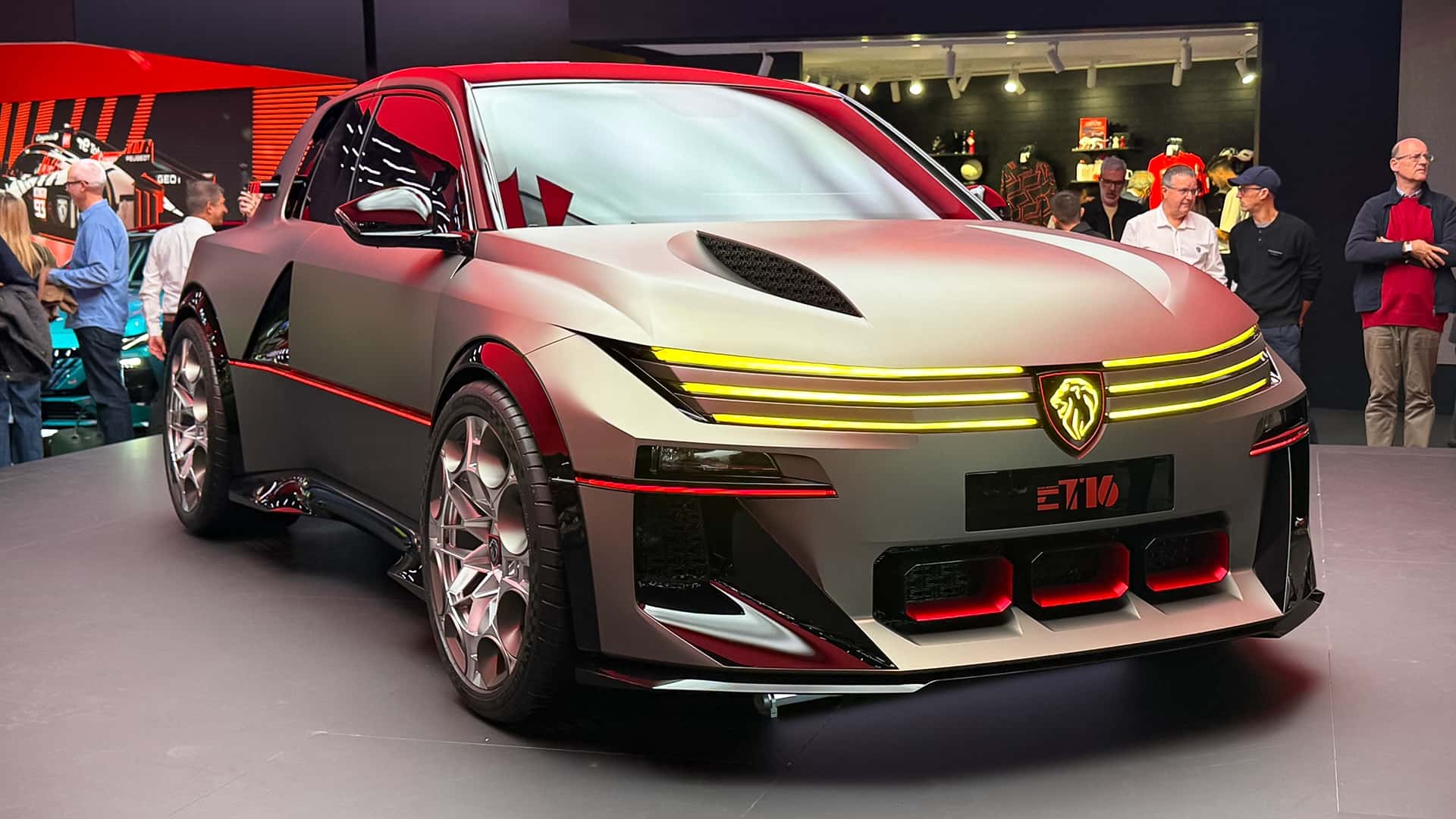
The automotive landscape, particularly in the realm of electric vehicles, is undergoing a dramatic transformation, keenly highlighted by the recent Paris Auto Show in 2026. What was once perceived as a flagging exhibition, four years ago, has now become a vibrant battleground showcasing an explosion of new EV models, many of which promise to be genuinely affordable EV choices for consumers across Europe.
This resurgence signals a pivotal moment in the global automotive industry, where established European giants are actively confronting the rapid ascent of Chinese manufacturers. The evolving competition is ultimately poised to benefit consumers, offering a wider array of electrified vehicles at more accessible price points.
Key Takeaways (TL;DR)
- The Paris Auto Show, once struggling, has re-emerged in 2026 as a pivotal event for electric vehicles.
- Chinese automakers, who capitalized on the 2022 show by introducing numerous affordable EV choices, have since made significant inroads into the European market.
- European manufacturers are now vigorously responding, unveiling a slew of new, competitively priced EV concepts and production models.
- Brands like Renault, Dacia, Alpine, and Stellantis are focusing on “Voitures à vivre”—cars designed to integrate seamlessly into daily life.
- Chinese brands continue their expansion, not just through exports but also via substantial investments in European manufacturing and strategic collaborations.
- The intensified competition is driving innovation and accelerating development timelines, making affordable EVs more accessible globally, though the U.S. market still lags.
The Shifting Dynamics of the Paris Auto Show
Just four years ago, in 2022, the atmosphere at the Paris Auto Show mirrored a broader sentiment plaguing similar events in the United States: a perceived decline in relevance. Major European players, including Mercedes-Benz, opted for off-site reveals, casting a shadow over the show’s future. The absence of many traditional brands left a void, contributing to the narrative of a dying auto show.
Chinese Dominance in 2022
Yet, amidst this backdrop, Chinese manufacturers seized the opportunity. Companies like BYD and Great Wall Motors, through its Ora and WEY brands, made their presence felt, showcasing an array of new EV and Plug-in Hybrid Electric Vehicle (PHEV) models. These offerings, largely small hatchbacks and crossovers, stood out for their relative affordability and impressive range, surpassing many similarly priced options available at the time. This strategic move allowed Chinese brands, many of which were largely unknown to the European public then, to tap into a crucial market segment: the value-conscious buyer seeking an electrified vehicle.
This initial foray proved highly successful, enabling Chinese automakers and their EV offerings to establish a significant foothold in the European market. They effectively catered to a demand that existing European manufacturers had struggled to meet, thereby fundamentally altering the competitive landscape.
European Resurgence in 2026
Fast forward to 2026, and the narrative has dramatically changed. While the United States’ auto shows and its affordable EV market continue to grapple with challenges, Europe has mounted a formidable response. This year’s Paris Auto Show presented a comprehensive display of innovation and competitive spirit, signaling that European brands are now actively challenging the Chinese market dominance.
The event was characterized by a concerted effort from European manufacturers to showcase a full spectrum of new models and concepts, all with a strong emphasis on electrification. This robust display underscores a global recognition of the imperative to accelerate the transition to electric mobility and to offer genuinely affordable EV choices.
European Automakers’ Renewed Strategy
The 2026 Paris Auto Show highlighted a strategic pivot by European automakers, driven by a renewed focus on consumer needs and market competitiveness. This shift is evident in their product development and marketing philosophies.
Focus on “Cars for Living”
Renault, for instance, impressed attendees with production models from Dacia and captivating concepts from Alpine and Renault. The Renault E-Space concept, an electric MPV, harked back to the iconic 1980s Espace design, embodying the company’s vision for future mobility. Renault Group Chief Growth Officer Fabrice Cambolive articulated this guiding principle as “Voitures à vivre,” or “cars for living.” This philosophy centers on creating vehicles where electrification seamlessly integrates into daily life, exploring new possibilities for how and where their brands evolve next.
New Affordable EV Models Emerge
Similarly, Stellantis unveiled numerous EV concepts across its European brands. The overarching goal for European automakers appears to be a direct challenge to Chinese manufacturers by meeting the demand for reasonably-priced EVs with models that combine affordability with desirability. The Citroën 2CV concept, a clear standout, captivated audiences by channeling the charm of its predecessor while targeting an impressive price point of 15,000 euros, equivalent to just under $17,000 at current exchange rates.
The 2CV concept is but one example of the growing portfolio of affordable EV choices from European marques. Upon its anticipated launch, it is expected to join a burgeoning list of budget-friendly electric vehicles, including the Renault Twingo, Dacia Spring, Nissan Pixo, Kia EV2, and Volkswagen ID. Polo. This proliferation of models signals a concerted effort to populate a market segment that was notably sparse during the 2022 show.
Chinese Manufacturers’ Continued Expansion
Despite the strong European offensive, Chinese automakers were undeniably present in full force at the 2026 Paris Auto Show. An estimated 25 different Chinese brands showcased models across various price ranges, underscoring their sustained ambition in the European market.
Investment in European Manufacturing
However, this continued presence is not viewed as a catastrophic market meltdown by industry observers. Notably, several prominent Chinese brands, including BYD, Geely, and Xpeng, have initiated significant plans to invest directly in Europe’s manufacturing infrastructure. Xpeng, for example, reported that its L03 compact crossover has garnered 12,000 orders since its summer launch, with production slated to occur in Austria through a partnership with Magna-Steyr. This strategic move indicates a long-term commitment to the European market, moving beyond mere exports.
Strategic Collaborations and Speed
Analyst and consultant Lei Xing offered insight into the evolving dynamic, stating via email, “If I had to summarize this year’s Paris Motor Show, it would be hope, introspection, and integration. European brands are trying hard, and they are starting to figure some things out, even if it means the Chinese providing a compromise in terms of halving the hybrid/plug-in export volume but at the same time getting help from the Chinese.” This perspective highlights a complex interplay of competition and collaboration.
Further illustrating this point, some Chinese brands, such as Leapmotor, are acting as crucial partners for established European conglomerates. Reuters reported that Antonio Filosa, head of Stellantis Pro One, indicated that collaboration with Leapmotor has enabled brands to complement each other. Leapmotor’s agility and specialized expertise have proven beneficial for Stellantis, aiding its efforts to rapidly bring new models to market.
The 2026 Paris Auto Show witnessed the debut of the Leapmotor B03 hatchback, complementing its B03X small crossover sibling. Both models were launched mere weeks after their Chinese counterparts, demonstrating incredible speed to market. This rapid development pace is also mirrored in European offerings, such as the Dacia Spring, which was developed in under two years. The accelerated timelines reflect a shared urgency across the industry to meet consumer demand and robustly compete in the race to offer widespread affordable EV choices.
Global Implications and the US Market
From an international perspective, the vigorous competition and the resultant proliferation of diverse and affordable EV choices in Europe stand in stark contrast to the comparatively limited options available in the United States. While China continues to be a dominant force in the global affordable EV discourse, the 2026 Paris Auto Show underscored a significant shift: a serious, competitive selection of electrified vehicles is now emerging from a wider array of manufacturers beyond just Chinese brands.
This intense competition and the acceleration of EV development are undeniably positive developments for consumers worldwide and for environmental sustainability. The hope remains that this newfound sense of urgency to develop and deliver affordable EV choices will soon extend its influence to the U.S. market, providing American consumers with the same breadth of options and competitive pricing seen in Europe.
Frequently Asked Questions (FAQ)
What was the key difference between the 2022 and 2026 Paris Auto Shows?
In 2022, the show was marked by a significant absence of European brands, allowing Chinese automakers like BYD to make a strong debut with affordable EVs. By 2026, European manufacturers mounted a robust comeback, showcasing numerous new EV models to directly compete with the established Chinese presence.
How are European automakers responding to Chinese EV competition?
European brands are focusing on developing competitively priced electric vehicles, often drawing on their heritage (e.g., Citroën 2CV concept) and adopting philosophies like Renault’s “Voitures à vivre” to create practical, integrated electric mobility solutions.
Are Chinese EV manufacturers still expanding in Europe?
Yes, Chinese manufacturers are continuing their expansion in Europe, not just through vehicle exports but also by investing significantly in the continent’s manufacturing base. Brands like Xpeng are producing vehicles in Europe, and companies like Leapmotor are engaging in strategic collaborations with European conglomerates.
What is the significance of “Voitures à vivre”?
“Voitures à vivre,” meaning “cars for living,” is Renault Group’s guiding principle for electrification. It emphasizes designing electric vehicles that are highly integrated, practical, and responsive to the real-life needs and lifestyles of consumers, ensuring electrification enhances daily living.
Which affordable EV models are gaining traction in Europe?
The market for affordable EV choices in Europe is expanding rapidly. Notable models include the upcoming Citroën 2CV concept, Renault Twingo, Dacia Spring, Nissan Pixo, Kia EV2, Volkswagen ID. Polo, and Chinese models like the Xpeng L03 and Leapmotor B03 and B03X.
How does the European EV market compare to the U.S. market?
The European EV market, as demonstrated by the 2026 Paris Auto Show, is experiencing intense competition and a rapid influx of diverse and affordable EV options from both European and Chinese manufacturers. In contrast, the U.S. market currently offers fewer affordable EV choices and has a slower pace of development in this segment.