
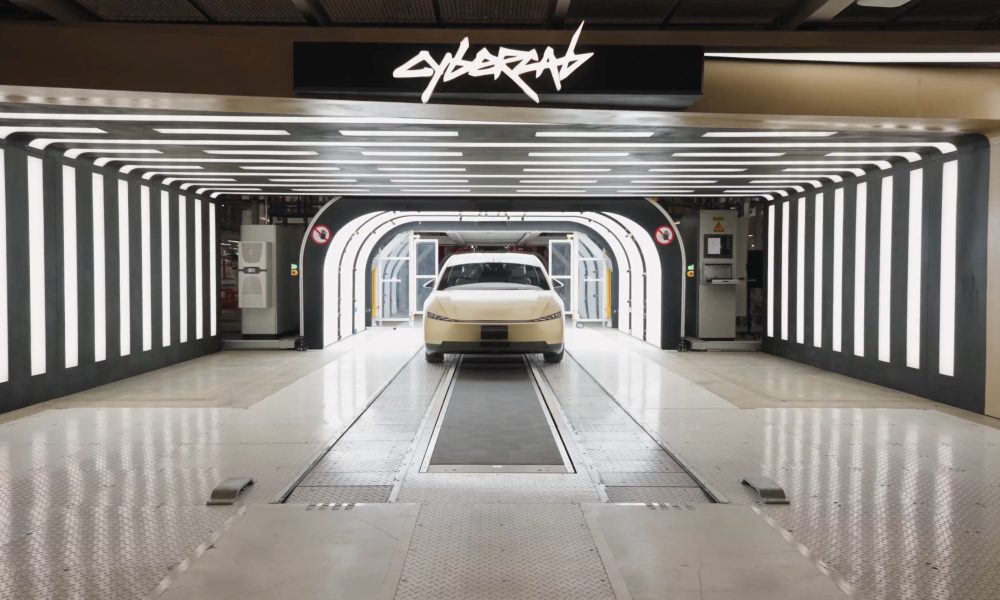
Tesla CEO Elon Musk has indicated that the company is considering expanding its production capabilities at Gigafactory Berlin to include the Cybercab and the Optimus humanoid robot. These additions could mark a significant evolution for the German plant, moving beyond its current role primarily focused on Model Y production.
Cybercab and Optimus as Next Major Products
In a recent discussion with Giga Berlin plant manager André Thierig, Musk identified the Cybercab as the most probable next major product for the facility. He stated, “From a next major product standpoint, I think most likely is the Tesla Cybercab.”

Beyond the Cybercab, Musk also suggested possibilities for the Optimus humanoid robot to be manufactured at Giga Berlin. “There are also possibilities of Tesla Optimus being produced in the facility,” he added.
Tesla has already initiated Cybercab production at its Giga Texas facility, with plans for significant ramp-up in the current year. The potential inclusion of Giga Berlin in this production effort would depend on favorable conditions in the European market.
Optimus: A Long-Term High-Volume Product
Musk’s comments regarding Optimus are consistent with his past statements about the robot’s future. He has previously articulated that Optimus is expected to become Tesla’s highest-volume product in the long run.
The production capacity envisioned for Optimus is substantial. Reports suggest that the Model S and Model X lines at the Fremont Factory are being repurposed for Optimus production, with an annual output target of one million units. This indicates a significant scale anticipated for the humanoid robot.
The potential for Giga Berlin to contribute to this mass production underscores the strategic importance of the European facility in Tesla’s global manufacturing network.
Giga Berlin’s Evolving Role
In addition to the potential for Cybercab and Optimus production, Musk confirmed that Giga Berlin has already commenced battery cell production. The plant is also set to increase its Model Y output.
This expansion in production lines comes as Tesla’s supervised Full Self-Driving (FSD) technology awaits regulatory approvals in Europe. Successful approval could further drive demand for Tesla vehicles in the region.
Collectively, these developments suggest that Giga Berlin is poised to transition from a regional vehicle assembly plant to a comprehensive multi-product manufacturing hub. This strategic shift would diversify its production portfolio and enhance its contribution to Tesla’s overall growth objectives.
Musk Addresses Giga Berlin Expansion Concerns
In separate remarks, Elon Musk also addressed concerns regarding the future growth of Gigafactory Berlin. He reportedly warned that the plant’s expansion could be hindered if it is not permitted to operate “free from external influences.”
These comments, delivered in a pre-recorded video discussion with employees, were made at a time of ongoing discussions about union representation at the facility. Reports from German media outlets suggest that Musk’s remarks were interpreted as a reference to the IG Metall union.
Musk expressed that further expansion would be unlikely if Giga Berlin faces increased “external influences.” However, he did not suggest any plans for plant closure. The timing of these remarks is particularly significant due to upcoming works council elections in early March.
Previously, Musk has voiced concerns that a stronger union presence could potentially limit Tesla’s operational flexibility and strategic ambitions in Germany. Despite these concerns about external influences, Musk also lauded the Giga Berlin site, acknowledging it as one of the world’s most advanced factories and commending its cleanliness and team culture.
Battery Cell Production Ramping Up
During the same discussion, Musk reportedly confirmed that Tesla has commenced ramping up battery cell production at Giga Berlin. This development is noteworthy, as it appears to accelerate the timeline for large-scale cell manufacturing at the Brandenburg site, which was previously anticipated to begin around 2027.
The expansion of battery cell manufacturing at Giga Berlin is a critical step in Tesla’s vertical integration strategy, aiming to secure its supply chain and reduce reliance on external suppliers.
Tesla Semi Expansion to Europe
In another development related to Tesla’s European ambitions, Elon Musk also provided an update on the Tesla Semi truck. He indicated that the all-electric Class 8 truck could be introduced to the European market as early as 2027.
“We’ve got the Tesla Semi coming out, the heavy truck, and that’ll be going to Europe hopefully next year,” Musk stated during the interview regarding Giga Berlin.
Tesla has already commenced limited production and customer deliveries of the Semi in the United States. The company is working to scale up production at its dedicated Semi factory located near Giga Nevada. The European rollout would represent the next phase in the Semi’s global expansion beyond North America.
Musk’s cautious use of the word “hopefully” allows for flexibility, but the statement clearly signals Europe as the next target for Tesla’s commercial vehicle expansion. Musk has consistently advocated for the electrification of all forms of ground transport, and the Semi is a key component of this strategy, aiming to reduce emissions from the heavy-duty freight sector.
The Tesla Semi lineup currently includes two variants: Standard and Long Range. The Standard trim offers an estimated range of up to 325 miles with an energy consumption of 1.7 kWh per mile. The Long Range version is designed to provide up to 500 miles of range, which should be sufficient for most European routes.