
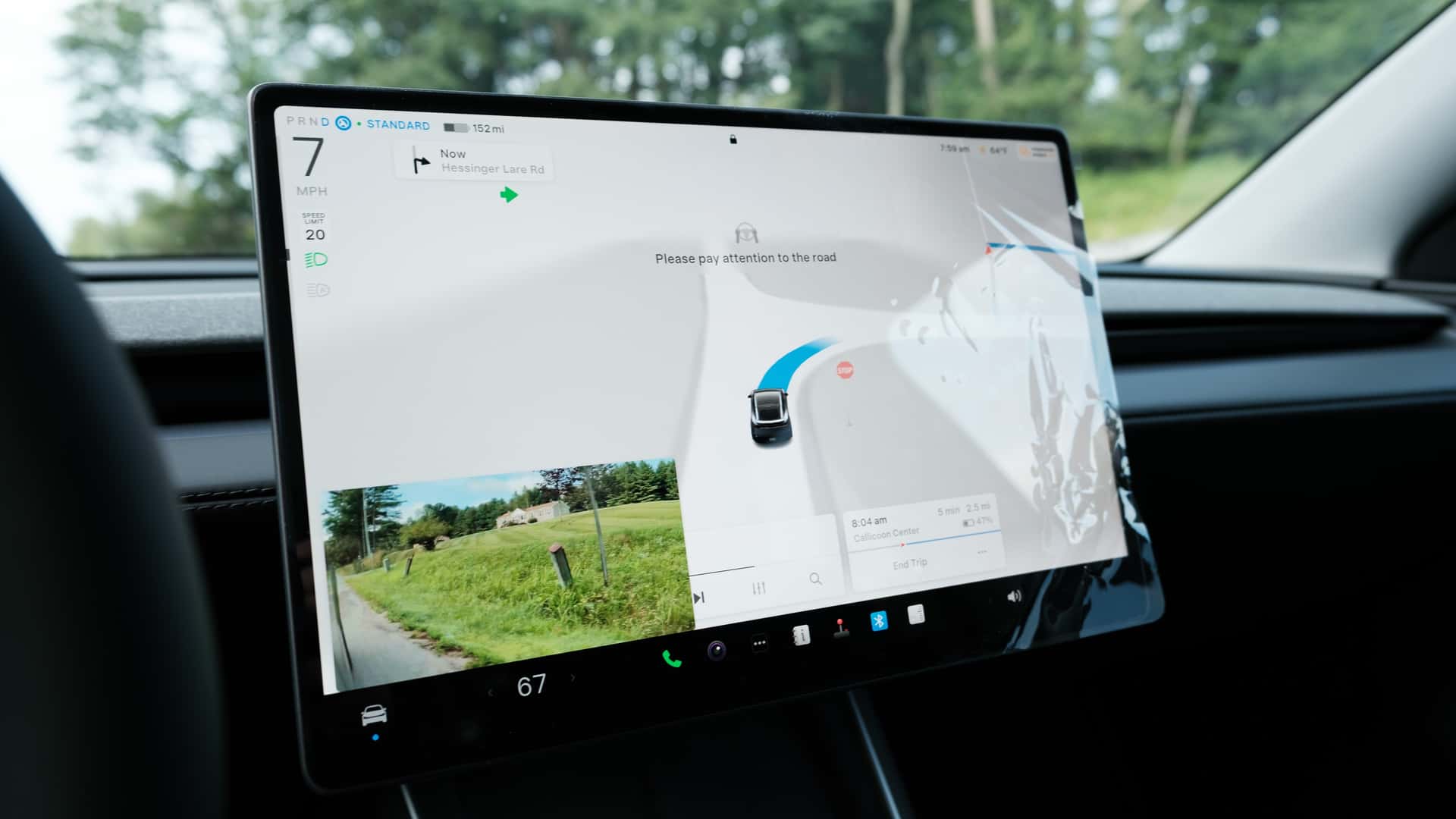
Tesla announced a significant milestone for its Full Self-Driving (Supervised) software, revealing 1.1 million active subscriptions by the end of the fourth quarter of 2025. This surge in adoption is a crucial element for CEO Elon Musk’s ambitious compensation package, which is tied to aggressive sales targets for the driver-assistance system.
FSD Subscriptions Key to Tesla’s Future and Musk’s Pay
The reported figure of 1.1 million FSD subscriptions represents a substantial increase of 38% from the approximately 800,000 subscriptions recorded in the fourth quarter of 2024. This marks the first time Tesla has officially disclosed its FSD subscription numbers. For CEO Elon Musk, achieving 10 million FSD subscriptions is a key performance indicator for his potentially trillion-dollar pay package.
The company, which aims to position itself as a leader in robotics, energy, and artificial intelligence, views the expansion of FSD subscriptions as more critical than its electric vehicle sales. “The future is autonomous,” Musk stated, emphasizing the long-term vision for the technology.
Autonomous Driving Aspirations and Comparisons
Tesla’s FSD subscription numbers significantly outpace those of competitors. General Motors, for instance, has fewer subscribers for its Super Cruise system, which operates exclusively on mapped highways, unlike FSD’s capability in urban environments.
The company is also leveraging FSD for its Robotaxi service. Recently launched in Austin without human safety drivers, the service is slated for expansion to Dallas, Phoenix, and Miami in 2026. “This new autonomous market, you have to start thinking about us as providing transportation as a service, more than the total… market for vehicles alone,” said Lars Moravy, Tesla’s Vice President of Engineering, during the earnings call. Musk further predicted that “the vast majority of miles traveled will be autonomous in the future.”

Regulatory Hurdles and Legal Challenges Persist
Despite the growth in subscriptions, Tesla’s advanced driver-assistance system continues to face intense scrutiny. The U.S. National Highway Traffic Safety Administration (NHTSA) launched an investigation in October into nearly 3 million Tesla vehicles equipped with FSD, following over 50 reports of crashes and traffic law violations.
In California, a judge ruled in December that Tesla had engaged in deceptive marketing by overstating the capabilities of both FSD and its Autopilot system. The automaker has since removed the “Autopilot” branding from its standard driver-assistance features and is facing multiple lawsuits related to FSD’s performance.
A New Chapter for Tesla
Even with these challenges, Tesla officials remain optimistic about the company’s strategic shift towards autonomous driving. Vaibhav Taneja, Tesla’s Chief Financial Officer, remarked, “We’re starting not the next chapter, but a new book on the progression of this company.” He added, “2026 will be when all of this began. While at times it feels daunting, it will be the most exciting change in Tesla’s history.”
The FSD subscription service, which costs $99 per month, was recently discontinued as a one-time purchase, reinforcing Tesla’s focus on recurring revenue streams from its autonomy technology.