
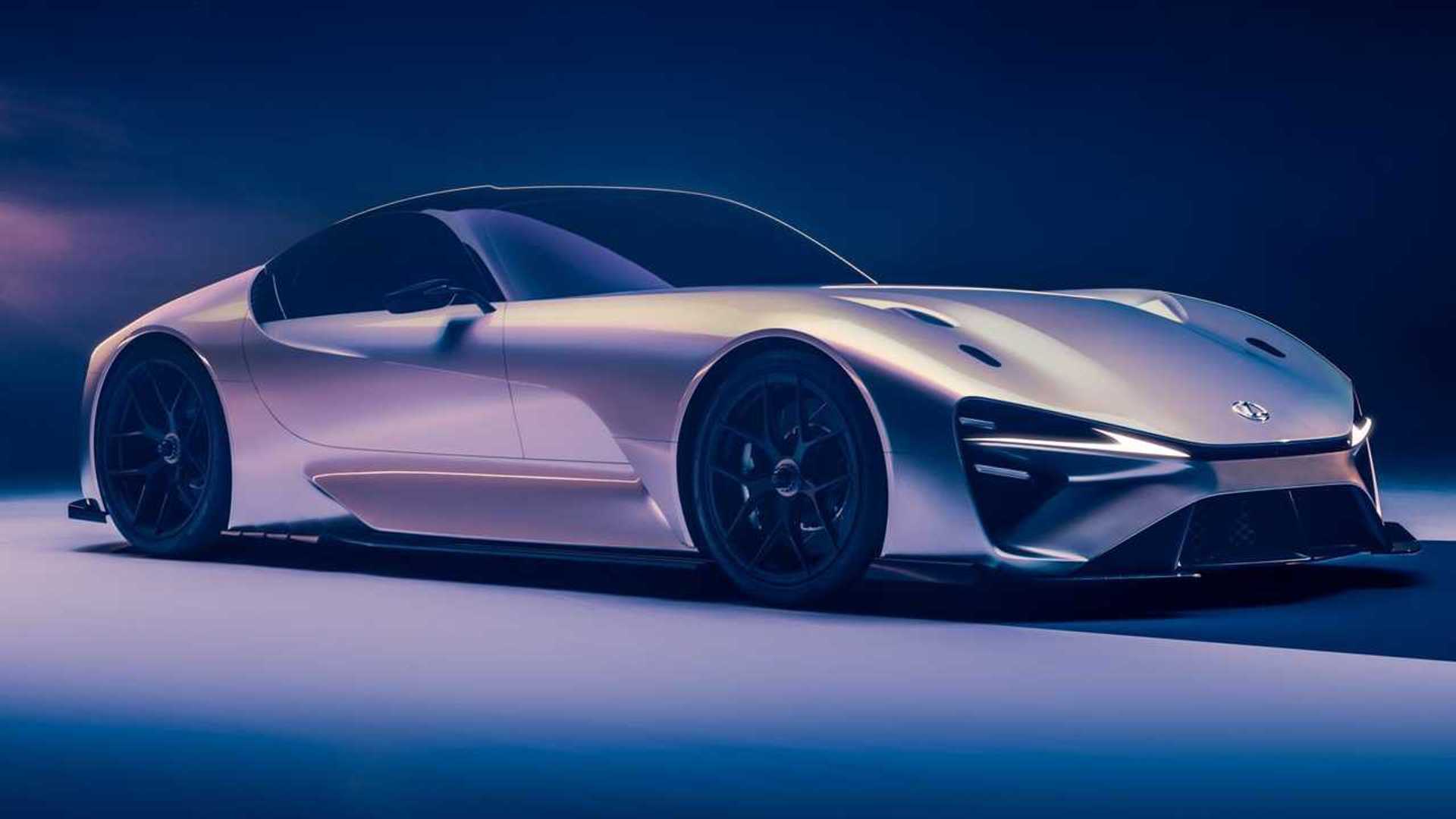
Toyota aims to be the first automaker to introduce a production vehicle equipped with solid-state batteries (SSBs), a technology that could revolutionize electric vehicles. While several companies are vying for this milestone, Toyota suggests its first SSB-powered car could debut as early as 2027, though 2028 is also a possibility. This groundbreaking vehicle is anticipated to be a high-performance sports car, potentially an electric successor to the Lexus LFA.
Potential for a High-Performance Debut
Although Toyota has not explicitly named the vehicle, hints suggest the initial application of SSBs will be in a specialized model. Industry observers speculate this could be a production version of the Lexus Electrified Sport concept. The advantages of SSBs, particularly their lightweight nature, are especially beneficial for sports cars where agility and handling dynamics are paramount.
Advantages of Solid-State Batteries
Toyota describes its SSBs as offering “high-power, compact and long range.” These characteristics align perfectly with the requirements of a performance-oriented EV. Unlike current high-performance EVs, which often carry significant weight penalties from their battery packs that can compromise handling, SSBs promise higher power density. This allows for smaller, lighter battery packs, potentially leading to improved vehicle dynamics by enabling better mass centralization. Manufacturers like McMurtry are already exploring battery designs around the cockpit to center mass, a concept made more feasible with SSB technology.
The benefits extend beyond size and weight. SSBs offer significantly better longevity, faster charging capabilities, and enhanced safety, being less susceptible to issues like thermal runaway compared to conventional lithium-ion batteries. This contrasts with the challenges faced by even the most advanced current EVs; for instance, BYD’s YangWang U9, despite its immense 3,000 hp output, completed a Nurburgring Nordschleife lap slower than a lighter Porsche 911 GT3 RS, highlighting how weight can impede performance on a challenging track.
Toyota’s Strategic Approach
Keiji Kaita, president of Toyota’s Carbon Neutral Engineering Development Center, indicated at the 2025 Japan Mobility Show that vehicles utilizing SSBs would capitalize on these inherent advantages. This reinforces the likelihood of an initial deployment in a Lexus-badged sports car.
Toyota has maintained a cautious approach, not officially confirming the exact vehicle for its SSB debut. It’s possible the technology could first appear in a hybrid model or be integrated into existing or upcoming vehicles, such as a potential production version of a recent Corolla concept. However, the company’s commitment to advancing SSB technology is evident. Toyota recently announced a significant partnership with a local metals company to secure essential cathode materials, a critical step towards enabling large-scale manufacturing of these advanced batteries.
The development and mass production of solid-state batteries represent a long-term endeavor for the entire automotive industry. While a clear leader has yet to emerge, Toyota’s sustained investment and progress, bolstered by its considerable resources, position it as a strong contender. The anticipated arrival of Toyota’s solid-state EVs promises not only technological advancement but also a more engaging driving experience.