
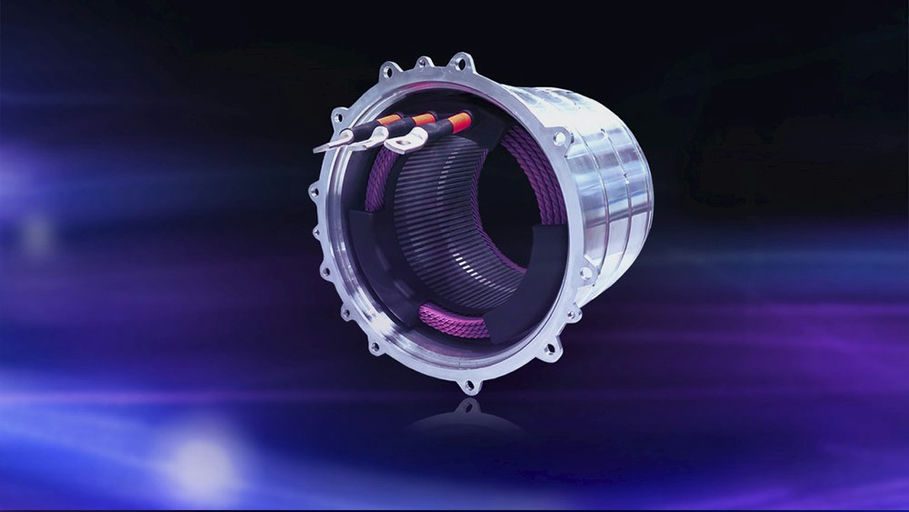
Key Takeaways
- Advanced Simulation for EVs: High-fidelity FPGA motor models enable highly responsive, real-time digital representations of electric machines, critical for modern EV development.
- Microsecond Precision: These models capture crucial dynamics occurring within microseconds, vital for accurate motor control system validation.
- Real-time HIL Validation: FPGA technology facilitates deterministic, low-latency execution of complex motor models, enabling realistic Hardware-in-the-Loop (HIL) validation of controllers, inverters, and protection strategies.
- Accelerated Development: This approach significantly reduces validation risk and accelerates the development cycle for EV powertrains.
- Free Webinar Opportunity: dSPACE is hosting a free webinar on September 17, 2026, at 10:15 am EDT, detailing these advanced simulation techniques.
- Part of a Broader Conference: The webinar is a key session within the Virtual Conference on EV Engineering, running from September 14 to 17, 2026, covering the entire EV engineering ecosystem.
As the electric vehicle (EV) industry surges forward, driven by relentless innovation and an imperative for efficiency, the complexity of motor control systems continues to escalate. Modern EV powertrains demand not only powerful performance but also precise, instantaneous control, operating with dynamics that unfold within mere microseconds. Ensuring the reliability and safety of these advanced systems necessitates equally sophisticated validation tools.
One of the most significant advancements in this domain is the advent of high-fidelity FPGA motor models. These cutting-edge simulation tools are revolutionising how electric machines are developed and tested, offering a path to virtual motor responses that mirror real-world behaviour with unprecedented accuracy and speed.

The Imperative for Real-Time Simulation in EV Development
Electric vehicles rely on intricate motor control systems that manage everything from torque delivery and speed regulation to regenerative braking. The performance and efficiency of these systems are profoundly influenced by microsecond-level dynamics, including rapid current transients, high-frequency switching of power electronics, and swift responses to load changes.
Traditional simulation methods often struggle to capture these fleeting effects in real time, leading to potential inaccuracies and delays in the development cycle. The gap between simulated and physical performance can introduce significant risks, necessitating extensive and costly physical prototyping and testing phases.
Understanding High-Fidelity FPGA Motor Models
High-fidelity FPGA motor models represent a leap forward in addressing these challenges. FPGA, or Field-Programmable Gate Array, technology offers a unique platform for executing detailed electrical machine models with extreme determinism and low latency. Unlike traditional CPU-based simulations, FPGAs are designed for parallel processing, allowing complex equations governing motor behaviour to be executed simultaneously.
This parallel execution capability is the cornerstone of achieving real-time performance. It means a virtual motor can respond to control inputs as rapidly and precisely as its physical counterpart, providing an invaluable environment for rigorous testing and validation.
Capturing Microsecond Dynamics with Precision
The ability of high-fidelity FPGA motor models to capture dynamics within microseconds is pivotal. In EV motor control, even tiny delays or inaccuracies in simulation can lead to significant discrepancies when transferring designs to hardware. For instance, the rapid switching of inverters – power electronics that convert DC battery power to AC for the motor – generates harmonics and transient effects that must be precisely accounted for.
FPGA-based simulations excel here, offering the computational speed and deterministic timing necessary to accurately model these effects. This ensures that the control algorithms developed and tested virtually will perform predictably and optimally when deployed in actual vehicles.
Real-Time Hardware-in-the-Loop (HIL) Validation
The true power of these advanced motor models is realised through real-time Hardware-in-the-Loop (HIL) validation. HIL simulation involves connecting the actual production control hardware – the motor control unit (MCU) or electronic control unit (ECU) – to a simulated environment that precisely mimics the physical motor and its surrounding components.
In this setup, the MCU perceives the FPGA-based motor model as if it were a real motor, sending control signals and receiving feedback in real time. This allows engineers to thoroughly test and validate controller performance under a vast array of operating conditions, fault scenarios, and environmental factors, all within a safe, reproducible, and cost-effective virtual environment.
Benefits of FPGA-Based HIL for EV Powertrains
The adoption of FPGA-based HIL simulation with high-fidelity motor models offers several transformative benefits for EV powertrain development:
- Enhanced Validation of Motor Controllers: Engineers can rigorously test complex control algorithms for torque, speed, and flux, ensuring optimal performance across the motor’s operating envelope.
- Inverter Performance Assessment: The intricate switching patterns and power conversion efficiencies of inverters can be thoroughly evaluated, leading to more robust and efficient designs.
- Robust Protection Strategy Testing: Critical protection strategies against overcurrents, overvoltages, and short circuits can be validated in extreme conditions without risking physical hardware.
- Comprehensive Fault Scenario Analysis: Simulating various fault conditions, such as sensor failures, insulation breakdowns, or winding faults, allows for the development and testing of sophisticated diagnostic and fault-tolerant control mechanisms.
- Accelerated Development Cycles: By identifying and resolving issues earlier in the design phase, the need for costly physical prototypes is reduced, and time-to-market is significantly shortened.
- Reduced Validation Risk: The ability to conduct exhaustive testing in a virtual environment minimises the risk of unforeseen failures in the field, leading to safer and more reliable EVs.
Exclusive Webinar by dSPACE: Deep Dive into FPGA Motor Models
To shed light on these groundbreaking techniques, dSPACE, a leading provider of simulation and validation solutions, is hosting an exclusive webinar. This session is designed for engineers and developers keen on leveraging the latest in simulation technology for electric vehicle development.
The webinar, titled “High-Fidelity FPGA Motor Models for Real-Time HIL Validation,” will delve into how detailed machine models can be executed with deterministic timing. Participants will discover practical implementation techniques and real-world applications that underscore the value of FPGA-based simulation in accelerating powertrain development and mitigating validation risks.
This valuable session is scheduled for September 17, 2026, at 10:15 am EDT. Interested professionals are encouraged to Register now—it’s free!
The Virtual Conference on EV Engineering: A Comprehensive Industry Forum
The dSPACE webinar is a highlight within the much larger Virtual Conference on EV Engineering, a premier event for the electric vehicle industry. Broadcast live from September 14 to 17, 2026, the conference offers an unparalleled opportunity to explore the entire EV engineering supply chain and ecosystem.
The comprehensive agenda covers a wide array of critical topics, including cutting-edge developments in motor and power electronics design and manufacturing, advancements in cell development and battery systems, rigorous testing methodologies, powertrain innovations, and sophisticated thermal management solutions. Furthermore, it addresses vital aspects like circuit protection, wire and cable technologies, and electromagnetic interference/compatibility (EMI/EMC) considerations.
Beyond the session on high-fidelity FPGA motor models, the conference features numerous other insightful presentations that cater to diverse interests within the EV engineering community. Topics range from “Advancing Battery Safety Through Early Thermal Runaway Detection With Infineon Sensors” and “Scalable And Cost-Efficient Testing Of State-of-the-Art Battery Management Systems” to discussions on “CoolGaN™ Automotive Bidirectional Switch: Shaping Single-Stage On-Board Chargers” and “Optimizing HV/LV Power Conversion For Next-Generation xEV Architectures.”
These sessions collectively offer a holistic view of the challenges and solutions shaping the future of electric mobility. Attendees gain access to expert insights on innovations spanning component design, manufacturing processes, safety protocols, and performance optimization across the EV spectrum.
To explore the full breadth of topics and register for other sessions, please See the complete session list for the Virtual Conference on EV Engineering here.
Advancing the Future of Electric Mobility
The evolution of electric vehicles is intrinsically linked to the ability to accurately and efficiently design, test, and validate their complex components. High-fidelity FPGA motor models represent a pivotal technology in this journey, enabling engineers to push the boundaries of performance, efficiency, and safety.
Through forums like the Virtual Conference on EV Engineering and dedicated webinars, the industry can collectively accelerate the adoption of these advanced techniques. This collaborative knowledge sharing is crucial for overcoming engineering hurdles, fostering innovation, and ultimately delivering the next generation of reliable and high-performing electric vehicles to the global market.
Frequently Asked Questions (FAQ)
What are high-fidelity FPGA motor models?
High-fidelity FPGA motor models are highly responsive digital representations of electric machines. They leverage Field-Programmable Gate Array (FPGA) technology for parallel execution of complex motor model equations, enabling real-time simulation with extreme determinism and low latency, crucial for capturing microsecond-level dynamics in EV motor control.
Why are these models critical for EV development?
These models are critical because modern EV motor control systems depend on dynamics occurring within microseconds. High-fidelity FPGA models accurately simulate these rapid effects, enabling realistic validation of motor controllers, inverters, protection strategies, and fault scenarios, thus accelerating powertrain development and reducing validation risk.
What is real-time Hardware-in-the-Loop (HIL) validation?
Real-time HIL validation is a testing method where the actual motor control hardware (e.g., ECU) is connected to a simulated environment that precisely mimics the physical motor and its associated components. FPGA-based motor models provide the necessary real-time, deterministic simulation environment, allowing the control hardware to interact as if with a real motor.
What benefits does FPGA technology offer for motor simulation?
FPGA technology offers parallel execution of motor model equations, leading to superior computational speed and deterministic timing. This capability is essential for accurately capturing rapid transients and microsecond-level dynamics in electric machines, providing a highly responsive virtual environment for real-time validation.
What will the dSPACE webinar cover?
The dSPACE webinar will demonstrate how detailed machine models can be executed with deterministic timing using FPGA technology. It will highlight practical implementation techniques and real-world applications of FPGA-based simulation, showcasing its value in accelerating EV powertrain development and reducing associated validation risks.
When and where is this webinar taking place?
The webinar, “High-Fidelity FPGA Motor Models for Real-Time HIL Validation,” is scheduled for September 17, 2026, at 10:15 am EDT. It is presented by dSPACE and is a free-to-attend online session, forming part of the broader Virtual Conference on EV Engineering.
What is the Virtual Conference on EV Engineering?
The Virtual Conference on EV Engineering is an online event running from September 14 to 17, 2026. It covers the entire EV engineering supply chain and ecosystem, including motor and power electronics design, battery systems, testing, thermal management, circuit protection, and more, offering a comprehensive overview of industry advancements.