
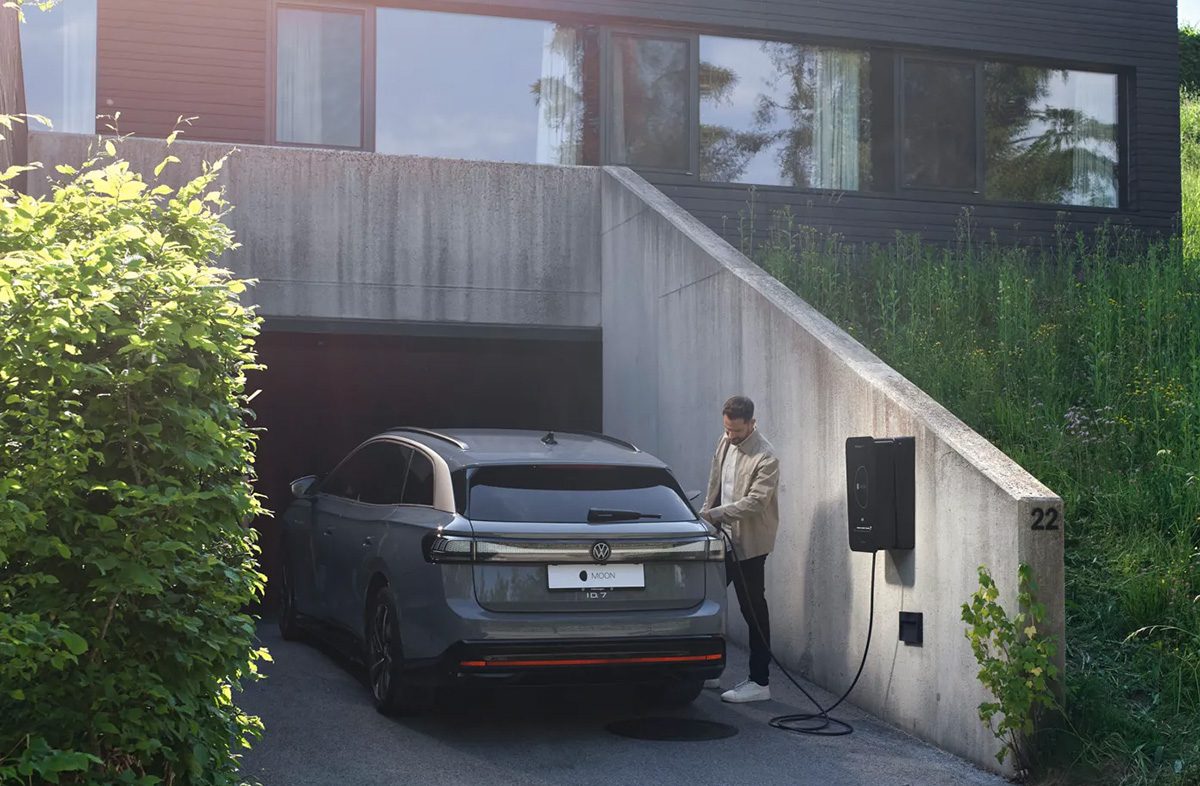
Volkswagen Group Sverige has announced a significant leap in electric vehicle (EV) technology, moving bidirectional charging from experimental pilot projects to widespread commercial deployment. The initiative will see Volkswagen Group dealerships across Sweden equipped with advanced bidirectional charging solutions, marking a pivotal moment for energy management in the electric mobility sector.
Key Takeaways
- Volkswagen Group Sweden is deploying commercial bidirectional EV charging across its dealer network.
- This move signifies the transition of advanced V2G (Vehicle-to-Grid) technology from pilot phase to broad market availability.
- The integrated system utilizes bidirectional-capable Volkswagen Group vehicles, MOON chargers, and Energy Bank software for optimized energy flow.
- The technology enables EVs to supply electricity back to homes and the national grid, enhancing energy resilience and grid stability.
- Developed in collaboration with Energy Bank since 2021 at the Stenberg Living Lab, this rollout expands a successful pilot project.
- Christian Jacobsson, CEO of Energy Bank, emphasizes the potential for creating value for EV owners and the electricity system.
Pioneering Bidirectional Charging: A New Era for EVs
Bidirectional EV charging represents a transformative capability for electric vehicles, allowing them to not only draw power from the grid but also to export it back. This ‘vehicle-to-grid’ (V2G) functionality, alongside vehicle-to-home (V2H) and vehicle-to-load (V2L) applications, positions EVs as dynamic energy assets rather than mere consumers.

The implementation by Volkswagen Group Sverige is set to unlock a range of benefits. For individual EV owners, it offers the potential for energy cost savings by discharging stored energy during peak tariff hours or powering homes during outages. For the broader electricity system, V2G technology provides crucial flexibility, supporting grid stability and facilitating greater integration of renewable energy sources.
The Integrated Ecosystem: Volkswagen, MOON, and Energy Bank
At the core of this innovative rollout is a meticulously designed ecosystem involving key players within and outside the Volkswagen Group. The system hinges on the interoperability of several advanced components, ensuring seamless energy flow and intelligent management.
Specifically, the solution integrates Volkswagen Group vehicles that are equipped with bidirectional charging capabilities. These vehicles are designed to both accept and supply electrical power, forming the mobile energy storage units of the system. The hardware component for charging and discharging is provided by MOON, a sister company of the Volkswagen Group, which specializes in advanced charging infrastructure.

Crucially, the entire operation is orchestrated by software developed by Energy Bank. This sophisticated platform is responsible for managing the complex interplay of charging schedules, energy storage optimization, and power exports. It intelligently balances the needs of the vehicle, the home, and the grid, maximizing efficiency and economic benefits.
From Laboratory to Commercial Scale: The Stenberg Living Lab Legacy
Years of Collaborative Development
The journey towards this commercial deployment began several years ago with a focused research and development effort. Volkswagen and Energy Bank initiated their collaboration on bidirectional charging technology in 2021, recognizing the immense potential of this emerging field. This partnership has been instrumental in refining the technical and operational aspects of the system.
Their joint efforts culminated in the establishment of the Stenberg Living Lab in Hudiksvall. This specialized facility served as a real-world testing ground, allowing engineers and researchers to rigorously develop, test, and validate the bidirectional charging system under controlled yet realistic conditions. The insights gained from the Stenberg Living Lab have been vital in perfecting the system’s performance, reliability, and user experience.
Expanding Beyond Pilot Projects
The successful outcomes from the Living Lab have paved the way for this significant expansion. What began as a promising pilot project is now transitioning into a fully-fledged commercial service. This strategic shift demonstrates a strong commitment from Volkswagen Group Sverige to bring cutting-edge energy solutions directly to its customers and to contribute actively to the evolution of smart energy grids.
Leadership Endorsement and Market Impact
The move has been met with enthusiasm from industry leaders, underscoring its importance for the future of sustainable energy. Christian Jacobsson, CEO of Energy Bank, articulated the broader implications of this commercial rollout.
“This is the moment when bidirectional charging moves from promising technology to commercial infrastructure,” said Christian Jacobsson. He further added, “With MOON and Volkswagen as strategic partners, we can bring bidirectional charging to customers at scale and create value for EV owners and the electricity system.”
Jacobsson’s statement highlights the collective ambition to not only make this technology accessible but also to leverage its capabilities to generate tangible benefits. For EV owners, this translates into potential savings and enhanced energy independence. For the electricity system, it offers a dynamic resource for managing supply and demand fluctuations, especially crucial as renewable energy sources become more prevalent.
Boosting Grid Resilience and Renewable Energy Integration
The widespread adoption of bidirectional EV charging in Sweden holds substantial promise for enhancing national energy infrastructure. As the country continues its transition towards a greater reliance on renewable energy sources like wind and solar, intermittent generation becomes a critical challenge.
Electric vehicles, when equipped with V2G capabilities, can act as a vast distributed battery storage system. During periods of high renewable energy generation, EVs can absorb excess electricity, storing it for later use. Conversely, during periods of low generation or high demand, these vehicles can discharge power back to the grid, helping to stabilize supply and mitigate potential blackouts. This dynamic interaction makes the grid more robust and sustainable.
The Road Ahead: Scaling Sustainable Mobility
Volkswagen Group Sverige’s initiative in deploying commercial bidirectional charging across its dealer network represents a significant stride towards a more integrated and sustainable energy future. It showcases a clear vision where electric vehicles are not merely a mode of transport but an integral component of a smart energy ecosystem.
The scalability of this model, leveraging an existing dealer network, is a critical factor for rapid adoption. By making this technology readily available through familiar service points, Volkswagen Group aims to accelerate the transition to sustainable mobility and empower its customers with advanced energy management tools. This strategic move could set a precedent for other markets, demonstrating the commercial viability and operational benefits of bidirectional EV charging on a larger scale.
Frequently Asked Questions (FAQ)
What is bidirectional EV charging?
Bidirectional EV charging allows an electric vehicle to not only draw electricity from the grid but also to send power back to a home (V2H) or the electricity grid itself (V2G). This transforms EVs into mobile energy storage units, offering flexibility and resilience to the energy system.
How does Volkswagen Group’s system work in Sweden?
The system combines specific bidirectional-capable Volkswagen Group vehicles with specialized bidirectional chargers from MOON, a Volkswagen sister company. Energy Bank’s software then intelligently manages the charging, energy storage, and power export processes, optimizing energy flow for users and the grid.
What are the benefits of bidirectional charging for EV owners?
EV owners can benefit from reduced electricity bills by charging during off-peak hours and discharging during expensive peak times. It also offers energy independence, allowing EVs to power homes during outages and potentially earn revenue by supplying excess energy to the grid.
What role does the Stenberg Living Lab play in this deployment?
The Stenberg Living Lab in Hudiksvall was a critical testing and development site. Volkswagen and Energy Bank collaborated there since 2021 to refine and validate the bidirectional charging technology, ensuring its readiness for commercial deployment and scalability across the dealer network.
How does bidirectional charging impact the electricity grid?
Bidirectional charging enhances grid stability by providing a distributed energy storage resource. EVs can absorb surplus renewable energy and discharge power during high demand, balancing supply and demand, reducing strain on infrastructure, and facilitating a cleaner energy mix.
Is this technology widely available outside Sweden?
While pilot projects and limited deployments exist globally, Volkswagen Group Sverige’s initiative marks one of the first large-scale commercial rollouts of bidirectional charging across an entire dealer network. This makes Sweden a pioneer in bringing this advanced EV technology to a broad customer base.
Who are the key partners involved in this initiative?
The primary partners are Volkswagen Group Sverige, which provides the bidirectional-capable vehicles and oversees the dealer network integration. MOON, a Volkswagen Group sister company, supplies the necessary charging hardware. Energy Bank develops the crucial software that manages the entire bidirectional energy flow.