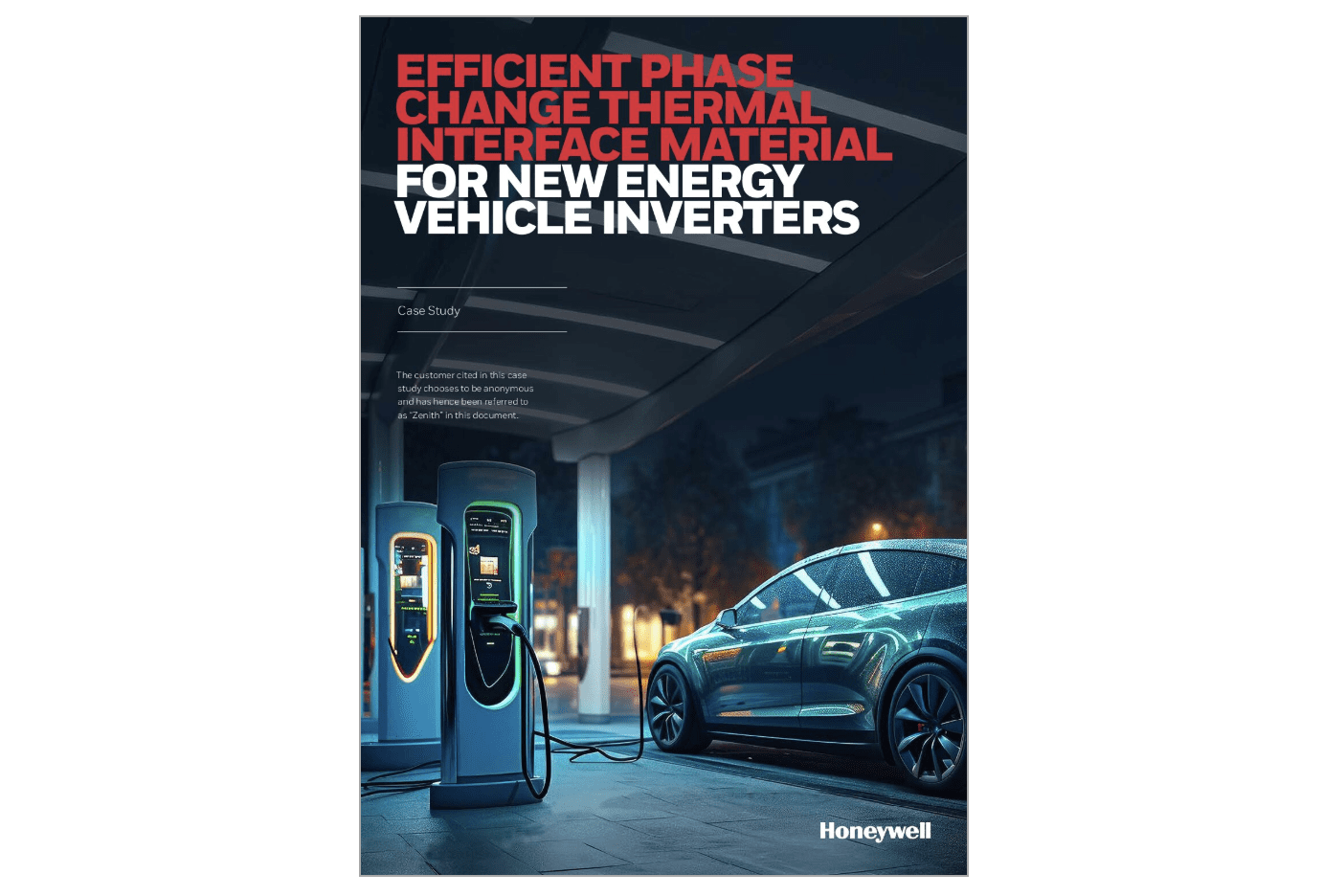
A prominent manufacturer of electric vehicle (EV) inverters recently faced a significant challenge with heat dissipation, prompting a search for a robust thermal management solution. The manufacturer required a method to effectively manage heat generated by the inverter.
In-Depth Evaluation for Optimal Thermal Solutions
To address this critical need, a comprehensive evaluation of various thermal management options was undertaken. Key criteria included high thermal conductivity, long-term reliability, and suitability for applications with minimal spacing, often referred to as thin gaps. This process aimed to identify a solution that could meet the demanding requirements of modern EV components.

Honeywell’s Phase Change Materials (PCM) in EV Applications
The case study delves into the specific applications of Honeywell’s Phase Change Material (PCM) technology. It highlights the effectiveness of PCMs in managing thermal loads within EV inverters, on-board chargers, and advanced driver-assistance systems (ADAS). The material’s ability to absorb and release heat during phase transitions makes it an ideal candidate for controlling operating temperatures in these high-performance automotive components.
Access the Full Case Study
Interested parties can download the complete case study from Honeywell to gain detailed insights into the thermal management solutions explored and implemented. The download requires users to provide contact information, including first name, last name, company, email, job title, phone number, and country. Additionally, users must consent to Honeywell’s Terms & Conditions and Privacy Statement. An option to receive further marketing communications from Honeywell is also available.
Note: The original article also contained information about a Virtual Conference on EV Engineering from March 9-12, 2026, featuring several sessions on topics such as “Automotive CoolGaN™ Enabling Highly-Efficient & Affordable E-Mobility” and “Unlocking Next-Gen xEV Power Conversion: New CoolSiC™ Devices.” This information is separate from the Honeywell case study and has been retained as context.