
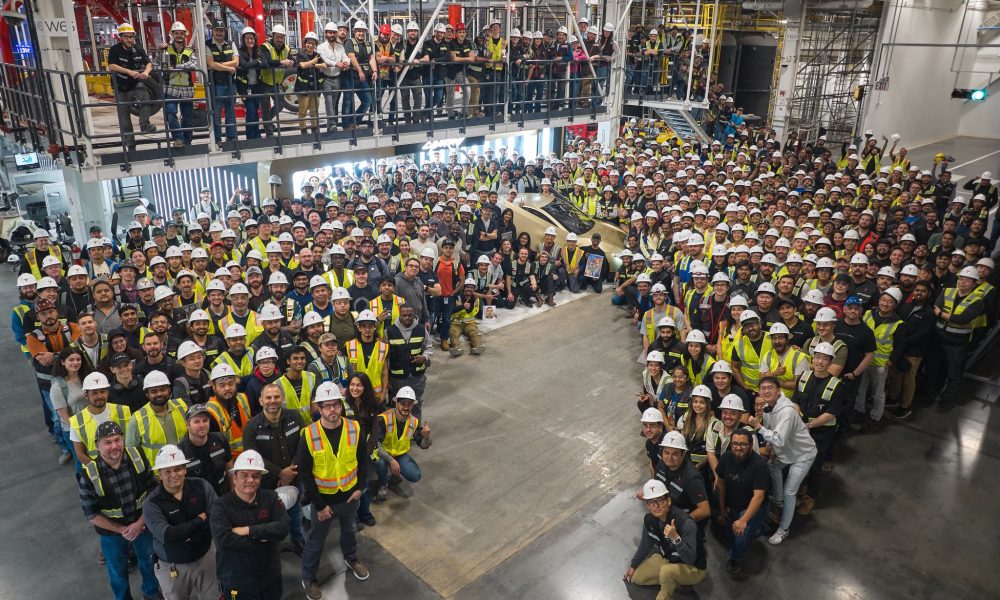
Gigafactory Texas has officially commenced production of the Tesla Cybercab, marking a significant manufacturing milestone that could herald a fundamental shift in personal transportation and vehicle ownership. The innovative, steering-wheel-free, and pedal-less electric vehicle is slated for volume production in April, with an anticipated price point under $30,000. This development positions the Cybercab as a potential catalyst for transforming transportation economics, making personal car ownership an optional consideration for many.
The Dawn of Affordable Autonomy
The Cybercab is engineered for maximum efficiency and cost-effectiveness. Its design prioritizes fleet and ride-sharing operations, featuring a compact, two-seater configuration. Key to its economic advantage are elements like inductive charging, a modest battery offering approximately 300 miles of range, and a manufacturing process that utilizes roughly half the components of a Model 3. Tesla’s revolutionary “unboxed” manufacturing approach is also designed to facilitate rapid, high-volume output.

This focus on efficiency aims to drastically reduce per-mile transportation costs, potentially as low as $0.20. Through shared fleets and high utilization rates, the Cybercab is expected to offer on-demand autonomous mobility at a fraction of current ride-sharing prices. This could fundamentally alter the financial calculus of personal vehicle ownership, which typically involves significant monthly expenses for payments, insurance, and maintenance, alongside immediate depreciation.
Furthermore, the Cybercab could unlock new revenue streams for car owners. By integrating privately owned vehicles into the Robotaxi network, owners might generate passive income when their cars are not in use. This could lead to a broader societal benefit, with cities potentially repurposing parking infrastructure for green spaces or housing. The widespread adoption of electric, shared autonomous vehicles could also significantly reduce urban congestion and environmental emissions over time.
Economic Disruption and Societal Costs
While the Cybercab promises unprecedented mobility and efficiency, its introduction raises significant concerns about economic disruption and job displacement. The rise of Robotaxis, powered by advanced AI, poses a direct threat to industries reliant on human drivers.

Companies like Uber and Lyft, along with traditional taxi services, currently employ millions globally. The elimination of labor costs through autonomous operation could lead to substantial job losses in these sectors. In the United States alone, ride-hailing services facilitate billions of miles of travel annually, underscoring the scale of potential employment impact.
The ripple effects of this technological shift could extend beyond direct driving roles. Suppliers of vehicle components, auto repair services, insurance adjusters, and even public transportation systems may experience reduced demand. Historical patterns of automation suggest that while new jobs may emerge, the creation of new employment opportunities often lags behind job destruction, particularly impacting lower-skilled workers.
Gig economy workers, who often rely on flexible income from ride-sharing, are particularly vulnerable. The challenge of retraining displaced drivers in a broader landscape of AI-driven job market shifts could be substantial. Projections for 2025 already indicated potential layoffs ranging from 50,000 to 300,000 jobs tied to artificial intelligence advancements.
The competitive landscape of the transportation industry is also poised for upheaval. While companies like Waymo and Uber have established partnerships, Tesla’s aggressive scaling and cost-reduction strategies for the Cybercab could trigger a price war. This intense competition could squeeze existing players and accelerate industry consolidation.
Balancing Innovation with Equity
The advent of the Tesla Cybercab presents a complex dichotomy of benefits and drawbacks, impacting various stakeholders differently. The potential winners include consumers, Tesla shareholders, urban planners, and environmental advocates.
Consumers stand to gain from significantly reduced transportation costs and enhanced mobility options. Anecdotal evidence suggests that the elimination of awkward social interactions with drivers in ride-sharing services is also a welcome, albeit often unstated, benefit for many passengers.
Tesla investors are positioned to benefit as the successful deployment of its Robotaxi service is anticipated to boost the company’s valuation and share price. Cities may see a reduction in traffic congestion and parking demands, freeing up valuable urban space for development such as housing or commercial areas.
Environmentally, the shift towards shared electric fleets promises a reduction in tailpipe emissions and a more efficient use of energy resources, contributing to cleaner air and mitigating climate change impacts.
A Call for Proactive Planning
The commencement of Cybercab production serves as a critical juncture, compelling society to carefully consider the balance between technological advancement and social equity. If Tesla successfully implements its production timeline and its autonomous technology proves reliable and safe, it could usher in an era of abundant and affordable mobility, fundamentally reshaping urban living.
However, the realization of these benefits hinges on the development and implementation of proactive policies. Measures such as comprehensive retraining programs for displaced workers, robust social safety nets, and phased deployment strategies will be crucial. Without such interventions, this technological revolution risks exacerbating economic inequality and leaving a significant portion of the workforce behind.
The core question is not whether the Cybercab will disrupt the status quo – its impact is already beginning – but rather whether society is adequately prepared for the profound economic and social transformations it is poised to unleash. The transition demands careful consideration of both the immense potential benefits of AI-driven autonomy and the very real human costs involved.