
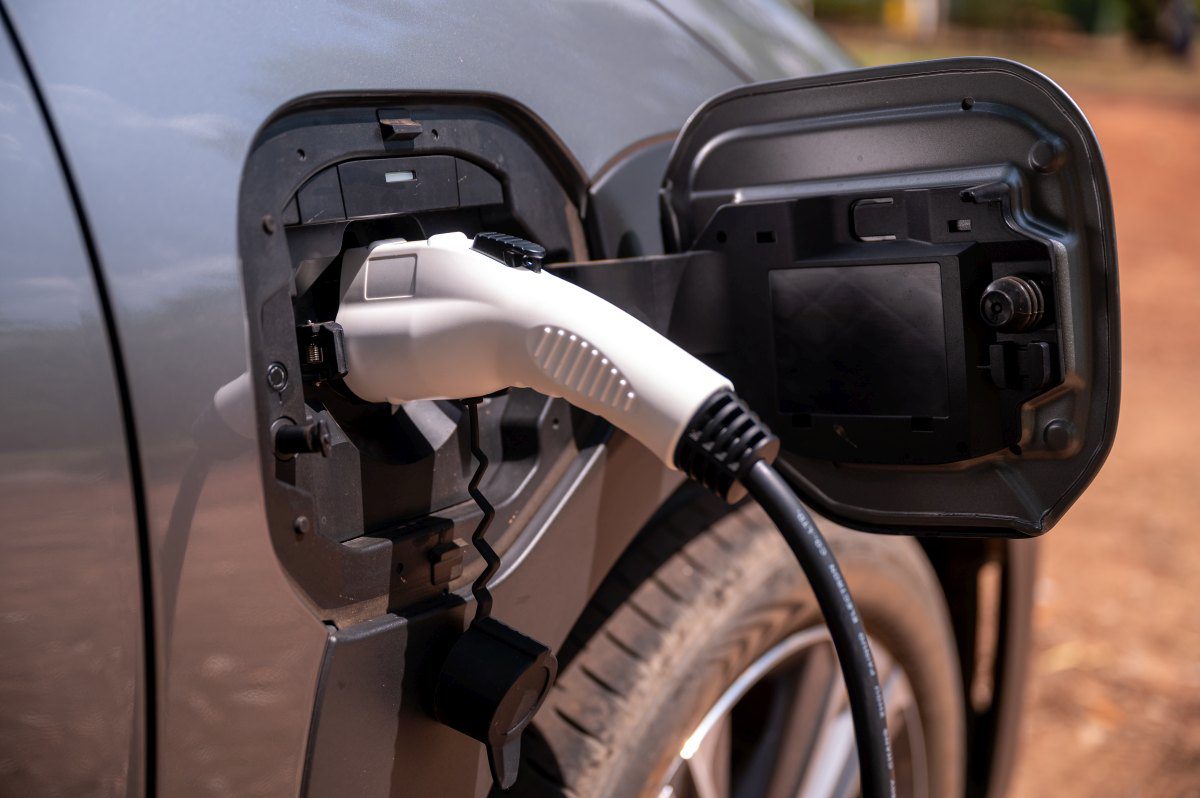
In the rapidly evolving landscape of electric vehicles (EVs), a key question for current owners is whether their cars can be upgraded with newer, more powerful batteries in the future. This concern is particularly relevant for those seeking extended driving range or enhanced functionality, like bi-directional charging.
The Quest for Extended Range
Mark, a proud owner of a 2024 Subaru Solterra purchased in December 2024, recently reached out with a pertinent query. While he “absolutely loves” his EV, he noted a slight shortfall in its range, specifically its inability to comfortably complete a round trip from his Melbourne home to Ballarat without an intermediate recharge. He posed a question that resonates with many EV enthusiasts: Will it be possible in the years ahead to replace the existing battery with one that offers an extended range?

He also inquired about the feasibility of retrofitting bi-directional charging capabilities into his Solterra, wondering if such features could be incorporated via a software update or minor hardware modification.
Manufacturer Stance on Upgrades
Bryce Gaton, an expert in electric vehicles with extensive experience since 2008, addressed Mark’s questions. Gaton noted that manufacturers typically show little inclination to offer battery upgrades for existing models. The prevailing business model often encourages consumers to purchase a new vehicle to access the latest technological advancements.
“Manufacturers are notoriously bad at offering upgrades to existing models as they like you to buy a replacement new car with the ‘latest and greatest’ tech instead,” Gaton explained. “This means we are very unlikely to ever see a bigger battery upgrade from Subaru/Toyota themselves.”

The Aftermarket Battery Landscape
Historically, the aftermarket for battery replacements and upgrades was more robust for early Battery Electric Vehicles (BEVs). Gaton pointed out that early models, such as the Mitsubishi iMiEV and the Nissan Leaf, offered significantly shorter ranges – around 100-120 km. These vehicles also experienced faster battery degradation, creating a market for aftermarket businesses.
“Many of the older ones were likely to one day need replacing as their short ranges decreased to less-than-practical distances,” Gaton stated. “Offering some return on the investment work to design one as there was a reasonable number of potential customers.”
Furthermore, owners of these older EVs were keen to increase their limited original range when a battery replacement was necessary. This was made more achievable by the continuous improvements in battery energy density and significant price reductions in battery cells between 2010 and the present day. These advancements allowed for larger battery capacities to be fitted into original battery casings, often at a lower cost.
Modern EVs and the Diminishing Need for Upgrades
However, the EV market has advanced considerably. Gaton highlighted that even the most affordable BEVs available today offer at least double, and often five to six times, the driving range of their early counterparts.
Consequently, Gaton predicts that the demand for extended-range battery upgrades will likely diminish. “As a consequence, I am guessing we won’t see longer-range batteries offered as range degradation rates now are much lower, meaning that in combination with those long initial ranges – they are unlikely to ever fall to ‘utterly too short for anything’,” he explained.
The reduced need for replacements, coupled with the substantial development costs for aftermarket upgrades, makes such ventures less attractive for businesses. “Plus, after-market businesses are less likely to develop replacements as almost all the batteries in modern BEVs won’t need replacement, so there is little likelihood of a decent return on their development work,” Gaton added. He also noted the economic reality that the cost of a new, entry-level BEV can be comparable to the price of a battery replacement for a 15-year-old model like the Leaf or iMiEV.
The Potential of Bi-directional Charging
Regarding Mark’s inquiry about bi-directional charging, Gaton suggested that the Subaru Solterra might possess the underlying capability, potentially requiring only a software update or a minor hardware change.
“It wouldn’t surprise me if yours was capable of it with a minor hardware change (or even just a software update),” Gaton stated. He cited Toyota’s recent experiments in the US since 2022 with Vehicle-to-Grid (V2G) technology, utilizing Japanese-specification bZ4X models, as an example of such ongoing development.
However, Gaton cautioned that even if the vehicle is technically capable, manufacturers may prefer owners to purchase newer models equipped with the feature. Warranty concerns are also a significant factor. “However, even if yours is ‘capable’ of V2G is – it would be a safe bet that the manufacturer would much prefer you buy a new one when they (finally) announce the feature and warranty the battery for use with V2G technology,” he advised. “It could even work ‘out of the box’ now, but do you want to risk your warranty?”
EVs Following the Path of ICE Evolution
Gaton concluded by drawing parallels between the evolution of electric vehicles and internal combustion engine (ICE) cars. He emphasized that cars have consistently incorporated new features and incremental improvements since the dawn of the automotive era, a trend that is expected to continue.
“Cars have been quietly evolving to incorporate new features since the beginning of the automotive era, and this is unlikely to change any time soon,” Gaton stated. “After all, if in 10 years’ time manufacturers built cars that were the same as the ones on sale today – they might have a hard time convincing you to spend the money on ‘more of the same’.”
While BEVs experienced a significant technological leap between 2010 and 2018, their development trajectory now mirrors the gradual, incremental changes characteristic of ICE vehicles. Gaton noted that the widespread adoption of V2G technology, however, seems to have been a particularly long time in coming.
About the Author: Bryce Gaton is a seasoned expert in the electric vehicle sector, contributing his knowledge to publications like The Driven and Renew Economy since 2008. He currently serves as an EV electrical safety trainer/supervisor for the University of Melbourne and offers valuable guidance through his consultancy, EVchoice, assisting businesses, government, and the public with the transition to electric mobility.