
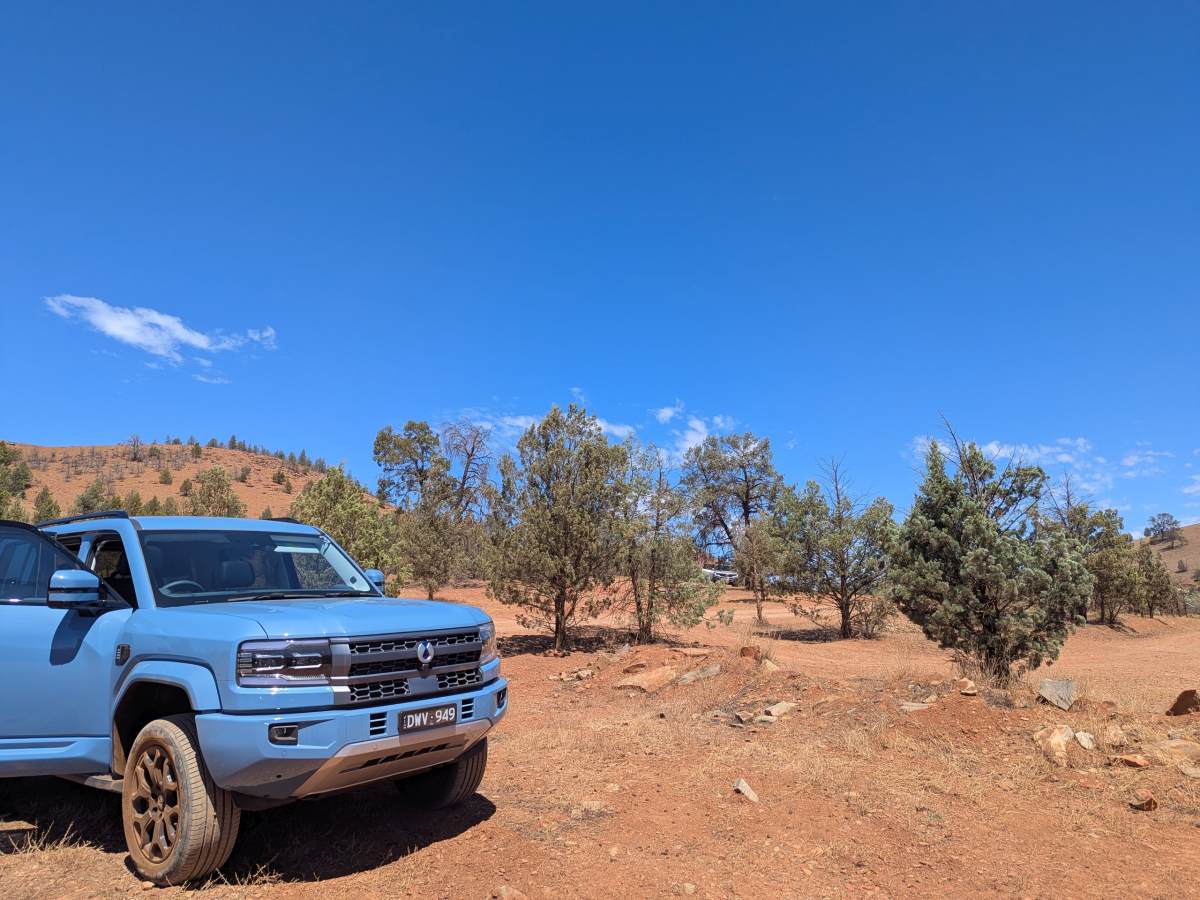
The landscape of off-road vehicles is undergoing a significant shift, moving beyond its traditional diesel-only roots. Leading this charge is BYD’s Denza B5, a plug-in hybrid SUV poised to challenge established players like the Toyota Prado. This electrified 4WD was recently put to the test in the rugged Flinders Ranges, offering a glimpse into the future of adventure vehicles.
Denza B5: A New Electrified Contender
The Denza B5, part of BYD’s expanding lineup, represents a serious electrified alternative in a segment that has largely remained the domain of diesel engines. Following the successful launch of the BYD Shark 6, which sold over 18,000 units in 2025, the B5 aims to capture the attention of families and adventurers seeking robust towing capabilities and advanced technology.

Designed to compete directly with the highly popular diesel Toyota Prado, the Denza B5 enters the market with significant promises. While its exterior design aligns with conventional premium off-roaders, its underlying technology sets it apart.
Outback Adventure: A Rigorous Test Drive
A recent test drive of the 2026 Denza B5 took journalist Riz Akhtar from Adelaide deep into the Flinders Ranges. This journey was far from a typical city commute, spanning 500 kilometres over two days and encompassing demanding on- and off-road conditions in the Australian Outback.
The objective was clear: to assess the B5’s capabilities in environments where traditional diesel 4WDs have long held sway.

Competitive Pricing and Performance
A key highlight of the Denza B5 is its surprisingly competitive starting price of $74,990 plus on-road costs. This positions it directly against the base model Toyota Prado, offering a compelling value proposition.
Despite the comparable pricing, the Denza B5 reportedly delivers twice the power and significantly more advanced technology, presenting a strong case as a ‘bargain’ when compared to European luxury rivals.
Powertrain and Electrified Performance
The Denza B5 employs BYD’s Dual Mode Off-road (DM-O) platform, a sophisticated plug-in hybrid system. It features a 1.5-litre turbo engine working in tandem with two powerful electric motors.
This combined setup generates an impressive 425 kW of power and 760 Nm of torque. This translates into brisk acceleration, with the B5 capable of reaching 100 km/h from a standstill in a mere 4.8 seconds.
During the highway drive out of Adelaide, the vehicle’s responsiveness was noted, delivering an experience more akin to a sports car than a three-tonne SUV. This rapid acceleration offers Prado buyers a distinct alternative performance profile.
Electric Range and Charging Capabilities
The plug-in hybrid system offers a practical electric-only range of 90 km, suitable for daily city driving, powered by a 31.8 kWh BYD Blade Battery pack.
For longer journeys, the B5 supports rapid charging, with DC charging capabilities allowing a 10-80% charge in approximately 20 minutes, at speeds up to 100 kW.
Combined, the Denza B5 boasts a total range of up to 1,000 km, catering to those undertaking occasional long-distance travel, such as the journey to Wilpena Pound.
Interior Luxury and Comfort
The interior of the Denza B5 offers a high level of luxury and comfort, designed to enhance the experience of adventuring families. Even in the heat of the Australian Outback, the Nappa leather seats with ventilation and a highly effective air conditioning system kept occupants comfortable.
Convenience features include a built-in console fridge, maintaining a consistent cool temperature for drinks throughout the journey. This amenity is highlighted as a feature often absent in comparable Prado variants.
The B5’s massage seats contribute to a more premium feel. A large 15.6-inch central touchscreen, featuring what is described as the best in-car software among 4WDs tested by the author, serves as the command centre.
Supplementing the visual experience is a 16-speaker Devialet sound system. While deemed satisfactory for most music, it was noted that bass-heavy tracks could sound slightly muffled when compared to premium audio systems in other vehicles.
Advanced Driver Aids and Connectivity
The head-up display proved effective during the drive, projecting navigation directions clearly, even under the bright Australian sun past Hawker, approximately 400 km north of Adelaide.
Spacious and Versatile Cabin
Passenger space in the Denza B5 is generous across both rows. Extended periods in the rear seats during the drive to the Flinders Ranges were found to be particularly comfortable, aided by a flat floor that enhances the sense of spaciousness, making the rear cabin feel akin to a lounge.
Off-Road Prowess: Tested in the Flinders
The second day of testing focused on the off-road tracks near Wilpena Pound, where the Denza B5 and its underlying engineering truly demonstrated their purpose. The vehicle exhibited characteristics of a body-on-frame SUV rather than a soft-roader, designed explicitly for challenging terrain.
Distinguishing itself from the BYD Shark 6, the Denza B5 is equipped with front and rear differential locks, along with a ‘tank turn’ function for navigating tight trails.
Innovative Suspension System
A standout feature, particularly on the Leopard variant priced from $79,990 before on-roads, is the unique DiSus-P hydraulic suspension system.
During climbs over rocky terrain in the Flinders, the ride height was elevated to 310 mm. This adjustment effectively absorbed the impact of corrugated tracks, providing a smooth ride over challenging surfaces.
The suspension, combined with an approach angle of 39 degrees (when raised), significantly eased the climb over steep inclines.
Capability on Descents and Water Crossings
The vehicle’s departure angle of 35 degrees, coupled with a 360-degree camera view, contributed to confident descents. The technology integrated into the B5 aims to assist even novice off-roaders in navigating difficult tracks.
With a wading depth of 790 mm, the Denza B5 instils confidence for traversing creek crossings. While it may not replicate the legendary feel of a Toyota LandCruiser, its advanced technology makes off-roading more accessible.
Areas for Consideration
Despite its impressive capabilities, the Denza B5 is not without its considerations. Its considerable weight can be felt during high-speed cornering, and the steering, while functional, was described as slightly light, though potentially adjustable.
A crucial aspect for potential buyers, particularly those cross-shopping with established models like the Prado or LandCruiser, is long-term durability. The Denza brand will need to establish a track record of reliability in harsh Australian conditions over an extended period, as buyers in this segment often prioritise longevity measured in decades.
Towing Capacity
The B5’s towing capacity is rated at 3 tonnes, which is slightly less than the Toyota Prado’s 3.5-tonne rating. While this difference may be significant for a small subset of buyers who regularly haul very heavy loads, it is unlikely to be a limiting factor for the majority of users.
Conclusion: A Capable Electrified Future
The 2026 Denza B5 successfully demonstrated its capabilities during its extensive test in the Flinders Ranges, navigating both the journey and the rugged terrain without issue. It proved to be quiet, powerful, and highly capable both on and off the road.
This vehicle represents a significant step forward for electrified off-roaders, moving beyond niche appeal to offer a genuinely capable alternative in a segment dominated by diesel. It presents a compelling option for Australian drivers seeking a blend of luxury, electrification, and robust performance for both suburban life and bush adventures.
About the Author: Riz Akhtar is the founder of carloop, a Melbourne-based entity specializing in Australian EV data, insight reports, and trends. With a background as a mechanical engineer who spent his initial seven years in transport infrastructure development, Akhtar now focuses on electric vehicles and reducing transport emissions in Australia. He currently drives a red Tesla Model 3.