
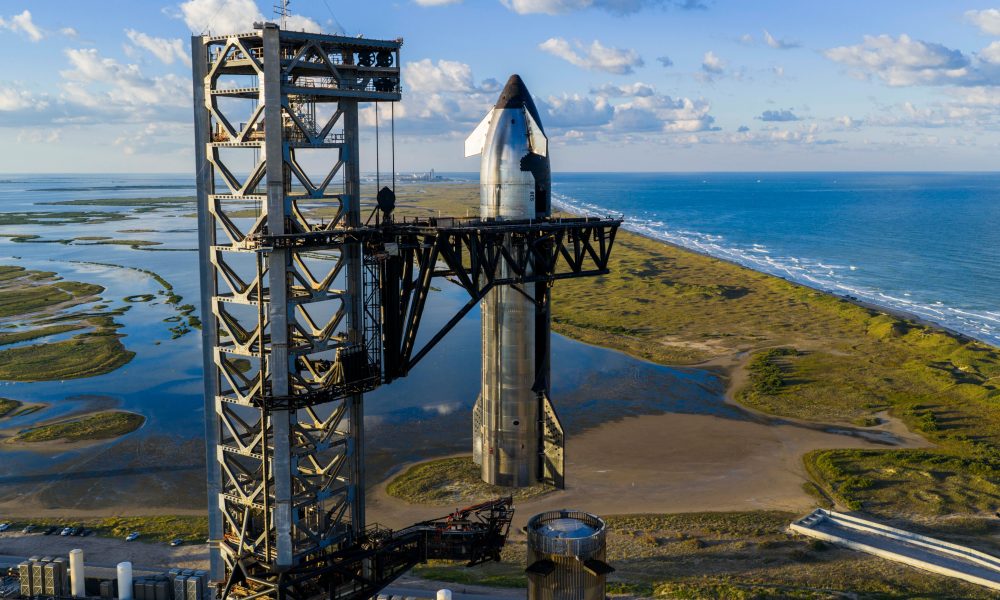
Elon Musk Confirms Starship V3’s Next Launch Imminent, Signaling Aggressive Development Pace
SpaceX is on track for its next Starship launch, with CEO Elon Musk confirming the vehicle is slated to fly again next month. This announcement underscores the company’s ambitious timeline for its next-generation Starship V3 rocket.
Starship Development Accelerates
Musk shared the update via a concise post on the social media platform X, stating, “Starship flies again next month.” The post was accompanied by a video showcasing SpaceX’s Super Heavy booster successfully being caught by a launch tower at Starbase, Texas, highlighting advancements in recovery technology.

This projected timeline aligns with previous statements from Musk. In late January, he indicated that Starship’s twelfth flight test was anticipated in approximately six weeks, placing the potential launch window in March. This projection was consistent with SpaceX’s earlier target for the first quarter of 2026 for the mission.
Starship flies again next month
pic.twitter.com/I08L5oaRA4— Elon Musk (@elonmusk) February 21, 2026
Debut of Starship V3 and Raptor V3 Engines
If the launch proceeds as planned next month, it will mark the debut of the Starship V3 configuration. This upgraded version is expected to feature SpaceX’s new Raptor V3 engines, representing a significant step forward in propulsion technology.

The Raptor V3 engines are engineered to deliver substantially higher thrust compared to their predecessors. Crucially, they are also designed to reduce both manufacturing costs and weight, key factors for scaling production. The Starship V3 platform itself is anticipated to be optimized for enhanced manufacturability.
This optimization is vital for SpaceX’s objectives of achieving high launch cadences. Such a rate is necessary to support the deployment of its Starlink satellite constellation, facilitate NASA’s lunar exploration missions, and progress towards long-term interplanetary goals, including human missions to Mars.
Transition from Testing to Operations
Starship V3 is widely seen as the pivotal iteration that will transition the program from its experimental testing phase to a more operational and scaled deployment model. Previous integrated flight tests have yielded valuable data, demonstrating steady progress despite mixed outcomes.
The high expectations surrounding SpaceX’s current development efforts suggest a focus on refining the Starship system. A rapid and aggressive launch schedule is essential for advancing multiple critical programs simultaneously.
Strategic Importance of Aggressive Launch Schedule
An accelerated launch cadence for Starship directly supports several of SpaceX’s core strategic priorities. This includes the deployment of next-generation Starlink satellites, bolstering NASA’s lunar ambitions under the Artemis program, and maintaining momentum for SpaceX’s overarching long-term objectives related to the Moon and Mars.
The continuous flight testing and iterative improvements are designed to ensure Starship is ready for its diverse range of missions. The commitment to a rapid launch timeline reflects SpaceX’s determination to push the boundaries of space exploration and transportation technology.