
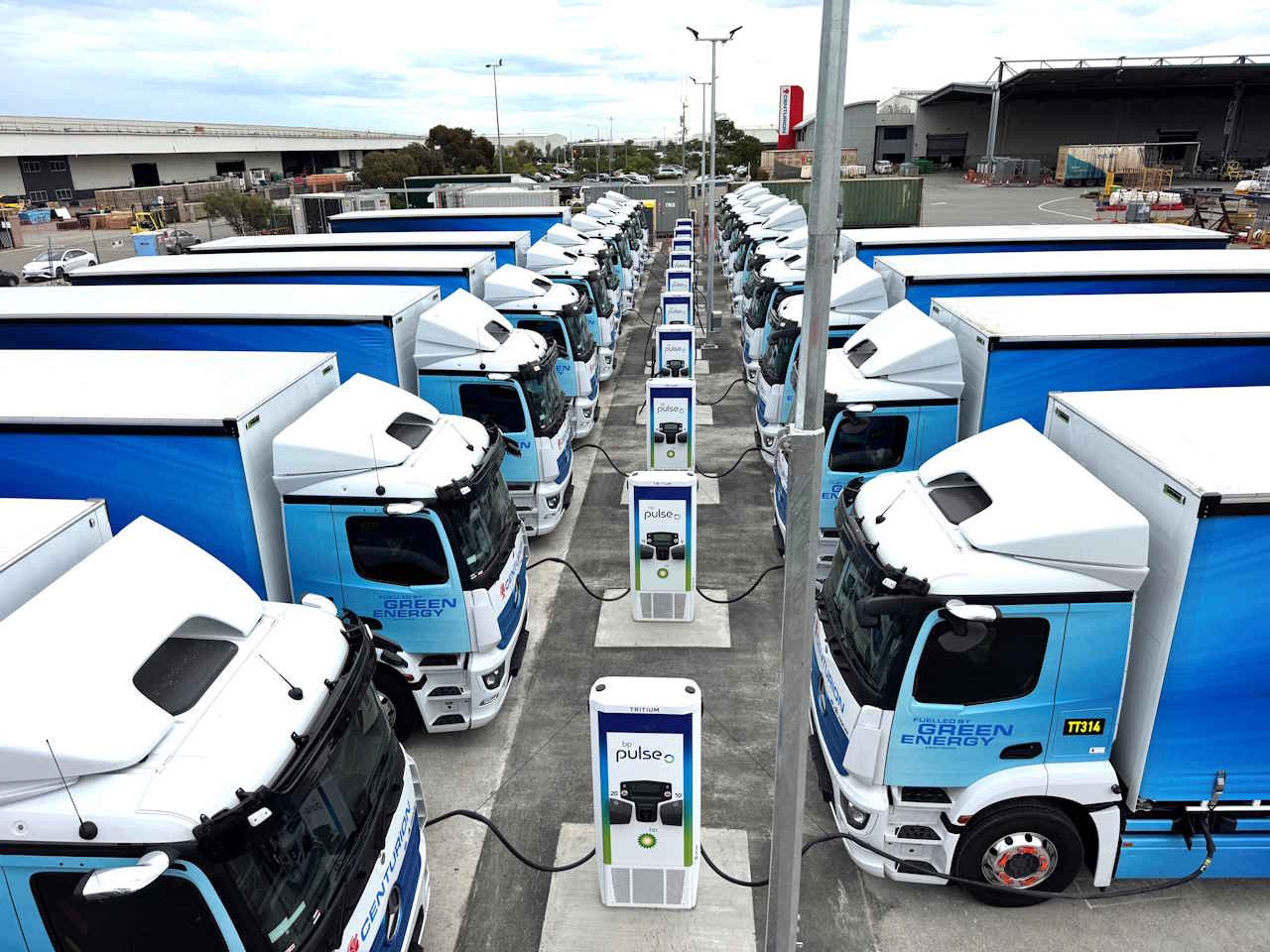
In a significant move towards fostering a greener economy and bolstering the resilience of its vital logistics sector, the Victorian Labor government has rolled out two new initiatives designed to support the freight industry. These programs aim to alleviate the financial burden of escalating fuel costs while simultaneously propelling businesses towards cleaner, more sustainable transport options.
The applications are now open for these pioneering programs, which are set to empower freight operators across Victoria to invest in advanced low- and zero-emission vehicles, crucial charging infrastructure, and innovative technologies. This strategic investment is poised to not only reduce operational expenditures but also enhance overall efficiency, a particularly critical objective amidst recent fuel price volatility.

A Strategic Push Towards Cleaner Freight
The newly launched Freight Decarbonisation Co-Investment Program and the Victorian Electric Heavy Vehicle Trial represent a concerted effort by the state government to guide Victoria’s freight industry into a more sustainable future. By focusing on both financial assistance and practical experience, the initiatives seek to create a pragmatic pathway for businesses to adapt to evolving environmental standards and economic realities.
These programs underscore the government’s recognition of the immense pressure faced by freight operators, particularly concerning fluctuating fuel prices. The overarching goal is to equip the industry with the tools and resources needed to embrace modern, fuel-independent solutions, thereby strengthening economic stability and environmental responsibility within the sector.
Understanding the Dual Programs for Sustainability
Victoria’s freight decarbonisation strategy is underpinned by a two-pronged approach, each program targeting distinct yet complementary aspects of the transition. These initiatives are carefully designed to address both the immediate financial challenges and the long-term strategic needs of the industry, fostering a comprehensive shift towards sustainable practices.

The Freight Decarbonisation Co-Investment Program Explained
The cornerstone of this ambitious transition is the $8 million Freight Decarbonisation Co-Investment Program. This initiative is structured to provide substantial financial grants, with eligible small- and medium-sized freight businesses able to secure up to $300,000. The funding is earmarked for critical investments, including cleaner vehicles, advanced charging infrastructure, the adoption of low-emissions fuels, and other cutting-edge technologies.
To ensure a shared commitment to the decarbonisation journey, the program mandates a co-investment model. Successful grant recipients are required to contribute cash at a rate of 1:5. For instance, a business receiving the maximum grant of $300,000 would be required to provide a cash co-investment of $60,000. This mechanism encourages genuine partnership and ensures that businesses have a vested interest in the success and longevity of their sustainable upgrades.
Businesses operating across both road and rail freight segments are eligible to apply, signifying a broad commitment to transforming Victoria’s entire goods movement network. Expressions of interest for this pivotal Freight Decarbonisation Co-Investment Program are open until 4:00 PM on Wednesday, 22 April 2026. Further detailed information regarding application criteria and processes is accessible here.
Pioneering Real-World Electric Heavy Vehicle Experience
Complementing the co-investment grants is the $1.5 million Victorian Electric Heavy Vehicle Trial. This trial is being delivered in close partnership with the Victorian Transport Association (VTA), a key industry body. Its primary objective is to provide businesses with invaluable real-world experience operating electric heavy vehicles.
The trial is crucial for understanding the practicalities, performance, and integration challenges of electric heavy vehicles within existing freight operations. While specific details regarding the trial’s implementation, participant selection, and operational scope are yet to be publicly announced, its establishment highlights a proactive approach to gathering empirical data and insights necessary for a smooth, informed transition across Victoria’s freight decarbonisation efforts. Updates on the trial’s progress are anticipated as it moves forward.
Government Vision: Addressing Costs and Modernising Fleets
State Minister for Ports and Freight, Melissa Horne, articulated the core motivation behind these new programs, emphasising the government’s commitment to supporting the industry through challenging economic conditions. Her statement underscored a direct response to the pressures faced by freight operators.
“We know the cost of fuel is hurting our freight operators which is why rolling out these programs will help freight businesses cut costs, boost efficiency and modernise their fleets for the future,” Minister Horne stated. She further elaborated on the long-term benefits for businesses: “We’re making it easier for operators to save on running costs while transitioning to cleaner, more reliable technology.” This vision highlights a dual benefit: immediate economic relief and a future-proofed, sustainable transport network.
Industry Endorsement: A Measured Transition
The introduction of these programs has been met with positive reception from key industry stakeholders, signaling a collaborative approach to Victoria’s freight decarbonisation journey. The Victorian Transport Association (VTA), a prominent voice for the sector, expressed strong support for the government’s initiatives.
Peter Anderson, CEO of the VTA, commended the government for its foresight and practical support. He praised the government on “recognising the scale of the decarbonisation challenge and for supporting freight operators with meaningful, hands‑on programs.” This acknowledgment from an industry leader underscores the pertinence and relevance of the new schemes.
Anderson further elaborated on the VTA’s long-standing advocacy for a strategic and well-considered shift. “The VTA has consistently advocated for a measured, informed transition so that freight companies can adopt cleaner technologies when it makes operational and commercial sense,” he remarked. He stressed the importance of a phased approach, acknowledging that such a significant transformation will take time: “While this shift will take years, the most important step is beginning with knowledge, clarity, and a plan.”
Victoria’s Freight Sector: A Foundation for Economic Growth
The importance of Victoria’s freight industry to the state’s economic fabric cannot be overstated. As a critical engine for commerce and supply chains, the sector is responsible for the movement of vast quantities of goods and employs a significant portion of the workforce. Annually, Victoria’s freight businesses contribute substantially to the state’s prosperity, employing approximately 240,000 individuals.
These dedicated professionals are responsible for moving an staggering volume of goods, with approximately 440 million tonnes of freight transported each year across various modes. Projections indicate that this figure is set to grow considerably in the coming decades, placing even greater demands on the sector. Therefore, investing in the modernisation and decarbonisation of this crucial industry is not merely an environmental imperative but a strategic economic necessity.
Long-Term Impact: Economic Resilience and Environmental Stewardship
The implementation of the Freight Decarbonisation Co-Investment Program and the Victorian Electric Heavy Vehicle Trial marks a pivotal moment for Victoria’s ambition to lead in sustainable logistics. These initiatives are designed to yield significant benefits, contributing to both the economic resilience of businesses and the broader environmental goals of the state.
By empowering freight operators to reduce their reliance on traditional fuels, the programs offer a pathway to lower operating costs, thereby enhancing profitability and stability for businesses, especially small and medium enterprises. This financial advantage, coupled with the adoption of cleaner technologies, will concurrently lead to a reduction in greenhouse gas emissions and improved air quality across Victoria.
Ultimately, these programs represent a forward-thinking investment in the future of Victoria’s freight sector. They are critical steps towards creating an efficient, cost-effective, and environmentally responsible supply chain that can meet the growing demands of the state’s economy while safeguarding its natural environment for generations to come. Victoria’s freight decarbonisation efforts are poised to set a precedent for sustainable industry transformation.