
Key Takeaways:
- Electrify America is simplifying its payment system for EV charging.
- The company is phasing out mandatory app-based account top-ups and auto-reload features.
- A new direct billing model will be implemented, placing temporary authorization holds on payment cards for each session.
- This change aims to improve convenience for all EV drivers, particularly occasional users, by removing the need for preloaded funds and manual refunds.
- The streamlined approach aligns Electrify America’s payment process more closely with direct-to-card billing models seen in other major charging networks.
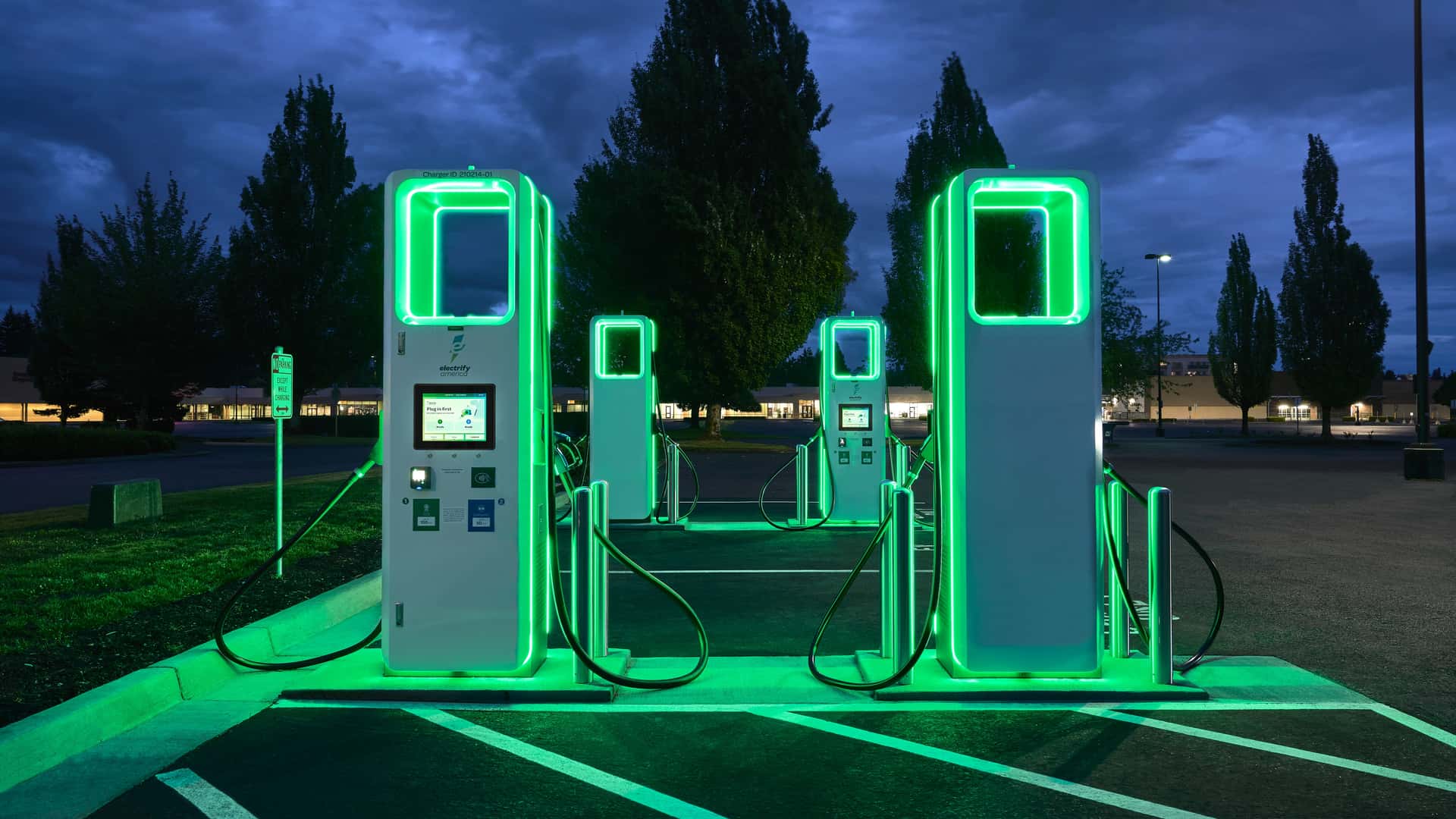
In a significant move aimed at streamlining the electric vehicle (EV) charging experience, Electrify America, one of the premier EV charging networks in the United States, has announced a fundamental shift in its payment system. The company will soon phase out its existing app-based account balance requirement, transitioning to a more direct and user-friendly billing model for individual charging sessions.

This strategic update addresses a common pain point for many EV drivers, particularly those who are occasional users of the Electrify America network. By eliminating the need to preload funds and manage account balances, the company aims to foster a more seamless and less cumbersome electric vehicle charging experience across its vast infrastructure.
Streamlining Payments for a Seamless EV Charging Experience
The evolution of EV charging infrastructure is not merely about increasing the number of stations or the speed of charging; it also critically involves enhancing the overall user experience. Payment systems often represent a significant point of friction for consumers accustomed to the simplicity of traditional fuel pumps. Electrify America’s latest policy adjustment directly tackles this challenge.
The Shift from Account Balances to Direct Billing
Historically, Electrify America customers were required to maintain a preloaded fund balance within the company’s smartphone application. This system included an automatic reload feature, which would top up the account with a predetermined amount once the balance fell below a certain threshold. While functional, this approach often added an additional layer of complexity that deviated from the instant payment methods prevalent in other consumer services.

The impending change will see Electrify America moving towards a direct billing model. This means that each charging session will be billed directly to the customer’s registered payment card without the intermediary step of managing an in-app balance. This transition is expected to roll out across the network in the coming weeks, promising a more intuitive process for all electric vehicle owners utilizing the network.
Addressing User Friction and Enhancing Convenience
One of the primary motivations behind this policy update is to mitigate the hassle associated with account management. Under the previous system, infrequent users often found themselves needing to request manual refunds for any remaining balance left on their accounts after a charging session or period of inactivity. This administrative step, while not overly difficult, nevertheless represented an unnecessary barrier to an otherwise straightforward service.
For the modern EV driver seeking efficiency and simplicity, the removal of such steps is a welcome development. It reflects a growing industry trend towards simplifying the customer journey, making the adoption and day-to-day operation of electric vehicles more appealing and less daunting for a broader audience. Enhancing the EV charging experience is crucial for encouraging wider electric mobility.
Understanding the New Direct Billing Mechanism
The new payment mechanism introduces a system designed to be both efficient and transparent. Electrify America intends to place an automatic, temporary authorization hold on the customer’s payment card at the commencement of each charging session. These holds will be executed in increments of $20.
Temporary Authorization Holds Explained
This method mirrors practices common in other industries, such as car rentals or hotel bookings, where an initial hold secures the anticipated cost. At the conclusion of the charging session, the precise cost of the electricity consumed will be charged to the card, and any amount from the temporary hold that was not utilized will be automatically released back to the customer’s payment card. For example, if an initial $20 hold is placed and the session ultimately costs $17, the remaining $3 will be promptly returned to the card, eliminating the need for manual refund requests.
This system ensures that customers only pay for the energy they actually use, while providing the network operator with assurance of payment. It significantly reduces the administrative burden on both the customer and the service provider, enhancing the overall transactional fluidity within the Electrify America charging network.
Handling Existing Account Funds
For current Electrify America users who still have funds residing in their app accounts, the company has outlined a clear transition plan. Any existing balance will be automatically applied towards their subsequent charging sessions. Should the cost of a session exceed the remaining account balance, the difference will be seamlessly billed to the registered payment card on file. This ensures a smooth transition without requiring users to actively manage or transfer their existing funds.
Aligning with Industry Best Practices
Electrify America’s pivot to direct billing signifies an alignment with payment models that have proven successful in the EV charging sector, particularly those prioritized by industry leaders.
The Tesla Supercharger Model: A Benchmark
The change brings Electrify America’s payment process closer to that of the widely acclaimed Tesla Supercharger network. Tesla’s system, known for its user-friendly interface, typically requires drivers to use a smartphone app to initiate charging but then directly bills the session cost to a credit or debit card registered with the account. This direct-to-card approach has long been praised for its simplicity and efficiency, setting a high standard for the EV charging experience.
By adopting a similar methodology, Electrify America aims to enhance customer satisfaction and reduce perceived complexities, thereby fostering greater confidence in using its extensive network for electric vehicle charging needs. This move is a testament to the ongoing efforts across the industry to standardize and simplify the charging process, making electric mobility more accessible and convenient for everyone.
Electrify America’s Expanding Charging Footprint
Understanding the scale of Electrify America’s operations provides crucial context for the impact of this policy change on the broader EV charging landscape. The company plays a pivotal role in expanding the charging infrastructure necessary to support the growing number of electric vehicles on American roads.
Network Scale and Charger Diversity
According to data from the Department of Energy’s Alternative Fuels Data Center, Electrify America currently operates an impressive network of over 1,100 EV charging stations across the United States. These stations collectively host approximately 5,800 individual charging ports, providing essential infrastructure for long-distance travel and daily commutes.
The vast majority of these locations are equipped with DC fast chargers, capable of delivering up to 350 kilowatts of power, which significantly reduces charging times for compatible electric vehicles. In addition to its high-speed offerings, Electrify America also provides Level 2 charging ports at 140 stations nationwide, totaling 170 ports, catering to various charging needs and vehicle types.
Comparing to the Broader U.S. Charging Infrastructure
While Electrify America boasts a substantial network, it operates within a dynamic and competitive ecosystem. For comparison, the Tesla Supercharger network, widely recognized as the largest in the country, features nearly 38,000 fast-charging ports distributed across 3,100 stations in the U.S. These figures underscore the continuous growth and investment in charging infrastructure required to keep pace with the accelerating adoption of electric vehicles.
The expansion and refinement of charging networks, including critical updates to payment systems, are essential components of building a robust and reliable EV ecosystem. As more drivers transition to electric vehicles, the ease of access and use of public charging infrastructure will become increasingly important factors in their purchasing decisions and daily satisfaction.
The Broader Impact on EV Adoption and Charging Infrastructure
The simplification of payment processes, such as Electrify America’s move to direct billing, has far-reaching implications for the broader landscape of electric vehicle adoption. Reducing friction at charging stations can significantly improve the overall perception of EV ownership, making it more appealing to prospective buyers.
A streamlined EV charging experience helps alleviate range anxiety and provides a clearer path to electric mobility. As the market for EVs matures, competition among charging providers is intensifying, prompting companies to innovate not just in hardware, but also in software and user interfaces. Such strategic enhancements are crucial for driving consumer confidence and ensuring the long-term sustainability of the electric vehicle revolution.
These developments contribute to the larger goal of establishing a comprehensive and interoperable charging network across the nation, supporting government mandates and consumer preferences for cleaner transportation options. The continuous improvement of charging infrastructure, both in terms of physical presence and operational ease, remains a critical pillar for a future dominated by electric vehicles.
Frequently Asked Questions (FAQ)
What is Electrify America changing about its payment system?
Electrify America is phasing out its app-based account balances and auto-reload features. Instead, customers will be billed directly to their registered payment card for each charging session, making the process more straightforward and eliminating the need to manage a prepaid account.
Why is Electrify America making this change?
The change aims to simplify the electric vehicle charging experience and improve convenience for users, especially those who only occasionally use Electrify America stations. It removes the extra step of preloading funds and the hassle of requesting manual refunds for unused balances.
How will the new direct billing system work?
At the start of each charging session, Electrify America will place an automatic but temporary authorization hold on the customer’s payment card in $20 increments. After the session concludes, the exact amount for the charge will be billed, and any unused portion of the hold will be automatically returned to the card.
What happens to existing funds in an Electrify America app account?
For customers with existing funds in their app accounts, this money will be applied to their next charging session. If the cost of that session exceeds the remaining balance, the additional amount will be billed directly to the customer’s registered payment card.
How does this compare to other EV charging networks?
This new system makes Electrify America’s charging experience more similar to that of Tesla’s Supercharger network. Tesla also utilizes a smartphone app to initiate charging but directly bills the session costs to a linked credit or debit card, a method widely appreciated for its simplicity.
How many charging stations does Electrify America operate?
According to the Department of Energy’s Alternative Fuels Data Center, Electrify America operates over 1,100 EV charging stations in the United States, offering a combined total of 5,800 charging ports. Most of these provide high-speed DC fast charging capabilities.