
Key Takeaways
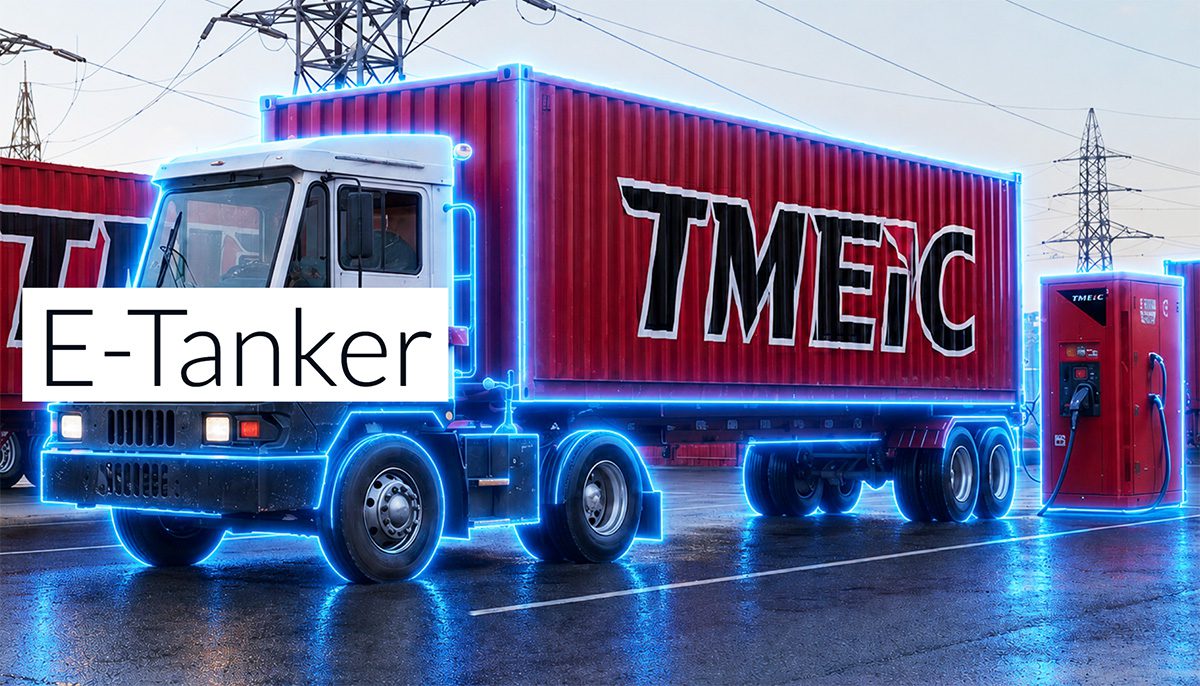
- Japan-based TMEIC’s US subsidiary has launched the E-Tanker, a groundbreaking mobile charging system designed to swiftly electrify diesel rubber-tired gantry (RTG) cranes in port terminals.
- The E-Tanker solution, housed in a standard 40-foot container, features mobile lithium-ion battery charging units, high-energy battery blocks, and a charging station, all managed by an intelligent Fleet Management System (FMS).
- This innovative approach circumvents major infrastructure challenges, such as extensive yard redesigns or costly grid upgrades, typically associated with traditional RTG electrification methods.
- It enables terminals to transition from diesel to battery-electric operations quickly and cost-effectively, significantly reducing downtime and preserving terminal capacity.
- Diesel RTG cranes are major contributors to a terminal’s fuel consumption, accounting for up to 75%, making them a critical target for decarbonization efforts within the maritime logistics sector.
In a significant stride towards accelerating decarbonization across global maritime logistics, the US subsidiary of Japan-based TMEIC has introduced an innovative mobile charging system tailored to revolutionize port operations. The new solution, dubbed E-Tanker, is engineered to facilitate a rapid and seamless transition of rubber-tired gantry (RTG) cranes from conventional diesel power to more sustainable battery-electric operations.
This development comes as ports worldwide intensify efforts to reduce their carbon footprint and enhance operational efficiencies. Diesel-powered RTG cranes, integral to container handling, represent a substantial source of emissions and fuel consumption, positioning them as a critical area for sustainable innovation.
Addressing the Decarbonization Imperative in Port Operations
Global shipping and port industries are under increasing pressure to adopt greener technologies and practices. The maritime sector, a cornerstone of international trade, is a significant contributor to global greenhouse gas emissions. As such, governments, regulators, and environmental advocates are driving initiatives to mandate cleaner operations, pushing terminals to seek viable solutions for emission reduction.
Port terminals, serving as vital gateways for trade, are complex ecosystems where operational efficiency must be balanced with environmental stewardship. Electrification of heavy machinery like RTG cranes offers a direct pathway to achieving both, minimizing reliance on fossil fuels and improving air quality within port communities.
Traditional Electrification Challenges for Gantry Cranes
Historically, electrifying existing diesel RTG cranes has presented numerous logistical and financial hurdles for port operators. Conventional methods, such as installing cable reels or bus bar systems, often necessitate extensive civil work, significant yard redesigns, and costly upgrades to electrical grid infrastructure.
These traditional approaches typically lead to prolonged retrofit downtime, disrupting critical terminal operations and impacting overall capacity. For busy container terminals, even short periods of operational interruption can translate into substantial financial losses and supply chain delays, making large-scale electrification projects difficult to justify without innovative alternatives.
TMEIC’s E-Tanker: A New Paradigm for Port Electrification
TMEIC’s E-Tanker is designed to overcome these long-standing challenges by introducing a flexible, scalable, and non-intrusive electrification pathway. This comprehensive mobile charging system is an integrated solution engineered for quick deployment and seamless integration into existing terminal layouts.
The system is specifically developed to enable terminals to upgrade their RTG fleets without the need for the extensive and disruptive infrastructure overhauls associated with conventional wired electrification options. This focus on minimizing operational disruption is central to the E-Tanker’s appeal.
Key Components of the Innovative Mobile Charging System
The E-Tanker solution comprises several interconnected elements working in concert to provide efficient, on-demand power. At its core is a self-contained mobile charging system, housing a lithium-ion battery charging unit.
This unit is complemented by high-energy battery blocks, which are adaptable to existing cranes, and a dedicated charging station. The entire ecosystem is orchestrated and optimized by TMEIC’s intelligent Fleet Management System (FMS), ensuring coordinated and efficient energy deployment.
Seamless Integration and Operational Flexibility
One of the most compelling features of the E-Tanker is its design for integration into dynamic port environments. The entire mobile charging system is housed within a standard 40-foot container, allowing it to be easily transported across the terminal yard using existing terminal tractors.
This mobility ensures that the E-Tanker can be strategically positioned to serve multiple RTGs as needed, offering unparalleled flexibility. A single E-Tanker unit possesses the scalability required to support broader electrification initiatives across an entire fleet of cranes, adapting to varying operational demands and expansion plans without fixed infrastructure constraints.
Optimizing Efficiency with Intelligent Fleet Management
The integration of TMEIC’s intelligent Fleet Management System (FMS) is pivotal to the E-Tanker’s operational efficacy. The FMS provides terminal operators with real-time, comprehensive visibility into their yard operations, moving beyond simple battery status monitoring.
Through the FMS, operators can access crucial data points, including individual battery state of charge for each crane, current job assignments, optimized charging schedules, and overall operational priorities. This data-driven approach allows terminals to precisely optimize the utilization of their assets, ensuring maximum efficiency and minimal downtime across the entire RTG fleet.
Transformative Impact on Port Sustainability and Economics
The introduction of TMEIC’s E-Tanker marks a significant step towards achieving substantial environmental and economic benefits for port terminals. By enabling a smooth transition to battery-electric power, the system directly targets one of the largest sources of emissions within a terminal.
Suraj Mishra, Business Development Manager at TMEIC, highlighted the critical impact of this shift: “Diesel-powered RTG cranes can account for up to 75% of a terminal’s fuel consumption, making them a high-impact starting point for decarbonization.” This statistic underscores the immense potential for emission reduction and fuel cost savings that the E-Tanker offers.
Mishra further elaborated on the operational advantages, stating, “While traditional cable reel and bus bar approaches clash with yard layout constraints and involve significant civil work and retrofit downtime, the E-Tanker solution introduces a new crane electrification paradigm. Terminals can transition to cleaner, battery-electric operations quickly and cost-effectively without redesigning their yards or taking cranes offline for weeks.” This emphasis on rapid, cost-effective deployment without major disruption positions the E-Tanker as a highly attractive option for forward-thinking port authorities.
Driving Sustainable Operations Forward
The ability of the E-Tanker to adapt compact battery blocks to existing cranes is a game-changer, eliminating the need for extensive yard redesigns and grid upgrades. This preservation of terminal capacity and uptime is crucial for maintaining competitive operational flows.
As ports increasingly face mandates for greener operations and seek avenues for enhancing their sustainability profiles, solutions like TMEIC’s mobile charging system offer a practical and immediate pathway. It aligns with global efforts to create more eco-friendly supply chains, contributing to cleaner air and reduced reliance on fossil fuels.
The Future of Eco-Friendly Port Infrastructure
TMEIC’s E-Tanker represents more than just a technological advancement; it signifies a strategic shift in how port infrastructure can evolve to meet modern demands for sustainability and efficiency. By providing a scalable and non-disruptive method for electrifying a core piece of port equipment, it empowers terminals to embark on their decarbonization journeys with greater confidence and reduced complexity.
This innovative mobile charging system not only promises immediate environmental benefits but also positions adopting terminals at the forefront of sustainable maritime logistics, potentially attracting new business and reinforcing their commitment to a greener future. The global port landscape is set to witness a transformative era, driven by such intelligent and adaptable electrification solutions.
Frequently Asked Questions (FAQ)
What is TMEIC’s E-Tanker system?
TMEIC’s E-Tanker is an innovative mobile charging system designed to convert diesel-powered rubber-tired gantry (RTG) cranes to battery-electric power. It comprises a mobile lithium-ion battery charging unit, high-energy battery blocks, a charging station, and an intelligent Fleet Management System (FMS), all housed within a standard 40-foot container.
How does the E-Tanker simplify port crane electrification?
The E-Tanker simplifies electrification by eliminating the need for extensive civil work, yard redesigns, and major grid upgrades common with traditional methods. Its mobile nature and adaptable battery blocks allow for quick, cost-effective conversion without significant operational downtime, preserving terminal capacity and enhancing flexibility.
What are the primary benefits of using the E-Tanker?
The primary benefits include significant reduction in fuel consumption and emissions (diesel RTGs account for up to 75% of terminal fuel use), lower operational costs, improved air quality, and minimal disruption during the transition. It offers scalability and real-time operational optimization through its integrated Fleet Management System.
Can the E-Tanker serve multiple cranes?
Yes, the E-Tanker’s design, housed in a standard 40-foot container and transported by terminal tractors, allows a single mobile charging system unit to serve multiple RTG cranes. This scalability is crucial for supporting broader electrification initiatives across an entire fleet of cranes within a port terminal.
How does the Fleet Management System (FMS) enhance efficiency?
The intelligent FMS provides real-time visibility into yard operations, including battery state of charge, job assignments, charging schedules, and operational priorities. This data allows terminal operators to optimize asset utilization, manage energy flow efficiently, and maximize overall operational throughput and uptime.
What makes TMEIC’s solution different from traditional electrification?
Unlike traditional cable reel or bus bar systems that require fixed infrastructure, significant civil engineering, and long retrofit periods, TMEIC’s E-Tanker is a flexible, mobile, and non-invasive mobile charging system. It integrates seamlessly into existing layouts, minimizing disruption and allowing rapid, cost-effective transitions to battery-electric power.