
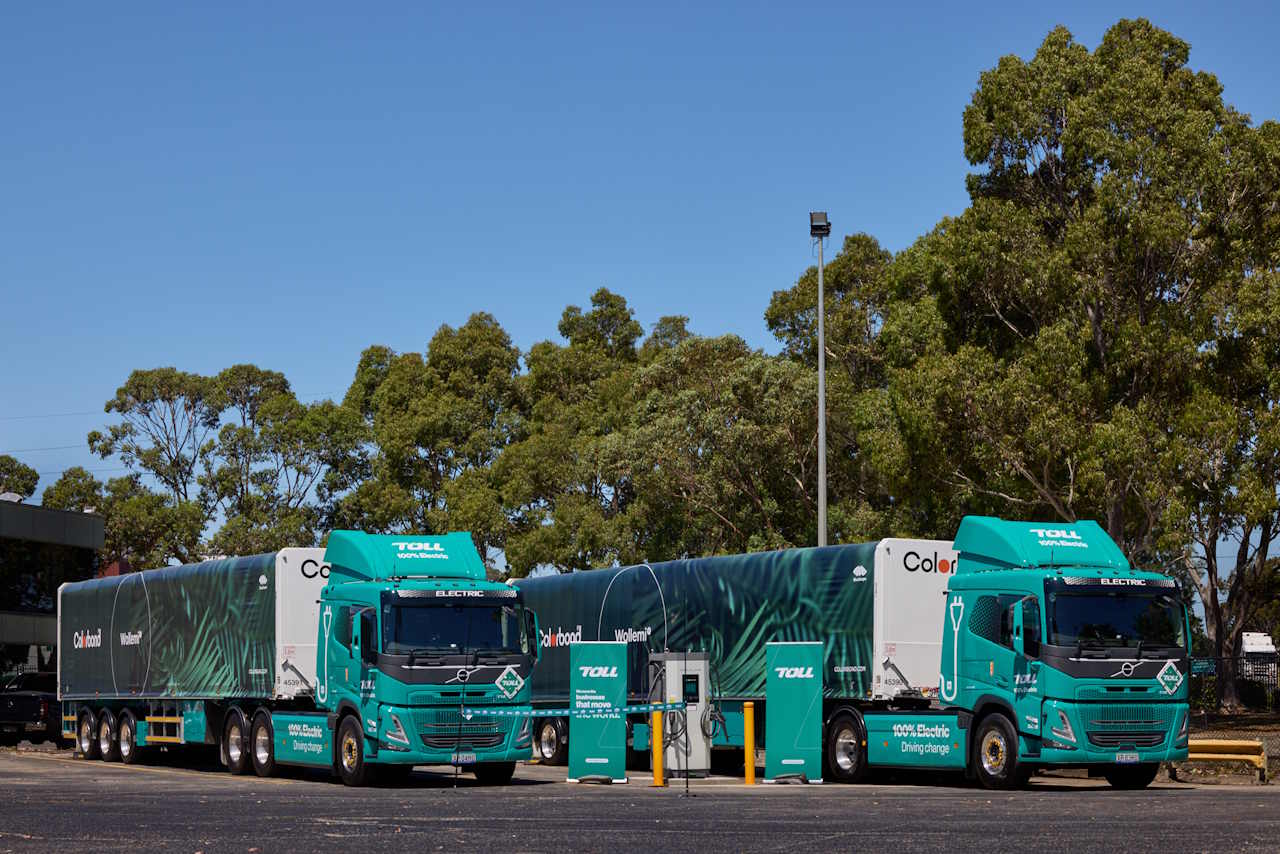
As industry leaders and politicians convene in Parliament House this Monday, a crucial discussion on freight decarbonisation is set to highlight a transformative shift in Australia’s transport sector. Far from hindering daily life, the adoption of electric vehicles (EVs) is now championed as a critical strategy to enhance national transport security and bolster economic resilience, especially for the agricultural sector. The narrative suggests that electric trucks in Australia are not just an environmental imperative but a strategic economic necessity.
The urgency of this transition has been underscored by recent global events, particularly the ongoing conflict in Iran, which has exposed Australia’s acute vulnerability to its fossil fuel dependence. The nation imports almost all of its liquid fuel, maintains minimal strategic reserves, and relies heavily on extensive supply chains that traverse geopolitically volatile regions. This dependency creates a precarious situation for the backbone of the Australian economy: road freight.

Geopolitical Instability and Fuel Vulnerability
Warnings from international figures have previously echoed concerns about global stability. As former Canadian Prime Minister Mark Carney and then European Commission President Ursula von der Leyen advised Australian parliamentarians, a ‘no norms’ environment, particularly under potential shifts in global leadership, implies that no region can be definitively considered stable. Such insights reinforce the critical need for Australia to reduce its reliance on external fuel sources and fortify its domestic supply chains.
The iconic truckies’ bumper sticker, proclaiming “When trucks stop, Australia stops,” encapsulates the profound impact of the road freight industry on the nation’s operations. While Australia’s diesel supplies may not be on the brink of immediate collapse, the persistent rise in fuel prices and the emergence of localised shortages, especially in regional areas, inevitably lead to escalating operational costs. These increased expenses ultimately burden farmers, who already operate on impossibly tight margins, and consumers, who face an exacerbated cost-of-living impost that many can ill afford.
Electric Trucks: A Solution to Transport Security
In this context, truck electrification has rapidly evolved from a niche academic interest into a pressing issue of ‘hip pocket politics’ for every Australian. It is fundamentally an issue of transport security—the inherent ability to move goods reliably and affordably, even in the face of significant global disruption. This shift towards electric trucks in Australia is gaining momentum as a non-negotiable step for national resilience.

With national fuel reserves dwindling and local bowsers occasionally running dry across the country, the moment has arrived for the logistics industry and the government to cease deflecting responsibility and instead collaboratively address the challenges preventing the rapid electrification of this vital strategic industry. The time for proactive solutions is now, moving beyond mere discussions about why rapid decarbonisation cannot be achieved.
Overcoming Barriers to Widespread EV Adoption
Common objections, such as the perceived lack of charging infrastructure, concerns about electric prime movers’ range limitations compared to diesel counterparts, worries about driver downtime for charging, or outright misinformation regarding battery impact on payloads, must be actively confronted and resolved. Instead of merely repeating these challenges, the focus must shift towards practical and immediate solutions to accelerate the integration of electric trucks in Australia’s freight networks.
Leading the charge in this transition is Alex Kelly at Ikea, who has demonstrated that strong customer demand for electric logistics drives industry innovation. Ikea’s last-mile logistics providers have now largely transitioned to electric deliveries, with their broader logistics partners rapidly scaling up their electrification efforts. Beyond the undeniable environmental benefits, this strategic shift has provided a tangible advantage to Ikea’s bottom line and has successfully insulated its millions of customers from the unpredictable volatility of diesel prices.
Accelerating Electrification: Immediate Opportunities
The broader industry must now follow suit by focusing on what can be achieved immediately. This involves prioritising logistics operations that fall within the practical range of a single battery charge, thereby reducing immediate reliance on a massive, nationwide infrastructure rollout. Such an approach enables the electrification of a substantial portion of freight jobs this month, next month, and throughout the year, marking quick wins for electric trucks in Australia.
Consider the example of the City of Ballarat, a significant manufacturing hub located 120km west of Melbourne. It hosts global brands such as Mars and McCain, alongside engineering giants like UGL and Alstom, national champions like Jila Mints, and regional distributors such as Nature’s Cargo. Ballarat is also home to several major regional trucking companies, including Seargents, O’Neils, and Kane Transportation, and is serviced by national operators like Linfox and Toll. The city further benefits from an intermodal freight terminal, facilitating the transshipment of grain and containers to various points across western Victoria.
The Ballarat-Melbourne Corridor: A Case Study
While raw materials flow into Ballarat from across Australia and finished products are shipped nationwide, a substantial portion of manufactured goods first travel to warehouses in western Melbourne, a journey of approximately 100km. Data from Transport Victoria indicates that in March 2026, around 2,700 heavy vehicles passed their monitoring sites on the M8 daily in each direction. A significant number of these vehicles operate specifically on the Ballarat-Melbourne route.
Implementing a strategy to replace just 50 prime movers on this critical corridor, operating twice daily on weekdays and 15 on weekends, could lead to an estimated annual saving of approximately 2.7 million litres of diesel. Incorporating Ballarat’s 76 public buses into an electrification plan could further escalate these savings to over 5 million litres annually. This ambitious target is not a distant goal requiring years of development but rather an achievable feat within months.
Australia benefits from a ready supply of electric prime movers from numerous manufacturers, with vehicles available onshore for immediate deployment. Furthermore, the logistical advantage of sourcing from Chinese brands means that from factory gate to Australian roads, the transit time can be less than four weeks. Reputable Chinese manufacturers such as Windrose, SANY, BYD, Foton, and JAC offer prime movers and heavy rigid trucks that are already certified for Australian roads and poised for shipment, accelerating the availability of electric trucks in Australia.
Strategic Investment in Charging Infrastructure
The challenge of charging infrastructure, often cited as a major limiting factor, is fundamentally a question of strategic planning and timely investment. Common-use charging sites can be rapidly established in locations with suitable land and existing power connections. Regional centres like Ballarat possess distinct advantages in this regard, with more available space, often simpler grid access, and less complex planning approval processes compared to dense metropolitan areas.
The underlying technology for these charging solutions is already proven and robust. If federal and state governments collaborate effectively to facilitate and incentivise investment, capital will readily flow into these essential infrastructure projects. This coordinated effort is vital for ensuring the seamless integration and widespread adoption of electric trucks in Australia.
Agility and Scale: The Future of Electrification
A significant strength of electrification deployments lies in their inherently smaller scale and faster implementation timelines compared to large-scale infrastructure projects such as pumped hydro, mega-renewables, or extensive transmission lines. While the nation awaits the development of a few dozen large-scale foundational projects, there is immense potential to swiftly roll out hundreds of smaller, yet equally critical, electrification initiatives across the country.
The freight challenges and opportunities observed in the Ballarat region are not isolated; they represent a microcosm of similar situations across many regional areas in Australia. The region also holds particular significance as the home electorate of Infrastructure Minister Catherine King.
As Minister King participates in Monday’s discussions, the imperative is clear: a collective commitment to planning and immediate action. By embracing the transition to electric trucks in Australia, millions of litres of diesel can be saved, operational costs for businesses and consumers can be significantly reduced, and crucial fossil fuel emissions can be eliminated, securing a more sustainable and resilient future for the nation’s transport sector.