
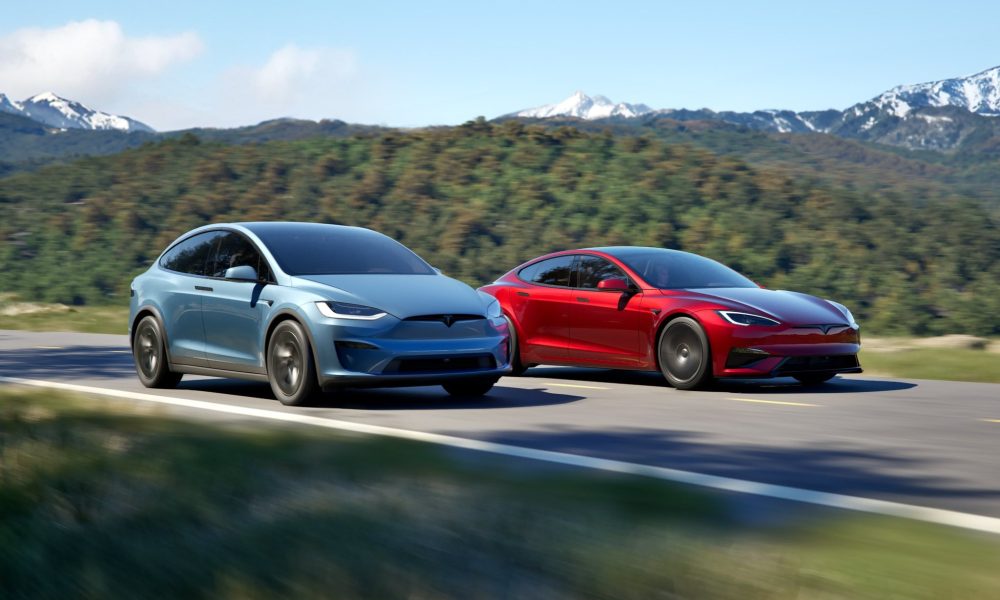
Tesla, the pioneering electric vehicle manufacturer, has officially commenced the wind-down of production for its iconic Model S sedan and Model X SUV in the United States. This significant strategic shift marks the impending conclusion for two of the company’s most enduring and foundational vehicles, which have been instrumental in shaping the modern electric vehicle landscape.
The announcement, which signals a pivotal moment in Tesla’s product evolution, was conveyed directly to owners in the U.S. through an email dispatched on March 27, 2026. The message, while delivering news of the vehicles’ discontinuation, also served as a profound acknowledgment of their historical significance.

A Legacy Acknowledged: Tesla’s Farewell Email to Owners
The email, sent to a broad base of U.S. customers, opened with a tone of gratitude and historical reflection. It highlighted the seminal role played by the Tesla Model S and Model X in catalyzing a global energy transition, laying the groundwork for a future defined by sustainable transportation.
The message unequivocally stated: “Model S and Model X marked the beginning of the world’s transition to electric transportation.” This statement underscored the vehicles’ critical position, not merely as products, but as harbingers of a monumental shift in automotive engineering and consumer perception.
Further elaborating on their foundational impact, the email continued, affirming that “These vehicles also made it possible for Tesla to develop the technology that would move our world toward autonomy.” This direct correlation between the early development of the Model S and Model X and the subsequent advancements in autonomous driving technology speaks volumes about their long-term strategic value to the company.

However, the message then pivoted to deliver the central news regarding the future availability of these pioneering models. It clearly communicated the company’s forward-looking strategy, indicating a definitive change in production priorities.
“As we make way for this autonomous future, Model S and Model X production will be ending. If you’d like to bring home a new Model S or Model X, order yours soon from our limited inventory,” the email advised, effectively commencing a final sales push for the existing stock.
The communication concluded with a simple yet heartfelt expression of appreciation, stating: “Thank you for being part of our journey.” This sentiment underscored the deep connection between the brand and its early adopters, many of whom have been integral to Tesla’s growth and vision.
Elon Musk’s Strategic Vision and Production Wind-Down
This official notification to customers aligns with earlier statements made by Tesla CEO Elon Musk. During the company’s Q4 2025 earnings call in late January, Musk had previewed the decision, characterizing the planned cessation of the Model S and Model X production as an “honorable discharge” for the two long-standing vehicle lines.
The CEO’s choice of words reflected a recognition of the significant contributions these models have made to Tesla’s brand identity and technological leadership over more than a decade. The timeline for this transition was also outlined, with Musk confirming that the wind-down of production for both the Model S and Model X would occur during the second quarter of 2026.
A key strategic driver behind this decision is the imperative to reallocate valuable factory floor space at Tesla’s primary manufacturing facility in Fremont, California. This repurposing of space is critical for accommodating the company’s next-generation manufacturing initiatives, representing a broader shift in its operational focus.
The freed-up capacity at the Fremont plant is earmarked for the production of advanced technologies, specifically the Optimus humanoid robots and the highly anticipated Robotaxi platform. This strategic reallocation underscores Tesla’s deepening commitment to artificial intelligence, robotics, and fully autonomous transportation services as core pillars of its future business model.
The Pioneering Journey of Tesla Model S and Model X
Launched amidst considerable anticipation, the Tesla Model S, introduced in 2012, and its SUV counterpart, the Model X, which followed in 2015, quickly ascended to the status of ‘halo cars’ for the nascent electric vehicle manufacturer. This designation underscored their role as aspirational flagship vehicles, designed not only to showcase the pinnacle of Tesla’s engineering prowess but also to elevate the brand’s perception globally.
These pioneering vehicles were instrumental in challenging long-held skepticism about electric mobility. They demonstrably proved that electric vehicles were not just viable alternatives but could, in fact, significantly outperform their conventional gasoline-powered luxury counterparts. This superiority was evident across critical metrics, including blistering acceleration, impressive long-distance range capabilities, and a suite of cutting-edge technological features.
Beyond raw performance, the Tesla Model S and Model X carved a path for innovation by introducing features that were revolutionary at the time. Their adoption of over-the-air (OTA) software updates, for instance, transformed how vehicle maintenance and feature enhancements were delivered, making cars more akin to continually improving smart devices.
Furthermore, these models were at the forefront of integrating early autonomy hardware, laying crucial groundwork for the ambitious self-driving capabilities Tesla would pursue in the years to come. The hardware and software innovations debuted on these platforms became benchmarks for the industry, pushing traditional automakers to accelerate their own EV and autonomous driving programs.
While the Tesla Model S and Model X never achieved the mass-market sales volumes of later models such as the Model 3 sedan and Model Y SUV, their engineering breakthroughs and market presence were foundational. They established the credibility and desirability of electric vehicles, effectively paving the way for the company’s current, broader lineup and the intensive development of its full self-driving technology.
Market Reaction and Global Implications of the Decision
The news of the impending discontinuation of the Tesla Model S and Model X elicited varied reactions from the brand’s fervent community. Many early adopters, who championed the vehicles and often invested in Tesla stock, highlighted how these cars convinced them of the viability and potential of the broader EV movement. For them, these vehicles represent a personal connection to a transformative technological shift.
However, some U.S. owners who had not yet received the direct email communication expressed mild frustration, underscoring the immediate impact of such a significant announcement on existing customers and brand enthusiasts. The initial outreach regarding the end of Tesla Model S and Model X production appears to be geographically focused.
International customers have confirmed that the notification remains U.S.-only for the time being, suggesting a phased approach to the global rollout of this information or a specific focus on the primary market for the Model S and Model X.
For prospective buyers still considering the purchase of a Model S or Model X, the window of opportunity is rapidly diminishing. Tesla has indicated that inventory for both models is now limited, emphasizing the urgency for those wishing to acquire one of the final units. This scarcity creates a natural endpoint for a product line that has spanned over a decade.
Illustrating the imminent cessation of new orders, Tesla’s Korean division has already implemented a definitive cut-off date of March 31 for new orders in that specific market. This regional action reinforces the global strategy to conclude production and sales of these models.
Ultimately, the email serves a dual purpose: it acts as a heartfelt farewell to the Tesla Model S and Model X, honoring their significant contributions, while also functioning as a final sales push for the remaining vehicles. This elegant closing of a pivotal chapter aims to transition loyal customers and the market towards Tesla’s future innovations.
Looking Ahead: Tesla’s Future Beyond Flagship Models
As the Tesla Model S and Model X approach their official production conclusion in Q2 2026, the company has not yet provided specific details regarding an exact final production date beyond this quarter. Furthermore, Tesla has not confirmed any immediate direct replacements for these luxury sedan and SUV segments.
While speculation continues to circulate within industry circles about potential new offerings, such as a possible SUV derivative based on the Cybertruck platform, Tesla’s public declarations and strategic focus have shifted squarely. The company’s primary emphasis is now on the advancement of its autonomy capabilities and the expansion of its robotics division.
This forward-looking strategy signals a clear direction for the company, moving beyond the traditional vehicle model cycle to prioritize next-generation technologies. The development of the Optimus robot and the rollout of the Robotaxi platform represent Tesla’s commitment to diversified, cutting-edge solutions that extend beyond personal vehicle ownership.
The impending retirement of the Tesla Model S and Model X marks the conclusion of an extraordinary chapter in electric vehicle innovation. These vehicles, once visionary symbols of sustainable luxury, are making way for a future where Tesla aims to redefine not just personal transportation, but mobility and automation on a much broader scale. The company’s trajectory is now firmly set towards a future dominated by autonomous systems and advanced robotics, cementing a new era for the global automotive and technology industries.