
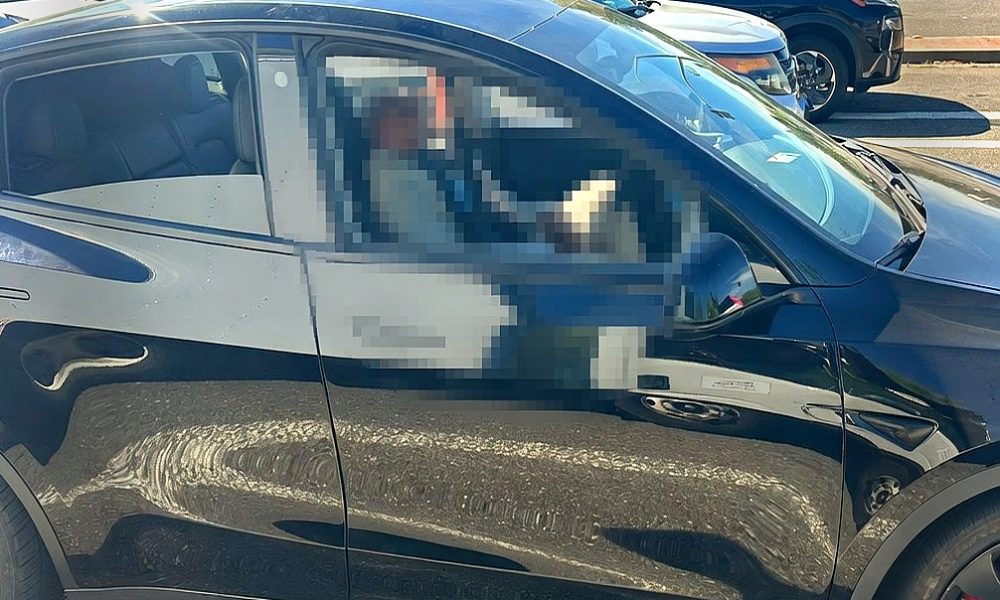
In a bizarre incident that has reignited debates around the responsibilities of drivers utilizing advanced vehicle autonomy, a Northern California man was arrested on suspicion of driving under the influence (DUI) after police found him reportedly asleep at the wheel of his Tesla. The vehicle, equipped with the manufacturer’s advanced driver-assistance system, was actively navigating through busy streets in Vacaville, California, at the time of the discovery.
The case highlights the complex interplay between evolving automotive technology, public safety, and legal frameworks designed to govern human operation of vehicles, even those with sophisticated self-navigating capabilities. Authorities confirmed that despite the car handling navigation, the driver was found to be impaired, underscoring the legal expectation of active driver supervision.

The Vacaville Incident Unfolds
The incident, which took place in Vacaville, California, on March 27, 2026, began when a concerned community member contacted dispatch to report a driver who appeared to be unconscious behind the wheel of a Tesla Model Y. The vigilant caller remained on the line, providing real-time updates that enabled law enforcement officers to track and intercept the vehicle.
Officers from the Vacaville Police Department successfully stopped the vehicle at the intersection of Elmira Road and Shasta Drive. Upon approaching the car, they found the driver seemingly “completely passed out” while the Tesla continued its self-navigation through city traffic. The scene inside the vehicle offered further context to the situation.
A four-pack of Sutter Home wine bottles and a box of Round Table pizza were clearly visible on the passenger seat, painting a picture of an extremely relaxed — and allegedly intoxicated — individual. Following an investigation at the scene, police confirmed the presence of both alcohol and marijuana in the driver’s system. There was no indication of a medical emergency, leading officers to conclude that the driver was engaged in what appeared to be an “extremely committed drunken nap.”

The driver was subsequently arrested on a DUI charge, bringing into focus the legal responsibilities that persist even when a vehicle is employing advanced automated features like Tesla Full Self-Driving.
Navigating Legal Boundaries: Assisted Driving and DUI Laws
The Vacaville Police Department, in a statement released via its Facebook page, clarified the legal position on such incidents. While California law permits the use of assistive driving features, including those offered by Tesla, it unequivocally mandates that drivers must remain “conscious, alert, and not under the influence while operating them.” This stipulation is critical, as it defines the human element of responsibility within the operation of semi-autonomous vehicles.
Advanced driver-assistance systems (ADAS) like Tesla Full Self-Driving are designed to assist the driver, not replace them entirely in all circumstances. They require continuous human supervision, a concept often referred to as Level 2 automation, where the driver is still considered the primary operator and is responsible for monitoring the environment and intervening when necessary.
The incident serves as a stark reminder that the legal definition of “operating” a vehicle extends beyond physically manipulating the steering wheel or pedals. It encompasses the responsibility to maintain full control and awareness, regardless of the technological aids present in the vehicle. Driving under the influence, even in a car capable of self-navigation, remains a severe offense with serious legal consequences.
Public Reactions and Commentary
The incident quickly garnered significant public attention and sparked a range of reactions, particularly on social media platforms where the Vacaville Police Department shared details. Many comments underscored the irony and potential dangers of the situation.
One commenter humorously noted, “That time when his vehicle had more situational awareness than he did,” highlighting the stark contrast between the impaired driver and the sophisticated technology guiding the car. Another chimed in with a playful jab at the wine found in the car, stating, “Sutter all the way home….” These reactions reflect a broader public fascination and sometimes a misunderstanding of what Tesla Full Self-Driving can and cannot do.
The case adds another layer to the ongoing societal conversation about how humans interact with increasingly autonomous systems and where the line of accountability is drawn. It also brings into focus the educational imperative for drivers to fully comprehend the limitations and legal requirements associated with using ADAS technology.
Tesla’s Stance on Autonomy and Driver Vigilance
This event unfolds against a backdrop of evolving discussions regarding Tesla’s advanced driver-assistance features, including its Full Self-Driving (FSD) beta program. The company, led by CEO Elon Musk, has consistently championed the safety benefits of its autonomous driving technologies, portraying them as crucial steps towards a future of safer roads.
Musk himself has contributed to the discourse with notable statements. In December 2025, when asked by a user if FSD v14.2.1 allowed texting behind the wheel, his response was concise: “Depending on context of surrounding traffic, yes.” He further elaborated on the safety aspect, telling investors that drivers manually disengaging autopilot to check texts while steering with their knees was “significantly less safe” than allowing FSD to manage the driving task, terming FSD “kind of the killer app.”
However, these previous statements by Musk did not include any provisions or mentions regarding the consumption of alcoholic beverages, such as Sutter Home wine, while FSD is engaged. Tesla’s official guidelines and user manuals consistently stress the requirement for drivers to remain attentive and prepared to take control at all times, emphasizing that the system is an assistance feature, not a fully autonomous solution that absolves the driver of responsibility.
The company’s position, aligned with regulatory standards, has always been that human oversight is paramount. The incident in Vacaville, involving a driver allegedly incapacitated by alcohol and marijuana, starkly illustrates the gap between the technological capabilities of Tesla Full Self-Driving and the persistent human responsibility that underpins its safe operation.
The Broader Implications for Autonomous Driving
Incidents like the one in Vacaville underscore the ongoing challenges and public perception issues faced by developers of advanced driver-assistance systems. While the technology aims to reduce human error, instances of misuse or misunderstanding by drivers can inadvertently cast a shadow on the entire field of autonomous driving.
The legal and ethical frameworks surrounding autonomous vehicles are still under development globally. This particular case highlights the immediate need for clear communication from manufacturers and robust enforcement by law enforcement agencies regarding the safe and legal operation of vehicles equipped with ADAS. The distinction between Level 2 semi-automation and Level 5 full autonomy, where no human intervention is required, remains a critical point of public education.
For Tesla Full Self-Driving and similar systems to gain widespread public trust and acceptance, it is imperative that drivers understand their continuing role and responsibilities. The technology is designed to assist, making driving potentially safer and more convenient, but it does not, under current laws and technical capabilities, grant permission for drivers to abdicate their primary duty of care.
Conclusion
The arrest of a Vacaville man for DUI while his Tesla Model Y, operating on its Full Self-Driving system, navigated the roads, serves as a compelling case study at the intersection of technological advancement and human accountability. It firmly reiterates that even as vehicles become more sophisticated, the ultimate responsibility for safe operation rests with the human driver.
California’s laws, echoing regulations in many jurisdictions, maintain that drivers must be alert, sober, and ready to intervene, regardless of the level of assistance provided by their vehicle. This incident not only provides fodder for public discussion but also underscores the critical need for drivers to fully understand and adhere to the guidelines governing the use of advanced driver-assistance systems, ensuring that innovation proceeds hand-in-hand with safety and legal compliance.