
Key Takeaways
- ABB E-Mobility has introduced its new OM M-Series power cabinet, a groundbreaking DC fast charger system capable of megawatt-level output.
- The system delivers up to 1.2 megawatts (MW) to a single electric vehicle (EV) or dynamically distributes power to as many as 24 EVs simultaneously.
- Boasting an industry-leading power density of 625 kilowatts per square meter (kW/m²), the OM M-Series optimizes space utilization for charging networks.
- The modular design allows for scalable deployment, starting from 200 kW and expanding to 1.2 MW, ensuring future-proof infrastructure.
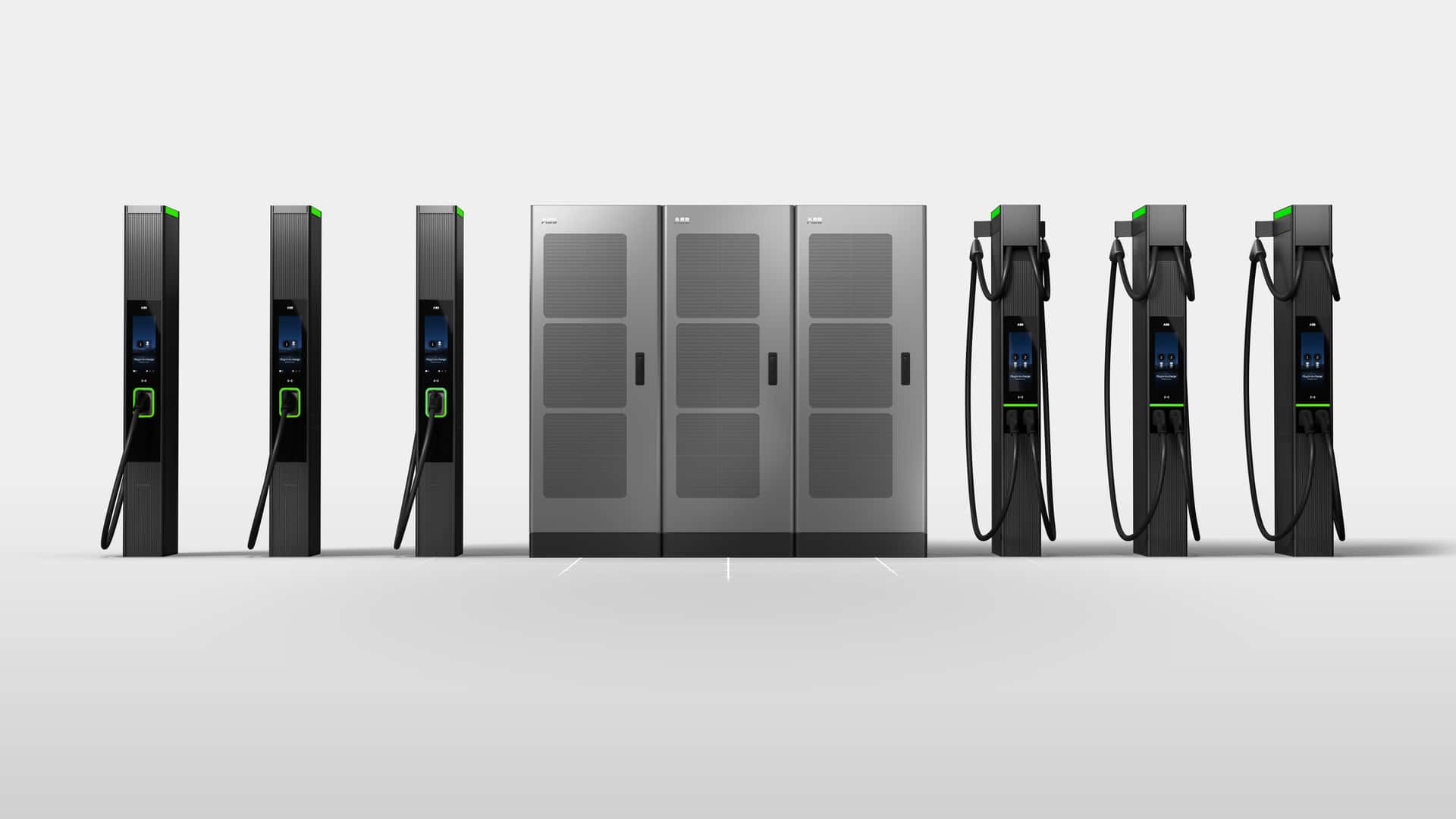
- A range of compatible dispensers, including the OM Ultra for heavy-duty vehicles and OM Solo/Duo for passenger EVs, offer versatile charging solutions across various connector standards.
Introduction: Powering the Future of Electric Mobility
The global transition to electric vehicles (EVs) continues to accelerate, placing unprecedented demands on charging infrastructure. As battery capacities grow and charging expectations shorten, the need for faster, more efficient solutions becomes paramount. In a significant leap forward for high-power electric vehicle charging, Swiss technology giant ABB E-Mobility has unveiled its latest innovation: the OM M-Series power cabinet.
This new direct current (DC) fast charger system is engineered to meet the burgeoning requirements of modern EVs, from compact passenger cars to heavy-duty commercial vehicles. It represents a critical advancement in the quest for ubiquitous and rapid electric vehicle charging, capable of delivering power outputs that enter megawatt territory.

The Megawatt Revolution: Unpacking ABB’s OM M-Series Capabilities
At the core of ABB E-Mobility’s groundbreaking offering is the OM M-Series power cabinet, a robust system designed for unparalleled performance in electric vehicle charging. This innovative cabinet has the capacity to deliver an impressive 1.2 megawatts (MW) of power to a single electric vehicle, setting a new benchmark for speed and efficiency in the charging landscape. Such a high power output is particularly crucial for rapidly recharging large battery packs found in commercial trucks and buses.
Beyond single-vehicle high-speed charging, the OM M-Series exhibits remarkable versatility through its dynamic power allocation capabilities. The system can intelligently distribute its substantial power output among up to 24 electric vehicles simultaneously. This dynamic allocation ensures that multiple vehicles, whether utilizing CCS (Combined Charging System) or NACS (North American Charging Standard) connectors, can receive optimized charging, significantly enhancing throughput at busy charging hubs and service stations.
Setting New Standards: Power Density and Modular Design
A defining feature of ABB E-Mobility’s OM M-Series is its industry-leading power density, which stands at an impressive 625 kilowatts per square meter (kW/m²). This high power density is a critical advantage for charging network operators, particularly in urban environments or space-constrained locations where real estate is at a premium. Maximizing power output within a compact footprint allows for more efficient deployment of charging infrastructure, leading to a higher return on investment for site owners.

The OM M-Series also boasts a highly modular system architecture, a design philosophy that offers significant strategic benefits. Charging networks can commence operations with a foundational M200 unit, providing 200 kW of power. As demand for electric vehicle charging grows and utilization rates climb, additional cabinets—such as the M400 (400 kW) and M800 (800 kW)—can be seamlessly integrated to scale up power output. This modularity ensures that initial investments are protected, allowing operators to expand their charging capacity without incurring prohibitive upgrade costs for dispensers, which only need to be connected to the power cabinet.
Versatile Dispenser Solutions for Every EV Need
To complement the powerful OM M-Series power cabinet, ABB E-Mobility offers a suite of specialized dispensers, each tailored to specific electric vehicle charging requirements. The flagship OM Ultra dispenser is engineered for megawatt charging, primarily targeting heavy-duty electric trucks and buses. It features a single liquid-cooled MCS (Megawatt Charging System) cable, capable of delivering up to 1,500 amps at voltages reaching 980 volts. This robust configuration is essential for commercial fleet operations where minimizing downtime is critical.
For passenger electric vehicles, the OM Solo dispenser provides flexible high-speed charging. It can deliver up to 800 kW to a single EV with its 800A peak current, utilizing a liquid-cooled cable configurable with either a CCS or a NACS connector. Variants are also available with a phase-cooled CCS cable, offering up to 600A, and an air-cooled NACS cable, providing up to 375A. Furthermore, the OM Duo dispenser caters to multi-vehicle charging scenarios, equipped with two outlets each capable of delivering up to 800A, making it ideal for high-traffic locations.
The Broader Landscape: A Competitive Megawatt Charging Arena
ABB E-Mobility’s entry into megawatt EV charging underscores a significant trend within the electric vehicle industry. As modern EVs are increasingly designed to accept charge rates exceeding 300 kW, the demand for ultra-fast charging infrastructure is intensifying. Several key players are actively developing and deploying megawatt-capable solutions, signaling a collective push towards overcoming range anxiety and accelerating EV adoption.
Competitors in this high-stakes segment include Alpitronic, which offers a split DC charging system capable of delivering up to 600 kW to a single EV. Tesla’s latest Supercharger setups have also reached outputs of up to 1.2 MW, primarily catering to its expanding fleet. Additionally, China’s BYD is a prominent player, already deploying its 1.5 MW Flash chargers, demonstrating the global race to provide the most powerful and efficient electric vehicle charging solutions. This competitive landscape highlights the industry’s commitment to advancing fast charging technology, ultimately benefiting electric vehicle owners and fleet operators worldwide.
The Future of EV Charging Infrastructure: Implications for Adoption
The introduction of the ABB OM M-Series and similar megawatt-capable systems marks a pivotal moment for electric vehicle charging infrastructure. These advancements are not merely about higher power numbers; they represent a fundamental shift in how quickly and conveniently EVs can be recharged, directly impacting their viability for a broader range of applications and users.
For commercial logistics, the ability to rapidly charge heavy-duty electric trucks with megawatt charging system capabilities means shorter turnaround times and increased operational efficiency, making electric fleets a more attractive and sustainable alternative to traditional diesel vehicles. For long-distance passenger travel, the availability of ultra-fast charging points along major highways could effectively eliminate range anxiety, mirroring the convenience of refueling internal combustion engine vehicles.
Moreover, the modularity and high power density offered by systems like the OM M-Series contribute significantly to the economic feasibility and scalability of charging networks. Operators can deploy infrastructure more strategically, optimize space, and incrementally expand capacity to meet evolving demand, fostering a robust and resilient ecosystem for electric mobility. This progression in charging technology is crucial for achieving widespread electric vehicle adoption and supporting global sustainability goals.
Conclusion: Advancing Sustainable Transport
ABB E-Mobility’s OM M-Series power cabinet represents a significant stride in the evolution of electric vehicle charging technology. By delivering unparalleled power, dynamic allocation capabilities, and a modular, space-efficient design, it addresses critical challenges faced by the expanding EV market. This development, alongside contributions from other industry leaders, underscores a collective commitment to building a robust and future-proof electric vehicle charging infrastructure.
As the demand for electric vehicles continues its upward trajectory, innovations like the OM M-Series will be instrumental in facilitating a seamless and efficient transition to sustainable transport worldwide. The race towards faster, more accessible, and intelligently managed charging solutions is intensifying, with ABB E-Mobility firmly positioning itself at the forefront of this transformative journey.
Frequently Asked Questions (FAQs)
What is the maximum power output of the ABB OM M-Series?
The ABB OM M-Series power cabinet can deliver up to 1.2 megawatts (MW) of power. This capability allows for extremely rapid charging of high-capacity electric vehicles, particularly large commercial trucks and buses, significantly reducing their charging downtime and enhancing operational efficiency for fleet operators.
How does the OM M-Series handle multiple electric vehicles?
The system is designed for dynamic power allocation, meaning it can intelligently distribute its total output to as many as 24 electric vehicles simultaneously. This feature is crucial for busy charging stations, ensuring efficient service to multiple users without compromising charging speeds where individual vehicles require less power.
What is the power density of the new ABB charger?
The OM M-Series boasts an industry-leading power density of 625 kilowatts per square meter (kW/m²). This high density is vital for optimizing space utilization at charging sites, allowing network operators to deploy more charging capacity within a smaller physical footprint, which is beneficial for urban installations.
Is the ABB OM M-Series charging system modular?
Yes, the system features a modular design, enabling scalable deployment. Charging site owners can start with smaller units like the M200 (200 kW) and easily add more cabinets (M400, M800) as their charging demand grows. This modularity minimizes initial investment risks and future upgrade costs, promoting flexible expansion.
Which types of electric vehicle connectors are compatible with the OM M-Series?
The OM M-Series supports various connector types through its compatible dispensers. The OM Ultra uses liquid-cooled MCS (Megawatt Charging System) cables for heavy-duty vehicles, while the OM Solo and OM Duo dispensers can be configured with CCS (Combined Charging System) or NACS (North American Charging Standard) connectors for passenger EVs.
How does ABB’s new charger compare to other megawatt charging solutions?
ABB’s OM M-Series offers a competitive solution in the burgeoning megawatt charging market. Other players like Alpitronic (up to 600 kW), Tesla (up to 1.2 MW Superchargers), and BYD (1.5 MW Flash chargers) are also developing high-power systems, highlighting a widespread industry trend towards significantly faster electric vehicle charging capabilities.