
Key Takeaways:
- The 2026 Tesla Model Y has become the first vehicle ever to successfully pass the U.S. National Highway Traffic Safety Administration’s (NHTSA) updated and more stringent Advanced Driver Assistance Systems (ADAS) safety tests.
- This landmark achievement, announced on May 7, 2026, positions the Model Y as a benchmark for advanced vehicle safety under NHTSA’s New Car Assessment Program (NCAP).
- The Model Y met rigorous pass/fail criteria for four newly introduced tests – pedestrian automatic emergency braking, lane keeping assistance, blind spot warning, and blind spot intervention – in addition to satisfying existing ADAS requirements.
- NHTSA Administrator Jonathan Morrison hailed the accomplishment as a “significant step forward” for consumer safety and urged other manufacturers to meet these elevated standards.
- The successful performance validates the life-saving potential of sophisticated driver assistance technologies and underscores their crucial role in reducing human error and preventing crashes on roadways.
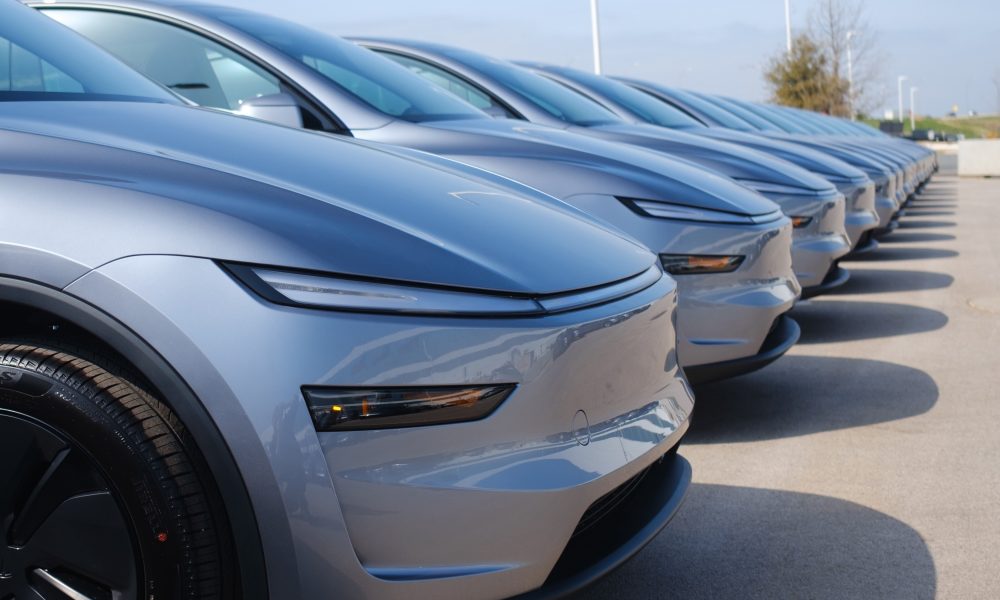
In a pioneering move that redefines automotive safety benchmarks, the 2026 Tesla Model Y has etched its name into history as the first vehicle to successfully navigate the United States government’s new Advanced Driver Assistance Systems (ADAS) testing protocols.

The landmark announcement, issued by the National Highway Traffic Safety Administration (NHTSA) on May 7, 2026, confirmed the Model Y’s impeccable performance under the revamped New Car Assessment Program (NCAP), setting a formidable standard for the entire industry.
Specifically, Model Y vehicles manufactured on or after November 12, 2025, demonstrated full compliance with the updated and more rigorous pass/fail criteria. This included excelling in four newly added tests designed to address evolving road safety challenges.
These new evaluations encompass pedestrian automatic emergency braking, lane keeping assistance, blind spot warning, and blind spot intervention. Critically, the vehicle also continued to meet NCAP’s original four ADAS requirements: forward collision warning, crash imminent braking, dynamic brake support, and lane departure warning.
Elevating Vehicle Safety: The Evolution of NHTSA’s ADAS Testing
The overhaul of NHTSA’s New Car Assessment Program, finalized in late 2024 and effective for all 2026 model year vehicles, represents a pivotal shift in how vehicle safety is evaluated. This update reflects a growing consensus that advanced driver assistance systems are no longer merely premium add-ons but essential technologies for crash prevention.
The agency’s strategic expansion of its testing regimen was driven by comprehensive data on roadway fatalities and incident patterns. For instance, the inclusion of pedestrian automatic emergency braking directly targets one of the fastest-rising causes of severe injuries and deaths on roads across the nation.
Similarly, the new tests for blind spot intervention and lane keeping assistance directly address common scenarios leading to side-swipe collisions and run-off-road incidents, which contribute significantly to accident statistics.
By incorporating objective, performance-based evaluations, rather than simply noting the presence of technology, NHTSA aims to provide consumers with transparent and actionable data. This allows buyers to make more informed decisions based on the real-world effectiveness of a vehicle’s advanced driver assistance systems.
A High Bar for the Industry: Administrator Morrison’s Remarks
NHTSA Administrator Jonathan Morrison underscored the profound significance of Tesla’s achievement. His statement on the Model Y’s performance resonated through the automotive sector.
“Today’s announcement marks a significant step forward in our efforts to provide consumers with the most comprehensive safety ratings ever. By successfully passing these new tests, the 2026 Tesla Model Y demonstrates the lifesaving potential of driver assistance technologies and sets a high bar for the industry. We hope to see many more manufacturers develop vehicles that can meet these requirements.”
Morrison’s comments highlight NHTSA’s commitment to advancing road safety through rigorous testing and encouraging innovation. The expectation is that this precedent will galvanize other automakers to elevate their own advanced driver assistance systems to meet, or even surpass, these newly established federal benchmarks.
Deep Dive into the ADAS Safety Tests
The comprehensive nature of NHTSA’s updated ADAS safety tests ensures a holistic evaluation of a vehicle’s protective capabilities. The four new tests are particularly crucial in mitigating modern driving risks.
Pedestrian Automatic Emergency Braking (PAEB) systems are designed to detect pedestrians in a vehicle’s path and automatically apply brakes if the driver fails to respond, significantly reducing the risk of impact or its severity. This is vital in urban environments where pedestrian accidents are frequent.
Lane Keeping Assistance (LKA) actively helps drivers maintain their vehicle within its lane through subtle steering inputs. This technology is instrumental in preventing unintentional lane departures, a common cause of single-vehicle crashes and head-on collisions.
Blind Spot Warning (BSW) provides visual or audible alerts to drivers when another vehicle is detected in their blind spot, particularly useful during lane changes. Complementing this, Blind Spot Intervention (BSI) takes an active role, providing gentle steering or braking to help prevent collisions if a driver attempts to change lanes while a vehicle is in the blind spot.
The Model Y also demonstrated proficiency in the program’s original ADAS requirements. Forward Collision Warning (FCW) alerts drivers to potential frontal crashes, while Crash Imminent Braking (CIB) automatically applies brakes to mitigate or prevent a collision. Dynamic Brake Support (DBS) provides additional braking force when the driver doesn’t press the pedal hard enough, and Lane Departure Warning (LDW) notifies drivers if they unintentionally drift out of their lane.
Tesla’s Validation: Reinforcing a Safety-First Ethos
For Tesla, the Model Y’s perfect score on these stringent ADAS safety tests serves as a powerful validation of its long-standing commitment to vehicle safety and its pioneering work in advanced driver assistance systems. The company has consistently emphasized building some of the safest vehicles on the road, and this federal certification reinforces that claim with objective, third-party data.
This achievement is particularly significant as vehicle autonomy transitions from theoretical concepts to practical applications. Tesla’s Full Self-Driving (FSD) software, along with the impending rollout of robotaxis, represents a broader industry pivot towards higher levels of automation.
While regulators and consumers naturally approach these advancements with caution, the Model Y’s success demonstrates that current driver-assist systems, when engineered with precision and rigor, possess the capability to dramatically reduce the incidence of human error, which remains the predominant factor in the vast majority of traffic crashes.
Paving the Way for Autonomous Futures
The successful passage of NHTSA’s updated ADAS safety tests is more than a mere accolade for Tesla; it is a critical regulatory green light that signals the future of autonomy must be built on demonstrably proven and testable safety foundations. As autonomous driving technologies edge closer to Level 3 and beyond, where drivers may increasingly disengage from active control, independent verification becomes paramount.
Such certifications play a vital role in building public trust, which is indispensable for the widespread adoption of autonomous vehicles. They also directly inform purchasing decisions, providing consumers with confidence in the safety credentials of increasingly complex vehicles.
Moreover, this milestone accelerates the development of even more sophisticated systems. It establishes a tangible target for engineers and researchers, pushing the boundaries of what advanced driver assistance systems can achieve. Ultimately, this collective advancement holds the promise of dramatically reducing, and perhaps one day eliminating, the tens of thousands of annual traffic fatalities.
Broader Implications for the Automotive Landscape
The Model Y’s triumph is a clear message to the entire automotive sector: meeting elevated federal safety standards is not only achievable but also increasingly expected. This benchmark will likely spur increased investment in research and development of advanced driver assistance systems across all manufacturers, fostering a competitive environment focused on superior safety performance.
In an era defined by software-driven vehicles and transformative mobility solutions, the 2026 Model Y’s performance on NHTSA’s ADAS safety tests underscores a fundamental truth. The path to a safer, more autonomous driving future is paved not just with technological ambition, but with rigorous, independent validation and a relentless pursuit of engineering excellence. The bar has been unequivocally raised, promising a safer journey for all who share the roads.
FAQ Section
What is ADAS and why are these tests important?
ADAS, or Advanced Driver Assistance Systems, are technologies designed to assist drivers and enhance vehicle safety. These tests are crucial because they objectively evaluate the real-world performance of these systems, providing consumers with vital information and pushing manufacturers to develop more effective crash-prevention features, thereby improving overall road safety.
Which specific new ADAS tests did the Tesla Model Y pass?
The 2026 Tesla Model Y passed four newly added tests: pedestrian automatic emergency braking, lane keeping assistance, blind spot warning, and blind spot intervention. These tests target common accident types and reflect NHTSA’s commitment to addressing rising roadway safety concerns through advanced technology.
When were NHTSA’s new ADAS safety tests finalized and effective?
The updates to NHTSA’s New Car Assessment Program (NCAP) were finalized in late 2024. These more stringent requirements for advanced driver assistance systems became effective for all 2026 model year vehicles, making the 2026 Tesla Model Y the first to undergo and successfully pass them under the new criteria.
How does this achievement impact Tesla’s standing in the automotive industry?
This milestone significantly strengthens Tesla’s reputation for building safe vehicles and validates its advanced driver assistance systems. It reinforces the company’s long-standing claims and positions the Model Y as a leader in automotive safety, setting a benchmark for competitors and building public trust in its autonomous driving ambitions.
What are the broader implications of these new ADAS safety tests for other car manufacturers?
The Model Y’s success sets a high bar and signals to the entire automotive industry that meeting these elevated federal safety standards is achievable and expected. It will likely spur other manufacturers to accelerate their development and integration of advanced driver assistance systems to comply with and surpass these new, rigorous benchmarks, leading to safer vehicles across the board.
How do ADAS technologies contribute to reducing traffic fatalities?
Advanced Driver Assistance Systems reduce human error, which is a primary cause of accidents. Features like automatic emergency braking prevent collisions, while lane-keeping aids prevent unintentional departures. By proactively mitigating risks and assisting drivers, these validated technologies have the potential to significantly lower the incidence and severity of crashes, thus saving lives on our roads.