
Key Takeaways:
- A Harvard Business School study reveals one in five US DC fast charging stations is non-operational, highlighting a critical infrastructure challenge for electric vehicles.
- Fluke’s new FEV500 introduces an all-in-one testing solution that simulates an electric vehicle, allowing technicians to perform comprehensive safety, communication, and interoperability checks on Level 3 DC fast charging stations without an actual EV.
- The device consolidates the functions of a digital multimeter, an insulation tester, and an oscilloscope into a single unit, simplifying complex DC fast charger testing procedures.
- Supporting international communication standards like ISO 15118 and DIN SPEC 70121, the FEV500 ensures thorough validation of the crucial digital handshake between EV and charger.
- Designed for field use, the FEV500 features guided workflows, auto-test sequences, and a rugged, portable design, empowering technicians with varying skill levels to efficiently maintain and troubleshoot EV charging infrastructure.
The burgeoning electric vehicle (EV) market relies heavily on a robust and reliable charging infrastructure. However, a recent study from Harvard Business School casts a concerning shadow, indicating that a significant 20% of DC fast charging stations across the United States are currently non-operational. This statistic underscores a critical barrier to widespread EV adoption and highlights an urgent need for advanced diagnostic and maintenance solutions.

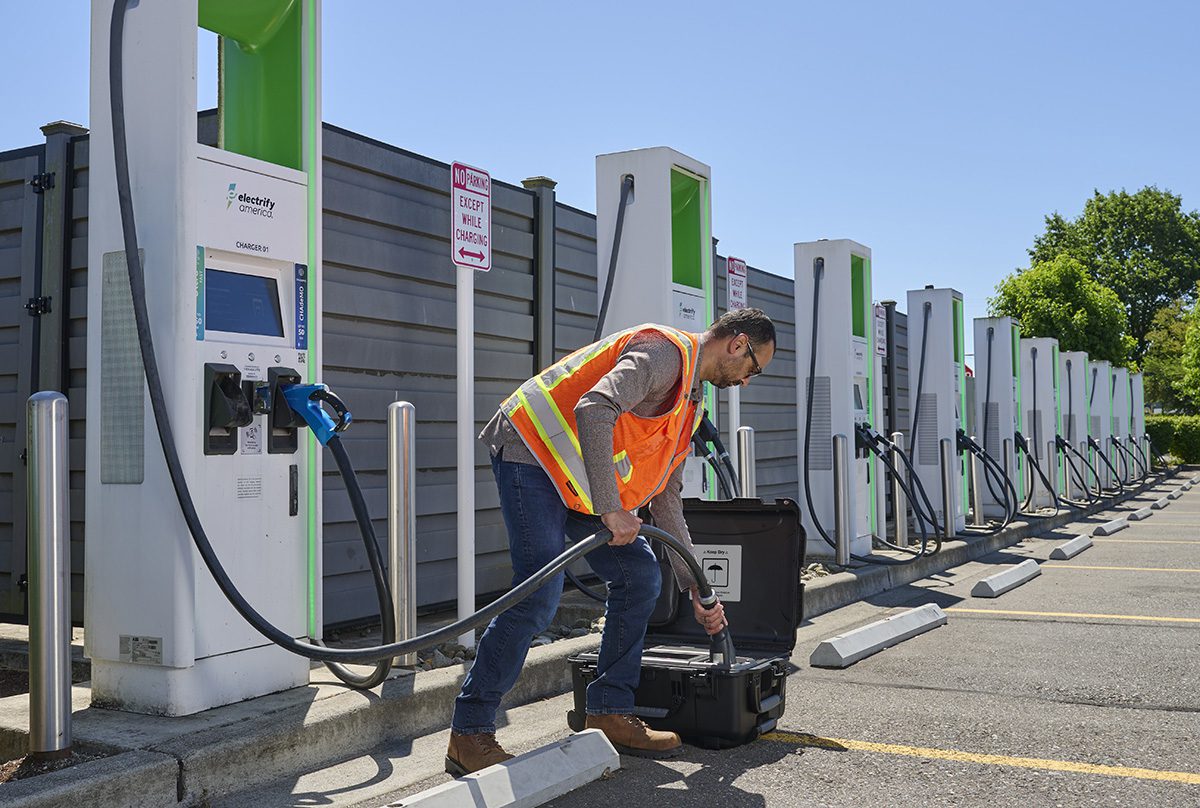
Addressing this pressing challenge, Fluke, a leader in electronic test and measurement technology, has unveiled its FEV500 EV Charging Station Test Solution. This innovative device is engineered to revolutionize DC fast charger testing for Level 3 stations, serving as a virtual electric vehicle to conduct comprehensive safety, communication, and interoperability assessments directly on-site.
Addressing the Reliability Crisis in EV Charging Infrastructure
The reliability of EV charging infrastructure is paramount for consumer confidence and the overall success of the energy transition. When fast chargers are out of service, it not only frustrates EV owners but also impedes the seamless integration of electric mobility into daily life. This issue directly impacts user experience and contributes to range anxiety, factors that can slow the pace of EV adoption.
The Harvard Business School study cited by Fluke provides a quantifiable measure of this reliability gap. A fifth of all DC fast charging stations being offline represents a substantial portion of available infrastructure, signaling a systemic problem that requires sophisticated tools and streamlined maintenance practices to overcome. Ensuring operational readiness is no longer just about deploying chargers but about keeping them consistently functional.
The Unique Complexities of Level 3 DC Fast Charger Testing
Unlike simpler Level 1 or Level 2 AC charging equipment, Level 3 DC fast charging stations present a significantly more intricate testing environment. These high-power systems don’t merely deliver electricity; they engage in a sophisticated digital handshake with the connected electric vehicle before a charging session can commence. This complex communication protocol ensures safety, optimizes power delivery, and facilitates accurate billing.
This advanced negotiation process, governed by international standards such as ISO 15118 and DIN SPEC 70121, requires specialized equipment for proper DC fast charger testing. Validating these intricate communication protocols, alongside fundamental electrical parameters, is crucial for guaranteeing interoperability and preventing charging failures. Traditional testing methods often fall short in addressing this multifaceted challenge.
FEV500: An Integrated Solution for Comprehensive Diagnostics
The Fluke FEV500 is specifically designed to tackle the inherent complexities of Level 3 DC fast charger testing. By simulating an electric vehicle, the device can initiate and manage a full digital handshake with the charging station, providing detailed insights into its operational status. This capability is vital for diagnosing issues that extend beyond basic electrical faults to communication errors.
A standout feature of the FEV500 is its ability to consolidate the functions of what would traditionally require three separate instruments. Technicians typically need a digital multimeter for voltage and current measurements, an insulation tester to verify electrical safety, and an oscilloscope to analyze waveforms and communication signals. The FEV500 integrates all these capabilities, streamlining the DC fast charger testing process significantly.
Key Features and Capabilities
The FEV500 supports the two main international standards governing EV-to-EVSE (Electric Vehicle Supply Equipment) communication: ISO 15118 and DIN SPEC 70121. Adherence to these protocols means the device can thoroughly validate the protocol stack, ensuring that the charger can properly communicate and negotiate with any compatible electric vehicle. This level of comprehensive interoperability testing is critical for preventing charging session failures.
Furthermore, the FEV500 offers a single connection point, eliminating the need for complex disassembly or multiple setup configurations. This design choice dramatically reduces testing time and simplifies the overall procedure, making DC fast charger testing more efficient and less prone to errors in the field. The integrated nature of the tool means less equipment to carry and manage.
Streamlined Workflows for Field Technicians
Recognizing that field technicians may not always possess advanced training in complex EV charging protocols, Fluke has engineered the FEV500 with user-friendliness in mind. The device delivers clear PASS/FAIL results through guided workflows, which minimize manual input and potential for human error. These auto-test sequences accelerate the diagnostic process, allowing technicians to quickly identify and resolve issues.
All test data is logged directly to the device, providing a comprehensive record for analysis, reporting, and compliance. This data logging capability is invaluable for commissioning new stations, conducting routine maintenance checks, and troubleshooting specific problems. The FEV500’s intuitive interface ensures that technicians can cover all aspects of DC fast charger testing, from initial setup to ongoing operational support.
Built for the Field: Design and Portability
Durability and portability are critical for any tool used in challenging field environments. The FEV500 features a rugged, wheeled chassis, designed to withstand the rigors of frequent transport between various depots and charging sites. This robust construction ensures that the device can endure daily use and environmental stresses.
For situations requiring air travel, the FEV500 includes a removable battery, complying with regulations for air transport of battery-powered devices. This thoughtful design element underscores Fluke’s understanding of the practical demands faced by field service professionals who are tasked with maintaining a geographically dispersed charging infrastructure.
Industry Impact and Future Outlook
The introduction of the Fluke FEV500 marks a significant advancement in the reliability of EV charging infrastructure. As Theo Brillhart, Technology Director at Fluke, rightly stated: “Fast DC charging is the backbone of the EV transition, but the truth is, reliability is still the industry’s weakest link. We built the FEV500 to close that gap.” This sentiment highlights the critical role such diagnostic tools play in fostering a dependable charging ecosystem.
By enabling more efficient and accurate DC fast charger testing, the FEV500 helps charging network operators and service providers improve uptime, enhance user satisfaction, and accelerate the transition to electric vehicles. As the EV market continues its rapid expansion, tools like the FEV500 will be indispensable in ensuring that the underlying infrastructure can keep pace with demand and maintain high levels of operational efficiency.
FAQ Section
What is the primary function of the Fluke FEV500?
The Fluke FEV500 acts as a virtual electric vehicle to comprehensively test Level 3 DC fast charging stations. It performs safety, communication, and interoperability checks without needing an actual EV on-site, streamlining maintenance and commissioning processes.
Why is DC fast charger testing more complex than AC charging equipment testing?
DC fast chargers require a sophisticated digital handshake with the EV to negotiate power delivery and ensure safety. This involves intricate communication protocols (like ISO 15118 and DIN SPEC 70121) that need validation beyond basic electrical measurements, unlike simpler AC systems.
How does the FEV500 simplify the testing process for technicians?
The FEV500 integrates the functions of three separate instruments—a digital multimeter, an insulation tester, and an oscilloscope—into one device. It also provides guided workflows and auto-test sequences, delivering clear PASS/FAIL results to reduce complexity and manual input.
What communication standards does the FEV500 support for EV-to-EVSE interaction?
The Fluke FEV500 supports ISO 15118 and DIN SPEC 70121. These are the main international standards governing the digital communication between electric vehicles and charging stations, ensuring proper protocol stack validation and interoperability.
What problem does the FEV500 aim to solve in the EV charging industry?
The FEV500 aims to address the significant reliability issues in EV charging infrastructure, specifically the high percentage of non-operational DC fast charging stations. By facilitating easier and more comprehensive testing, it helps improve charger uptime and overall network dependability.
Is the FEV500 designed for use by all levels of technicians?
Yes, the FEV500 is designed with user-friendliness in mind. Its guided workflows and auto-test sequences make it accessible for field technicians without advanced training, enabling them to perform complex diagnostics effectively and efficiently.
How does the FEV500’s design accommodate field usage and travel?
The device features a rugged, wheeled chassis built for durability and easy transport between sites. Additionally, it includes a removable battery, which facilitates compliance with air travel regulations, making it highly portable for technicians on the move.