
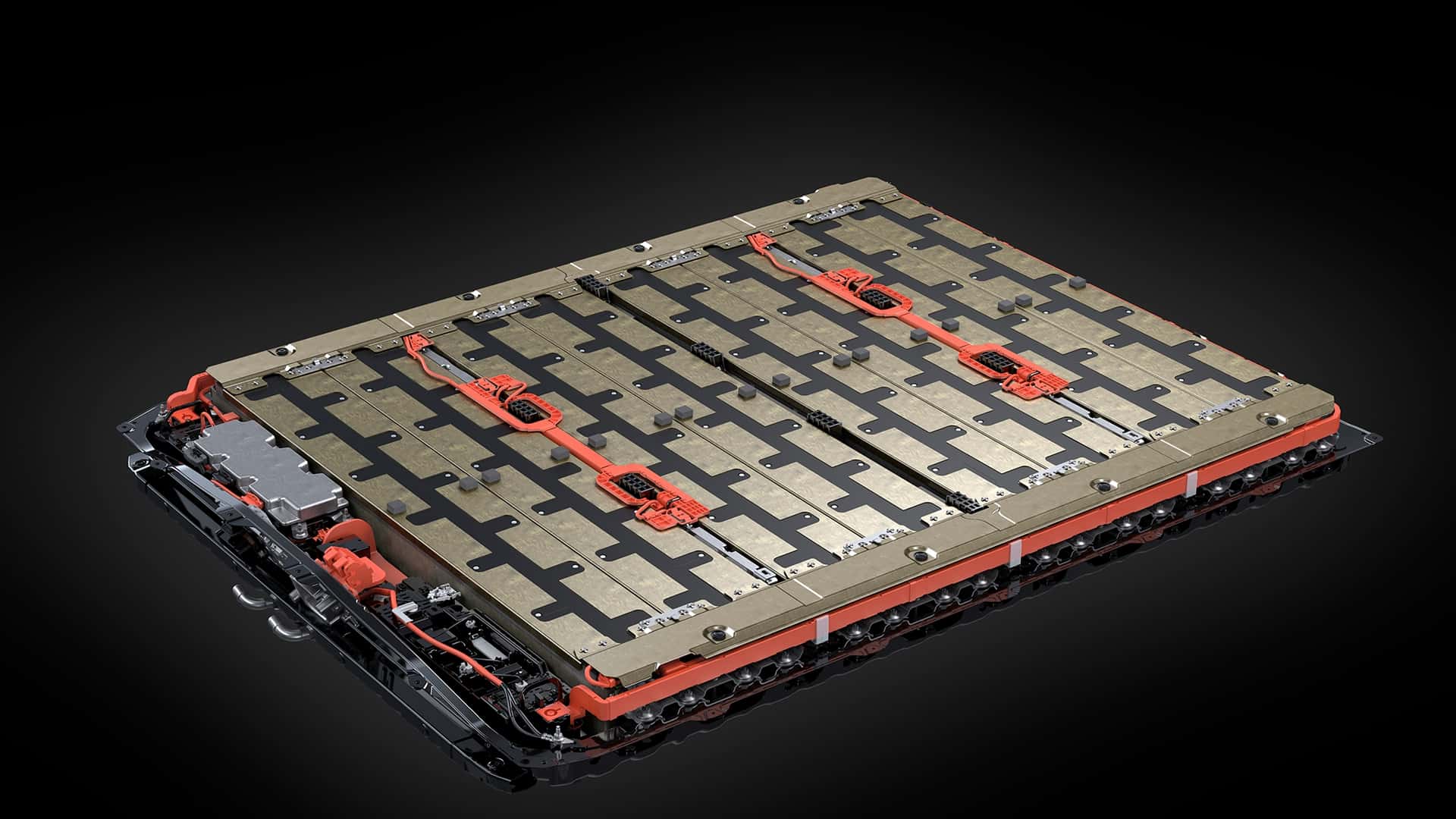
In a significant development for the electric vehicle (EV) industry, scientists have unveiled a groundbreaking approach to dramatically extend the lifespan of EV batteries. Researchers at Sweden’s Chalmers University of Technology have pioneered an artificial intelligence (AI)-powered charging method, promising to mitigate the accelerated degradation often associated with frequent fast charging.
This innovative AI battery management system could add thousands of extra miles to an EV’s operational life, addressing a key concern for consumers and manufacturers alike regarding long-term battery health and sustainability. The findings, detailed in a study published in the academic journal IEEE, present a compelling vision for the future of electric mobility.

Key Takeaways
- A new AI-powered charging method from Chalmers University of Technology can extend EV battery life by up to 23%.
- This breakthrough leverages reinforcement learning to optimize fast-charging currents, reducing degradation.
- The technology aims to add tens of thousands of miles to EV battery lifespan without compromising charging speed.
- While currently a lab-simulated success, its real-world implementation could redefine battery warranties and the used EV market.
- The innovation holds substantial environmental and economic benefits, enhancing the sustainability of electric vehicles.
The Core Breakthrough: AI-Powered Charging Optimisation
The study highlights a sophisticated AI-based charging methodology designed to optimize the electrical current flow during fast-charging cycles. This precise management significantly slows down the natural degradation process of lithium-ion batteries, which are standard in modern electric vehicles.
According to the researchers, this advanced AI battery management system can extend the vehicle’s battery life by an impressive 23%. This translates into a substantial increase in the usable life of an electric vehicle, offering considerable advantages for consumers and the broader automotive sector.
Quantifying the Lifespan Extension
To put the 23% improvement into perspective, consider current EV battery performance. For instance, a Tesla battery is estimated to last between 300,000 and 500,000 miles, depending on various factors like usage patterns and charging habits. A 23% extension could potentially add anywhere from approximately 70,000 miles on the lower end to over 100,000 miles on the higher end of these estimates.

This increased longevity can translate into several additional years of dependable range for drivers. The research frames this EV battery life extension in terms of charge/discharge cycles, a standard metric for battery durability.
Authors Meng Yuan and Changfu Zou from Chalmers University’s Department of Electrical Engineering articulated the significance of their work: “This work introduces the first explicit formulation of a lifelong battery fast charging problem. The proposed method achieves a significant improvement in performance, where battery lifespan is extended to 703 equivalent full cycles… representing a 22.9% improvement over the standard baseline.”
Understanding EV Battery Degradation
Modern EV batteries are engineered for durability, designed to maintain performance for years without substantial degradation. However, specific usage patterns can accelerate their aging process. Among these, frequent fast-charging is a primary concern.
High-powered charging, while convenient, introduces significant stress on the internal components of battery cells. This stress can lead to various degradation mechanisms, critically lithium plating. Lithium plating occurs when lithium ions, instead of intercalating smoothly into the anode material, deposit as metallic lithium on the anode surface. This reduces the battery’s capacity and overall efficiency.
The intricate chemistry and delicate balance within lithium-ion batteries make them susceptible to damage under rapid energy transfer. The anode, cathode, and electrolyte, the three main active components of a battery, can all be negatively impacted by excessive heat and rapid ion movement during fast charging, leading to diminished EV battery life.
How AI Enhances Battery Health Through Reinforcement Learning
The core of this innovation lies in its sophisticated application of artificial intelligence. The researchers at Chalmers University utilised a machine learning technique known as ‘reinforcement learning’ within the battery management system (BMS). This technique enables the system to learn through a process of trial and error, identifying the most optimal charging parameters.
During fast-charging cycles, the AI battery management system dynamically adjusts the current. It bases these adjustments on real-time data concerning the battery pack’s specific chemistry and its current state of health. As the battery naturally ages and its internal characteristics evolve, the AI intelligently modifies the voltage to ensure that critical components like the anode, cathode, and electrolyte are not subjected to undue stress.
This adaptive and predictive capability allows the AI to preemptively mitigate potential damage, thus preserving the battery’s structural integrity and chemical composition over a longer period. By continuously learning and adapting, the system ensures optimal performance while prioritizing the long-term health of the power unit, directly contributing to EV battery life extension.
Potential Real-World Impact and Economic Benefits
The implications of such a breakthrough, once commercialized, are far-reaching. For the average American driver, who covers approximately 13,476 miles each year according to the Federal Highway Administration, this new AI-enabled charging method could significantly prolong EV ownership.
Extending a battery’s life by several years offers substantial financial benefits to consumers, reducing the need for costly battery replacements and enhancing the overall value proposition of electric vehicles. This directly addresses one of the primary concerns potential EV buyers often raise: the longevity and replacement cost of the battery pack.
Beyond individual consumers, the broader environmental advantages are equally compelling. A longer EV battery life means fewer batteries need to be manufactured over time. This translates to a reduced demand for raw materials such as lithium, cobalt, and nickel, whose extraction and processing carry significant environmental footprints. Furthermore, a decreased manufacturing rate for new batteries would lead to a lower associated carbon footprint, bolstering the sustainability credentials of the electric vehicle industry as a whole.
Laboratory Success Paves the Way for Future Validation
It is crucial to note that while the simulation results are highly promising, this smart charging experiment was conducted in a controlled laboratory environment. The next critical step will involve rigorous testing on physical batteries under real-world driving and charging conditions to validate these findings.
If these simulated results are successfully replicated and proven robust in practical applications, the technology could fundamentally alter several aspects of the EV ecosystem. It could prompt significant changes in battery warranty policies offered by manufacturers, potentially extending coverage periods and boosting consumer confidence. Moreover, the used EV market would likely see a positive shift, with vehicles retaining higher resale values due to guaranteed longer battery health.
This paradigm shift would also influence how the entire automotive industry approaches long-term battery health and longevity, pushing towards more sophisticated, AI-driven solutions for energy management. The development underscores a growing trend where intelligent systems play a pivotal role in optimizing hardware performance.
Maintaining Efficiency: Speed Without Compromise
One of the most critical aspects of this AI-powered solution is its ability to enhance EV battery life without sacrificing charging speed. A common misconception is that extending battery health often requires slowing down charging processes, a trade-off many EV owners might be reluctant to make.
However, the researchers explicitly address this concern in their study: “The proposed approach maintains comparable charging efficiency while largely extending battery lifespan, demonstrating that lifespan enhancement can be achieved without compromising charging speed.” This assurance is vital for widespread adoption, as fast-charging capabilities remain a key convenience factor for electric vehicle users.
The ability to have both extended battery longevity and rapid charging capabilities represents a ‘best of both worlds’ scenario, making electric vehicles even more practical and appealing for a broader demographic. This innovation aligns perfectly with the evolving demands for efficient and sustainable transportation solutions globally.
The Road Ahead for EV Battery Technology
This breakthrough from Chalmers University of Technology signifies a critical advancement in the quest for more durable and efficient electric vehicle batteries. As the automotive industry continues its rapid transition towards electrification, innovations like an intelligent AI battery management system are indispensable.
The potential for significant EV battery life extension, coupled with environmental and economic benefits, positions this research as a cornerstone for future developments in sustainable mobility. While real-world validation is pending, the foundational work provides a clear path forward for integrating artificial intelligence into the very core of electric vehicle performance, promising a future where EV batteries are not only powerful but also remarkably long-lasting.
FAQ Section
What is the main discovery regarding EV batteries?
Researchers at Chalmers University of Technology have developed an AI-powered charging method that can extend an electric vehicle battery’s lifespan by up to 23%. This system intelligently optimizes charging currents to reduce degradation, promising significant improvements in battery durability and vehicle longevity for EV owners.
How does AI help extend EV battery life?
The AI battery management system employs ‘reinforcement learning’ to dynamically adjust the charging current. It assesses the battery’s chemistry and health in real-time, adapting voltage to prevent stress on components like the anode, cathode, and electrolyte, which typically degrade faster during frequent fast charging.
What causes EV batteries to degrade faster with frequent fast charging?
Frequent fast charging subjects lithium-ion batteries to high stress. This can accelerate degradation mechanisms, most notably lithium plating, where lithium ions deposit on the anode surface instead of integrating properly. This process reduces battery capacity and shortens its overall effective lifespan.
What are the practical benefits of a 23% battery life extension?
A 23% extension means tens of thousands of additional miles for an EV battery, potentially adding several years to a vehicle’s usable life. This translates to significant cost savings for owners by delaying battery replacement, reducing demand for raw materials, and lowering the environmental impact of manufacturing.
Will this AI charging method slow down my EV’s charging speed?
No, the research indicates that the proposed AI-powered approach maintains comparable charging efficiency. The authors state that “lifespan enhancement can be achieved without compromising charging speed,” which is a crucial factor for user convenience and broader adoption of electric vehicles.
Is this technology available for commercial EVs now?
Currently, this smart charging experiment has been conducted in a laboratory simulation, not on physical batteries in real-world conditions. While the results are highly promising, extensive real-world testing and validation are necessary before this technology can be integrated into commercial electric vehicles and widely adopted.