
Key Takeaways (TL;DR)
- Researchers at Hanyang University have established a critical quantitative benchmark for sulfide-based all-solid-state batteries.
- A minimum lithium niobium oxide (LNO) coating thickness of 2.5 nanometers is necessary to effectively protect cathode materials.
- This specific coating significantly extends battery cycle life by 43% and reduces interfacial resistance by over 50% compared to uncoated cells.
- The findings provide a vital guideline for optimizing cathode-electrolyte interfaces in next-generation solid-state battery development.
- While powder atomic layer deposition (ALD) shows promise for scalability, industrial integration remains a key challenge for future production.
Revolutionising Battery Technology: A Breakthrough for Sulfide Solid-State Battery Cathodes
In a significant stride towards the next generation of energy storage, researchers at Hanyang University in South Korea have unveiled a crucial quantitative parameter for enhancing the longevity and performance of sulfide-based all-solid-state batteries. Their groundbreaking study identifies 2.5 nanometers as the minimum effective thickness for lithium niobium oxide (LNO) coatings, a protective layer essential for safeguarding cathode materials against degradation.

This discovery provides a much-needed lower bound for battery engineers and material scientists, offering a precise guideline that has long been absent in the burgeoning field of solid-state battery development. The advancement holds profound implications for the commercial viability and widespread adoption of electric vehicles (EVs) and other advanced energy applications, promising more durable and efficient power sources.
Addressing the Core Challenge of Solid-State Battery Stability
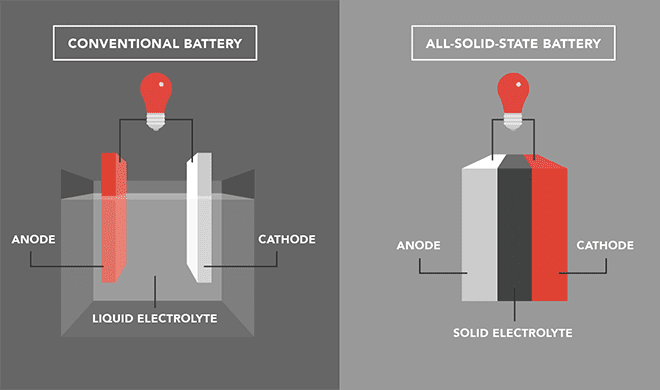
All-solid-state batteries (ASSBs) represent a paradigm shift from traditional lithium-ion batteries, replacing flammable liquid electrolytes with solid counterparts. This fundamental change promises enhanced safety, higher energy density, and a longer lifespan. However, sulfide-based solid electrolytes, while offering high ionic conductivity, present a significant challenge: chemical reactivity at the cathode interface.
When these solid electrolytes come into direct contact with active cathode materials, such as NCM811 (a nickel-cobalt-manganese composition), they trigger undesirable side reactions. These reactions lead to the formation of resistive degradation products, effectively creating a barrier that impedes lithium-ion flow. The consequence is a rapid increase in interfacial resistance and a dramatic shortening of the battery’s cycle life, undermining the inherent advantages of solid-state technology.

The LNO Coating Solution: A Diffusion Barrier
To counteract this critical issue, thin protective coatings are applied to the cathode materials. Lithium niobium oxide (LNO) has emerged as a promising candidate for this role, acting as a robust diffusion barrier. Its primary function is to chemically isolate the reactive sulfide solid electrolyte from the cathode, thereby preventing direct contact and suppressing detrimental side reactions.
While the concept of LNO coatings has been explored, the exact minimum thickness required to achieve effective protection without unduly compromising initial battery capacity or adding excessive material had not been definitively established. This uncertainty has presented a hurdle in optimizing the design and manufacturing processes for sulfide solid-state battery cathodes.
Precision Engineering: The Atomic Layer Deposition Method
The Hanyang team employed a sophisticated technique known as rotary powder atomic layer deposition (ALD) to apply the LNO coatings. ALD is a highly precise method that allows for the deposition of ultra-thin, uniform films with atomic-level control over thickness and composition. This is crucial for creating effective protective layers at the nanoscale, where even minor variations can significantly impact performance.
Specifically, the researchers utilized a supercycle ALD method, meticulously alternating the deposition of lithium and niobium precursors with ozone as a reactant. This iterative process enabled them to achieve exceptional control over the LNO’s composition and crystal structure. For their experimental evaluation, the team prepared NCM811 cathode powders coated with LNO at three distinct thicknesses: 1.0 nm, 2.5 nm, and 5.0 nm, allowing for a comprehensive comparative analysis of their electrochemical performance.
Empirical Data Reveals Optimal Performance Threshold
The experimental results demonstrated a clear trade-off between initial discharge capacity and long-term cycle life, directly correlating with the LNO coating thickness. The cells featuring a 1.0 nm LNO coating exhibited the highest initial discharge capacity, reaching 229 mAh g⁻¹. However, this initial advantage was short-lived, as their cycle life was a significant 28% shorter compared to cells with the 2.5 nm coating, and their interfacial resistance was 59% higher.
Spectroscopic analysis provided conclusive evidence that the 1.0 nm coating was simply too thin to effectively prevent the electrolyte from contacting the cathode material, leading to the continued proliferation of side reactions. In stark contrast, the 2.5 nm coated cells achieved an initial capacity of 216 mAh g⁻¹, demonstrating a remarkable balance between energy delivery and durability. Pushing the coating thickness further to 5.0 nm resulted in a slightly lower initial capacity of 207 mAh g⁻¹, with no additional meaningful gain in cycle life beyond what the 2.5 nm coating already provided.
Significant Improvements Against Uncoated Counterparts
The true impact of the 2.5 nm LNO coating became evident when compared against uncoated cathode materials. The findings highlighted that this optimal protective layer extended the battery’s cycle life by an impressive 43%. Furthermore, it slashed the interfacial resistance to less than half, a critical factor for maintaining stable power delivery and preventing premature battery degradation over extended use.
These improvements underscore the profound effect that precise nanoscale engineering can have on the macroscopic performance of advanced battery systems. By effectively mitigating the chemical instability at the cathode-electrolyte interface, the Hanyang University research has paved a viable path towards more robust and long-lasting sulfide solid-state battery cathodes.
Expert Validation and Future Directions
Prof. Tae Joo Park, who spearheaded this pivotal research, articulated the significance of their findings: “Our results show that the minimum effective thickness of the LNO protective layer to suppress side reactions in sulfide-based ASSBs is 2.5 nm. This provides a practical guideline for cathode–electrolyte interface optimization in next-generation solid-state batteries.”
This statement emphasizes the practical utility of the research, transforming theoretical understanding into actionable engineering parameters. Such guidelines are invaluable for accelerating the development and commercialization of all-solid-state batteries, helping to streamline research efforts and manufacturing processes. The study’s insights are poised to influence a wide array of battery cell design and manufacturing strategies globally.
Scaling Up: The Path to Gigafactory Integration
While the laboratory results are highly encouraging, the journey from academic breakthrough to large-scale industrial application presents its own set of challenges. The Hanyang team acknowledged that powder ALD, the precision method used for coating, holds significant promise for scalable manufacturing. Its ability to create uniform, high-quality coatings on particulate materials makes it an attractive option for producing vast quantities of cathode powders.
However, the integration of such advanced coating technologies into existing or future gigafactories—the massive production facilities for EV batteries—remains an open challenge. Factors such as throughput, cost-effectiveness, energy consumption, and the complexities of handling vast quantities of materials at an atomic level need meticulous consideration and further innovation. Overcoming these manufacturing and supply chain hurdles will be critical for solid-state battery technology to move from niche applications to mainstream EV adoption.
Impact on Next-Generation EV Technology
The implications of this research extend far beyond the laboratory. Enhanced sulfide solid-state battery cathodes, protected by an optimally thick LNO coating, promise a future where electric vehicles boast significantly improved range, faster charging capabilities, and unparalleled safety compared to current lithium-ion models. The reduction in battery degradation and increase in cycle life translate directly into a longer operational lifespan for EVs, lowering the total cost of ownership and making electric mobility more accessible and appealing to a wider consumer base.
This progress in material science and battery technology is fundamental to achieving global sustainability goals and transitioning towards a cleaner energy future. As the automotive industry continues its rapid shift towards electrification, breakthroughs like those from Hanyang University are essential in unlocking the full potential of advanced energy storage solutions.
Conclusion
The identification of 2.5 nanometers as the minimum effective LNO coating thickness for sulfide solid-state battery cathodes by Hanyang University marks a pivotal moment in battery research. This quantitative insight offers a clear pathway for engineers to design more stable, durable, and efficient next-generation batteries. Published in the esteemed journal Energy Storage Materials, this work not only pushes the boundaries of material science but also lays a critical foundation for accelerating the commercialization of all-solid-state batteries, ultimately driving the evolution of electric vehicle technology and sustainable energy solutions worldwide.
Frequently Asked Questions About Sulfide Solid-State Battery Cathodes
What are sulfide solid-state batteries?
Sulfide solid-state batteries (ASSBs) are advanced electrochemical energy storage devices that use a solid sulfide material as the electrolyte instead of a liquid. This design significantly improves safety by eliminating flammable organic solvents and offers the potential for higher energy density and longer lifespan compared to traditional lithium-ion batteries.
Why is cathode protection crucial in sulfide solid-state batteries?
Sulfide solid electrolytes are chemically reactive with cathode active materials at their interface. This reactivity leads to undesirable side reactions, forming resistive degradation products that hinder lithium-ion transport. Protecting the cathode interface with a barrier layer is essential to prevent these reactions, maintain low interfacial resistance, and ensure a long battery cycle life.
What is LNO coating and how does it protect the cathode?
LNO stands for lithium niobium oxide. It is used as a thin protective coating applied to cathode powders in sulfide solid-state batteries. LNO acts as a stable diffusion barrier, chemically isolating the reactive sulfide solid electrolyte from the cathode material. This prevents direct contact, suppresses side reactions, and maintains the electrochemical integrity of the interface.
What was the key finding of the Hanyang University research?
Hanyang University researchers determined that 2.5 nanometers is the minimum effective thickness for an LNO protective layer to successfully suppress side reactions in sulfide-based all-solid-state batteries. Coatings thinner than this were insufficient, while thicker coatings offered no significant additional benefits in cycle life but reduced initial capacity.
How does the 2.5 nm LNO coating improve battery performance?
Compared to uncoated cells, the 2.5 nm LNO coating significantly extended the battery’s cycle life by 43%. It also more than halved the interfacial resistance, a critical factor for stable and efficient battery operation. These improvements contribute to greater durability, enhanced reliability, and better overall electrochemical performance for sulfide solid-state battery cathodes.
What is atomic layer deposition (ALD) and why was it used?
Atomic layer deposition (ALD) is a precise thin-film deposition technique that enables the growth of uniform and conformal films with atomic-level control over thickness and composition. Hanyang University used rotary powder ALD because of its ability to apply ultra-thin, highly controlled LNO coatings to particulate cathode materials, ensuring optimal protection at the nanoscale.
What are the implications for electric vehicle (EV) technology?
This research has significant implications for EV technology by paving the way for more robust and efficient solid-state batteries. Improved cathode protection translates to longer battery lifespan, enhanced safety, and potentially faster charging capabilities for electric vehicles. These advancements are crucial for accelerating the global transition to sustainable e-mobility solutions.