
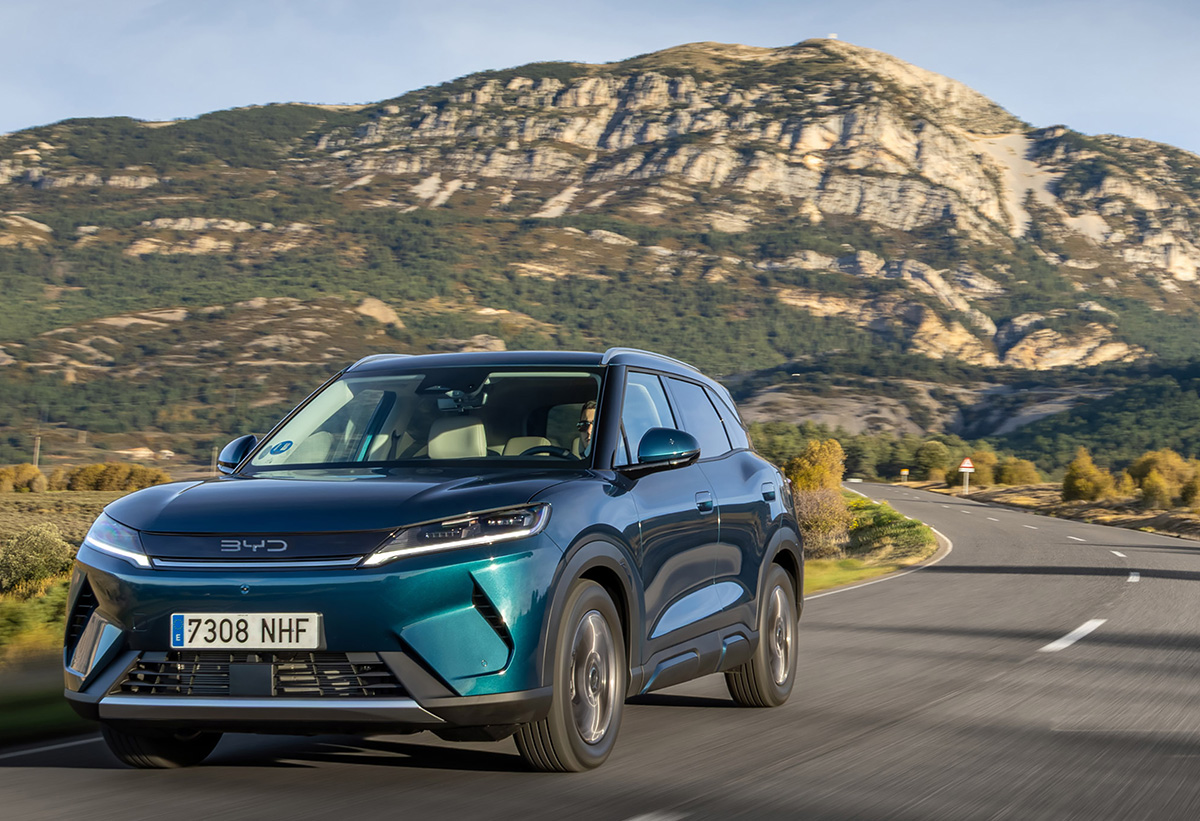
Key Takeaways: Chinese EV titan BYD is confidently charting a course of global expansion that deliberately bypasses the challenging US passenger car market. Despite being the world’s largest electric vehicle producer, BYD’s executive leadership states that its immense growth and success are not contingent on US market entry, citing overwhelming demand in regions like Brazil, the UK, and Europe. The company is actively addressing capacity shortages while simultaneously introducing groundbreaking technologies, such as the Blade Battery 2.0 with over 1,000 km range and rapid Flash charging. This aggressive global push, emblematic of the broader Chinese EV market strategy, stands in stark contrast to Western automakers who are observed scaling back their EV ambitions.
China continues to solidify its position as the undisputed global capital for electric vehicle manufacturing, with BYD emerging as the world’s largest producer of EVs. Despite this formidable leadership, Chinese automakers largely find themselves excluded from one of the globe’s most significant automotive markets: the United States. This exclusion stems from a complex interplay of high tariffs designed to protect domestic industries and outright bans on specific foreign-made technologies, creating substantial barriers to entry for passenger vehicles.

While the path for passenger cars remains heavily restricted, certain workarounds exist for commercial vehicles. BYD, for instance, has successfully established operations building electric buses in California, demonstrating a niche presence in the American commercial sector. Similarly, Windrose has recently commenced sales of its electric trucks within the US market, showcasing that commercial segments may offer viable avenues despite the broader challenges.
BYD’s Strategic Pivot Away from US Passenger Car Market
Amidst ongoing discussions about the global electric vehicle landscape, a key question has been whether BYD, a company synonymous with the cutting edge of the Chinese EV market strategy, is actively seeking to penetrate the US passenger car market. The answer, definitively, is no. The company’s strategic focus clearly lies elsewhere, reflecting a calculated decision to prioritize regions offering less resistance and more immediate growth potential.
Speaking at the recent Beijing Auto Show, BYD Executive Vice President Stella Li, widely recognized as the public face driving the company’s ambitious global expansion, articulated a clear stance. Ms. Li unequivocally stated that BYD’s impressive growth trajectory and current success are fundamentally independent of any entry into the American market. This position underscores a significant shift in the global automotive industry’s competitive dynamics.
In an interview with the BBC, Ms. Li asserted, “We survive and are successful without the US market today.” This declaration highlights the immense strength and self-sufficiency BYD has cultivated through its diversified international operations. The company’s confidence stems from its ability to meet escalating consumer demand across multiple continents, effectively minimizing the strategic necessity of confronting the formidable regulatory and economic hurdles prevalent in the United States.
Global Demand Outstrips Supply for the EV Giant
Far from being concerned with US market access, Ms. Li revealed that BYD’s primary challenge currently revolves around managing an unprecedented surge in demand from other pivotal regions worldwide. The company is struggling to keep pace with the soaring appetite for its electric vehicles in markets spanning Brazil, the United Kingdom, and the broader European continent. This global surge signifies a crucial element of BYD’s comprehensive Chinese EV market strategy.
“Actually, we are now suffering [insufficient] capacity. Our demand is much higher than what we can supply,” Ms. Li explained. This admission, from the world’s largest EV manufacturer, paints a vivid picture of a company stretched by its own success. The immense global interest in BYD’s offerings underscores the effectiveness of its product strategy, technological innovation, and competitive pricing, which resonate strongly with diverse international consumer bases.
Beyond sales, BYD is also intensely focused on bolstering its brand recognition and establishing a strong retail footprint in these burgeoning territories. Efforts are actively underway to enhance visibility and consumer trust in new markets, including the United Kingdom. Furthermore, the company has ambitious plans to open up to 20 dedicated EV dealerships across Canada, signaling a concerted effort to deepen its presence in key North American adjacent markets without directly engaging the US passenger vehicle sector.
Pioneering Battery and Charging Innovation
Central to BYD’s global success and its robust Chinese EV market strategy is its relentless pursuit of technological innovation, particularly in battery development. In March of this year, the company made a significant announcement, introducing its highly anticipated Blade Battery 2.0. This next-generation battery technology promises a remarkable driving range, exceeding 1,000 kilometers on a single charge, a critical factor for consumer adoption and market competitiveness.
Alongside the Blade Battery 2.0, BYD also unveiled a revolutionary new Flash charging system. This advanced technology is engineered to dramatically reduce charging times, enabling a Blade Battery to replenish from 10% to 70% capacity in an astonishingly short five minutes. Such rapid charging capabilities represent a paradigm shift in electric vehicle convenience, addressing one of the major concerns of potential EV buyers.
The practical application of this cutting-edge technology is already becoming a reality. The Flash charging system is confirmed to be available in at least one electric vehicle model specifically destined for the European market. This rapid deployment of innovative features underscores BYD’s commitment to delivering advanced, user-centric solutions to its global customer base, further solidifying its competitive edge.
“Rest of World” Markets: A New Frontier for Chinese EV Market Strategy
While much media attention often focuses on established automotive markets, a substantial portion of the global EV revolution is unfolding with remarkable speed in what are collectively termed the “Rest of World” markets. These diverse, smaller automotive markets are experiencing an unprecedented surge in electric vehicle adoption. Here, the strategic flexibility and competitive offerings of Chinese automakers, with BYD leading the charge, have allowed them to secure a dominant market position.
The agility of companies employing a sophisticated Chinese EV market strategy has allowed them to rapidly respond to local demands, often offering a broader range of affordable and technologically advanced models. This has enabled them to capture significant market share long before many legacy automakers from the West could establish a firm foothold. This dominance is not merely anecdotal; it is reflected in rising sales figures and increasing consumer preference for Chinese-made EVs in these growing economies.
This dynamic highlights a fundamental shift in global automotive power. As EV adoption rates accelerate globally, particularly in emerging economies, Chinese manufacturers are demonstrating their capability to innovate, scale production, and penetrate new markets with unparalleled speed and efficiency. Their comprehensive approach, from battery manufacturing to vehicle assembly, provides a significant competitive advantage.
Contrasting Fortunes: Western OEMs Scale Back as Global EV Market Accelerates
The aggressive expansion and technological advancements demonstrated by BYD and other Chinese EV manufacturers present a stark contrast to recent trends observed among their counterparts in the United States and, to a lesser extent, Europe. While the global electric vehicle market continues its upward trajectory, many established Western automakers appear to be caught in a self-defeating spiral, marked by decisions to cancel or significantly scale back their ambitious EV programs.
These retractions come at a critical juncture, precisely as the global electric vehicle market is transitioning into a phase of unprecedented acceleration and widespread consumer acceptance. This divergence in strategy raises pertinent questions about the long-term competitive landscape of the automotive industry. The hesitancy or scaling back by some traditional manufacturers could inadvertently cede further ground to their more agile, globally focused competitors.
Bill Pierce of EVinfo.net encapsulated this concern, stating, “The United States is making a strategic error by slowing momentum on electric vehicles at the federal level, and the timing could not be worse.” This critical assessment suggests that policy decisions and corporate strategies within certain Western nations may be inadvertently handicapping their ability to compete effectively in the rapidly evolving future of transportation, potentially leaving them lagging in the global race for EV leadership.
FAQ Section
Why isn’t BYD prioritizing the US market for passenger cars?
BYD’s executive leadership indicates that the company’s robust global growth and profitability are not dependent on entering the US passenger car market. High tariffs and bans on certain foreign-made technologies create significant barriers, making other international markets, where demand is already soaring, more strategically attractive and less challenging to penetrate.
What are BYD’s key global growth markets?
BYD is currently experiencing overwhelming demand in several key international regions, including Brazil, the United Kingdom, and various countries across Europe. These markets are central to the company’s current expansion strategy, where it is actively increasing capacity and brand recognition to meet consumer needs.
What new battery technology has BYD introduced recently?
In March, BYD unveiled its Blade Battery 2.0, which boasts an impressive range of over 1,000 kilometers on a single charge. Alongside this, the company introduced a new Flash charging system capable of charging the Blade Battery from 10% to 70% in just five minutes, significantly enhancing user convenience.
How do Chinese EV market strategies differ from US/European approaches?
Chinese EV market strategies, exemplified by BYD, often prioritize rapid global expansion, aggressive technological innovation, and competitive pricing, especially in emerging markets. This contrasts with some US and European automakers, who are observed scaling back EV programs, potentially due to different market dynamics, regulatory environments, or investment priorities.
Are Chinese EVs completely absent from the US market?
While Chinese passenger cars face significant barriers in the US due to tariffs and technology bans, Chinese companies do have a presence in the commercial vehicle sector. For instance, BYD builds electric buses in California, and Windrose has commenced sales of its electric trucks in the US, demonstrating specific commercial avenues for market entry.
What challenges is BYD currently facing despite its success?
Despite its global success and leadership, BYD’s primary challenge, as stated by Executive VP Stella Li, is meeting the overwhelming demand for its electric vehicles. The company is currently experiencing insufficient production capacity, indicating that global consumer demand is significantly higher than what it can supply.