
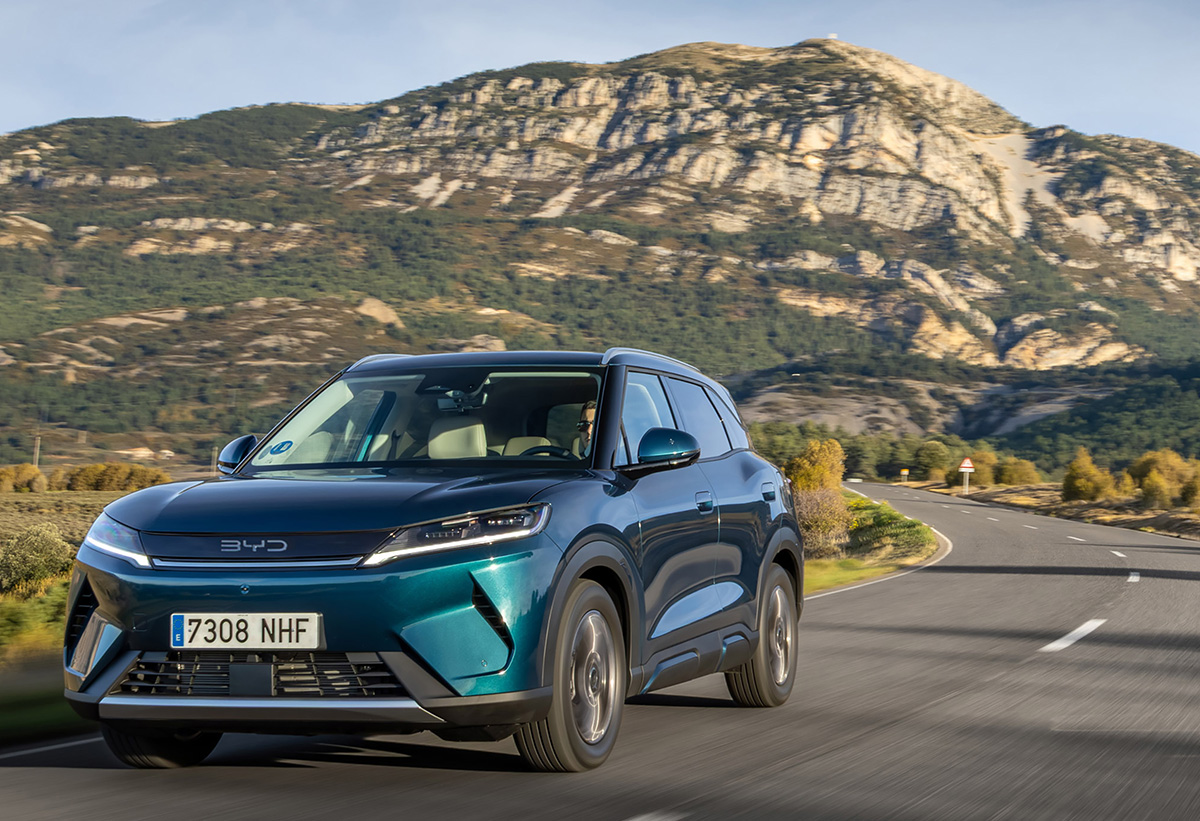
In a bold declaration that underscores shifting global automotive priorities, Chinese electric vehicle (EV) manufacturing giant BYD has asserted its independence from the United States market. Despite China holding the undisputed title of the world’s EV capital and BYD reigning as the planet’s largest EV producer, the company’s executive leadership views the lucrative American passenger car market as non-essential for its burgeoning global expansion strategy.
This strategic posture comes as Chinese automakers face significant hurdles in the US, primarily in the form of elevated tariffs and outright bans on specific foreign-made technologies. While certain workarounds exist for commercial vehicles – notably BYD’s electric bus manufacturing operations in California and Windrose’s recent entry into the US electric truck market – the narrative for passenger cars remains distinctively different.

Key Takeaways:
- BYD, the world’s largest EV producer, is not prioritizing entry into the US passenger car market due to existing tariffs and technology bans.
- Executive VP Stella Li states BYD is successfully growing without the US market, facing capacity constraints due to high demand in other regions.
- The company is actively increasing brand recognition and expanding sales networks across Brazil, the UK, Europe, and Canada.
- BYD recently unveiled its Blade Battery 2.0, offering over 1,000 km range, and Flash charging technology, capable of 10% to 70% charge in five minutes.
- Chinese automakers, led by BYD, dominate EV adoption in many emerging markets globally.
- US and European automakers are scaling back EV programs, a move deemed a “strategic error” by some experts, as the global EV market accelerates.
Navigating Trade Barriers: BYD’s Strategic Stance on the US Market
Speaking candidly at the recent Beijing Auto Show, BYD Executive VP Stella Li, widely recognised as the driving force behind BYD’s ambitious global expansion strategy, articulated the company’s clear position. Ms. Li indicated that BYD’s impressive growth trajectory is in no way dependent on securing a foothold in the American passenger vehicle sector.
The Landscape of US Exclusion
The US market, historically a cornerstone for global automotive success, remains largely inaccessible for Chinese passenger EVs. This exclusion is a multifaceted issue, stemming from a combination of substantial import tariffs designed to protect domestic industries and legislative prohibitions on technologies perceived as national security risks. These barriers effectively create a high wall, limiting direct competition from prominent Chinese players like BYD.
Despite these significant trade barriers, BYD has demonstrated remarkable resilience and growth. The company has strategically found avenues for partial entry, particularly in the commercial vehicle segment. Its established electric bus manufacturing facility in California is a prime example, alongside recent developments like Windrose’s foray into the US electric truck market. However, for the core passenger car business, BYD’s messaging is unequivocal.
Prioritising Global Demand Over US Entry
Ms. Li underscored BYD’s self-sufficiency, telling the BBC: “We survive and are successful without the US market today.” This statement highlights a strategic pivot, where the company focuses its resources and expansion efforts on markets that are not only receptive but are actively demanding its products at an accelerating rate. The executive further elaborated on the current operational realities, revealing a significant supply-side challenge.
“Actually, we are now suffering [insufficient] capacity. Our demand is much higher than what we can supply,” Ms. Li explained. This is not a lament of poor sales but rather an indicator of overwhelming demand from other international markets, including high-growth regions like Brazil, the rapidly electrifying UK, and the broader European continent. This robust international appetite is a cornerstone of BYD’s global expansion strategy, validating its decision to look beyond the US.
Concurrently, BYD is aggressively working to enhance its brand recognition and distribution networks in these new markets. Significant plans are underway in regions such as the UK and Canada, where the company intends to establish up to 20 new EV dealerships, signalling a concerted effort to deepen its penetration and solidify its long-term presence.
Powering the Future: BYD’s Technological Edge and Market Leadership
Central to BYD’s success and its confident global expansion strategy is its formidable technological prowess, particularly in battery development. The company continues to push the boundaries of EV performance and convenience, cementing its reputation as an innovator in the sector.
Innovations in Battery Technology
In a significant technological reveal in March, BYD introduced its advanced Blade Battery 2.0. This next-generation power unit is engineered to deliver an impressive range of over 1,000 kilometres on a single charge, a critical factor in alleviating range anxiety for consumers and boosting EV adoption. Beyond extended range, BYD also unveiled a groundbreaking Flash charging system. This innovative technology enables a Blade Battery to charge from 10% to 70% in an astonishing five minutes, a speed that rivals refuelling conventional internal combustion engine vehicles.
Such rapid charging capabilities represent a paradigm shift in EV practicality, addressing one of the primary concerns for prospective buyers. The immediate applicability of these advancements is evident, with the Flash charging technology already integrated into at least one EV model destined for the European market. These innovations are crucial components of BYD’s global expansion strategy, offering a compelling competitive advantage.
Rapid Global Market Penetration
Beyond the established automotive powers, a significant portion of the global EV landscape — often collectively referred to as the “Rest of World” markets — is witnessing an unprecedented surge in electric vehicle adoption. In these rapidly expanding segments, Chinese automakers, with BYD at the forefront, have effectively seized market leadership. Their ability to offer cost-effective, technologically advanced, and well-designed EVs has allowed them to dominate, outcompeting many traditional players.
This dominance is not merely about market share; it reflects a deep understanding of diverse consumer needs and an agile manufacturing and distribution network. The aggressive expansion in these regions forms the backbone of BYD’s successful global expansion strategy, providing a vast and growing customer base that more than compensates for its limited presence in the US.
A Divergent Path: Global EV Acceleration vs. Western Hesitation
The global electric vehicle transition is unfolding at varying speeds and with differing strategic approaches across continents. While BYD and other Chinese manufacturers are aggressively expanding and innovating, a noticeable recalibration is occurring in Western automotive hubs.
Soaring Adoption in “Rest of World” Markets
In contrast to the protective measures seen in the US, many emerging economies and developing markets are embracing EVs with enthusiasm. These regions often lack entrenched fossil fuel infrastructure, making the shift to electric vehicles a more straightforward and economically viable option. Government incentives, coupled with the availability of affordable and high-performing EVs from Chinese manufacturers, have fuelled this rapid adoption.
The success of BYD’s global expansion strategy in these markets is a testament to its agility and ability to cater to diverse economic and environmental contexts. This segment of the global market is becoming increasingly crucial for EV growth, potentially reshaping the balance of power in the automotive industry.
US and European Automakers Re-evaluating EV Commitments
Paradoxically, as the global EV market gathers significant momentum, many traditional automakers in the United States and, to a lesser extent, Europe, appear to be locked into a self-defeating spiral. There has been a discernible trend of cancelling or significantly scaling back their ambitious EV programs. This retrenchment comes at a critical juncture when global demand for electric vehicles is kicking into high gear, potentially leaving these legacy manufacturers at a disadvantage.
Industry observers are closely watching these developments. As Bill Pierce of EVinfo.net incisively noted, “The United States is making a strategic error by slowing momentum on electric vehicles at the federal level, and the timing could not be worse.” This assessment suggests that short-term policy adjustments or market hesitations could have profound long-term consequences, allowing rapidly advancing players like BYD to further solidify their global dominance.
Strategic Implications and Future Outlook
BYD’s declaration and its robust global expansion strategy signal a potential recalibration of the global automotive power structure. The company’s confidence in thriving without the US market reflects a broader trend where geopolitical factors, technological innovation, and diverse market demands are reshaping competition. This strategy enables BYD to allocate resources more efficiently to markets offering less resistance and greater immediate growth potential, further consolidating its position as a global EV leader.
The divergent paths of EV adoption and policy in the East and West will likely have lasting impacts on manufacturing, supply chains, and technological standards. As BYD continues to expand its reach and technological capabilities, its independence from one of the world’s largest automotive markets could be perceived not as a limitation, but as a strategic strength, allowing it to dictate its own terms of global engagement.
FAQ Section
Why is BYD not prioritizing the US passenger car market?
BYD cites high tariffs and bans on certain foreign-made technologies as primary reasons for not actively pursuing the US passenger car market. Executive VP Stella Li affirmed the company’s ability to succeed without US sales.
Where is BYD experiencing high demand for its electric vehicles?
BYD is currently facing capacity constraints due to soaring demand in several key regions, including Brazil, the UK, and across Europe. These markets are central to BYD’s global expansion strategy.
What new battery technologies has BYD recently introduced?
BYD recently unveiled its Blade Battery 2.0, which offers a range exceeding 1,000 km, and a Flash charging system capable of charging the battery from 10% to 70% in just five minutes.
How are Chinese automakers performing in “Rest of World” markets?
Chinese automakers, led by BYD, are dominating the EV market in many smaller and emerging economies globally. These regions are experiencing rapid EV adoption, contributing significantly to BYD’s global expansion strategy.
What is the current trend among US and European automakers regarding EVs?
In contrast to global growth, US and, to a lesser extent, European automakers are scaling back or cancelling some of their EV programs. This move is seen by some experts as a strategic misstep, potentially hindering their competitiveness.
What is Stella Li’s role at BYD?
Stella Li serves as BYD’s Executive Vice President and is widely regarded as the public face and driving force behind the company’s aggressive and successful push for global dominance in the electric vehicle industry.