
Key Takeaways:
- Researchers at Hanyang University have established 2.5 nanometers as the critical minimum thickness for lithium niobium oxide (LNO) coatings to effectively shield cathode materials in sulfide-based all-solid-state batteries.
- This breakthrough provides a crucial quantitative guideline for overcoming the chemical reactivity challenges at the cathode-electrolyte interface, a persistent hurdle for these advanced battery systems.
- Experiments demonstrated that a 2.5 nm LNO coating significantly extended cycle life by 43% and reduced interfacial resistance by over 50% compared to uncoated cells, while thinner (1.0 nm) coatings proved insufficient.
- The study, published in Energy Storage Materials, highlights the importance of precise nanoscale engineering for enhancing the performance and longevity of next-generation solid-state battery technology.
- While powder atomic layer deposition (ALD) is a promising scalable manufacturing technique, its integration into gigafactories remains a key challenge for future commercialization.
Pioneering Research Defines Critical LNO Coating for Sulfide Solid-State Battery Cathodes
SEOUL, South Korea — A significant advancement in the pursuit of high-performance electric vehicle (EV) batteries has emerged from Hanyang University. Researchers there have pinpointed 2.5 nanometers as the precise minimum thickness required for lithium niobium oxide (LNO) coatings to effectively protect cathode materials in sulfide-based all-solid-state batteries. This groundbreaking quantitative finding addresses a long-standing challenge in the field, providing a crucial benchmark for future battery development.

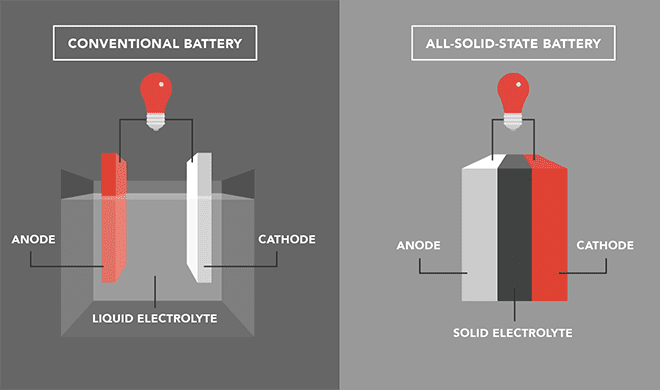
Solid-state batteries, particularly those employing sulfide electrolytes, are widely considered a promising pathway for next-generation energy storage due to their potential for enhanced safety, higher energy density, and faster charging capabilities compared to conventional lithium-ion batteries. However, a primary obstacle to their widespread adoption has been the chemical instability at the interface between the sulfide solid electrolyte and the cathode active material.
Addressing Interfacial Reactivity: The Core Challenge
The inherent chemical reactivity of sulfide-based solid electrolytes at the cathode interface poses a significant hurdle to their commercial viability. Upon contact with active cathode materials, these electrolytes tend to generate resistive degradation products. This undesirable reaction mechanism leads to increased internal resistance within the battery cell and, crucially, a substantial reduction in the battery’s cycle life, undermining the performance benefits of solid-state technology.
Mitigating this interfacial degradation is paramount for unlocking the full potential of sulfide solid-state battery cathodes. Previous research indicated that thin protective coatings could act as a diffusion barrier, preventing direct contact and subsequent reactions. However, the exact minimum thickness required for such a coating to be truly effective had remained an elusive quantitative measure, leaving a critical gap in design guidelines for battery engineers.

Nanoscale Engineering with LNO Coatings
The Hanyang University team focused its investigation on lithium niobium oxide (LNO) as the protective layer, applying it to NCM811 cathode powders. NCM811, a nickel-rich cathode material, is favored for its high energy density but is also highly susceptible to degradation in reactive environments, making it an ideal candidate for this protective coating study.
To ensure precise and uniform application of the LNO layers, the researchers utilized rotary powder atomic layer deposition (ALD). This advanced deposition technique allows for atomic-level control over film thickness and composition. Specifically, a supercycle ALD method was employed, involving the alternating deposition of lithium and niobium precursors with ozone, which facilitated meticulous control over the LNO coating’s stoichiometry and thickness.
Performance Trade-offs Across Coating Thicknesses
To determine the optimal thickness, the Hanyang team systematically deposited LNO coatings at three distinct thicknesses: 1.0 nanometer (nm), 2.5 nm, and 5.0 nm. The electrochemical performance of the resulting solid-state battery cells revealed clear and significant trade-offs, underscoring the delicate balance required for interface engineering.
Cells with the thinnest 1.0 nm LNO coating initially delivered the highest discharge capacity, registering 229 mAh g⁻¹. However, this initial advantage was short-lived. The cycle life of these cells proved to be 28% shorter than those with a 2.5 nm coating. Furthermore, their interfacial resistance was significantly higher, by 59%, indicating that the protective layer was insufficient to prevent the detrimental side reactions from occurring effectively.
Spectroscopic analysis provided conclusive evidence, confirming that side reactions were indeed suppressed effectively at the 2.5 nm thickness but not at 1.0 nm. The ultrathin 1.0 nm coating simply failed to act as a robust enough diffusion barrier, allowing the sulfide electrolyte to continue reacting with the cathode active material.
The 2.5 Nanometer Breakthrough: Enhanced Stability and Longevity
The 2.5 nm LNO-coated cells demonstrated a robust balance of performance metrics. They achieved an initial discharge capacity of 216 mAh g⁻¹, only slightly lower than the 1.0 nm variant, but crucially, exhibited significantly improved stability and longevity. Compared to an uncoated cell, the 2.5 nm coating extended the cycle life by an impressive 43% and slashed the interfacial resistance to less than half.
Increasing the coating thickness further to 5.0 nm resulted in a modest drop in initial capacity to 207 mAh g⁻¹. More importantly, the researchers found no meaningful additional gain in cycle life or reduction in interfacial resistance compared to the 2.5 nm coating. This observation suggests that beyond 2.5 nm, the benefits of the protective layer plateau, while its increased thickness potentially introduces additional resistance or reduces the active material content proportionally, thus diminishing overall electrochemical performance.
A Practical Guideline for Next-Generation Solid-State Batteries
Prof. Tae Joo Park, who spearheaded the research, emphasized the profound implications of these findings. “Our results show that the minimum effective thickness of the LNO protective layer to suppress side reactions in sulfide-based ASSBs is 2.5 nm,” said Prof. Park. He further added, “This provides a practical guideline for cathode–electrolyte interface optimization in next-generation solid-state batteries.”
This quantitative threshold is invaluable for battery designers and manufacturers. It allows for precise engineering of sulfide solid-state battery cathodes, enabling them to optimize performance without over-engineering, which can lead to unnecessary material usage, increased cost, and potentially compromised energy density.
Scalability and Future Challenges
While the laboratory results are highly encouraging, the Hanyang team also acknowledged the practical considerations for mass production. They noted that powder ALD, the method used for depositing the LNO coatings, holds significant promise for scalable manufacturing due to its ability to coat large quantities of powder uniformly.
However, translating this laboratory success to industrial-scale production, particularly for integration into gigafactories, presents its own set of challenges. These include optimizing deposition rates for high throughput, managing material costs, and ensuring consistent quality across vast production volumes. Overcoming these hurdles will be crucial for the widespread adoption of this advanced battery technology in the electric vehicle market and other applications requiring high-performance energy storage solutions.
The study’s findings, which offer a critical design parameter for improving the stability and longevity of sulfide solid-state battery cathodes, were published in the peer-reviewed journal Energy Storage Materials. This research marks a significant step forward in making solid-state batteries a commercial reality, propelling the evolution of electric vehicle technology towards a more sustainable and efficient future.
Frequently Asked Questions (FAQ)
What is the main discovery from Hanyang University’s research?
Researchers at Hanyang University discovered that 2.5 nanometers is the minimum effective thickness for a lithium niobium oxide (LNO) coating to protect cathode materials in sulfide-based all-solid-state batteries. This quantitative finding is crucial for optimizing battery design and improving their performance and longevity.
Why is this specific coating thickness important for solid-state batteries?
Sulfide-based solid electrolytes react with cathode materials, creating resistive degradation products that shorten battery cycle life. A 2.5 nm LNO coating acts as a diffusion barrier, effectively suppressing these side reactions. Thinner coatings (1.0 nm) are ineffective, while thicker ones (5.0 nm) offer no additional benefits and can reduce initial capacity.
What type of cathode material was used in the study?
The study focused on NCM811 cathode powders. NCM811 is a nickel-rich material known for its high energy density, making it a relevant choice for next-generation batteries. Its susceptibility to degradation underscores the importance of effective protective coatings for its stable operation in sulfide solid-state batteries.
How was the LNO coating applied to the cathode powders?
The LNO coatings were applied using rotary powder atomic layer deposition (ALD). Specifically, a supercycle ALD method was employed, which involves alternating deposition steps of lithium and niobium with ozone. This technique allows for precise, atomic-level control over the thickness and composition of the protective layer, ensuring uniform coverage.
What performance improvements did the 2.5 nm coating provide?
Compared to uncoated cells, the 2.5 nm LNO coating significantly improved battery performance. It extended the cycle life by 43% and reduced the interfacial resistance by more than half. This demonstrates its effectiveness in maintaining electrochemical stability and prolonging the operational lifespan of sulfide solid-state battery cathodes.
What is the significance of this research for electric vehicles (EVs)?
This research provides a vital practical guideline for developing more stable and efficient sulfide solid-state batteries, which are seen as a key to next-generation EVs. These batteries promise greater safety, higher energy density, and faster charging, ultimately contributing to longer-range, more reliable, and safer electric vehicles for the future.
Are there any challenges remaining for commercializing this technology?
Yes, while powder ALD is a promising technique for scalable manufacturing, its integration into gigafactory-scale production remains an open challenge. Overcoming hurdles related to high-volume throughput, cost-effectiveness, and ensuring consistent quality across massive production scales will be critical for the widespread commercial adoption of this advanced battery technology.