
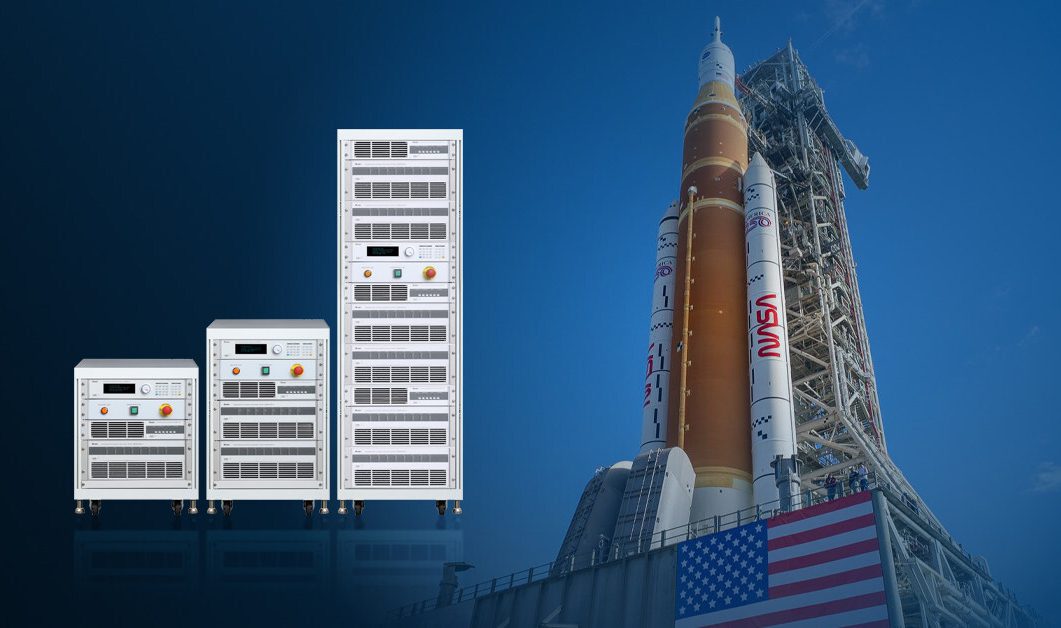
Key Takeaways:
- Chroma Systems Solutions’ 17020 Battery Test System played a crucial role in validating the lithium-ion battery systems for NASA’s Orion crew capsule.
- This rigorous testing was for the Artemis II mission, marking the first crewed circumlunar voyage of the Artemis program.
- The validation process involved two phases: initial lab evaluations for performance, reliability, and safety, followed by direct integration into the launch tower for continuous monitoring.
- The programmable platform simulated mission-specific load conditions, including critical eclipse periods when solar power is unavailable.
- Orion relies on four primary lithium-ion batteries for its crew module, alongside specialized power units for the highly critical launch abort system.
In a significant step forward for human space exploration, Chroma Systems Solutions has confirmed the successful validation of the lithium-ion battery systems aboard NASA’s Orion crew capsule using its advanced Chroma 17020 Battery Test System. This meticulous testing was a critical prerequisite for the Artemis II mission, which is poised to become the first crewed Artemis flight, embarking on a circumlunar journey carrying four astronauts.

Ensuring Power Reliability for Human Spaceflight
The success of any crewed space mission hinges on the unwavering reliability of its power systems. For NASA’s Artemis II, which aims to orbit the Moon with astronauts on board, the performance and safety of the Orion capsule’s batteries are paramount. These sophisticated power units are essential for powering all critical onboard systems, from communication and navigation to life support and propulsion.
The Artemis II mission represents a pivotal moment in NASA’s ambitious plan to return humans to the lunar surface. As the first crewed flight of the Artemis program, it will demonstrate the Orion spacecraft’s capabilities with a human crew, paving the way for future lunar landings and eventual missions to Mars. The integrity of its power supply, therefore, cannot be overstated.
The Chroma 17020 Battery Test System: A Deep Dive into Validation
At the heart of Orion’s battery validation was the Chroma 17020 Battery Test System. This highly programmable and versatile platform is designed to rigorously evaluate the performance, reliability, and safety of battery systems under a wide array of conditions, mirroring the extreme environments encountered in space. Its precision and comprehensive testing capabilities made it an indispensable tool for NASA engineers.

The system’s ability to simulate real-world operational demands, including fluctuating power draw and environmental stresses, provides engineers with critical data to ensure that batteries can withstand the rigors of spaceflight. This level of detailed analysis is fundamental for missions where even the smallest power anomaly could have catastrophic consequences.
Two-Phase Validation: From Lab to Launchpad
The testing process for Orion’s lithium-ion batteries was executed in a meticulous two-phase approach, designed to cover every possible scenario and ensure continuous validation up to the final moments before launch.
Initially, the Chroma 17020 Battery Test System was deployed in laboratory conditions. During this phase, engineers conducted extensive evaluations of battery performance, assessing their energy capacity, power output, charge/discharge cycles, and overall longevity. Reliability was meticulously scrutinized through repeated stress tests, while safety protocols were validated to prevent thermal runaway or other potential failures critical for human spaceflight.
Following successful lab validation, the Chroma 17020 was integrated directly into the launch tower. Here, it continued to validate battery performance in a real-world operational environment, right up to the final countdown sequence. This on-site monitoring ensured that the batteries maintained optimal condition under pre-launch conditions and verified their readiness for immediate deployment.
Simulating Mission-Critical Load Conditions
A key feature of the programmable test platform was its capability to simulate mission-specific load conditions. This included accurately mimicking critical periods, such as eclipses, when the Orion capsule would pass into the Earth’s or Moon’s shadow, rendering solar charging unavailable.
During these eclipse periods, the spacecraft’s batteries are solely responsible for carrying the full demand for all essential systems, including communication with Earth, navigation systems guiding the capsule, and propulsion systems crucial for maneuvers. The Chroma 17020 ensured that the batteries could reliably sustain these high demands without faltering, providing a robust power backbone during the most challenging phases of the mission.
Orion’s Diverse Battery Architecture
The Orion crew capsule is equipped with a sophisticated power architecture tailored to its various operational requirements. It carries four primary lithium-ion batteries within the crew module itself. These batteries are the workhorses, supplying continuous power for the astronauts’ life support, scientific instruments, and internal systems throughout the circumlunar journey.
Beyond the primary power sources, Orion also incorporates specialized batteries within its launch abort system. This system is a critical safety feature designed to propel the crew capsule to safety in the event of an anomaly during ascent. The batteries powering the launch abort system must deliver instantaneous, high-power output on a single, no-failure-tolerated event. Their flawless operation is non-negotiable, highlighting the extreme importance of their validation through systems like the Chroma 17020 Battery Test System.
Industry Contributions to Space Exploration
The role of specialized engineering companies like Chroma Systems Solutions underscores the collaborative effort behind monumental achievements in space exploration. Their expertise in advanced testing technologies directly contributes to the safety and success of missions that push the boundaries of human endeavor.
Commenting on their contribution, Fred Sabatine, CEO of Chroma Systems Solutions, stated, “We are proud to contribute to a mission that represents a major step forward in human space exploration.” This sentiment reflects the broader impact of their work, moving beyond just technical validation to enabling the next generation of spaceflight.
The successful validation of Orion’s battery systems by the Chroma 17020 Battery Test System ensures that the Artemis II astronauts will be powered by reliable and robust energy sources, as they prepare for their historic journey around the Moon. This technological assurance is foundational for advancing humanity’s presence in the cosmos.
Frequently Asked Questions (FAQ)
What is the Artemis II mission?
Artemis II is NASA’s first crewed mission under the Artemis program, sending four astronauts on a circumlunar voyage around the Moon. It aims to test the Orion spacecraft with a human crew before future lunar landings.
What role did the Chroma 17020 Battery Test System play in Artemis II?
The Chroma 17020 Battery Test System was used to rigorously evaluate and validate the lithium-ion battery systems of NASA’s Orion crew capsule, ensuring their performance, reliability, and safety for the Artemis II mission.
Why is battery testing so critical for space missions?
Battery testing is critical because space missions rely entirely on onboard power for life support, communication, navigation, and propulsion. Any failure could jeopardize the mission and astronaut safety in an unforgiving environment.
How was the testing conducted for Orion’s batteries?
Testing involved two phases: initial lab evaluations for performance and safety, followed by integration of the Chroma 17020 Battery Test System directly into the launch tower to continuously validate battery performance up to the final countdown.
What specific conditions were simulated during battery validation?
The programmable test platform simulated mission-specific load conditions, including critical eclipse periods where solar charging is unavailable and batteries must power all essential systems like communication, navigation, and propulsion.
What types of batteries does the Orion capsule use?
The Orion crew module utilizes four primary lithium-ion batteries for its main power needs, and specialized batteries are integrated into the launch abort system for critical, instantaneous power delivery during emergencies.
Who is Chroma Systems Solutions?
Chroma Systems Solutions is a company that provides advanced power electronics testing solutions. Their Chroma 17020 Battery Test System is an example of their contributions to high-stakes applications like space exploration, ensuring power system integrity.