
Key Takeaways
- Hoymiles has launched the HiFlow Pro, the first UL-compliant plug-in solar microinverter in the U.S. designed to meet the new UL 3700 safety standard.
- This innovative device allows residential users, particularly those in apartments or rental homes, to directly integrate solar power into a standard 120-volt household outlet.
- The microinverter incorporates critical safety features, including automatic power cut-off during grid outages and protection against electrical shock from exposed pins.
- The system promises reduced energy bills and increased energy independence, with up to four units capable of parallel operation for a maximum input of 1,200W.
- Eight U.S. states currently permit plug-in solar panels, reflecting a growing trend seen widely in European markets like Germany.
In a significant development for residential renewable energy solutions, Hoymiles has introduced the HiFlow Pro, the first plug-in solar microinverter in the United States engineered to comply with the new UL 3700 safety standard. This innovation marks a pivotal moment for urban dwellers and renters seeking more accessible and affordable pathways to sustainable energy consumption, enabling direct power injection into a standard 120-volt outlet.
Traditionally, solar power systems have been associated with substantial rooftop installations, often requiring significant capital investment and permanent structural modifications. The advent of plug-in solar panels, coupled with the latest microinverter technology, is democratizing access to solar energy, allowing a broader segment of the population to participate in the clean energy transition.

Revolutionizing Residential Solar Accessibility
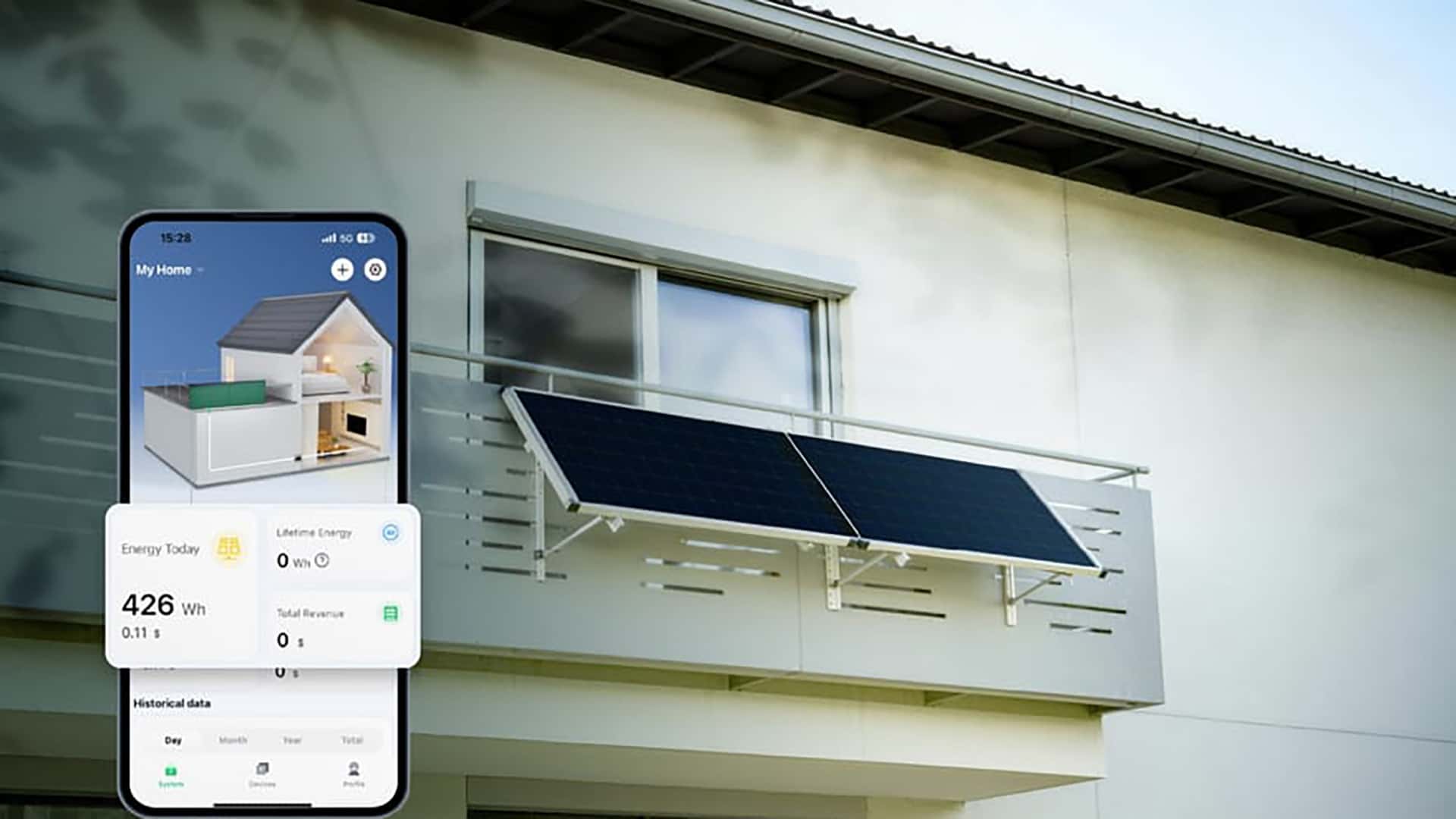
The concept of plug-in solar panels, sometimes referred to as balcony solar panels, addresses a critical gap in the renewable energy market. Many individuals residing in apartments, condominiums, or rental properties have historically faced barriers to adopting solar power due to logistical and financial constraints. The Hoymiles HiFlow Pro directly tackles these challenges by offering a compact, user-friendly, and legally compliant solution.
This system fundamentally changes how smaller-scale solar generation can be integrated into everyday living. By simply plugging the microinverter into a conventional wall socket, users can offset a portion of their electricity consumption from the grid, leading to tangible reductions in their monthly energy bills. The ease of installation and non-permanent nature of these setups make them particularly appealing for temporary residences.
The Significance of UL 3700 Compliance
A cornerstone of the HiFlow Pro’s introduction is its design adherence to UL 3700, North America’s recently established safety standard for plug-in solar panels. This compliance is not merely a technicality; it represents a crucial step in ensuring the safety and reliability of these emergent technologies within the broader electrical grid infrastructure. Safety concerns have historically been a significant hurdle for widespread adoption of plug-in solar solutions.

The UL 3700 standard addresses potential hazards associated with direct-to-grid power injection. It mandates rigorous safety protocols to protect both homeowners and utility workers. By meeting these stringent requirements, the Hoymiles HiFlow Pro assures consumers of a product that has undergone thorough testing and validation, fostering greater trust and confidence in the technology.
Robust Safety Features and Technical Specifications
The Hoymiles HiFlow Pro microinverter is engineered with several critical safeguards. One primary concern with grid-tied systems is the potential for backfeeding electricity into the grid during a power outage, which could endanger utility line workers performing repairs. The HiFlow Pro features built-in mechanisms that automatically cut power to the solar system when a grid outage is detected.
Furthermore, the microinverter is designed to mitigate the risk of electrical shock. It automatically cuts power to any exposed pins on the cable ends when disconnected from the household outlet. Hoymiles specifies that the output voltage drops to less than 34V within one second after disconnection, significantly reducing shock hazards.
Beyond internal electrical safety, the physical durability of the unit is also noteworthy. The enclosure boasts a NEMA Type 6 and IP67 rating. This robust design ensures the device is protected against dust, strong jets of water, and temporary immersion, making it suitable for outdoor installation. It is built to operate reliably across a wide temperature range, from an extreme -40°F (-40°C) to 149°F (65°C), accommodating diverse climatic conditions.
Performance, Efficiency, and Economic Benefits
While designed for accessibility, the HiFlow Pro also delivers commendable performance. Each microinverter unit is rated for a maximum power output of 360 watts. The system demonstrates high operational efficiency, with a 95.5% dynamic efficiency and an impressive 99.8% static efficiency, ensuring that a substantial portion of the generated solar energy is converted for household use.
For users seeking greater energy generation, the system allows for scalability. Up to four HiFlow Pro microinverters can be deployed in parallel, with each unit plugged into a separate household outlet. This configuration enables a maximum combined input of 1,200W, significantly boosting overall energy production. The company asserts that under ideal conditions, the total annual energy production can reach as high as 2,403 kilowatt-hours (kWh).
The economic viability of such a system is also a key factor. Hoymiles suggests that the HiFlow Pro offers a swift return on investment (ROI), estimated to be approximately two years. This rapid payback period underscores the system’s potential for significant long-term cost savings on electricity bills. Pricing for the system is competitive, with a 180W kit, including one solar panel, retailing for $499, and a 360W kit priced at $700.
Streamlined Installation and Expanding Regulatory Landscape
Ease of installation is a hallmark of the HiFlow Pro. The company highlights that units can be set up in as little as one minute, facilitated by integrated Bluetooth and Wi-Fi connectivity for straightforward monitoring and control. This plug-and-play functionality is critical for making solar energy appealing to individuals without specialized technical expertise.
The regulatory environment for plug-in solar panels in the U.S. is evolving rapidly. Currently, eight states have enacted legislation explicitly permitting the use of these systems. These states include Colorado, Connecticut, Maryland, Maine, New Hampshire, Utah, Vermont, and Virginia. Beyond these, over two dozen additional states have introduced legislation pertaining to plug-in solar, indicating a clear nationwide trend towards broader acceptance and integration of residential distributed generation.
A Global Trend Towards Accessible Solar
The growing popularity of balcony solar, or plug-in solar, in the U.S. mirrors a well-established trend observed across Europe, particularly in countries like Germany. In these markets, accessible solar solutions have gained immense traction among apartment dwellers and environmentally conscious consumers. The non-permanent nature of such installations is a significant advantage, allowing users to simply pack up their equipment and relocate it when they move, unlike fixed rooftop installations.
The introduction of the Hoymiles HiFlow Pro, designed to meet the UL 3700 standard, represents a crucial step in bringing this widespread European adoption model to American households. By offering a safe, efficient, and portable means to generate renewable energy, this UL-compliant plug-in solar microinverter is set to empower more individuals to embrace sustainable living and reduce their reliance on conventional energy sources.
Correction: A previous version of this story stated that the product was UL-certified. It is not certified by UL Solutions, but designed to meet the UL 3700 standard. We regret the error.
Frequently Asked Questions About Plug-In Solar Microinverters
What is a plug-in solar microinverter?
A plug-in solar microinverter is a compact device that converts direct current (DC) power from a single solar panel into alternating current (AC) power, which can then be plugged directly into a standard wall outlet. This allows for immediate use of solar energy in a home, offsetting grid electricity consumption.
What is the UL 3700 safety standard?
UL 3700 is North America’s new safety standard specifically designed for plug-in solar panel systems. It establishes stringent safety requirements for devices like microinverters to ensure safe operation, especially regarding grid interaction, automatic disconnection during outages, and electrical shock prevention.
How does the Hoymiles HiFlow Pro enhance safety?
The HiFlow Pro enhances safety through features like automatic power cut-off during grid outages, preventing backfeeding electricity into the grid. It also de-energizes exposed cable pins instantly upon disconnection, reducing the risk of electrical shock for users and utility workers, aligning with UL 3700 requirements.
Can plug-in solar panels power an entire home?
Typically, plug-in solar panels like those used with the HiFlow Pro are designed to supplement household electricity and reduce energy bills, not to power an entire home independently. They are ideal for offsetting base load consumption in apartments or small residences, contributing to energy savings.
How many plug-in microinverters can be used together?
The Hoymiles HiFlow Pro allows for up to four microinverters to be used in parallel. Each unit is plugged into a separate household outlet, enabling a combined maximum power input of 1,200 watts. This modularity allows users to scale their solar generation based on their needs.
Which U.S. states permit plug-in solar panels?
As of now, eight U.S. states have legislation that explicitly enables the use of plug-in solar panels: Colorado, Connecticut, Maryland, Maine, New Hampshire, Utah, Vermont, and Virginia. Additionally, over two dozen other states have introduced similar legislation, indicating a growing acceptance across the country.