
Key Takeaways (TL;DR)
- Anthro Energy has received crucial US Department of Energy (DOE) approval to commence construction on its Louisville, Kentucky lithium-ion battery electrolyte plant.
- This facility is poised to become the first large-scale, US-owned advanced lithium-ion battery electrolyte plant, producing approximately 12,000 metric tons of polymer electrolytes annually.
- The project is backed by substantial federal funding, including a $24.9 million DOE grant from the Infrastructure Investment and Jobs Act and $18.4 million in IRA Section 48C investment tax credits, totaling $43 million.
- Anthro Energy’s Proteus platform will produce advanced polymer electrolytes designed to enhance performance, safety, and design flexibility for various applications, including defense, consumer electronics, and electric vehicles.
- A key differentiator is the plant’s commitment to using Foreign Entity of Concern-free (FEOC-free) inputs from day one, aiming to strengthen domestic supply chains and reduce reliance on overseas production.
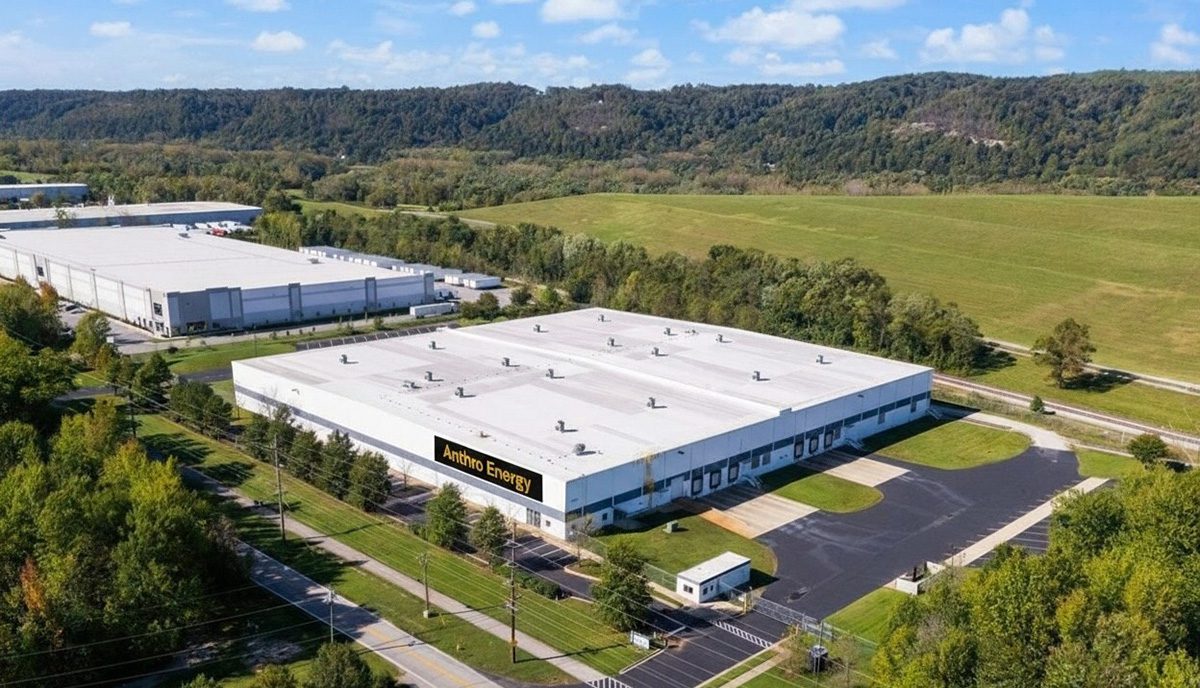
Anthro Energy, a pioneering Stanford University spinout, has reached a significant milestone in its ambitious plan to bolster domestic battery manufacturing. The company recently secured crucial authorization from the US Department of Energy (DOE), greenlighting the advancement of its Louisville, Kentucky electrolyte manufacturing facility into the critical construction phase. This development paves the way for what Anthro Energy hails as the nation’s inaugural large-scale, US-owned advanced lithium-ion battery electrolyte plant.
The DOE’s approval is a pivotal moment, unlocking the next phase of a substantial $24.9 million grant previously awarded under the bipartisan Infrastructure Investment and Jobs Act. This federal backing underscores the strategic importance of developing a robust, domestic supply chain for electric vehicle (EV) and energy storage technologies within the United States.

Federal Backing Fuels Domestic Production
The Louisville project benefits from a robust financial foundation, combining the DOE grant with an additional $18.4 million in investment tax credits under Section 48C of the Inflation Reduction Act (IRA). This formidable federal support package, totaling approximately $43 million, highlights the government’s commitment to fostering a resilient and independent domestic battery ecosystem.
The Infrastructure Investment and Jobs Act, enacted to revitalize American infrastructure, plays a vital role in funding projects that strengthen national industrial capabilities. Similarly, the Inflation Reduction Act’s Section 48C tax credits are specifically designed to incentivize domestic manufacturing and clean energy development, aligning perfectly with Anthro Energy’s mission.
Strategic Investment for a Resilient Supply Chain
This significant federal investment is not merely financial; it represents a strategic national endeavor to de-risk critical supply chains. Electrolytes are fundamental components of lithium-ion batteries, directly impacting their performance, safety, and lifespan. The establishment of a large-scale lithium-ion battery electrolyte plant in the US is therefore crucial for accelerating the domestic production of battery cells and packs.

By providing substantial financial incentives, the US government aims to reduce the nation’s reliance on foreign sources for essential battery materials. This move is particularly pertinent given the current geopolitical landscape and the drive to enhance economic security through self-sufficiency in key technological sectors.
Pioneering Advanced Electrolyte Technology
The chosen site in Louisville, Kentucky, will undergo a transformative conversion from an existing building into a state-of-the-art production hub. This facility is engineered to achieve an impressive 25 GWh-capacity, enabling the production of approximately 12,000 metric tons of polymer electrolytes annually. This scale is critical for meeting the anticipated demand from a rapidly expanding domestic battery manufacturing sector.
At the heart of Anthro Energy’s offering is its innovative Proteus platform, which utilizes advanced polymer electrolytes. These proprietary electrolytes are specifically engineered to deliver superior performance, enhanced safety characteristics, and greater design flexibility within lithium-ion cells. Such improvements are vital for pushing the boundaries of battery technology across diverse applications.
Addressing Global Supply Chain Vulnerabilities
The Proteus platform’s capabilities extend beyond mere performance enhancements. The advanced polymer electrolytes contribute to safer battery operation by potentially mitigating risks associated with conventional liquid electrolytes, such as thermal runaway. Moreover, their inherent flexibility can enable new battery form factors, opening doors for more versatile product designs in various end-use markets.
Anthro Energy has explicitly stated its intention to use Foreign Entity of Concern-free (FEOC-free) inputs from day one of operations. This commitment is a direct response to the growing imperative for customers to untangle their supply chains from entities designated as FEOCs, particularly those dominating global electrolyte production, such as Chinese battery supply chains.
The FEOC-free designation is a powerful pitch to manufacturers navigating complex regulatory requirements and seeking to establish secure, transparent, and resilient supply networks. This strategic decision aligns Anthro Energy with national efforts to build a truly domestic and independent battery manufacturing ecosystem.
Roadmap to Operational Excellence
With all planning milestones now successfully completed, Anthro Energy is poised to accelerate into the subsequent phases of the project. This will encompass a rigorous schedule of construction activities, the installation of advanced manufacturing equipment, strategic hiring initiatives to build a skilled workforce, and the seamless integration of various suppliers into the operational framework.
The company anticipates breaking ground on the Louisville facility in mid-2026. This timeline reflects an ambitious yet calculated progression from technological development in the lab to large-scale industrial manufacturing, emphasizing speed in bringing next-generation battery materials to the US market.
Leadership Vision for US Manufacturing
David Mackanic, CEO and co-founder of Anthro Energy, articulated the company’s driving philosophy, stating, “We are moving quickly—from technology development to full-scale manufacturing — to ensure that next-generation battery materials are produced here in the United States.” His statement underscores the urgency and national significance of this undertaking.
This vision resonates with broader governmental and industrial objectives to re-shore critical manufacturing capabilities and establish American leadership in advanced battery technologies. The transition from innovative research to industrial-scale production at such a pace is indicative of both the company’s prowess and the strategic imperative it serves.
The Broader Impact on the EV Ecosystem
The establishment of a facility dedicated to producing 12,000 metric tons of advanced polymer electrolytes per year represents a significant leap forward for the entire US EV and energy storage ecosystem. Electrolytes are often considered the ‘blood’ of a lithium-ion battery, critically influencing its characteristics. Domestic production of this scale ensures that US-based battery manufacturers have a reliable and secure source of high-quality components.
This development is crucial for various target markets, including the demanding defense sector, where reliable and high-performance power sources are paramount. In consumer electronics, improved safety and design flexibility can lead to longer-lasting and more innovative devices. For mobility platforms, ranging from electric vehicles to drones, the advanced electrolytes promise enhanced range, faster charging, and extended battery life.
Bolstering US Competitiveness in Battery Tech
Furthermore, the increased availability of domestically produced, FEOC-free electrolytes will directly support the ambitious goals of the US to become a global leader in clean energy and advanced manufacturing. It enables downstream battery cell and pack makers to meet domestic content requirements, which are increasingly important for qualifying for federal incentives and securing lucrative contracts.
The project aligns with a national strategy to foster innovation, create high-paying jobs, and secure a resilient domestic supply chain for critical energy technologies. By transforming an existing building, Anthro Energy also demonstrates an efficient use of industrial resources, contributing to regional economic development in Louisville.
Looking Ahead: The Future of US Battery Components
Anthro Energy’s Louisville facility is set to become a cornerstone in the burgeoning US battery industrial base. The anticipated groundbreaking in mid-2026 marks the beginning of a new chapter in domestic battery component manufacturing, one characterized by innovation, strategic independence, and robust federal-private partnerships.
This initiative not only promises to deliver advanced battery materials but also serves as a testament to the nation’s resolve to build a comprehensive and secure supply chain for the electric future. As the construction and integration phases progress, the industry will keenly watch the impact of this landmark lithium-ion battery electrolyte plant on the broader energy landscape.
Frequently Asked Questions (FAQ)
What is the significance of the DOE approval for Anthro Energy?
The DOE approval allows Anthro Energy to move into the construction phase of its Louisville, Kentucky lithium-ion battery electrolyte plant. This is crucial for establishing the first large-scale, US-owned advanced electrolyte production facility, vital for domestic battery manufacturing.
How much federal funding has Anthro Energy secured for this project?
Anthro Energy has secured approximately $43 million in total federal support. This includes a $24.9 million grant from the US Department of Energy under the Infrastructure Investment and Jobs Act and $18.4 million in IRA Section 48C investment tax credits.
What kind of electrolytes will the Louisville plant produce?
The plant will produce advanced polymer electrolytes based on Anthro Energy’s Proteus platform. These electrolytes are designed to significantly improve the performance, safety, and design flexibility of lithium-ion cells for various critical applications.
What does ‘FEOC-free’ mean for the plant’s operations?
‘FEOC-free’ signifies that the plant will use inputs free from Foreign Entities of Concern. This commitment aims to reduce reliance on foreign-dominated supply chains, particularly those from China, thereby strengthening the domestic US battery supply chain and enhancing national security.
Which markets will benefit from Anthro Energy’s new electrolyte production?
The advanced polymer electrolytes produced will target diverse critical markets. These include defense applications, consumer electronics, various mobility platforms (like electric vehicles), and large-scale energy storage systems, addressing a broad spectrum of modern power needs.
What is the projected capacity and timeline for the Louisville facility?
The facility is designed for a 25 GWh-capacity, capable of producing approximately 12,000 metric tons of polymer electrolytes annually. Groundbreaking for the construction phase is anticipated to occur in mid-2026, marking a rapid transition from development to full-scale manufacturing.