
Key Takeaways (TL;DR)
- NASA has significantly revised the Artemis III mission, shifting its focus from an immediate lunar south pole landing to a crucial crewed rendezvous and docking test in low Earth orbit (LEO) by 2027.
- The actual Moon landing has been deferred to Artemis IV, now targeted for 2028, impacting the original timeline for human return to the lunar surface.
- SpaceX’s Starship Human Landing System (HLS) remains central to NASA’s lunar ambitions, but its development must accelerate, with the Starship V3 launch being a critical precursor for the 2027 test.
- A major challenge for SpaceX Starship is mastering in-orbit refueling at scale, requiring approximately ten tanker launches to provide sufficient propellant for lunar missions.
- NASA has invested nearly $7 billion in HLS development, signaling a strong commitment despite the evolving mission architecture and the heightened pressure on SpaceX’s milestones, amplified by its recent IPO filing and CEO Elon Musk’s Mars colonization goals.
NASA’s ambitious plans to return humans to the Moon under the Artemis program have undergone a significant recalibration, directly impacting the pivotal role of SpaceX Starship. An updated architecture for Artemis III, recently released by the space agency, reveals a revised mission profile that, while reinforcing SpaceX’s central position, also introduces new complexities and stringent developmental milestones for its Starship Human Landing System (HLS).

This strategic shift underscores the intricate dance between groundbreaking technology development and the inherently challenging timelines of deep space exploration. The world watches as SpaceX grapples with these heightened expectations, with its Starship vehicle now more critical than ever to the success of America’s lunar ambitions.
The Shifting Sands of Artemis III
Initial Ambitions and SpaceX’s Exclusive Role
For five years, SpaceX has stood at the heart of NASA’s vision for lunar exploration. In a landmark decision in April 2021, NASA awarded SpaceX a substantial $2.89 billion contract, designating it as the sole provider to develop the Human Landing System capable of transporting astronauts to the Moon’s surface during the Artemis III mission.
This sole-source selection was met with legal challenges, notably from Blue Origin, which eventually secured its own HLS contract in a later procurement round. Nevertheless, SpaceX retained its status as the primary lander contractor, cementing its foundational role in the Artemis program’s initial crewed landing.

The original blueprint for Artemis III envisioned a direct and historic landing of two astronauts on the lunar south pole, a region believed to harbor vital water ice resources. This objective set a clear, ambitious target for both NASA and its commercial partners, propelling the development of next-generation lunar technologies.
The Pivotal Revision: Low Earth Orbit Test
However, the demanding schedule and the unprecedented technical challenges of developing a fully reusable lunar lander led to inevitable delays. By February 2026, NASA officially announced a comprehensive revision to the Artemis III mission architecture, adjusting its immediate objectives.
The updated plan now dictates that Artemis III will remain in low Earth orbit (LEO). This revised mission will serve as a critical crewed rendezvous and docking test, involving NASA’s Orion spacecraft and both SpaceX’s Starship HLS pathfinder and Blue Origin’s Blue Moon Mark 2 pathfinder.
This crucial test-in-orbit is designed to validate the intricate procedures and systems required for future lunar operations, including orbital maneuvers, proximity operations, and secure docking sequences between different spacecraft. The experience gained from this LEO mission is deemed essential before attempting a direct lunar landing with human crew.
Consequently, the actual crewed Moon landing has been strategically postponed, now slated for the subsequent Artemis IV mission, which is currently targeting a launch window in 2028. This adjustment provides additional time for the maturation of both HLS systems and the complex logistics involved in lunar surface operations.
SpaceX Starship’s Critical Path to Lunar Ambitions
The V3 Launch: A Foundation for Future Lunar Missions
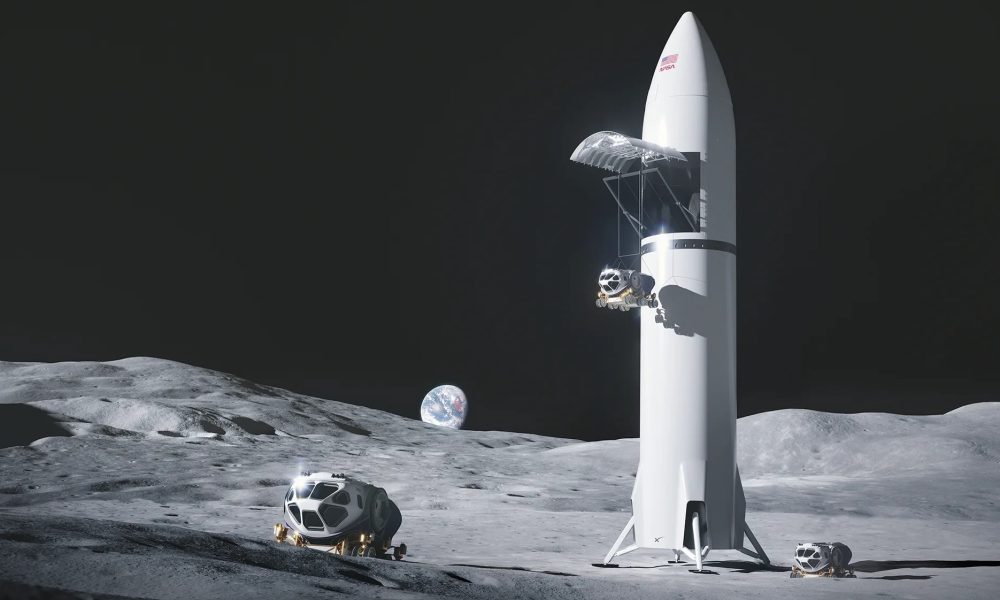
SpaceX’s trajectory for the Artemis program is intrinsically linked to the ongoing development and successful deployment of its Starship vehicle. The Starship HLS is not an entirely new design but rather a specialized, modified version of the Starship V3 upper stage, making the reliability and performance of the base vehicle paramount.
Therefore, before SpaceX can realistically prepare a dedicated Starship HLS pathfinder for the critical 2027 docking test, it must first demonstrate that the fundamental Starship V3 vehicle can fly reliably and consistently at scale. Each test flight of the Starship system contributes vital data points to this sequence of development.
The much-anticipated Flight 12, targeting launch this week, represents the initial data point in this crucial sequence. Its success or failure will offer invaluable insights into the V3’s capabilities and inform the subsequent steps in preparing the Starship HLS for its future rendezvous with Orion in LEO.
Overcoming the Orbital Refueling Hurdle
Beyond successful test flights, a monumental challenge that SpaceX Starship must conquer is mastering in-orbit refueling at an unprecedented scale. This complex maneuver, which no rocket has yet demonstrated routinely, is indispensable for Starship HLS to achieve lunar orbit and eventually land on the Moon.
To acquire enough propellant to reach the lunar surface, the Starship HLS will require approximately ten tanker launches to load its fuel into an orbital depot. This elaborate refueling sequence is a critical logistical and technical hurdle that demands not only flawless launches but also precise orbital mechanics and propellant transfer capabilities.
The Artemis III mission, in its revised format, serves as an extensive stress test for every single system that must operate seamlessly before any crewed lunar landing can take place. It is a dress rehearsal for orbital operations, validating the interconnected components and procedures that will define humanity’s return to the Moon.
Financial Commitments and Strategic Imperatives
NASA’s Investment in Lunar Landers
NASA’s commitment to developing Human Landing Systems for Artemis is substantial. The agency has allocated nearly $7 billion towards HLS development since awarding initial contracts to SpaceX in 2021 and Blue Origin in 2023.
Administrator Jared Isaacman has publicly expressed a desire to meticulously manage and drive down costs in future phases of the program. This financial prudence reflects the long-term investment required for sustained lunar presence and the need for efficiency in large-scale space endeavors.
The significant investment highlights the strategic importance NASA places on ensuring the availability of multiple, robust lunar lander options for its future missions beyond the initial Artemis III and IV landings. This dual-provider approach fosters competition and provides redundancy for critical capabilities.
SpaceX’s Evolving Role and High Stakes
SpaceX’s trajectory within the American space ecosystem has profoundly transformed. Initially primarily recognized as a launch services contractor, the company has now ascended to become the single most critical hardware provider in the nation’s program to return humans to the Moon.
The stakes for SpaceX are exceptionally high, both in terms of national space objectives and its own corporate milestones. The company is reportedly targeting an Initial Public Offering (IPO) that could value it at approximately $1.75 trillion, marking a significant financial event.
Furthermore, CEO Elon Musk’s personal compensation structure is directly tied to the ambitious goal of Mars colonization, a vision heavily dependent on the successful, large-scale deployment of the Starship system. This intertwining of national goals, corporate valuations, and personal incentives places immense pressure on every Starship milestone between now and the targeted 2028 Artemis IV lunar landing.
The successful execution of these complex missions will not only define the future of lunar exploration but also solidify SpaceX’s position as a dominant force in the global space industry, paving the way for even more ambitious interplanetary ventures.
Frequently Asked Questions (FAQ)
What is the primary goal of the revised Artemis III mission?
The revised Artemis III mission, now planned for 2027, aims to conduct a critical crewed rendezvous and docking test in low Earth orbit. It will involve NASA’s Orion spacecraft linking up with both SpaceX’s Starship HLS pathfinder and Blue Origin’s Blue Moon Mark 2 pathfinder, validating essential orbital operations before a lunar landing attempt.
Why is SpaceX’s Starship crucial for NASA’s Artemis program?
SpaceX’s Starship HLS is crucial because NASA selected it as the primary human landing system to transport astronauts to the Moon. It represents a new generation of fully reusable lunar landers, essential for establishing a sustained human presence on the lunar surface and supporting future deep space exploration.
What is the biggest technical challenge SpaceX faces for lunar Starship missions?
The biggest technical challenge for SpaceX Starship in lunar missions is achieving in-orbit refueling at scale. To reach the Moon, the Starship HLS requires an immense amount of propellant, necessitating approximately ten tanker launches to refill its tanks in Earth orbit before it can embark on its lunar journey.
When is the actual crewed Moon landing now planned?
The actual crewed Moon landing, initially planned for Artemis III, has been postponed. It is now slated for the Artemis IV mission, which is currently targeting a launch in 2028. This deferment allows more time for the development and testing of critical systems and procedures.
How much has NASA invested in Human Landing System development?
NASA has invested nearly $7 billion in Human Landing System development since awarding contracts to SpaceX in 2021 and Blue Origin in 2023. This significant financial commitment underscores the agency’s dedication to developing robust and reliable lunar lander capabilities for its ambitious Artemis program.
What is the significance of the Starship V3 launch for Artemis?
The Starship V3 launch is highly significant for Artemis because the Starship HLS is a modified version of the V3 upper stage. Reliable and successful flights of the base Starship V3 at scale are a prerequisite for preparing a Starship HLS pathfinder for the crucial 2027 Artemis III orbital docking test, directly impacting the lunar timeline.