
Key Takeaways
- Freudenberg Sealing Technologies has launched DIAvent maxFlow, a cutting-edge degassing element designed for lithium-ion EV batteries.
- The new system boasts an impressive flow rate of over 190 liters per second at 300 mbar differential pressure, a 2.5-fold increase over its predecessor, the DIAvent HighFlow.
- Key innovation lies in its profiled metal spring design, which enables instantaneous, full-snap opening during an EV battery thermal runaway event, preventing cascading failures.
- Unlike conventional burst disks, DIAvent maxFlow features a reversible mechanism that recloses autonomously, sealing the battery and enhancing safety for first responders.
- It offers precise and adjustable trigger pressure (50-200 mbar) and permits non-destructive end-of-line testing for superior quality control in battery pack production.
- The compact, robust design meets high protection ratings (IPX9K, IP6KX) and UL94 V0 flame-retardancy certification, ensuring reliability and compliance.
The global automotive industry is witnessing a rapid electrification surge, placing an unprecedented emphasis on the safety and reliability of electric vehicle (EV) battery systems. A critical challenge within this domain is mitigating the risks associated with EV battery thermal runaway – a severe condition where increasing temperature leads to uncontrolled self-heating, potentially resulting in fire or explosion. In a significant advancement aimed at bolstering EV battery safety, Freudenberg Sealing Technologies has introduced its latest innovation, the DIAvent maxFlow.
This state-of-the-art thermal runaway degassing element for lithium-ion vehicle batteries is engineered to deliver superior performance, setting a new benchmark for gas expulsion during critical events. With full specifications now released, the DIAvent maxFlow promises to redefine protection mechanisms for high-voltage battery packs, addressing long-standing issues with conventional venting solutions.

Revolutionary Flow Rate for Enhanced Safety
At the core of the DIAvent maxFlow’s capabilities is its exceptional flow rate. The system can vent over 190 liters per second at a 300 mbar differential pressure. This represents a substantial improvement, delivering 2.5 times the flow rate of the company’s previous generation, the DIAvent HighFlow. Such a rapid and voluminous expulsion of hot gases and particulates is crucial during an EV battery thermal runaway event. Faster gas removal minimizes internal pressure build-up and reduces the risk of propagation, where thermal runaway spreads from one cell to adjacent cells, leading to a catastrophic cascade failure across the entire battery pack.
The speed and efficiency with which dangerous gases can be expelled directly correlate to the overall safety of the vehicle and its occupants. By significantly increasing the venting capacity, Freudenberg aims to provide a more robust and responsive safety mechanism, buying critical time and potentially preventing the most severe outcomes of a thermal incident.
Precision Engineering: The Snap-Open Advantage
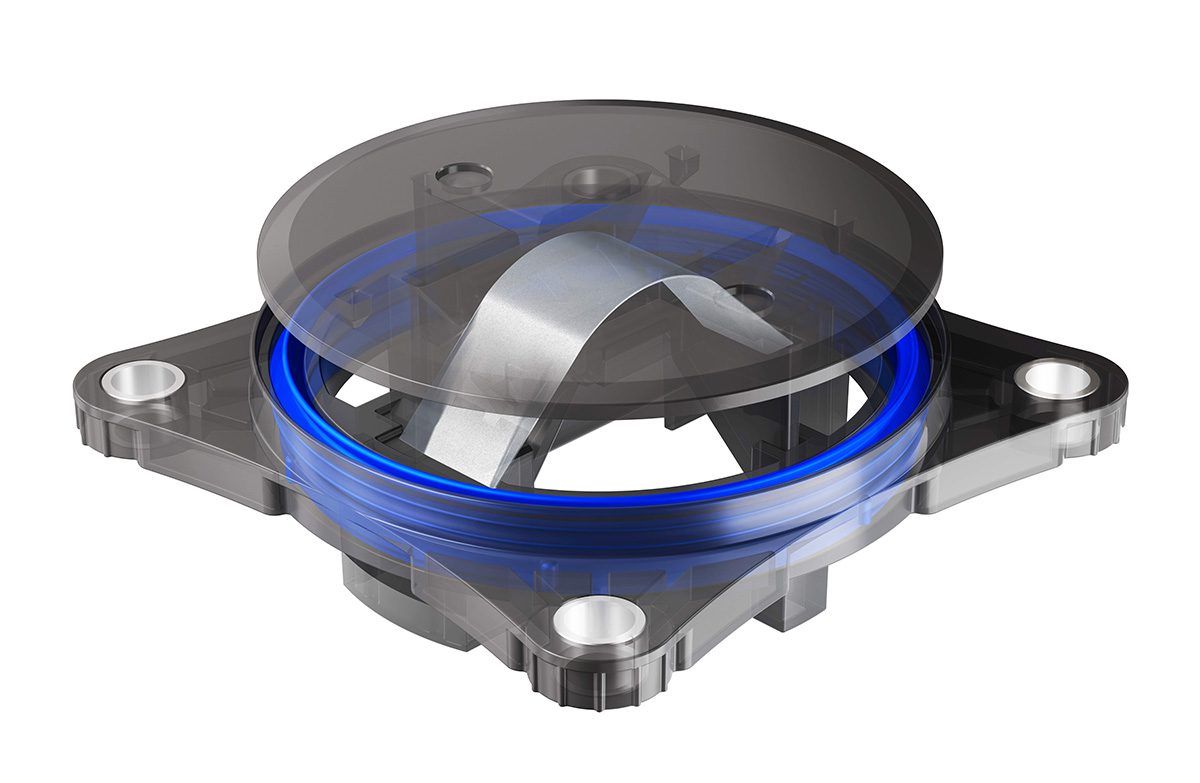
A pivotal design enhancement in the DIAvent maxFlow is the replacement of the rubber umbrella mechanism, common in earlier DIAvent generations, with a sophisticated profiled metal spring. This engineering choice marks a critical departure from traditional approaches, particularly in how the valve responds to a sudden pressure increase.
Unlike conventional systems that open gradually as pressure builds, the metal spring in the DIAvent maxFlow is designed to snap fully open the instant the predetermined trigger threshold is reached. This instantaneous full opening is vital for expelling hot gases as rapidly as possible, which is paramount in managing an EV battery thermal runaway. The speed of this reaction directly impacts the ability to contain the event and significantly reduces the potential for cascade failures spreading to neighbouring cells within the battery module.
Autonomous Re-closure: A Dual Safety Benefit
Beyond its rapid opening, another significant advantage of the DIAvent maxFlow is its ability to reclose autonomously once the internal battery pressure drops. This re-closing mechanism serves a critical dual purpose. Firstly, by sealing the battery against external oxygen ingress, it helps to limit any further combustion or re-ignition within the pack after the initial pressure event subsides. This containment is essential for mitigating fire risks and preventing the incident from escalating.
Secondly, the re-sealing feature is highly relevant for the safety of first responders who arrive at the scene after an EV battery thermal runaway event. A sealed battery reduces exposure to potentially toxic fumes and ensures that the internal environment remains isolated, thereby enhancing the safety protocols for emergency personnel managing the aftermath of such incidents. This proactive safety measure underlines Freudenberg’s commitment to comprehensive risk reduction.
Unmatched Precision and Quality Control
The DIAvent maxFlow distinguishes itself from conventional alternatives, such as burst disks, through its superior precision and innovative testing capabilities. The trigger pressure for the valve is precisely adjustable, ranging between 50 and 200 mbar, and features a remarkably low tolerance. This level of accuracy is a significant improvement over traditional burst disks, which are generally less precise in their activation points and can exhibit wider tolerances.
Furthermore, burst disks are a one-time use component; they cannot reclose after opening and cannot be tested non-destructively once installed into a battery pack. In stark contrast, the maxFlow’s reversible mechanism allows for non-destructive end-of-line testing of fully assembled battery packs. This capability offers a meaningful quality control advantage in high-volume production environments, enabling manufacturers to verify the functionality of every installed valve without compromising its integrity or incurring replacement costs. Such a feature enhances confidence in the safety systems of every EV battery leaving the assembly line.
Robust Design and Integration
Despite its advanced capabilities, the DIAvent maxFlow is designed with a compact footprint, measuring 86 × 86 × 12.1 mm overall, with an installation height of just 12.1 mm. This compact size facilitates easier integration into various battery pack designs without requiring extensive modifications or sacrificing valuable space.
The valve boasts robust protection ratings, reaching IPX9K and IP6KX, indicating excellent resistance to high-pressure water jets and dust ingress – critical for the demanding operating conditions of electric vehicles. It also carries UL94 V0 flame-retardancy certification, underscoring its commitment to fire safety standards. To ensure consistent performance and reliability, every unit undergoes 100% testing before delivery. For fastening, an M6 bolt handles standard applications, with clip and bayonet mounting options also available for greater flexibility. An integrated PIP (Pressure-Inducing Profile) seal tolerates up to 0.2 mm of housing unevenness, further simplifying installation and ensuring a secure, leak-proof fit even with minor surface irregularities.
A New Era in EV Battery Safety
The introduction of the DIAvent maxFlow represents a concerted effort by Freudenberg Sealing Technologies to push the boundaries of EV battery safety. Its development addresses the evolving needs of the automotive industry for more effective and reliable solutions to manage the inherent risks associated with high-energy lithium-ion battery systems.
Daniel Uhl, Head of Product Management at Freudenberg Sealing Technologies, underscored the significance of this development, stating, “With the DIAvent maxFlow, we have addressed the disadvantages of previous venting solutions with a single product.” This sentiment highlights the comprehensive nature of the innovation, consolidating multiple safety and quality advantages into a unified, high-performance component.
As electric vehicle adoption continues to accelerate globally, the demand for advanced safety features will only intensify. Innovations like the DIAvent maxFlow are crucial for building consumer trust and ensuring the long-term viability and success of e-mobility. The ability to effectively manage an EV battery thermal runaway event is not just a technical requirement but a fundamental pillar of automotive safety engineering in the electric age.
Frequently Asked Questions (FAQ)
What is an EV battery thermal runaway event?
An EV battery thermal runaway event is a rapid, uncontrolled increase in the temperature of a lithium-ion cell or battery pack. It’s often triggered by internal short circuits, overcharging, or external damage. This self-accelerating process can lead to the release of hot gases, fire, or explosion, posing a significant safety risk in electric vehicles.
How does Freudenberg’s DIAvent maxFlow enhance EV safety?
The DIAvent maxFlow significantly enhances EV safety by rapidly expelling hot gases during a thermal runaway event. Its high flow rate (over 190 liters/second) and instantaneous, full-snap opening mechanism prevent dangerous pressure build-up and mitigate the spread of thermal runaway to adjacent cells, thereby reducing the risk of cascade failures and severe consequences.
What are the key advantages of DIAvent maxFlow over traditional burst disks?
Key advantages include its reversible mechanism, allowing autonomous re-closure after venting to seal the battery. It also offers precise, adjustable trigger pressures and enables non-destructive end-of-line testing of fully assembled battery packs. Traditional burst disks are single-use, less precise, and cannot be tested without destruction once installed.
Can the DIAvent maxFlow be tested after installation?
Yes, one of the significant innovations of the DIAvent maxFlow is its reversible mechanism. This design permits non-destructive end-of-line testing of fully assembled battery packs, a crucial quality control advantage that ensures every valve is functional without needing replacement or compromising the battery unit.
What are the physical specifications and protection ratings of the device?
The DIAvent maxFlow is compact, measuring 86 × 86 × 12.1 mm. It features robust protection ratings of IPX9K and IP6KX, indicating high resistance to water and dust. Additionally, it holds UL94 V0 flame-retardancy certification, ensuring it meets stringent safety standards for fire resistance in automotive applications.
Why is autonomous re-closure important for first responders?
Autonomous re-closure is crucial for first responders because it re-seals the battery after an EV battery thermal runaway event. This action helps to contain any remaining toxic fumes and limits oxygen ingress, reducing the risk of further combustion. It creates a safer environment for emergency personnel when they approach and manage the incident site.