
Key Takeaways (TL;DR)
- Precision laser welding is fundamental for modern battery and power electronics manufacturing, ensuring reliable electrical interconnects.
- Key process strategies encompass weld geometry, metallurgy, and meticulous penetration control to optimize performance and longevity.
- Robust production relies heavily on effective fixture and clamping methods, coupled with advanced inline monitoring systems.
- Thorough process validation, utilizing real-world application examples and cross-sectional analysis, is crucial for guaranteeing product quality and safety.
- Emphasis is placed on production-oriented approaches to enhance process robustness, repeatability, and manufacturability for advanced electrical components.
The rapid evolution of electric vehicles (EVs), renewable energy systems, and high-performance portable electronics has placed an unprecedented demand on advanced manufacturing techniques. At the core of these innovations lies the ability to create durable, high-integrity electrical connections, a task increasingly entrusted to precision laser welding. This sophisticated method is not merely a joining technique; it is a critical enabler for the next generation of energy storage and power delivery systems.

As industries push the boundaries of performance and efficiency, the reliability of every component, from individual battery cells to complex power modules, becomes paramount. Laser welding offers the precision, speed, and localized heat input necessary to meet these stringent requirements, mitigating risks associated with traditional welding methods.
The Imperative of Precision in Battery and Power Electronics Welding
In the realm of batteries and power electronics, the stakes are exceptionally high. A single faulty weld can compromise the entire system’s performance, lead to thermal runaway in battery packs, or result in catastrophic failure in power converters. Therefore, precision is not just desirable; it is absolutely essential for safety, efficiency, and longevity.
Laser welding provides unparalleled control over the heat-affected zone, minimizing thermal stress on sensitive electronic components and preventing damage to adjacent materials. This capability is vital for maintaining the delicate balance required in high-density energy storage and conversion devices.

Connecting Critical Components: From Busbars to Power Modules
The applications for precision laser welding span a wide array of critical components within batteries and power electronics. This includes the intricate connections of busbars, which distribute current across battery modules, and tabs that connect individual cells within a pack. Terminals, serving as the main electrical interfaces, also demand robust, low-resistance welds.
Beyond battery packs, laser welding is indispensable for power-module interconnects, where multiple semiconductor devices are joined to create high-power electronic circuits. Each of these applications presents unique challenges, necessitating tailored laser welding strategies to achieve optimal electrical conductivity, mechanical strength, and thermal management.
Core Laser Welding Process Strategies Explained
Achieving superior weld quality in these demanding applications requires a deep understanding and precise control over several key process parameters. Each strategy plays a crucial role in ensuring the integrity and performance of the final product.
Understanding Weld Geometry for Optimal Performance
Weld geometry refers to the shape and dimensions of the fused material, which significantly impacts the mechanical strength, electrical conductivity, and thermal characteristics of the joint. Strategic selection of weld geometry—such as lap joints, butt joints, or fillet welds—is critical based on the specific application and material pairing.
For instance, in busbar welding, a geometry that maximizes the contact area and minimizes electrical resistance is preferred. Careful consideration of joint design ensures that the weld can withstand operational stresses and vibrations, preventing premature failure in dynamic environments like electric vehicles.
The Metallurgy Behind Robust Electrical Interconnects
Metallurgy, the science of metallic materials, is fundamental to successful laser welding, especially when joining dissimilar metals commonly found in battery and power electronics assemblies (e.g., copper to aluminum). Understanding the material properties, phase diagrams, and potential for intermetallic compound formation is crucial.
Poor metallurgical control can lead to brittle welds, increased electrical resistance, or susceptibility to corrosion. Advanced laser welding techniques focus on optimizing parameters to control microstructure, prevent the formation of detrimental intermetallics, and ensure a ductile, electrically conductive, and reliable connection.
Achieving Precise Penetration Control in Delicate Assemblies
Penetration control is perhaps one of the most critical aspects of laser welding for sensitive components. Insufficient penetration can lead to weak joints with high electrical resistance, while excessive penetration risks damaging underlying cells, insulation layers, or semiconductor dies.
Techniques such as modulated laser power, sophisticated beam shaping, and real-time feedback systems are employed to achieve precise melt pool control and ensure the laser energy is delivered exactly where needed, to the correct depth, without compromising the integrity of surrounding components.
Ensuring Quality and Repeatability in Production
In high-volume manufacturing environments, consistency and defect prevention are paramount. Robust production processes are built on foundations of precise fixturing, real-time monitoring, and rigorous validation.
Fixture and Clamping: Foundations of Positional Accuracy
Accurate and repeatable positioning of parts is fundamental to achieving consistent weld quality. Sophisticated fixturing and clamping mechanisms are designed to hold components securely and precisely in place, compensating for part tolerances and thermal expansion during welding.
These systems minimize misalignment, ensure consistent gap conditions, and facilitate efficient material handling, thereby contributing significantly to process repeatability and overall manufacturability, particularly for complex assemblies.
Inline Monitoring: Real-time Quality Assurance
Inline monitoring systems represent a paradigm shift in quality control, moving from post-process inspection to real-time process analysis. These systems utilize various sensors—thermal cameras, acoustic emission sensors, and optical detectors—to observe the weld process as it happens.
By monitoring critical parameters like melt pool stability, keyhole depth, and thermal signatures, deviations from optimal conditions can be detected instantly, allowing for immediate corrective action or flagging of potentially defective parts, significantly enhancing production robustness.
Process Validation: Guaranteeing Reliability and Safety
Beyond inline monitoring, comprehensive process validation is essential to guarantee the long-term reliability and safety of laser-welded components. This involves a suite of testing protocols, including destructive testing (e.g., pull tests, shear tests) and non-destructive evaluation (e.g., X-ray, ultrasound, electrical resistance measurements).
Validation ensures that the welding process consistently meets design specifications and performance criteria, providing confidence in the manufacturing methodology and the quality of the final product through rigorous, evidence-based assessment.
Enhancing Manufacturability for Advanced Applications
The goal of modern manufacturing is not just to produce parts, but to do so efficiently, consistently, and at scale. Production-oriented laser welding approaches are engineered precisely for this purpose, focusing on robustness, repeatability, and overall manufacturability for advanced electrical interconnects.
This includes developing automated solutions, optimizing cycle times, and integrating smart manufacturing principles that adapt to variations and ensure consistent output. The emphasis is on designing processes that are inherently stable and less susceptible to environmental or material fluctuations, thereby streamlining mass production and reducing costs without compromising quality.
Insights from Real-World Applications and Analysis
To further solidify understanding and refine laser welding techniques, industry experts rely heavily on real application examples. These practical case studies provide invaluable insights into the challenges encountered in diverse manufacturing scenarios and the innovative solutions developed to overcome them.
Crucially, cross-sectional analysis of welded joints offers a microscopic view into the weld’s internal structure, revealing critical details about penetration depth, metallurgical integrity, and the presence of any defects. This detailed examination is instrumental for process optimization and validation, ensuring that theoretical models align with practical outcomes.
Upcoming Webinar: A Deep Dive into Laser Welding Solutions
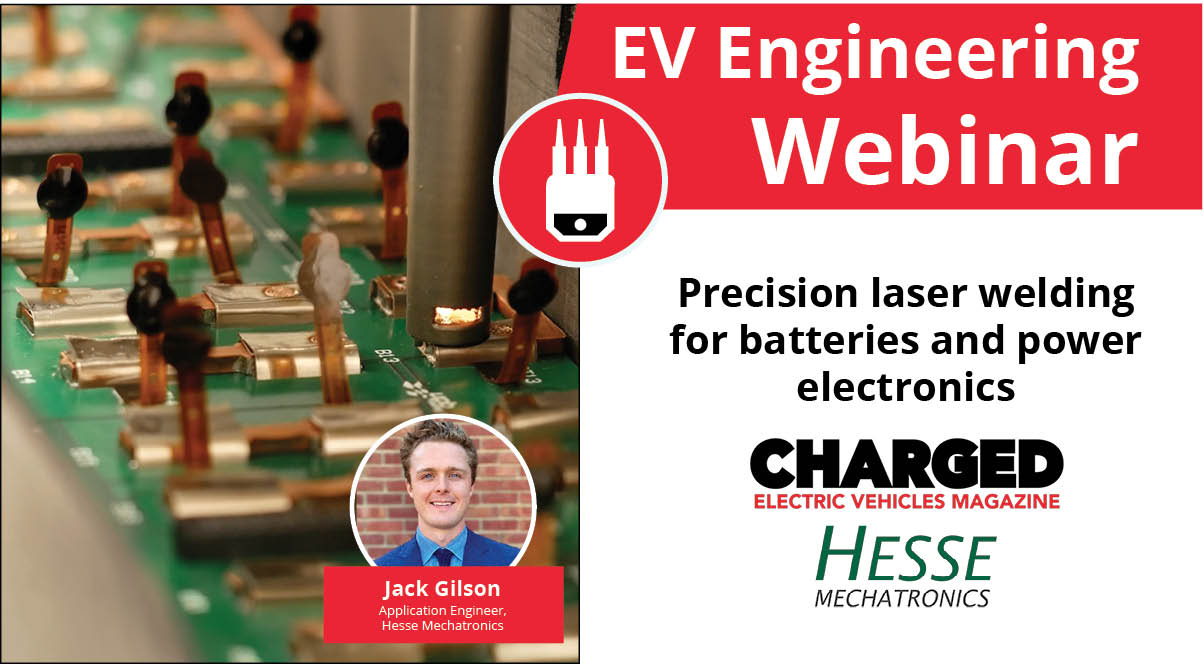
Industry professionals seeking to deepen their understanding of these critical manufacturing techniques are invited to a comprehensive session. This webinar will discuss laser welding process strategies tailored for battery and power electronics applications, offering an unparalleled opportunity to learn from experts.
The session is scheduled for Tuesday, June 2nd, at 1 pm EDT, and will cover weld geometry, metallurgy, penetration control, fixture and clamping considerations, inline monitoring, and process validation. The discussion will be enriched with real application examples and cross-sectional analysis, providing practical insights into enhancing process robustness and manufacturability for advanced electrical interconnects. Registration for this informative event is complimentary.
Past Learnings: On-Demand EV Engineering Webinars
For those interested in a broader spectrum of EV engineering topics, a series of free webinar sessions from the Spring Virtual Conference are available for on-demand viewing. These resources cover various aspects of electric vehicle technology, offering valuable insights into different facets of the industry.
Topics include ‘Automotive CoolGaN™ Enabling Highly-Efficient & Affordable E-Mobility’, ‘Exclusive Introduction To LOCTITE SOLVE: AI-powered Virtual Adhesives Hub’, ‘Unlocking Next-Gen xEV Power Conversion: New CoolSiC™ Devices’, and ‘Designing Safer E-Mobility Battery Packs: Materials And Testing Insights’, among others. Registration for each session allows access to the recording and presentation materials.
Frequently Asked Questions (FAQ)
What is precision laser welding?
Precision laser welding is an advanced manufacturing technique utilizing a highly focused laser beam to create strong, localized welds. It’s crucial for joining delicate and high-performance components in industries like battery manufacturing and power electronics, offering unmatched control over heat input and weld quality.
Why is laser welding critical for batteries?
Laser welding is critical for batteries because it provides high-integrity, low-resistance electrical connections for components like busbars and tabs, without excessive heat input that could damage sensitive cell chemistry. This ensures safety, optimizes energy flow, and extends the lifespan of battery packs.
What are busbars, tabs, and terminals in this context?
Busbars are rigid conductive strips distributing current. Tabs are small connectors linking individual battery cells. Terminals are external connection points for modules or packs. Laser welding ensures robust, low-resistance joints for these components, vital for efficient and safe power transfer in battery systems.
What does ‘penetration control’ mean in laser welding?
Penetration control in laser welding refers to precisely managing the depth to which the laser beam melts the material. This is crucial for delicate electronics and batteries to ensure strong welds without damaging underlying layers, insulation, or sensitive components, preventing both weak joints and catastrophic failures.
How does inline monitoring improve welding quality?
Inline monitoring systems use sensors to observe the welding process in real-time, detecting deviations from optimal parameters like melt pool stability or thermal signatures. This allows for immediate process adjustments or rejection of defective parts, significantly enhancing quality control and production consistency during manufacturing.
What role does metallurgy play in laser welding for power electronics?
Metallurgy is vital for understanding material interactions during laser welding, especially for dissimilar metals like copper and aluminum in power electronics. It ensures optimal microstructure, prevents brittle intermetallic compounds, and guarantees strong, electrically conductive, and reliable joints, crucial for device performance and longevity.
How does process validation ensure reliability?
Process validation rigorously assesses the laser welding methodology through various tests, including destructive (e.g., pull tests) and non-destructive (e.g., X-ray) evaluations. This comprehensive approach confirms that the welds consistently meet design specifications, performance criteria, and safety standards, assuring long-term product reliability.