
Key Takeaways:
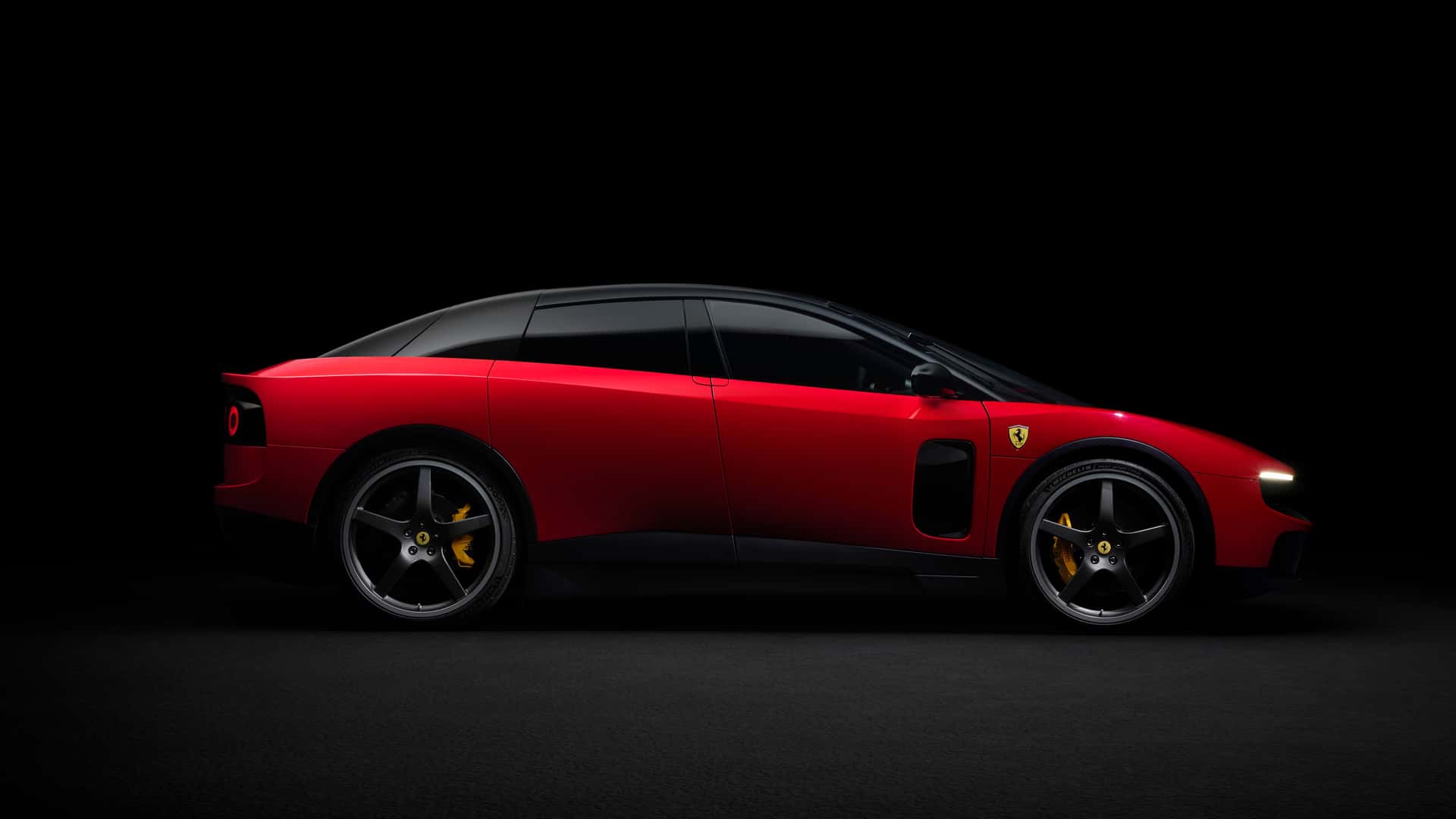
- The Ferrari Luce, Maranello’s inaugural all-electric vehicle, has met with widespread public criticism primarily concerning its design, which deviates significantly from traditional Ferrari aesthetics.
- Its minimalist, Apple-inspired exterior, influenced by designers Jony Ive and Marc Newson, has been perceived as ‘anonymous’ and lacking the brand’s characteristic visual drama.
- Despite public outcry, particularly from online commentators, Ferrari’s strategy for the Luce appears to target affluent buyers seeking a luxurious, tech-forward five-seater family EV, rather than a direct electric successor to its performance supercars.
- The market debut saw a significant drop in Ferrari’s shares, underscoring investor sensitivity to the brand’s electrification strategy and conservative growth targets.
- The design choice is seen by some as a deliberate move to avoid direct comparison with traditional combustion Ferraris and other high-performance EVs, signaling a new direction for the iconic marque.
The unveiling of the Ferrari Luce, the iconic Prancing Horse’s first all-electric vehicle, has ignited a fervent and largely critical debate within the automotive community. Unlike previous Ferrari debuts that often spark diverse opinions, the Luce has encountered an almost unified wave of rejection, centered not on its electric powertrain, but on its unexpected aesthetic.

Observers and enthusiasts alike had anticipated a low-slung, aggressively styled machine, embodying the quintessential Ferrari spirit. Instead, the Luce presented a stark departure, challenging preconceived notions of what a Ferrari should look like in the electric era.
A Design Language Divergence
The initial glimpse into the Luce’s interior had already hinted at a significant stylistic shift. Characterized by a Jony Ive-inspired Apple-esque minimalism, the cabin design, while receiving some negative feedback, also garnered considerable appreciation for its modern, clean approach.
However, few were prepared for the exterior to echo this restrained, almost understated aesthetic. Many had expected a design more akin to an electric variant of the Purosangue, Ferrari’s SUV, which the Italian automaker evidently opted against in favour of the Luce’s more subdued silhouette.

A prevalent sentiment suggests that if the distinctive Ferrari badges were removed, the Luce’s origins would be largely unidentifiable. While the sheetmetal may appear plain, it reportedly conceals intricate aerodynamic engineering and subtle design elements intended to signify its special status. Yet, the overall impression for many remains one of relative anonymity.
The Influence of Product Design and Aerodynamics
From a bird’s-eye perspective, the Ferrari Luce begins to reveal more of its intended design philosophy. From this vantage, it transcends the typical automotive form, appearing more as a meticulously crafted object—an exercise in sophisticated product design. It manifests as an expensive, Apple-like gadget on wheels, suggesting a deliberate intent behind its creation.
This restrained approach was no accident. Ferrari’s collaboration with Jony Ive and Marc Newson’s LoveFrom design firm underscores a calculated move. Ive, celebrated for his foundational work at Apple, is synonymous with defining modern premium technology through clean surfaces, minimal ornamentation, and a sense of inherent completeness without resorting to overt flashiness.
Newson, whose career spans various consumer product categories beyond automotive design, further reinforces this philosophy. Their collective influence is evident in the Luce’s commitment to understated elegance over traditional supercar exuberance.
Ferrari’s Evolving Design Identity
Ferrari’s design trajectory has experienced increased scrutiny and division since the brand shifted away from its longstanding reliance on Pininfarina, progressively internalizing more of its design processes. While this transition has not inherently led to ‘bad-looking’ cars, it has resulted in modern Ferraris that are often perceived as less overtly ‘romantic’ than the classic models that form many enthusiasts’ mental benchmark for the marque.
Previous models like the new F80, 849 Testarossa, or the SC40 have elicited varied reactions, with supporters balancing out critics. However, the response to the Ferrari Luce appears qualitatively different. The overwhelmingly one-sided nature of the criticism, with an apparent lack of vocal defenders, strikes many as unusual for a brand of Ferrari’s stature.
This disparity in public reaction prompts a deeper inquiry into whether the Luce represents a simple design misstep. Given Ferrari’s profound awareness of its brand power and market positioning, such a radical departure for its first electric vehicle is unlikely to be an accidental outcome. It strongly suggests the presence of extensive market research and positive feedback from a specific segment of prospective buyers who endorse this design direction.
Understanding the Target Audience and Market Rejection
It is plausible that Ferrari anticipated some negative reactions to the Luce, given its significant departure from established norms. However, the sheer breadth of disapproval might have exceeded expectations. Crucially, the passionate criticisms voiced in online comments sections often do not originate from the car’s intended target demographic.
While the minimalist, monolithic aesthetic of the Ferrari Luce may find acceptance among some, its proportions are frequently cited as a primary point of contention. Many argue that the vehicle would have benefited from a more elongated front section, irrespective of the powertrain beneath, contrasting sharply with its current compact dimensions.
Critics often suggest that Ferrari should have opted for a low-slung sedan or fastback profile, rather than a design that some liken to a ‘weird halfway house’ between a sedan and a crossover. This perspective is reinforced by comparisons to other luxury performance EVs.
Industry Benchmarks and Proportional Considerations
For instance, the Mercedes-AMG electric 4-Door, despite its controversial front fascia and rear, maintains the overall proportions of a high-performance vehicle. Similarly, Jaguar’s Type 00 Concept, another electric offering from a brand steeped in heritage, emphasizes classic luxury car proportions with a notably long nose. While initially divisive, the Type 00 Concept is reportedly gaining acceptance, partly attributed to its adherence to these traditional proportional cues.
Ferrari, however, operates from a distinct strategic position compared to Jaguar. The forthcoming production Type 01 is poised to become Jaguar’s sole model upon its release. In contrast, the Ferrari Luce is not positioned as a replacement for any existing model in Ferrari’s combustion lineup.
Instead, the electric Ferrari is engineered for a discerning clientele of affluent individuals who typically possess multiple vehicles. For this segment, an understated, yet immensely powerful, Ferrari-badged EV offering practical usability holds considerable appeal.
Strategic Positioning and Investor Concerns
The typical buyer of the Ferrari Luce is unlikely to be trading in a 296, an 812, or even a Purosangue. This customer segment often already owns several Ferraris and seeks a unique offering from Maranello: a quiet, practical, technologically advanced five-seater family car that still carries the prestigious badge, fulfilling a niche previously unaddressed by the brand.
The ultimate success of the Ferrari Luce in terms of sales figures remains to be seen, as public online outrage does not always translate into direct buyer rejection. Nevertheless, the initial market reaction has been tangible. Following the Luce’s reveal, Reuters reported a notable decline in Ferrari’s stock, with its Milan-listed shares falling by 8.4% and its New York-listed shares dropping by 5.1%.
This recent investor response compounds pressure previously observed in October when investors reacted unfavorably to Ferrari’s 2030 strategic plan. That occasion saw shares tumble by 31%, stemming from perceived conservative growth targets and a slower-than-expected rollout of electric vehicles.
These market reactions serve as a critical reminder that luxury automotive manufacturers cannot simply emulate mass-market EV strategies. They must meticulously balance the imperatives of electrification with the core tenets of scarcity, brand identity, heritage, and premium pricing.
Emissions Compliance and Brand Evolution
Ferrari’s venture into electric vehicles, epitomized by the Luce, is essential for meeting stringent global emissions requirements. This move also strategically enables the company to continue offering its celebrated V-12 sports cars within a compliant portfolio. However, for the Luce to genuinely impact emissions targets, it must achieve significant sales volumes, a prospect complicated by its perceived high price point, even by Ferrari’s elevated standards.
The Ferrari Luce might not be the electric Ferrari that purist enthusiasts envisioned. Yet, this divergence from expectation could be precisely its rationale. An electric supercar, while potentially easier to comprehend and more likely to garner immediate online acclaim, would inevitably face direct comparisons with Ferrari’s revered combustion models and other high-performance electric supercars.
If Ferrari’s internal assessment suggests that current electric technology is not yet mature enough to deliver an electric supercar that truly stands on par with its combustion counterparts in terms of raw emotional appeal and driving dynamics, then pursuing an entirely different direction, as with the Luce, becomes a logical strategic maneuver.
A Redefined Purpose
By conceptualizing the Luce as a distinct category, Ferrari has deftly sidestepped a potentially unfavorable direct comparison. This strategic pivot does not, however, render the design immune to critique. Its anonymous, clinical, and visually detached aesthetic, lacking the dramatic flair synonymous with Ferrari, remains a point of contention.
Ultimately, to accurately assess the Ferrari Luce, one must avoid judging it solely as a failed supercar. Such an interpretation might entirely miss the nuanced strategic intent behind Maranello’s bold foray into electrification.
Frequently Asked Questions (FAQ)
What is the Ferrari Luce?
The Ferrari Luce is the first all-electric vehicle introduced by the Italian luxury automaker. It represents a significant departure from Ferrari’s traditional sports car offerings, focusing on a more understated design and practical usability for a high-end clientele.
Why has the Ferrari Luce received negative reactions?
The primary reason for the negative reception is its design, which many critics perceive as too minimalist and anonymous, lacking the dramatic, low-slung aesthetics expected from a Ferrari. Its proportions have also been a point of contention among automotive enthusiasts.
Who is the target audience for the Ferrari Luce?
The Ferrari Luce is aimed at affluent individuals who likely already own several Ferraris and seek a versatile, tech-forward five-seater family car with the prestige of the Ferrari badge. It’s designed for daily usability rather than as a replacement for a performance supercar.
How did investors react to the Ferrari Luce’s unveiling?
Following the Luce’s reveal, Ferrari’s Milan-listed shares dropped 8.4%, and its New York-listed shares fell 5.1%. This reaction mirrors previous investor concerns regarding Ferrari’s conservative growth targets and slow EV rollout outlined in its 2030 plan.
What is the design philosophy behind the Ferrari Luce?
The Luce’s design is heavily influenced by Jony Ive and Marc Newson’s LoveFrom studio, emphasizing clean surfaces, minimal ornamentation, and a sophisticated, Apple-like product design ethos. Ferrari appears to be balancing electrification with brand identity and strategic positioning.
Is the Ferrari Luce a supercar?
No, the Ferrari Luce is not positioned as a supercar. It is conceived as a quiet, usable, tech-forward five-seater family car. This strategic decision by Ferrari helps avoid direct comparisons with its high-performance combustion models and other electric supercars, allowing the brand to explore a new market segment.