
Key Takeaways
- China’s BYD has demonstrated remarkable resilience and efficiency in its second-generation Blade Battery and Flash charging technology.
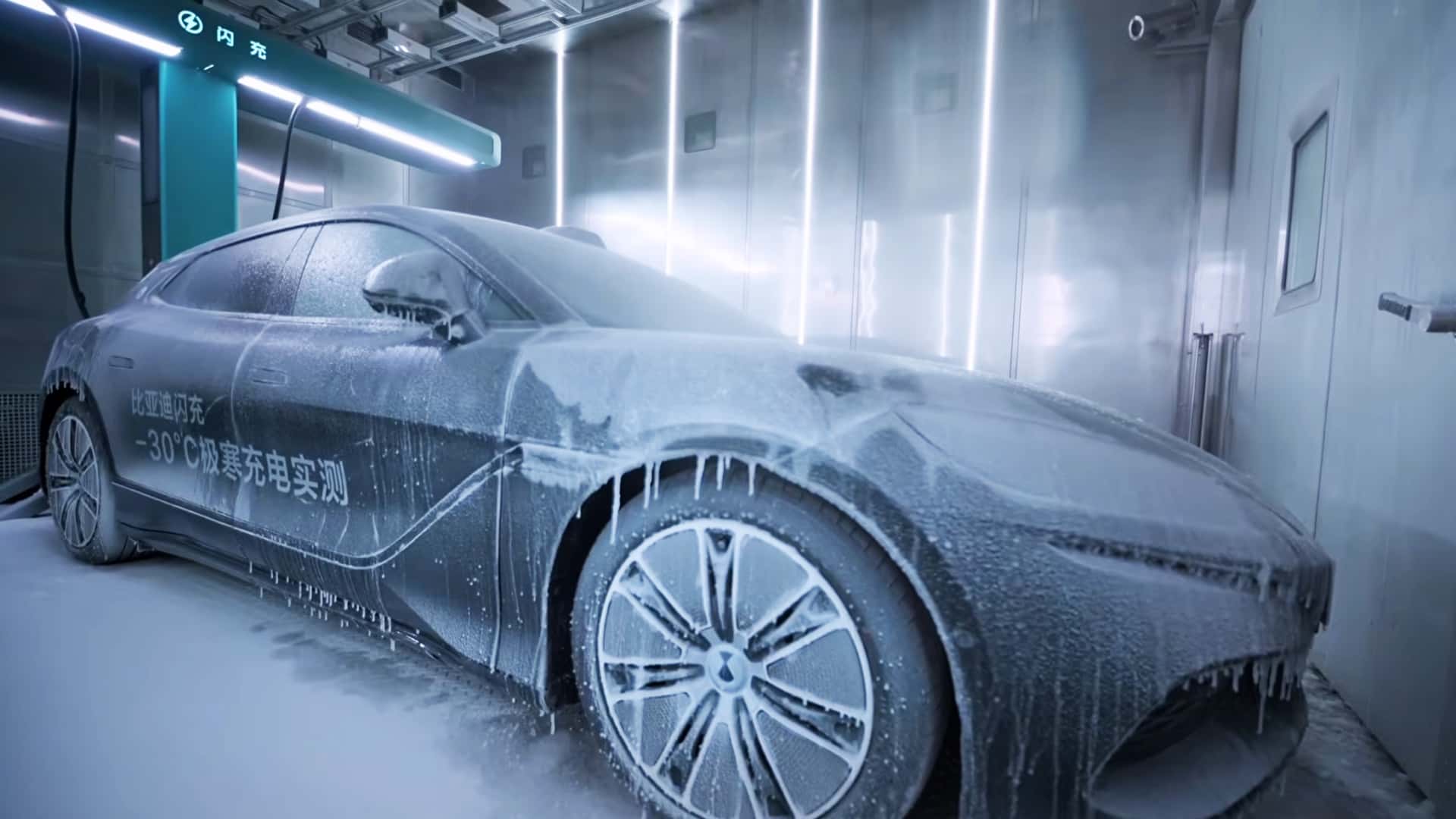
- A Denza Z9GT luxury EV, deep-frozen for 24 hours at -22°F (-30°C), successfully charged from 20% to 97% in just 12 minutes.
- This performance highlights BYD’s 1,500-kilowatt Flash chargers and advanced lithium iron phosphate (LFP) battery’s capability to overcome traditional EV charging challenges in extreme cold.
- The achievement could significantly reduce range anxiety and accelerate electric vehicle adoption in diverse climatic conditions globally.
- BYD Chairman Wang Chuanfu noted a deliberate 3% buffer in charging to allow for immediate regenerative braking post-session.
In a significant stride for electric vehicle technology, Chinese automotive giant BYD has showcased an unprecedented charging feat under extreme conditions. The company successfully charged its Denza Z9GT luxury electric vehicle (EV) from 20% to 97% in a mere 12 minutes, all while the vehicle had been deep-frozen for 24 hours at a punishing -22°F (-30°C).
This remarkable demonstration underscores the advanced capabilities of BYD’s second-generation Blade Battery technology when paired with its latest 1,500-kilowatt Flash chargers. The results challenge long-held perceptions about electric vehicle performance and charging efficiency, particularly in frigid environments where conventional batteries typically falter.

The Innovation Behind BYD’s Flash Charging Technology
BYD’s introduction of its second-generation Blade Battery and cutting-edge Flash chargers has generated considerable industry attention. This proprietary combination is engineered to make electric vehicle recharging as swift and convenient as refuelling a gasoline-powered car.
The core of this innovation lies in its ability to funnel up to an astounding 1,500 kilowatts of power from the DC fast charger directly into the vehicle’s lithium iron phosphate (LFP) pack. This high-power delivery system is a game-changer for reducing charging times.
Under ideal conditions, BYD claims its latest EVs can achieve a 10% to 70% charge in approximately five minutes. Furthermore, a 10% to 97% charge can be completed in under 10 minutes, setting new benchmarks for efficiency and speed in the EV sector.

Overcoming the Extreme Cold Challenge
The performance of electric vehicle batteries in sub-zero temperatures has historically been a critical concern for both manufacturers and consumers. Cold weather can significantly impede battery chemical reactions, increase internal resistance, and consequently slow down charging speeds and reduce overall range.
To explicitly address these challenges and prove the robustness of its technology, BYD undertook a rigorous test. The company subjected a brand-new Denza Z9GT, a luxury EV recently debuted in Europe, to an extreme cold soak.
The vehicle was deep-frozen at an intensely cold -22°F (-30°C) for a full 24 hours. This prolonged exposure ensured that the battery pack and associated systems were thoroughly chilled, creating conditions that would severely test most electric vehicle charging systems.
Denza Z9GT’s Unprecedented Performance
Following its 24-hour deep freeze, the Denza Z9GT was connected to a BYD Flash charger. The charging process commenced with the vehicle’s state of charge at 20%.
In an impressive display of engineering prowess, the Flash charger rapidly funnelled electrons into the second-generation Blade Battery. Within a mere 12 minutes, the vehicle’s charge level soared from 20% to 97%, validating BYD’s earlier performance claims.
Upon reaching 97% charge, the Denza Z9GT’s range meter indicated nearly 626 miles (1,009 kilometers). It is important to note that this range figure likely corresponds to China’s CLTC (China Light-duty Vehicle Test Cycle) testing procedure, which typically yields higher estimates compared to Western standards like WLTP or EPA, as it is geared more towards city driving scenarios with lower average speeds.
Understanding the 97% Charging Threshold
A notable aspect of BYD’s charging demonstrations is the consistent cutoff at 97%, rather than a full 100%. BYD Chairman Wang Chuanfu has provided a clear explanation for this deliberate design choice.
According to Chuanfu, the company intentionally incorporates a 3% buffer during charging tests. This buffer is crucial for allowing immediate regenerative braking functionality after a rapid Flash charging session. If the battery were charged to 100%, the system would have no capacity to absorb energy generated during regenerative braking, effectively disabling this crucial energy recovery mechanism until some charge is consumed.
Maintaining this small buffer ensures that drivers can immediately benefit from regenerative braking, enhancing both efficiency and safety upon departing a charging station.
Charting the Competitive Landscape of EV Charging
BYD’s cold-weather charging achievement places it at the forefront of electric vehicle battery technology and fast-charging capabilities. Comparing its performance with other leading EVs highlights the industry’s rapid advancements.
For instance, the Mercedes-AMG GT, a high-performance EV, can accept up to 600 kW when charging from a DC stall. Mercedes-Benz states that this allows the vehicle to go from 10% to 80% charge in 11 minutes under ideal conditions. While impressive, this is still in ‘ideal conditions’ and typically at warmer temperatures.
In another independent test, the Lucid Gravity SUV, recognized as one of America’s fastest-charging EVs, achieved a 0% to 50% charge in 12.5 minutes. This test was conducted by InsideEVs contributor and State of Charge YouTube channel host Tom Moloughney, providing a real-world benchmark for comparison.
BYD’s ability to nearly fully charge an EV in extreme cold conditions within 12 minutes, utilizing its advanced BYD Flash charging technology and Blade Battery, distinguishes it from many competitors. This performance is critical for widespread EV adoption, especially in regions that experience severe winters.
Broader Implications for Electric Vehicle Adoption
The successful demonstration of BYD’s Flash charging technology in freezing temperatures has profound implications for the global electric vehicle market. One of the primary barriers to EV adoption has been ‘range anxiety,’ exacerbated by concerns about charging speed and performance in diverse climates.
This breakthrough directly addresses these anxieties, particularly for consumers in colder regions who have traditionally viewed EVs with scepticism due to perceived limitations. The ability to charge rapidly, even when the vehicle is profoundly cold-soaked, removes a significant hurdle.
Furthermore, BYD has already been actively deploying its megawatt ‘Flash’ charging stations, indicating a strategic push to make this advanced charging infrastructure widely accessible. This robust charging ecosystem, combined with highly efficient battery technology, positions BYD as a leader in accelerating the transition to electric mobility.
The Future of EV Charging and BYD’s Role
BYD’s latest achievement signifies a pivotal moment in the evolution of electric vehicle technology. As manufacturers continue to push the boundaries of battery chemistry and charging infrastructure, the gap between EV and traditional internal combustion engine vehicle convenience continues to shrink.
The company’s commitment to innovation, particularly in making charging faster and more reliable across all environmental conditions, is a testament to its ambition to dominate the global EV market. This development promises to enhance user experience, reduce operational downtime for commercial fleets, and bolster confidence in electric vehicles as a viable and superior mode of transport.
As the electric vehicle industry matures, such advancements in BYD Flash charging technology will be crucial for sustained growth and broader consumer acceptance, paving the way for a more electrified future worldwide.
Frequently Asked Questions (FAQ)
What is BYD’s second-generation Blade Battery?
BYD’s second-generation Blade Battery is an advanced lithium iron phosphate (LFP) battery known for its high safety, energy density, and structural integrity. Its unique cell-to-pack design enhances space utilisation, contributing to improved vehicle performance and an extended lifespan.
How fast is BYD’s Flash charging technology?
BYD’s Flash charging technology, combined with its second-generation Blade Battery, can deliver up to 1,500 kilowatts. This enables charging from 10% to 70% in approximately five minutes and 10% to 97% in under ten minutes under ideal conditions, making EV recharging exceptionally swift.
Why is charging an EV in cold temperatures challenging?
Cold temperatures significantly impact EV batteries by slowing down the chemical reactions required for charging and discharging. This can increase internal resistance, reduce charging speed, and decrease overall battery efficiency and range, leading to longer charge times.
What was the specific cold-weather test conducted by BYD?
BYD deep-froze a Denza Z9GT luxury EV for 24 hours at an extreme -22°F (-30°C). Following this, the vehicle was connected to a Flash charger, demonstrating its ability to charge from 20% to 97% in just 12 minutes despite the severe cold.
Why does BYD charge its EVs to 97% instead of 100%?
BYD deliberately leaves a 3% buffer when charging its EVs to 97%. This allows for immediate regenerative braking functionality after a quick Flash charging session. If the battery were 100% full, there would be no capacity to absorb energy from regenerative braking, temporarily disabling the feature.
How does this achievement impact EV adoption in cold climates?
This breakthrough significantly boosts confidence in EV performance in cold climates. By demonstrating rapid charging capability even after prolonged exposure to extreme cold, BYD addresses a major concern for consumers in winter regions, thereby accelerating global electric vehicle adoption.