
Key Takeaways:
- Toyota Chairman Akio Toyoda publicly admitted his ‘biggest fear’ is the automotive industry’s complete shift to battery electric vehicles (BEVs).
- Toyoda, known for his love of traditional engines, feels isolated in his stance, contrasting with most major automotive executives who foresee an all-electric future.
- Despite Toyota’s public commitment to climate action, its electric vehicle offerings have been criticized for lacking advanced features like route-planning and competitive range.
- Advocacy group Public Citizen highlights Toyota’s significant financial contributions to climate-denying politicians and points to Toyoda’s continued influence on the company’s electric vehicle strategy.
- These comments emerge ahead of a critical annual shareholder meeting, where Toyoda’s re-appointment as chairman will be voted upon, following his previous removal as CEO over his cautious approach to EVs.
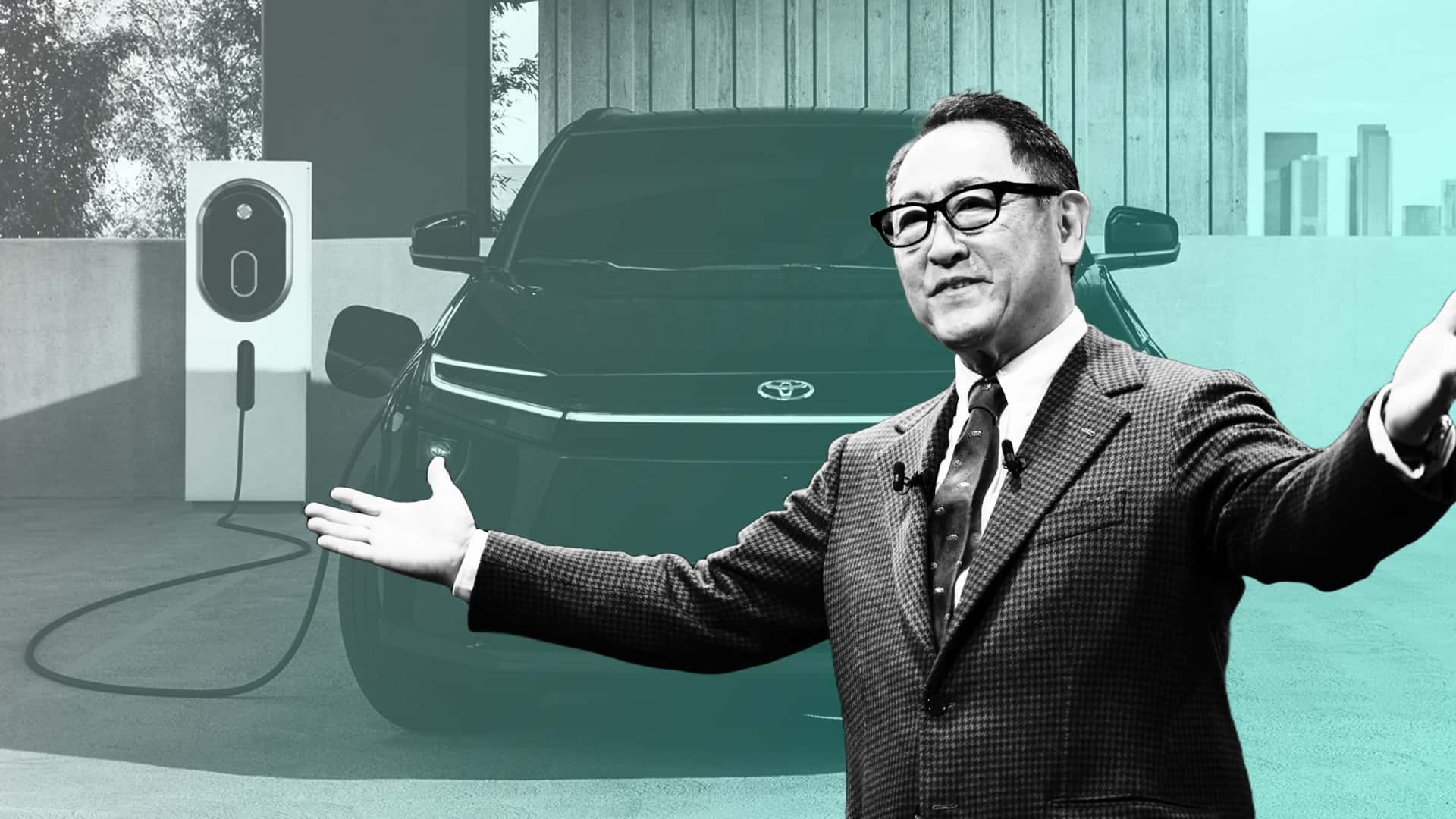
In a candid interview recently released by Carwow, Toyota Chairman Akio Toyoda has voiced a profound apprehension regarding the global automotive industry’s accelerating transition towards fully electric vehicles. His remarks, particularly the admission that ‘Everybody is shifting to BEVs, this is the biggest fear for me,’ unveil a striking divergence from the prevailing consensus among major automakers.
These statements have ignited discussions across the sector, casting a spotlight on Toyota’s electric vehicle strategy and its long-term commitment to electrification. They also challenge the perception of the company’s unified front in tackling the climate crisis, especially coming from the grandson of the company’s founder.
Akio Toyoda’s Personal Stance and Industry Isolation
Toyoda elaborated on his deeply personal connection to traditional automobiles, stating, ‘Three or four years ago, I was the only one to say to the media that I love smell, I love sound and I love engines, and I want to keep the jobs for engine suppliers.’ He added, ‘But it seems to me that I’m the only one. I feel very alone.’
This sentiment positions the Toyota chairman distinctly apart from his counterparts at other leading American, German, Japanese, and Korean automotive brands. While executives generally acknowledge the inevitability of an electric future, they primarily differ on the pace of transition, not the fundamental direction.
Many industry leaders aim to maintain production of internal combustion engine vehicles for enthusiast segments in the interim. However, few have expressed such explicit ‘fear’ concerning the comprehensive shift to electric drivetrains, underscoring Toyoda’s unique perspective on the evolving automotive landscape.
Toyota’s Lagging Electric Vehicle Portfolio
Toyota’s approach to electric vehicles (EVs) has been notably cautious, leading to a perception that the company is behind its competitors. While new electric models like the C-HR, bZ Woodland, and bZ have been introduced, they frequently lack standard features that consumers expect from modern EVs.
For instance, these models, along with the Lexus RZ 550e, have been observed to lack robust route-planning capabilities. This absence often frustrates users who rely on integrated navigation for optimal charging stops and range management, signaling a gap in Toyota’s electric vehicle strategy compared to market leaders.
The company’s reluctance to fully embrace cutting-edge EV technology has been linked by some analysts to Akio Toyoda’s tenure as CEO. His leadership style and strategic priorities, particularly his focus on ‘fun’ vehicles, may have inadvertently slowed the company’s EV development.
Executive Perspectives and Corporate Direction
Adam Zuckerman, a Clean Vehicles Campaigner at Public Citizen, articulated strong concerns regarding Toyoda’s public remarks. He stated, ‘I thought it was shocking that he’s admitting that he may be risking the future of his grandfather’s company because he likes the smell of gasoline and engines that go ‘vroom, vroom’.’
Zuckerman suggested that such admissions should prompt serious reflection among investors regarding corporate governance. He added, ‘I think this should either be disqualifying to investors that this is how he makes perhaps the most consequential decision of his tenure as chairman, or it should be an admission that he’s failed in that decision.’
These criticisms highlight the pressure on Toyota to demonstrate a clear and assertive electric vehicle strategy that aligns with global environmental targets and market expectations.
Lobbying Efforts and Climate Stance Under Scrutiny
Public Citizen has also drawn attention to Toyota’s political contributions, citing research indicating that the automaker has provided more financial support to climate-denying members of the U.S. Congress between 2020 and 2024 than any other automotive brand. This finding complicates Toyota’s stated commitment to environmental stewardship.
Akio Toyoda himself has publicly displayed his political leanings. In November 2025, he appeared at a Japanese NASCAR showcase event wearing attire adorned with ‘TRUMP/VANCE 2024’ regalia. In response to these actions, Public Citizen announced plans to showcase this image on trucks circulating Toyota Motor North America headquarters in Plano, Texas, signaling a growing advocacy campaign against the company’s perceived anti-EV stance.
These activities underscore the broader implications of Toyoda’s personal views on the company’s public image and its overall electric vehicle strategy, drawing sharp criticism from environmental and consumer advocacy groups.
Shareholder Scrutiny and Corporate Governance
Toyoda’s recent comments come at a particularly sensitive juncture for the company, just weeks before Toyota’s annual shareholder meeting. During this critical event, shareholders will vote on executive positions, including the re-appointment of Toyoda as chairman and the confirmation of the recently appointed CEO, Kenta Kon.
This is far from a mere formality. Toyoda was previously compelled to step down as CEO in 2023, largely due to investor dissatisfaction with his perceived overly cautious and slow approach to EV development. Following this leadership change, the company has reportedly accelerated its efforts, launching five new EVs this year across its Lexus and Toyota brands.
Such a pivotal meeting typically encourages executives to avoid controversial statements. However, Toyoda’s remarks could be interpreted as an attempt to appeal to Toyota’s extensive supplier base, which remains deeply invested in internal-combustion engine infrastructure and employment.
The ‘Shadow CEO’ Influence
Despite transitioning to chairman, Akio Toyoda is widely perceived as retaining significant influence over the company’s direction. Adam Zuckerman described him as a ‘shadow CEO,’ asserting that he ‘is still wielding a lot more power and giving more interviews than their actual CEO.’
Zuckerman further suggested that Toyoda’s public interviews might be a component of broader ‘private lobbying efforts that are looking in the U.S. and around the world to roll back all of our climate standards.’ This ongoing influence, potentially at odds with the current CEO’s mandate, raises questions about the consistency of Toyota’s electric vehicle strategy and its ultimate goals.
The situation presents a complex corporate governance challenge, where a former leader continues to shape public perception and strategic direction, potentially impacting the current management’s ability to execute a unified vision for electrification.
The ‘Multi-Pathway’ Approach Under Question
Toyota has consistently articulated a ‘multi-pathway’ approach to electrification, advocating for a diverse range of powertrain options, including hybrids, plug-in hybrids, and fuel cell vehicles, alongside battery electric vehicles. Company executives often present this as a measured strategy designed to meet varied consumer needs and market readiness.
Indeed, hybrid and electric models collectively accounted for 47% of Toyota and Lexus sales last year, indicating substantial progress in cleaner vehicle offerings. The rapid expansion of electric models this year further supports the narrative of a company striving to adapt. However, the credibility of this multi-pathway pitch is increasingly scrutinized.
Critics point to the perceived ‘half-assed nature’ of some of Toyota’s electric models, the misinformation Toyoda has reportedly disseminated about EV emissions, and the company’s documented lobbying efforts. When combined with Toyoda’s personal preference for gasoline cars due to their ‘smell’ and ‘sound,’ it becomes challenging to reconcile these elements with a holistic commitment to solving the climate crisis within Toyota’s electric vehicle strategy.
Implications for Toyota’s Future
Akio Toyoda’s statement, ‘If I have to make only carbon neutral cars, it’s not exciting,’ encapsulates a personal perspective that clashes with the urgent global imperative for decarbonization. While enthusiasts may appreciate the sentiment, the broader public and environmental stakeholders view the shift to EVs as a critical measure to mitigate climate catastrophe.
Toyota has publicly committed to addressing climate change, yet the visible limitations in its current electric vehicle offerings and the chairman’s candid admission suggest an internal conflict. This disparity raises fundamental questions about the sincerity and effectiveness of Toyota’s electric vehicle strategy, and its capacity to lead in an increasingly electrified automotive future.
FAQ Section
Q1: What is Akio Toyoda’s primary concern regarding electric vehicles?
Akio Toyoda’s ‘biggest fear’ is the automotive industry’s complete shift to battery electric vehicles (BEVs). He openly expressed his personal preference for the ‘smell, sound, and engines’ of traditional gasoline cars and his desire to preserve jobs for engine suppliers.
Q2: How does Toyota’s EV strategy compare to other major automakers?
Toyota has been perceived as slower to adopt a full-electric transition compared to many global rivals. While other executives are aligned on an all-electric future, Toyota pursues a ‘multi-pathway’ approach, emphasizing hybrids and other technologies alongside BEVs.
Q3: What criticisms have been leveled against Toyota’s current EV models?
Toyota’s electric models, such as the C-HR, bZ Woodland, bZ, and Lexus RZ 550e, have been criticized for lacking advanced features like competitive range and integrated route-planning capabilities, which are standard in many competitor EVs.
Q4: What role has Public Citizen played in scrutinizing Toyota’s actions?
Public Citizen, an advocacy group, has highlighted Toyota’s significant financial contributions to climate-denying politicians in the U.S. Congress. They also plan protests against Toyoda’s public display of political endorsements at odds with climate action.
Q5: Why is the timing of Toyoda’s comments significant for the company?
His statements come just before Toyota’s annual shareholder meeting, where his re-appointment as chairman will be voted upon. Toyoda was previously removed as CEO in 2023 due to investor concerns about his cautious approach to electric vehicles, making the current vote particularly impactful.
Q6: Does Akio Toyoda still influence Toyota’s direction despite being Chairman?
Yes, he is often described as a ‘shadow CEO,’ wielding significant influence over the company. His public interviews and reported lobbying efforts suggest he continues to shape Toyota’s strategic direction, potentially impacting its electric vehicle strategy.
Q7: What is Toyota’s official ‘multi-pathway’ approach to electrification?
Toyota’s ‘multi-pathway’ approach involves offering a range of powertrain options, including hybrids, plug-in hybrids, fuel cell vehicles, and battery electric vehicles, to meet diverse consumer demands and market conditions, rather than a sole focus on BEVs.