
Key Takeaways:
- Toyota Chairman Akio Toyoda admitted his “biggest fear” is the automotive industry going fully electric, citing his love for engine sounds and smells.
- His comments contradict the prevalent industry consensus among major global automakers, who are largely committed to an all-electric future.
- Critics, including Public Citizen, highlight Toyota’s slow progress in electric vehicle (EV) development and its alleged contributions to climate-denying political figures.
- Toyoda’s statements come weeks before a crucial shareholder meeting where his re-appointment as chairman will be voted on, following his ouster as CEO in 2023 over his EV approach.
- While Toyota officially promotes a ‘multi-pathway’ approach including hybrids, Toyoda’s personal stance raises questions about the company’s commitment to a rapid shift towards a fully electric future and addressing the climate crisis.
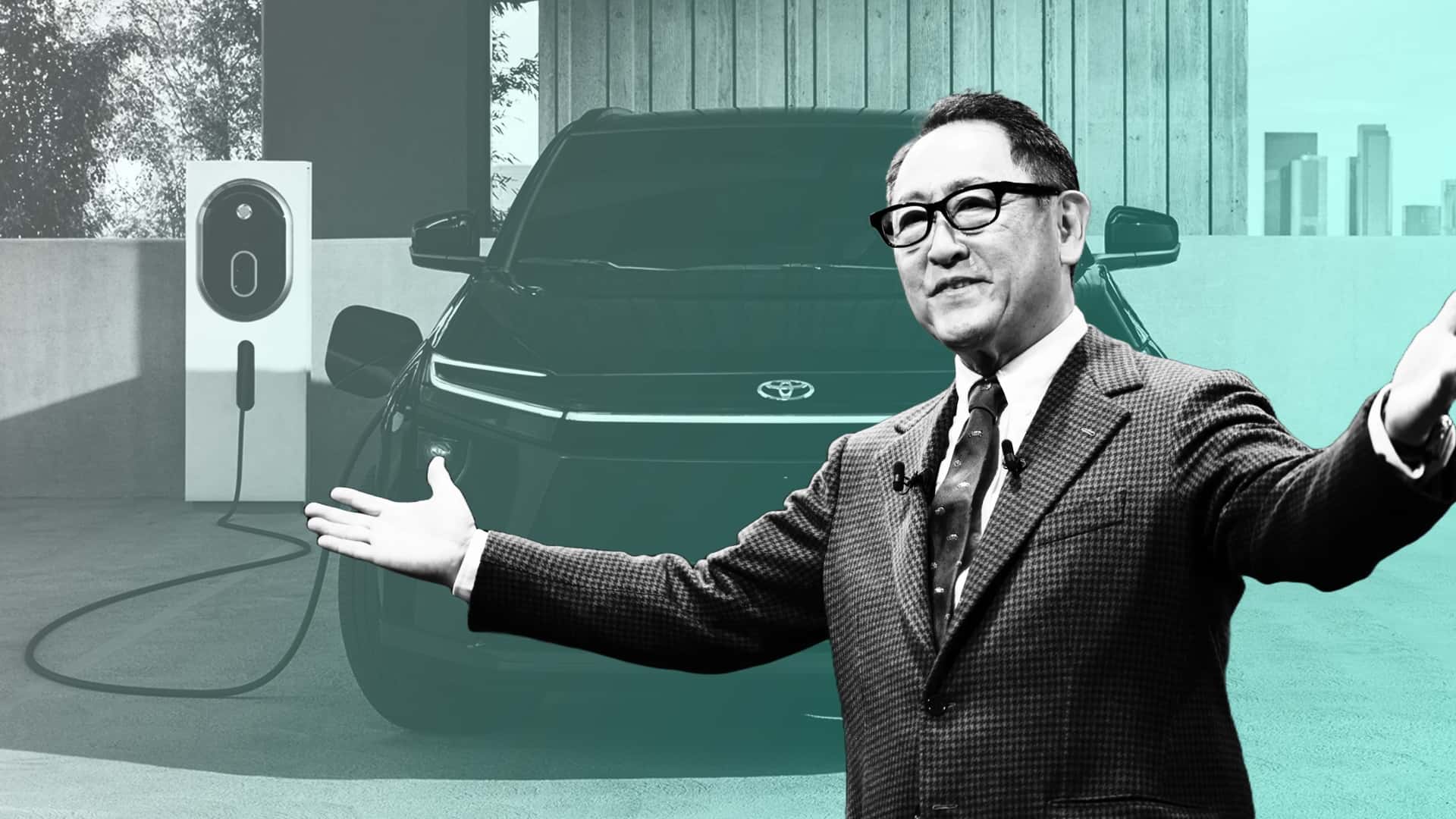
Akio Toyoda, Chairman of Toyota Motor Corporation, has publicly articulated a deep apprehension regarding the global automotive industry’s accelerating shift towards battery electric vehicles (BEVs). In a recent interview, Toyoda, grandson of the company’s founder, stated that a fully electric future represents his “biggest fear,” a candid admission that has sparked considerable debate across the industry and among environmental advocates.
His remarks underscore a potential ideological divide within one of the world’s largest automakers concerning the urgency and direction of its electric vehicle strategy.
Chairman’s Candid Admission on Electric Future
Speaking with Carwow in an interview released on Monday, June 10, Akio Toyoda did not mince words about his personal sentiments regarding the electric transition. “Everybody is shifting to BEVs, this is the biggest fear for me,” he openly stated.
Toyoda elaborated on his connection to traditional internal combustion engines, sentiments he believes set him apart from many peers. He recounted, “Three or four years ago, I was the only one to say to the media that I love smell, I love sound and I love engines, and I want to keep the jobs for engine suppliers.”
Expressing a sense of isolation in his views, he added, “But it seems to me that I’m the only one. I feel very alone.” This declaration from the head of a global automotive giant highlights a significant philosophical difference that could impact Toyota’s electric future.
A Divergent View Among Industry Leaders
Toyoda’s comments stand in stark contrast to the prevailing consensus among executives at major American, German, Japanese, and Korean automotive brands. Most industry leaders are largely aligned on the future of the car industry being wholly electric, differing primarily on the pace of this transition.
While many still express a desire to produce performance-oriented gasoline cars in the interim, few have expressed such a profound “fear” of the fundamental shift to electric vehicles. This unique perspective from Toyota’s chairman has drawn sharp criticism, particularly from those advocating for swifter climate action and greater investment in sustainable mobility.
Toyota’s Stance Versus Executive Action
Despite its public commitment to addressing the climate crisis and adopting a multi-pathway approach to electrification, Toyota has faced considerable scrutiny for its relatively slow rollout of competitive electric models. Critics argue that this cautious approach stems, in part, from the perspectives held by figures like Toyoda during his tenure as CEO.
Adam Zuckerman, a Clean Vehicles Campaigner at Public Citizen, an advocacy group, voiced strong concerns regarding Toyoda’s statements. “I thought it was shocking that he’s admitting that he may be risking the future of his grandfather’s company because he likes the smell of gasoline and engines that go ‘vroom, vroom’,” Zuckerman remarked.
He further added, “I think this should either be disqualifying to investors that this is how he makes perhaps the most consequential decision of his tenure as chairman, or it should be an admission that he’s failed in that decision.” These observations underscore the perceived risk to Toyota’s long-term market position and its commitment to the electric future.
Limitations in Current Toyota EV Offerings
Toyota has introduced a limited number of new electric models, including the C-HR, bZ Woodland, and bZ, but these offerings have been criticized for lacking advanced features common in rival EVs. Notably, these models still lack essential route-planning capabilities, a standard feature in many contemporary electric vehicles.
Compared to competitors, many of Toyota’s electric options have been perceived as having serious limitations, reflecting a broader lag in the company’s EV technology development. Even luxury offerings like the Lexus RZ 550e have been noted for not offering competitive range or route-planning, while curiously including features like the ability to “shift” fake gears.
Shareholder Scrutiny and Corporate Influence
Akio Toyoda’s recent comments surface just weeks before Toyota’s annual shareholder meeting, a critical event where investors will vote on the company’s executive positions, including the re-appointment of Toyoda as chairman and the recently appointed CEO, Kenta Kon.
This is not merely a formality; Toyoda was notably pushed out as CEO in 2023, largely due to investor concerns over his conservative approach to electric vehicles. Following his transition to chairman, the company has reportedly been in a hurry to catch up, launching five new electric models this year across its Lexus and Toyota brands.
Public Citizen’s Allegations and Advocacy
Public Citizen has highlighted Toyota’s broader influence on climate policy, noting in its research that the company contributed more to “climate-denying members of Congress” between 2020 and 2024 than any other automotive brand. This finding further complicates Toyota’s public image and its stated commitment to environmental stewardship.
Adding to the controversy, Toyoda himself made his political sympathies apparent by appearing at a Japanese NASCAR showcase event in November 2025 (sic, original article stated November 2025, likely a typo for 2023 or 2024 given context) in full “TRUMP/VANCE 2024” regalia. Public Citizen has announced plans to protest this by showcasing the image on trucks circling the Toyota Motor North America headquarters in Plano, Texas.
Zuckerman commented on Toyoda’s continued influence, stating, “As chairman, he’s really refused to let go of the reins. And in many ways, he is this shadow CEO, still wielding a lot more power and giving more interviews than their actual CEO.” He further speculated, “I think through these interviews, he’s still publicly trying to put his stamp on the company, and it looks like another arm of their private lobbying efforts that are looking in the U.S. and around the world to roll back all of our climate standards.”
The ‘Multi-Pathway’ Approach Under Question
Toyota’s official corporate messaging often touts a “multi-pathway” approach to electrification, emphasizing a strategy that meets consumers where they are, offering a range of options from hybrids to fully electric vehicles, and slowly increasing EV sales. This approach is frequently defended by executives as a measured and pragmatic transition.
The company’s strong performance in hybrid sales often lends credibility to this narrative. However, Akio Toyoda’s personal admissions and the noted shortcomings in Toyota’s dedicated EV models cast doubt on the sincerity and full commitment behind this strategy. The chairman’s preference for internal combustion engines and his lobbying activities raise questions about the company’s genuine resolve towards a fully electric future.
Hybrid Success Amidst EV Hesitation
Despite the criticisms regarding its EV strategy, Toyota has achieved significant success with its hybrid offerings. Last year, hybrid and electric models collectively accounted for a substantial 47% of Toyota and Lexus sales. This demonstrates strong consumer demand for electrified options, even if not exclusively battery electric vehicles.
However, Toyoda’s personal view, as expressed in the Carwow interview—”If I have to make only carbon neutral cars, it’s not exciting”—highlights a potential disconnect. While the company claims to care about climate action, the chairman’s focus on personal excitement over environmental imperative creates a challenging narrative for Toyota’s electric future and its role in combating the global climate crisis. The disparity between corporate statements and the chairman’s personal sentiments reveals a complex internal dynamic that could continue to shape Toyota’s trajectory in the evolving automotive landscape.
FAQ Section
What did Toyota Chairman Akio Toyoda say about electric vehicles?
Akio Toyoda stated that the industry’s shift to BEVs is his “biggest fear.” He expressed his love for the smell, sound, and engines of traditional cars and his desire to preserve jobs for engine suppliers, feeling isolated in this view among industry leaders.
Why is Toyota’s EV strategy considered slow?
Critics argue that Toyota has been slow to introduce compelling and technologically advanced electric models. Examples include the lack of route-planning capability in new EVs like the C-HR and bZ series, and general limitations compared to competitors.
How do Akio Toyoda’s views differ from other automotive executives?
While most major automotive executives are committed to an all-electric future, differing mainly on the transition speed, Toyoda is unique in expressing a “fear” of this shift and a strong personal preference for internal combustion engines.
What role has Public Citizen played in critiquing Toyota?
Public Citizen, an advocacy group, has highlighted Toyota’s significant financial contributions to “climate-denying members of Congress” between 2020-2024. They also criticize Toyoda’s personal stance and influence, planning protests over his political affiliations.
Did Akio Toyoda’s EV approach lead to his removal as CEO?
Yes, Akio Toyoda was reportedly pushed out as CEO in 2023 primarily due to investors’ concerns about his cautious and slow approach to developing and rolling out electric vehicles, leading to his current role as chairman.
What is Toyota’s official ‘multi-pathway’ approach to electrification?
Toyota’s official strategy involves offering a diverse range of electrified vehicles, including hybrids, plug-in hybrids, fuel-cell electric vehicles, and battery electric vehicles, aiming to meet varying consumer needs and market conditions for a gradual transition.
How do Toyota’s hybrid sales compare to its EV progress?
Toyota has achieved considerable success with its hybrids; these, combined with electric models, accounted for 47% of Toyota and Lexus sales last year. However, this hybrid success often overshadows the perceived lag and limitations in its dedicated battery-electric vehicle offerings.